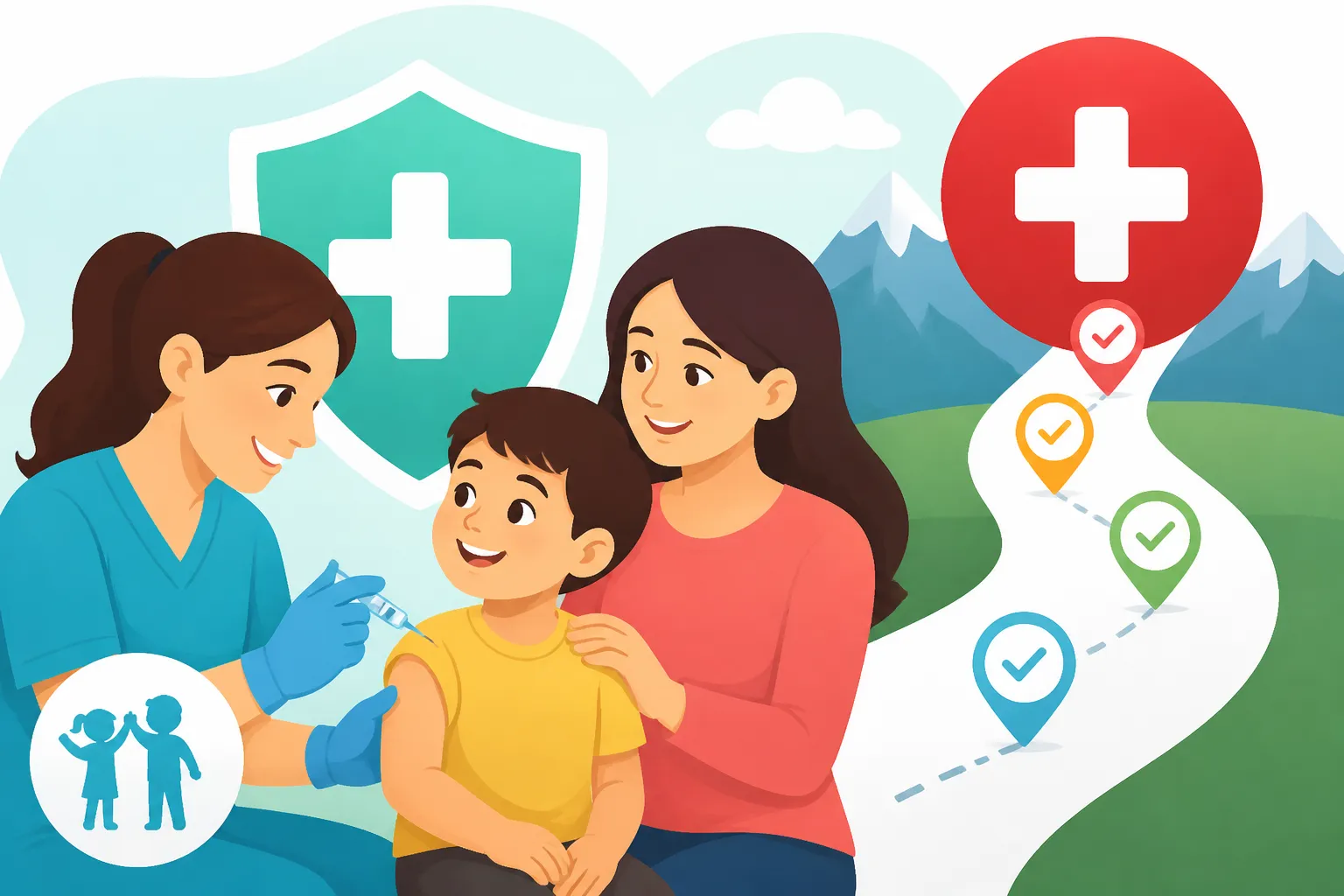
Vaccinations for Expat Children Catching Up to the Swiss Schedule
Ah, the joys of moving to Switzerland with kids! You've successfully navigated the mountain of paperwork for your permits, found a place to live, and maybe even started to decode the recycling system. Just when you think you're settling in, a new challenge often pops up: figuring out how your children's vaccination records from your home country fit into the Swiss system, and what you need to do to get them "caught up." Believe me, you're not alone in this. Many expat parents find themselves scratching their heads over differing schedules, unfamiliar vaccine names, and the general bewilderment of yet another new administrative process. This guide is here to walk you through exactly how to ensure your expat children are integrated into the Swiss vaccination schedule, making this one less administrative headache for you.
Understanding the Swiss Vaccination Schedule and Why It Matters
Moving to a new country often means encountering different approaches to public health, and Switzerland is no exception. While the fundamental goal of protecting children from preventable diseases remains the same worldwide, the specific timing, types, and combinations of vaccines can vary. It's vital to understand the Swiss perspective and requirements to ensure your child is not only healthy but also compliant with local guidelines, especially when it comes to school entry or participation in community activities.
The Importance of Vaccinations in Switzerland
Switzerland, much like many developed nations, places a strong emphasis on public health, and a robust vaccination program is a cornerstone of this. While vaccinations are not strictly mandatory by federal law for school entry (unlike in some other countries), strong recommendations and widespread public acceptance mean that most children are fully vaccinated. The Swiss Federal Office of Public Health (FOPH, or BAG in German, OFSP in French, UFSP in Italian) actively monitors disease prevalence and updates vaccination recommendations to protect the population.
These recommendations aren't just about individual protection; they're about maintaining herd immunity, which shields those who cannot be vaccinated due to age or medical conditions. Imagine a classroom where an unvaccinated child contracts measles; the ripple effect could be devastating, especially for very young infants or immunocompromised children. Swiss pediatricians and public health authorities are therefore very diligent in ensuring children are protected, and they'll expect you to be too. They want to prevent outbreaks and keep the community healthy, which is a goal every parent shares.
Key Differences from Home Country Schedules
One of the biggest sources of confusion for expat parents is comparing their home country's vaccination schedule with Switzerland's. You might find that some vaccines are given at different ages, or that certain combination vaccines are used that weren't common where you came from. For instance, the timing of the MMR (Measles, Mumps, Rubella) vaccine or the specific strains covered in the DTaP (Diphtheria, Tetanus, pertussis) might not align perfectly.
You might also discover that a vaccine that was optional or not routinely recommended in your home country is standard here, or vice versa. This isn't a sign that one system is "better" or "worse," but rather a reflection of different epidemiological contexts, historical disease patterns, and public health policies. For example, tick-borne encephalitis (TBE) vaccination is highly recommended in many parts of Switzerland due to the prevalence of ticks carrying the virus, whereas it might be completely absent from schedules in countries without this specific risk. It’s crucial not to assume that "close enough" is sufficient. A Swiss pediatrician will need to review your child's complete history against the local standard.
Where to Find the Official Swiss Schedule
Navigating official health information in a new country can feel like finding a needle in a haystack, especially with language barriers. Thankfully, the Swiss Federal Office of Public Health (FOPH) is your primary resource for the most up-to-date and official vaccination recommendations. Their website provides detailed schedules, often in multiple official languages (German, French, Italian) and sometimes even English summaries. You can easily search for "Swiss vaccination schedule FOPH" to find their current guidelines.
Additionally, each canton might have slightly more localized information or specific recommendations, especially regarding things like free vaccination campaigns or local public health initiatives. Your best bet is always to consult with your pediatrician. They are the experts who can translate the FOPH guidelines into a personalized plan for your child, taking into account their age, previous vaccination history, and any local cantonal specifics. For a broader look at how child healthcare operates, you might find our guide on Maternity and Child Healthcare in Switzerland: From Pregnancy to Pediatrics particularly useful, as it delves into the system from the ground up.
Navigating Your Child's Foreign Vaccination Records
This is often the trickiest part for expat parents. Your child’s little yellow vaccination card, or the printout from your family doctor back home, might seem perfectly clear to you, but it needs to be interpreted and understood within the Swiss medical context. The goal is to provide your new Swiss pediatrician with a comprehensive and clear picture of what your child has already received, so they can create an effective catch-up plan without unnecessary re-vaccinations.
Gathering and Translating Your Records
First things first: dig out all records. Don't leave any stone unturned. This includes the official vaccination booklet, any printouts from your doctor's office, hospital records, or even digital health portal summaries. The more detail, the better. Look for the exact dates of each dose, the name of the vaccine (if available), and the disease it protects against. Sometimes, international vaccine names can be confusingly similar, so clarity is key.
Once you have everything, consider if translation is necessary. If your records are in a common language like English, French, German, or Italian, you might be fine, especially if you find an English-speaking pediatrician. However, if your records are in a less common language, it's highly advisable to get them officially translated by a certified translator. While this can be an extra cost, it ensures there are no misunderstandings that could lead to delayed care or incorrect vaccination planning. A misinterpretation could mean your child receives a vaccine they don't need, or worse, misses one they desperately do. Remember, a Swiss doctor needs to clearly see the dates and types of vaccines to accurately assess the next steps.
Initial Consultation with a Swiss Pediatrician
Once you’ve gathered your meticulously translated records, the next crucial step is to book an initial appointment with a Swiss pediatrician. This is not just a check-up; it's a dedicated consultation to review your child’s entire vaccination history. Many expat parents make the mistake of just handing over a foreign vaccination card and expecting the doctor to instantly know what's what. It’s far more involved.
During this appointment, the pediatrician will go through each vaccine listed, comparing it against the current Swiss recommendations. They will assess:
- The specific vaccines received: Does "DTaP-IPV-Hib" from your country cover the same components as the Swiss equivalent?
- The timing of the doses: Were the intervals between doses appropriate according to Swiss guidelines?
- The number of doses: Is your child fully protected for each disease according to the Swiss schedule?
This consultation is your opportunity to ask all your questions and express any concerns. Be prepared for a detailed discussion. It's often the case that an English-speaking doctor can make this process significantly smoother, as communication is paramount when dealing with medical histories. You might find our resource on Finding an English-Speaking Pediatrician in Zurich Oerlikon or similar guides for other cantons helpful in this search.
Dealing with Missing or Incomplete Records
Let’s be honest, sometimes life happens, and records get lost, especially during international moves. Or perhaps the system in your home country wasn't as meticulous in record-keeping. If you arrive in Switzerland with missing or incomplete vaccination records, don't panic, but be prepared for a bit more work.
Your pediatrician has a few options to ensure your child gets on track safely:
- Blood Tests (Serology): In many cases, if there's significant doubt about immunity to certain diseases (like measles or hepatitis B), your pediatrician might recommend a blood test to check for existing antibodies. If antibodies are present, it indicates prior vaccination or natural infection, and further doses might not be needed. However, these tests can add to the cost and aren't always definitive for every vaccine. It’s also important to note that Swiss doctors generally don’t order routine blood tests automatically, so this would be a specific diagnostic step.
- Re-vaccination: If immunity cannot be confirmed and records are truly absent, the safest approach is often to simply re-vaccinate according to the Swiss schedule. While it might mean your child receives a dose they technically didn't need, it's generally considered safe to receive an additional dose of a vaccine, and it guarantees protection. This is a common and pragmatic solution when records are unrecoverable.
- Conservative Approach: For less critical or non-live vaccines, a pediatrician might suggest starting a new vaccination series, especially for younger children, treating them as if they have no prior history.
The key here is transparency with your pediatrician. Don't try to guess or fabricate information. Be upfront about what you have and what you don't. They are there to help, and their priority is your child's health and safety.
The Catch-Up Plan: How to Get Your Child on Track
Once your Swiss pediatrician has thoroughly reviewed your child’s foreign vaccination records (or lack thereof), they will develop a personalized "catch-up" vaccination plan. This isn't just a generic schedule; it's a carefully considered strategy to bring your child's immunity up to the Swiss standard in the most efficient and safest way possible.
The Catch-Up Protocol: What to Expect
The pediatrician will outline which vaccines are needed, how many doses of each, and the recommended intervals between them. They aim to minimize the number of additional appointments while ensuring your child is adequately protected. Here’s what the protocol generally involves:
- Prioritization: Vaccines for highly contagious or severe diseases (like measles, polio, or diphtheria) will likely be prioritized.
- Minimum Intervals: There are specific minimum intervals required between doses of the same vaccine to allow the immune system to respond effectively. Your pediatrician will adhere to these. They won't just give all missing shots at once, for example.
- Combined Vaccines: Switzerland widely uses combination vaccines (e.g., hexavalent vaccines that cover DTaP, polio, Hib, and Hepatitis B in one shot) to reduce the number of injections, which is a relief for both kids and parents!
- Documenting the New Schedule: Your pediatrician will likely start a new Swiss vaccination record (often a little red booklet called an "Impfbüchlein") where all new and assessed foreign vaccines will be recorded. This will become your official record moving forward. This is crucial for future school enrollments or any other administrative needs. For more context on managing overall child health, refer to our comprehensive guide on Pediatric Care: Checkups, Vaccination Schedules, and School Health.
It’s an adaptive process. The doctor won't typically throw out all previous vaccinations, but rather build upon them. If, for instance, your child had two doses of MMR in your home country, and the Swiss schedule also recommends two, they might be considered complete. If only one was given, the pediatrician would schedule the second.
Common Catch-Up Scenarios
Let's look at a few hypothetical scenarios to illustrate how a catch-up plan might look:
- Scenario 1: Recently Arrived Toddler with Incomplete Records:
- Problem: Your two-year-old had their initial baby shots, but you're missing records for their 18-month boosters and haven't had the MMR.
- Solution: The pediatrician might suggest drawing blood to check for measles antibodies if the primary MMR doses are confirmed, or simply administer the first MMR dose. They would then schedule the necessary booster shots for DTaP-IPV-Hib-HepB, ensuring proper intervals between doses.
- Scenario 2: Older Child Missing Specific Vaccines:
- Problem: Your 8-year-old is mostly up-to-date, but their home country didn't routinely offer the TBE vaccine, and they only had one dose of chickenpox (Varicella) vaccine, while Switzerland recommends two.
- Solution: The pediatrician would recommend starting the TBE vaccine series (typically two doses initially, then a booster), and schedule the second dose of Varicella vaccine. These can often be given concurrently with other scheduled appointments, assuming no contraindications.
- Scenario 3: Delayed Start for a Young Child:
- Problem: You arrived when your infant was 6 months old and they hadn't started any vaccinations yet.
- Solution: The pediatrician would initiate the full Swiss infant vaccination schedule, starting with the hexavalent vaccine (DTaP-IPV-Hib-HepB) and potentially pneumococcal and rotavirus vaccines, following the recommended age-appropriate intervals.
The key is that your pediatrician will tailor this plan specifically to your child. Don't be afraid to ask for clarification if anything is unclear.
Insurance Coverage for Catch-Up Vaccinations
Now, for the financial aspect, which is always a hot topic for expats in Switzerland. Generally, basic health insurance (KVG/LAMal) covers vaccinations recommended by the Federal Office of Public Health (FOPH). This is excellent news because most, if not all, of the routine and catch-up vaccinations for your children will fall under this category. So, once your family is properly enrolled in the mandatory basic health insurance, you shouldn't have to worry about the cost of the vaccines themselves or the administration fees.
However, there are always nuances. For a thorough understanding of your insurance, I recommend reading Understanding KVG/LAMal: Mandatory Basic Health Insurance Explained. Here are a few points to remember:
- Deductible (Franchise) and Co-pay (Selbstbehalt): Like all medical expenses covered by KVG, these vaccinations will count towards your chosen annual deductible (Franchise) and the 10% co-pay (Selbstbehalt) thereafter, up to a maximum. It's a system that takes some getting used to. You can learn more about how this works in The Swiss Franchise System: How Deductibles and Copays Work.
- Initial Period Without KVG: If you've just arrived, remember that you have up to 90 days to arrange your mandatory health insurance. During this initial window, you might not be fully covered for all medical expenses, depending on any travel insurance you might have. While SafetyWing is a fantastic option for flexible expat and travel insurance that can provide coverage during international transitions or for trips abroad, it's typically not a replacement for the mandatory Swiss basic health insurance (KVG) once you're a resident. However, it can be useful for those interim periods or as a backup for international travel once your KVG is in place.
- Tiers Garant vs. Tiers Payant: Most likely, your pediatrician will operate on a Tiers Garant system. This means you pay the bill upfront, and then submit it to your health insurance for reimbursement. Don't be surprised if you get a bill for each vaccination appointment. Our guide on How to Pay Medical Bills: Tiers Garant vs. Tiers Payant Billing Systems can clarify this for you.
- Non-Recommended Vaccinations: If for some reason your pediatrician suggests a vaccine that is not on the FOPH's recommended list (this is rare for routine childhood vaccinations but can happen for very specific travel or personal reasons), it might not be covered by basic KVG. Always clarify with your doctor and insurer beforehand if you have doubts.
In summary, the good news is that ensuring your child catches up on their vaccinations in Switzerland is generally covered by your mandatory health insurance, making it a manageable process once the administrative hurdles are cleared.
Practical Tips and Support for Expat Parents
Navigating the healthcare system in a new country can feel like a full-time job at times, and getting your children's vaccinations sorted is just one piece of that puzzle. But with a few practical tips and the right mindset, you can make this process as smooth as possible.
Finding an English-Speaking Pediatrician
For many expat families, language is the biggest hurdle. While many Swiss doctors speak excellent English, finding one who is truly comfortable discussing complex medical histories and patient concerns in English can make a huge difference, especially for something as sensitive as your child's health.
Here’s how to go about finding one:
- Expat Forums and Groups: Online expat groups (Facebook, local forums) are goldmines for recommendations. Ask other parents in your area who they use and why they like them.
- Hospital Websites: Larger hospitals, especially university hospitals in cities like Zurich, Geneva, or Basel, often have international patient services or lists of doctors who speak English. Their pediatrics departments are a good place to start.
- Doctor Directories: Websites like OneDoc or Comparis (which also has a doctor search function) often allow you to filter by language spoken. Always double-check by calling the practice.
- Word of Mouth: Ask colleagues, friends, or even your relocation agent for recommendations. Personal referrals are often the best.
Having a pediatrician with whom you can communicate clearly is invaluable. It reduces stress, minimizes misunderstandings, and empowers you to make informed decisions about your child's health. This is particularly important when dealing with the nuances of a catch-up vaccination schedule.
Managing Appointment Logistics and Costs
Once you have your pediatrician, managing the actual appointments becomes the next step.
- Booking Appointments: Be prepared to book appointments well in advance, especially for popular English-speaking doctors. Follow-up vaccination appointments will be scheduled by the practice, usually with a reminder.
- Clinic Visits: Swiss pediatric clinics are generally very efficient. You’ll typically check in, have a short wait, see the doctor, and then often a nurse will administer the vaccine. Don’t expect a lot of chitchat; Swiss medical appointments are usually very direct and focused.
- Comfort for Your Child: Bring a favorite toy, book, or blanket. Prepare your child by explaining what will happen in simple terms. Pediatric nurses are usually very skilled at distracting children during injections, but your presence and comfort are key.
- Cost Management: While the vaccinations themselves are covered by KVG, remember the deductible and co-pay. Keep track of your medical bills (the Rückforderungsbeleg) and submit them promptly to your insurance. Our article on Healthcare in Switzerland for Expats: The Complete System Overview (2027) provides a broader context on managing overall medical expenses.
Addressing Parental Concerns and Misinformation
In today’s world, it’s easy to get overwhelmed by information, and misinformation about vaccines can cause understandable anxiety. As an expat parent trying to navigate a new system, these concerns can be amplified.
It's completely normal to have questions or even worries about vaccines. My advice:
- Talk to Your Pediatrician: This is what they're there for. Ask specific questions about the safety of combination vaccines, the necessity of certain doses, or potential side effects. A good pediatrician will take the time to address your concerns with evidence-based information.
- Trust Official Sources: Rely on information from the FOPH, the World Health Organization (WHO), and reputable medical associations. Be wary of unverified sources on social media.
- Focus on the Benefits: Remind yourself of the immense benefits of vaccination – protecting your child from serious, potentially life-threatening diseases, and contributing to the health of the community.
- Acknowledge Your Feelings: Moving abroad is stressful, and managing healthcare adds to it. It’s okay to feel overwhelmed. Connect with other expat parents who have been through this; their experiences can be incredibly validating and helpful.
Ultimately, catching your child up on their vaccinations in Switzerland is a necessary and important step for their health and integration. While it might seem like a daunting task at first, with a little organization, clear communication with your pediatrician, and understanding of the Swiss system, you'll have them on track in no time. The peace of mind that comes with knowing your children are fully protected is truly priceless, allowing you to focus on all the other wonderful adventures that expat life in Switzerland offers. For those interested in the broader official schedule, particularly how it's structured from birth, exploring Childhood Vaccination Schedule in Switzerland: The Official Plan Explained might offer further insights.
Disclaimer
This article is for general informational purposes only and does not constitute professional advice. Laws, prices and regulations vary by location and change over time. Consult a qualified professional for guidance on your specific situation.