Facilitated Naturalization: Fast-Track Citizenship for Spouses of Swiss Nationals
Navigating the Swiss naturalization maze can feel like a full-time job even when you are married to a local. I still remember the sheer panic a friend felt when her neighbor hinted they might "blackball" her regular application over a minor laundry room dispute. This guide simplifies the facilitated naturalization path, ensuring you bypass the local gossip and reach citizenship faster.
Understanding Facilitated vs Regular Naturalization
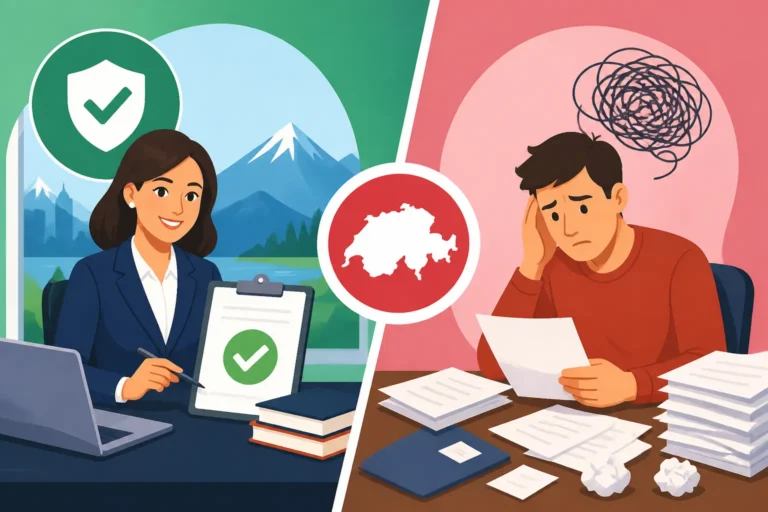
The most critical distinction you need to grasp is that facilitated naturalization is a federal process, whereas regular naturalization is heavily cantonal and communal. If you are applying the "regular" way, your fate often rests in the hands of your local village council or a committee of neighbors who might judge you on how well you stack your cardboard for recycling. For the spouse of a Swiss national, the facilitated route moves the decision-making power to the State Secretariat for Migration (SEM) in Bern. This centralization provides a layer of objectivity and protection that many expats find incredibly relieving.
In the regular process, you are often subjected to a public vote or a rigorous local interview where you might be asked to name every local fountain or the specific date of the village festival. While you still need to prove integration in the facilitated process, the criteria are standardized across the country. You are essentially dealing with federal bureaucrats rather than local politicians. This doesn't mean it is "easy," but it is significantly more predictable. Before you begin, it is helpful to understand your current standing by reviewing Residence Permits in Switzerland: L, B, C, and G Permits Explained to see how your current permit status interacts with your eventual application.
Another major advantage is the timeline. Regular naturalization usually requires ten years of residency in Switzerland. For spouses, this requirement is slashed in half. This "fast-track" recognizes the unique position of someone who has already integrated into a Swiss family unit. It assumes that by living with a Swiss citizen, you are already absorbing the culture, language, and civic values of the country at an accelerated rate. If you originally came to the country through Family Reunification: Bringing Your Spouse and Children to Switzerland, you are already halfway through the administrative hurdles required for this transition.
Eligibility Criteria for Spouses Living in Switzerland
To qualify for facilitated naturalization while residing within the borders, you must meet two primary "duration" requirements simultaneously. First, you must have lived in Switzerland for a total of five years. Second, you must have been married to and living with your Swiss spouse for at least three years. The "living together" part is crucial; the Swiss authorities have a sharp eye for "marriages of convenience" and will look for evidence of a shared life, such as joint bank accounts, a shared lease, or utility bills in both names.
The residency requirement is not just about having a mailbox in Switzerland. You must have physically resided here, and certain years count more than others. For example, years spent on a B or C permit count fully. However, the authorities also look at the quality of your stay. If you have spent significant time outside the country for work or extended holidays during those five years, the SEM might pause your clock. If you are currently comparing your options, you might also want to look into The Swiss C Permit (Permanent Residency): Fast-Track and Standard Routes to see if securing permanent residency is a better intermediate step for your specific situation.
Integration is the third pillar of eligibility. This is where many expats get nervous, but it is manageable with preparation. You must show that you are successfully integrated into the Swiss way of life. This means complying with Swiss law, not posing a threat to internal or external security, and, perhaps most importantly for daily life, being able to communicate in a national language. The SEM will also check that you do not have any outstanding debts or a history of relying on social assistance without a valid reason.
The Unique Case of Spouses Living Abroad
One of the most generous aspects of the Swiss system is that you can actually become a Swiss citizen without ever having lived in Switzerland, provided you are married to a Swiss national. This is quite rare globally. If you live abroad, you can apply for facilitated naturalization after being married for six years. However, the burden of proof for "close ties to Switzerland" is much higher than for those living in Zurich or Geneva.
To prove these "close ties," you will need to demonstrate that you visit Switzerland regularly—usually at least once a year or for several weeks every two years. You should have active contacts with people living in Switzerland, such as family members or close friends. Furthermore, you must show that you are familiar with the Swiss political system, geography, and current events. Being a member of a Swiss club abroad or working for a Swiss company can also bolster your case. Even if you live in New York or London, having a robust international health plan like Cigna Global can sometimes be used in your broader financial dossier to show you are well-supported and won't become a burden on the Swiss state.
The language requirement remains mandatory for those abroad. You must be able to hold a conversation in German, French, Italian, or Romansh. If you are living in a non-Swiss environment, maintaining this level of fluency can be a challenge. I have seen many spouses living abroad get caught off guard during their embassy interview because they assumed their marriage alone was enough. They were surprised when the consular officer switched to Swiss German and expected a fluent response about their last trip to the Alps.
Proving Language Proficiency and Integration
The language standards for facilitated naturalization are strict but fair. Generally, you are expected to reach a B1 level in oral communication and an A2 level in written communication in one of the national languages. This is often a higher bar than what is required for a simple residency permit. You should familiarize yourself with the Language Requirements for Swiss Permits: A1 to B2 Standards Explained to ensure you are aiming for the right certification.
The authorities prefer "fide" certificates or recognized diplomas like the Goethe-Zertifikat or DELF. When you submit your application, you will need to include these certificates as proof. If you are unsure which test to take, comparing Language Tests for C Permit: fide vs Goethe-Zertifikat Compared can save you a lot of time and money. I often tell people to choose the test that aligns with their learning style—fide is more practical and scenario-based, while Goethe is more academic.
Integration also covers your financial life. The SEM will request a debt register extract (Betreibungsauszug) to ensure you aren't living beyond your means or ignoring your financial obligations. They will also look at your tax records. In Switzerland, being a "good citizen" is synonymous with being a "good taxpayer." If you have been negligent with your filings, it could delay your application by years. For a deeper dive into why this matters, check Financial Independence Checks: Why Betreibungen (Debt) Stops Permit Renewals.
| Requirement Type | Residency in Switzerland | Residency Abroad |
|---|---|---|
| Marriage Duration | 3 Years | 6 Years |
| Total Residency | 5 Years | Not Required |
| Language Level | B1 Oral / A2 Written | B1 Oral / A2 Written |
| Integration Check | Cantonal/Federal | Embassy/Federal |
| Close Ties to CH | Assumed via Residency | Must be Proven |
The Application Process and Documentation
The administrative side of facilitated naturalization is a test of patience. You start by requesting the application forms from the SEM or your local cantonal migration office. Once you have the heavy envelope, you will need to gather a mountain of paperwork. This includes your birth certificate, marriage certificate, proof of citizenship for both spouses, and your criminal record extract. If any of these documents are not in a Swiss national language, you will likely need them translated by a certified professional. Services like RushTranslate are often used by expats to ensure their foreign birth certificates meet the exacting standards of the Swiss authorities.
After you submit the dossier, the "quiet phase" begins. This can last anywhere from 12 to 24 months. During this time, the SEM will conduct a background check. They will verify your marriage's validity and your integration through a series of inquiries. In many cases, you will be called for an interview. While this is federal, they often delegate the interview to the local police or a cantonal official. You should prepare for this by reviewing The Swiss Citizenship Interview Questions: What the Commune Asks You, as the themes of the questions—values, geography, and civic duty—remain consistent.
The costs are also a factor. You will pay a federal fee (usually around CHF 400 for adults), but there may also be cantonal and communal administrative fees that can bring the total closer to CHF 1,000. It is a significant investment, but considering the lifelong benefits, most find it worth every rappen. Keep in mind that Naturalization Timeline: How Long It Actually Takes After Applying can vary wildly depending on the workload of the SEM at any given time.
Life After Naturalization: Rights and Duties
Once the letter from Bern finally arrives with the word "Eingebürgert" (Naturalized), your life changes in several subtle but profound ways. You gain the right to vote and stand for election at all three levels of government: federal, cantonal, and communal. For many expats, the first time they receive their voting "booklet" in the mail is the moment they truly feel like they belong. You also get a Swiss passport, which is consistently ranked as one of the most powerful travel documents in the world.
However, citizenship also comes with duties. If you are a male and naturalized before the age of 25 (or in some cases 30), you may be liable for military service or the military exemption tax. This catches many young naturalized citizens by surprise. Additionally, you should investigate how your new status affects your original nationality. Fortunately, Dual Citizenship Rules in Switzerland: Do I Have to Renounce My Original Passport? explains that Switzerland has no problem with you keeping your old passport, though your home country might have different rules.
Documentation remains a theme even after you are Swiss. You will need to update your records with your employer, your bank, and your insurance providers. If you are moving between countries or have complex family structures, maintaining a global health policy like Cigna Global can simplify the transition as your legal status updates across different systems. Don't forget that you will also need to handle Translation and Apostille Requirements for Marriage Certificates if you plan to register your new Swiss status in your country of origin.
Common Pitfalls and How to Avoid Them
The biggest mistake I see is "integration complacency." Just because you are married to a Swiss person doesn't mean you can skip the effort of learning the local language or participating in the community. If the interviewer asks what you do on weekends and your only answer is "I watch Netflix in English," it sends a signal that you aren't truly woven into the Swiss social fabric. Join a local Verein (club), go to the neighborhood Apéro, and make a visible effort.
Another pitfall is the "paperwork gap." If you moved cantons recently, your files might be split between two different offices, causing massive delays. Always notify the SEM of a change of address immediately. Also, ensure your certificates are up to date. Many Swiss offices require civil documents (like birth certificates) to be no more than six months old. This often necessitates a fresh order from your home country, followed by a quick turnaround from a service like RushTranslate to get it into German or French.
Finally, do not underestimate the financial check. Even a forgotten speeding ticket that went to collection can show up on your debt register and derail an application. Clean up your "Betreibungen" before you even request the application form. Switzerland is a country of precision and rules; showing that you respect those rules in your personal finances is the fastest way to earn the trust of the federal authorities in Bern.
Legal Disclaimer
The information provided in this guide is for informational purposes only and does not constitute legal advice. Immigration laws and naturalization requirements in Switzerland are subject to change and can be interpreted differently depending on individual circumstances and cantonal policies. For official guidance, always consult the State Secretariat for Migration (SEM) or a qualified immigration lawyer.