Speed Cameras in Switzerland: Flash Radars and Zero Tolerance Margins
Navigating the Swiss roads often feels like walking through a high-security museum where the slightest misstep triggers a silent alarm. I still remember the gut-punch feeling of seeing a sudden, blinding orange flash in the rear-view mirror while driving through the Gubrist Tunnel during my first month here. This guide will walk you through the uncompromising world of Swiss speed cameras, the razor-thin tolerance margins, and how to avoid the eye-watering fines that can easily derail your monthly budget.
The Swiss Approach to Traffic Enforcement
Switzerland is famous for its precision in watchmaking, and that same obsession with exactness extends to their traffic laws. Unlike many other countries where "going with the flow" of traffic might allow you to hover 5-10 km/h over the limit without consequence, the Swiss system is designed for total compliance. The goal isn't just safety; it is also a matter of environmental protection and noise reduction, particularly in residential areas.
When you first arrive, the sheer number of cameras can be overwhelming. You will see them in tunnels, at major intersections, and hidden behind bushes in quiet villages. The culture here is one of strict adherence. Most locals will drive exactly at or even 2 km/h below the limit to avoid any risk. If you are coming from a place like the UK, the US, or even neighboring Italy, this level of surveillance can feel restrictive and even predatory. However, understanding Driving in Switzerland: Licenses, Buying Cars, and Strict Traffic Laws is the first step toward integrating into the local lifestyle without losing your hard-earned Swiss francs to the authorities.
The enforcement is automated, efficient, and almost impossible to escape once the "flash" has occurred. The system is linked directly to the vehicle registration database, meaning the bill often arrives at your doorstep before you’ve even finished processing the embarrassment of the event.
Types of Speed Cameras You Will Encounter
Switzerland utilizes a sophisticated mix of technology to monitor road speeds. Knowing what to look for can help you stay vigilant, though the best defense is always a calibrated speedometer and a heavy dose of patience.
Fixed Radar Installations
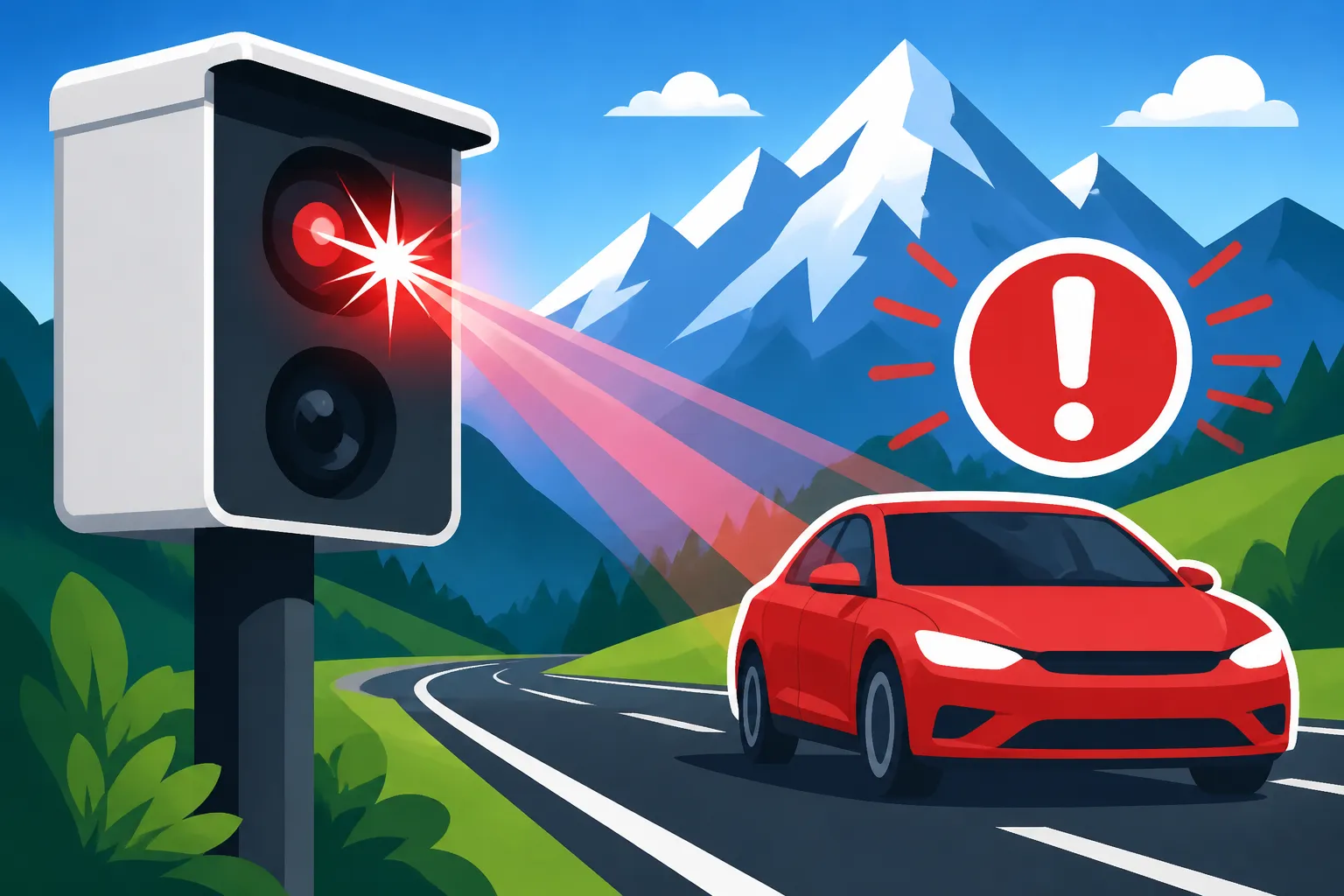
These are the "grey pillars" or large metal boxes permanently bolted to the ground. They are most common on motorways (Autobahnen) and at the entrances to long tunnels like the Gotthard or the Seelisberg. In cities like Zurich or Geneva, fixed cameras are often integrated into traffic light systems to catch both speeders and those who jump red lights. While searching for Where to Live in Switzerland: Cantons, Cities, and Commuter Zones, you’ll notice that wealthier or more densely populated cantons tend to have a higher density of these fixed installations.
Semi-Stationary Trailers
These are the "stealth" cameras that drive expats crazy. They look like small, windowless trailers or grey dumpsters parked on the side of the road. They are mobile but can be left in a single location for days or weeks. Because they look like common roadside equipment, they are incredibly effective at catching people who have become complacent on their daily commute. If you are using a service like HousingAnywhere to find a home in a suburban area, be prepared to see these appearing and disappearing in your neighborhood regularly.
Section Control Systems
Rather than catching you at a single point, section control (Abschnittsgeschwindigkeitskontrolle) calculates your average speed between two points. These are increasingly common in construction zones and long tunnel stretches. If you speed for the first half and slow down for the second, the computer still calculates the average; if that average is over the limit, you get a ticket. This technology makes it impossible to "brake for the camera" and then speed up again.
The Brutal Truth About Tolerance Margins
One of the biggest shocks for foreigners is the "Sicherheitsabzug" or safety deduction. This is the amount the police subtract from your measured speed to account for potential equipment errors. While it sounds like a "grace" margin, it is actually quite small.
The deduction depends on the type of technology used:
| Equipment Type | Speed Range | Deduction (Tolerance) |
|---|---|---|
| Stationary Radar | Up to 100 km/h | 3 km/h |
| Stationary Radar | 101 – 150 km/h | 4 km/h |
| Stationary Radar | Over 151 km/h | 5 km/h |
| Laser Technology | Up to 100 km/h | 3 km/h |
| Laser Technology | Over 101 km/h | 4 km/h |
| Mobile Radar (in car) | Up to 100 km/h | 7 km/h |
| Mobile Radar (in car) | Over 101 km/h | 8 km/h |
As you can see, if you are driving 125 km/h in a 120 km/h zone, and the radar subtracts 4 km/h, you are still 1 km/h over the limit. In Switzerland, being 1 km/h over is enough to trigger a 40 CHF fine. There is no "friendly warning" for minor infractions.
The Fine Structure: From Annoying to Life-Changing
Swiss fines are categorized into two types: "Ordnungsbussen" (administrative fines) and "Verzeigungen" (serious offenses that lead to a court summons).
Minor Infractions (Ordnungsbussen)
If you are caught going 1 to 15 km/h over the limit on the motorway, you will receive a standard fine. These are flat rates that do not depend on your income.
- 1-5 km/h over: 20–40 CHF
- 6-10 km/h over: 60–120 CHF
- 11-15 km/h over: 160–250 CHF
These fines are a nuisance but are considered part of the Cost of Living Realities: Groceries, Telecoms, and Household Expenses for those who aren't careful. You pay these via a QR-bill, similar to how you would handle The Serafe Fee 2026: Paying the Mandatory CHF 335 Media Tax.
Serious Infractions and Income-Based Fines
Once you cross a certain threshold (usually 25 km/h over on the motorway or 15-20 km/h over in the city), the "Ordnungsbusse" system no longer applies. You will be reported to the public prosecutor. This is where it gets very expensive. Switzerland uses a "day-fine" system (Tagessätze) for serious speeding. The court calculates a daily rate based on your net income and assets. If you are a high earner, a single speeding ticket can cost you 10,000 CHF or more.
Furthermore, under the "Via Sicura" laws, extreme speeding (Raserdelikt) can result in a mandatory prison sentence of at least one year and the confiscation of your vehicle. If you are still in the process of Buying a Car in Switzerland: Leasing vs Financing Financial Comparison, remember that the bank still wants their money even if the police have seized the car.
Practical Strategies for Avoiding the Flash
When I moved here, I had to completely retrain my brain. I was used to a 10% "buffer" in my home country, which simply does not exist here. To stay safe, I recommend several lifestyle adjustments.
First, use your car's cruise control or speed limiter religiously. Even on 30 km/h residential streets, a slight downhill can push you to 36 km/h, which is enough for a ticket. If you are navigating with a phone, ensure you have a reliable data connection using a provider like Airalo so your GPS can warn you about approaching permanent speed cameras. However, be aware that "radar warning" apps and dedicated GPS devices with radar databases are technically illegal to use while driving in Switzerland. Police can and do confiscate phones if they see a radar app open.
Second, pay close attention to the transition zones. Swiss roads often drop from 80 km/h to 60 km/h or 50 km/h very abruptly. The cameras are frequently placed exactly where the limit changes. If you haven't slowed down by the time you pass the sign, you’re already too late.
If you are a frequent traveler, you might consider Buying the 2026 E-Vignette Online via the Official Via Portal to ensure your car is legal for motorway use, but no vignette will protect you from the radar. If you find the stress of driving too high, many expats choose to rely on the world-class train system instead.
What to Do if You Get a Ticket
If you see the flash, do not panic, but do not ignore the letter when it arrives. Usually, within 10 to 14 days, the registered owner of the vehicle will receive a "Bussenzettel."
- Verify the details: Ensure the license plate and time are correct.
- Pay promptly: For minor fines, paying within 30 days closes the case. No points are added to your license for standard "Ordnungsbussen."
- The driver identity: If you weren't the one driving (e.g., a friend was using your car), you must provide their details on the form.
- Contesting: You can contest a fine if you believe the equipment malfunctioned, but this is rarely successful in Switzerland and often results in additional "administrative fees" if you lose.
If you fail to pay, the fine will escalate, and it could eventually lead to a What is a Betreibung? How an Unpaid Bill Ruins Your Swiss Credit Score, which will make it nearly impossible to rent an apartment or get a credit card in the future. For those with high-value cars or a history of minor accidents, having Private Liability Insurance (Privathaftpflicht): Why Expats Need It is essential, though it's important to note that insurance never covers the cost of traffic fines themselves.
Living Without the Fear of the Radar
Ultimately, the best way to handle speed cameras in Switzerland is to accept them as an immovable part of the landscape. When I stopped trying to "beat the system" and started leaving five minutes earlier for every appointment, my stress levels plummeted.
If you are just starting your journey and Renting in Switzerland: The Complete 2027 Guide for Expats, try to find a location with good public transport or easy walking access to shops. Buying car accessories like high-quality dash cams from Amazon Germany can help document your driving, but remember that data privacy laws in Switzerland are very strict regarding the use of such footage.
If you have moved here recently, make sure you are also Converting Your Foreign Driver's License to a Swiss Fahrausweis within the first 12 months. Driving on a foreign license after the one-year mark is treated as "driving without a license," which carries penalties far worse than a simple speeding ticket. Stay under the limit, watch for the trailers, and enjoy the beautiful scenery—just make sure you're enjoying it at exactly the posted speed.
Disclaimer
This guide is for informational purposes only and does not constitute legal advice. Traffic laws and fine structures in Switzerland are subject to change at the federal and cantonal levels. Always consult official Swiss government resources or a legal professional for specific cases.