Zug Expat Healthcare Guide: Private Clinics and English-Speaking Doctors
Moving to Zug often feels like a dream with its low taxes and stunning lake views, but the moment you need a doctor and realize you don't know the difference between a Hausarzt and a Permanence, the stress hits hard. I remember panicking during my first winter here when my daughter spiked a fever and I couldn't find an English-speaking clinic open after 5 PM. This guide solves that by mapping out Zug’s healthcare landscape, from elite private clinics to finding a doctor who actually speaks your language.
Understanding the Healthcare System in Zug
When you first arrive in Canton Zug, the efficiency of the infrastructure is breathtaking, but the healthcare system has its own set of rules that can feel like a labyrinth. Unlike many other countries where healthcare is provided by the state, Switzerland operates on a mandatory private insurance model. Within 90 days of your arrival, you must register for a basic insurance plan (KVG/LAMal). Zug, being a relatively small and wealthy canton, offers some of the best medical facilities in the world, but navigating them requires a bit of local know-how.
Mandatory Health Insurance and Local Choice
Every resident in Zug must have basic health insurance. This covers a wide range of services, but how much you pay out of pocket depends heavily on your choice of deductible. I’ve seen many expats choose the lowest premium only to be shocked by a massive bill when they actually get sick. Understanding The Swiss Franchise System: How Deductibles and Copays Work is the first step to financial sanity here. In Zug, you have a plethora of providers to choose from, and while the "basic" coverage is the same across all of them, the customer service and speed of reimbursement can vary.
The system is designed to give you autonomy, but that autonomy comes with the responsibility of managing your own care path. If you choose a "Telmed" or "HMO" model to save on premiums, you can't just walk into a specialist's office in Zug city center; you have to call a hotline or see your designated gatekeeper first. For many high-earning expats in Zug, the flexibility of a traditional model is worth the extra cost, allowing them to seek Finding Medical Care in Switzerland: Doctors, Specialists, and Referrals without the administrative hurdles of a managed-care plan.
The Choice Between Public and Private Care
In Zug, the line between public and private care is thinner than in many other countries. Even if you only have basic insurance, you can still access the Kantonsspital. However, Zug is home to a high density of private clinics that offer a more "boutique" experience. If you have Supplementary Health Insurance (VVG): What It Covers and When to Buy It, you gain access to private wards, the ability to choose your surgeon, and significantly shorter wait times for elective procedures.
For those who travel frequently or want a truly global safety net, looking into international providers like Cigna Global can be a game-changer. While you still need the mandatory Swiss insurance, Cigna Global can provide that extra layer of comfort, especially if you want the option to seek treatment outside of Switzerland or desire a higher level of private room comfort that standard Swiss supplementary plans might not fully cover depending on your age and health history.
Finding an English-Speaking Family Doctor in Major Cantons
In Zug, English is practically the second language due to the high concentration of multinational corporations. However, finding a "Hausarzt" (family doctor) who is currently accepting new patients can still be a challenge. I always recommend starting your search in areas like Baar or the Zug city center, where most medical professionals are used to dealing with an international clientele. When you call, don't be afraid to ask directly if the doctor speaks English; usually, the receptionist will be able to confirm this immediately.
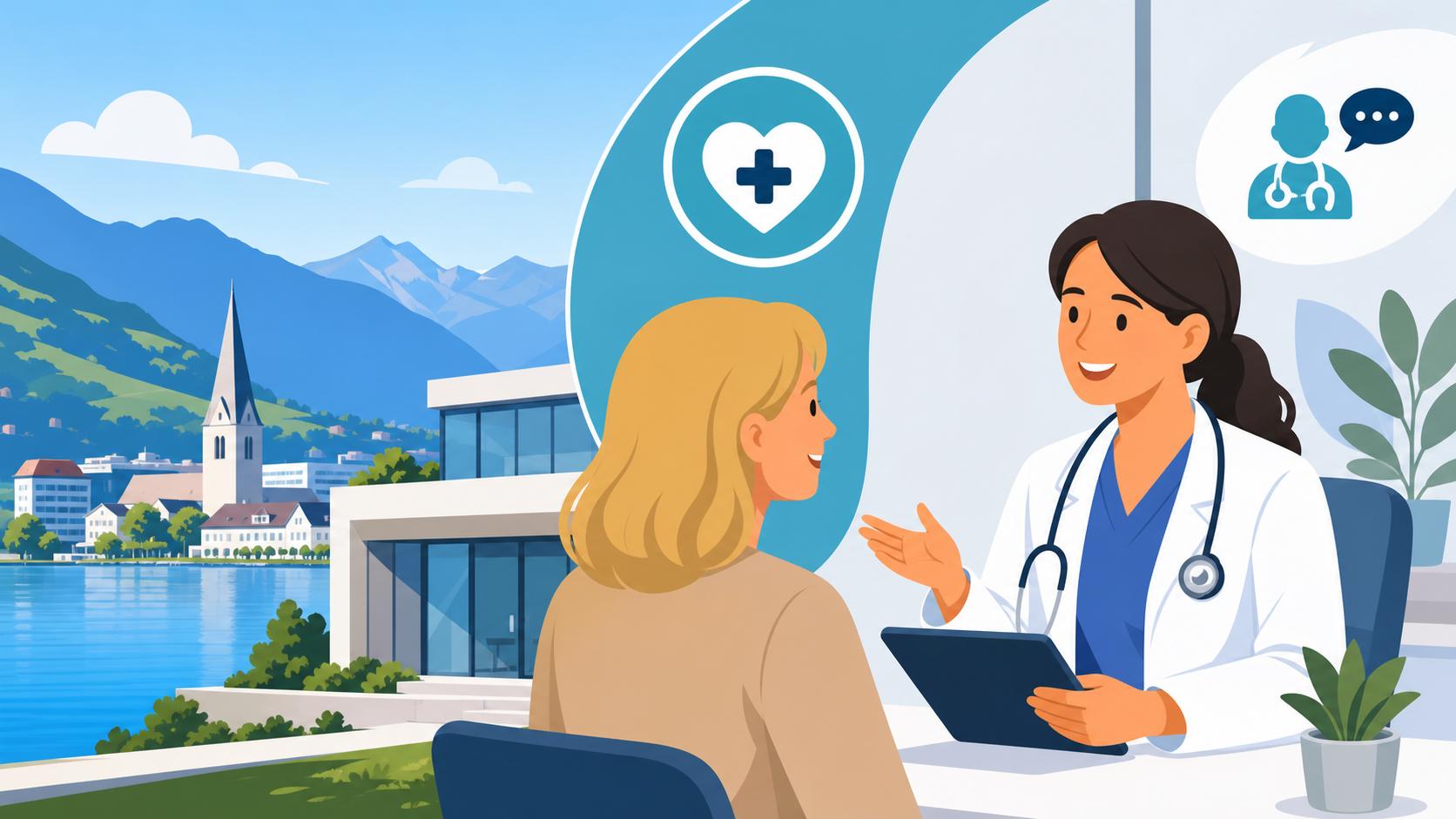
The peace of mind that comes with Finding an English-Speaking Family Doctor in Zug cannot be overstated. You want someone who understands the nuances of your medical history without a language barrier getting in the way. Many expats find that doctors in Zug are highly qualified, often having trained or worked in English-speaking countries. Once you find a good one, hang onto them—they are your primary link to the rest of the medical system, including referrals to specialists at the private clinics.
Top Hospitals and Clinics in the Zug Region
Zug might be small, but its medical infrastructure is punchy. Whether you are living in the hills of Oberägeri or the bustling streets of Cham, you are never more than 15-20 minutes away from world-class care. The canton is divided primarily between the main public-access hospital and several prestigious private institutions.
Zuger Kantonsspital in Baar
The Zuger Kantonsspital, located in Baar, is the backbone of the canton's medical services. It is a modern, highly efficient facility that handles everything from emergency trauma to routine births. One thing that surprised me when I first visited was how "non-hospital" it felt—lots of light, clean lines, and an incredible view of the surrounding mountains. Even as a "public" hospital, the level of care is what most would consider private in other countries.
The Kantonsspital is also where the main emergency room for the canton is located. If you have a serious incident in the middle of the night, this is likely where the ambulance will take you. They have an excellent neonatal department and a wide array of specialists on-site. For expats, the Kantonsspital is a reliable choice because they are very accustomed to dealing with various insurance providers and have a streamlined process for international residents.
AndreasKlinik (Hirslanden Group) in Cham
If you are looking for a more private, specialized environment, the AndreasKlinik in Cham is often the top choice for Zug expats. Part of the renowned Hirslanden Private Hospital Group, this clinic feels more like a five-star hotel than a medical facility. It is particularly well-known for its maternity ward and orthopedic surgery. Many expat families I know have chosen to give birth here because of the personalized attention and the option for private rooms that feel like suites.
To access the full suite of services at AndreasKlinik without a massive bill, you typically need semi-private or private supplementary insurance. This is where a plan from Cigna Global can be particularly useful, as it often bridges the gap for those who want the Hirslanden experience but perhaps didn't sign up for Swiss supplementary insurance in time. The clinic's staff is almost entirely bilingual, making the entire experience from check-in to discharge incredibly smooth for English speakers.
Specialized Private Clinics in Zug and Cham
Beyond the big two, Zug is dotted with specialized clinics focusing on everything from dermatology to sports medicine. For example, the Sportsmed Clinic in Zug is a go-to for the many weekend warriors who spend their winters on the slopes and summers hiking the Rigi. These clinics often operate on an appointment-only basis and provide highly focused care that larger hospitals might not prioritize.
| Facility Name | Location | Primary Specializations | Patient Type |
|---|---|---|---|
| Zuger Kantonsspital | Baar | General, Emergency, Maternity | Public & Private |
| AndreasKlinik | Cham | Orthopedics, Maternity, Surgery | Private/Semi-Private |
| Medizinisches Zentrum Zug | Zug City | General Practice, Pediatrics | All Insurances |
| Permanence Zug | Zug Station | Urgent Care, Walk-in | All Insurances |
| Swiss 1 Chirurgie | Pfaeffikon/Zug | Specialized Surgery | Private/Specialized |
Navigating Pharmacies and Medication in Zug
The pharmacy system in Switzerland is incredibly regulated, which is both a blessing and a curse. You can't just pick up strong ibuprofen or certain cold medicines at the supermarket; you have to go to an "Apotheke." In Zug, pharmacies are plentiful, but they have strict opening hours that can catch you off guard if you're used to 24-hour drugstores.
Prescription Rules and the Notfallapotheke
Most medications that require a prescription in your home country will also require one here. When a doctor in Zug gives you a prescription, you can take it to any pharmacy. The pharmacist will often ask for your insurance card (VeKa) to see if they can bill your insurance company directly. This is a huge relief compared to the "pay and reclaim" systems found elsewhere.
If you find yourself in need of medication on a Sunday or at 2 AM, you'll need to find the "Notfallapotheke" or the pharmacy on duty. In Zug, the pharmacies rotate this responsibility, or you can go to the pharmacy at the Zug train station (Apotheke Dr. Stoffel), which has extended hours. Be aware that buying medication during "emergency hours" often comes with a small surcharge, usually around 20-50 CHF, which is standard across the country. I detailed the nuances of this in my post on Pharmacies and Medication: Prescriptions, Costs, and OTC Regulations.
Buying Over-the-Counter Medicine and Supplements
Let’s talk about the "Swiss price tag." Over-the-counter (OTC) medications like paracetamol or vitamin D can be eye-wateringly expensive at a local Zug pharmacy. I’ve paid 15 CHF for a box of generic painkillers that would cost 1 CHF in the UK or US. This is where many savvy expats turn to online options.
For supplements, vitamins, and niche health products that aren't available or are too expensive locally, I frequently use iHerb. They ship to Switzerland remarkably fast, and as long as you keep your order value within certain limits to avoid heavy customs fees, it’s a massive money-saver. Whether it's melatonin (which is hard to get OTC in Switzerland) or specific protein powders, iHerb is a staple in my expat toolkit. Just be sure to check Bringing Prescription Medication into Switzerland: Customs and Legal Limits if you are planning to order anything that might be classified as a controlled substance here.
Managing Chronic Medication Needs
If you are moving to Zug with a chronic condition, my advice is to bring at least a three-month supply of your medication and a translated letter from your current doctor. The local "Hausarzt" will need to see this to issue Swiss prescriptions. Some medications might have different brand names here, but the active ingredients are the same. If you are using a specific, high-cost medication, check with your insurance provider early on to ensure it's on the "specialty list" for reimbursement.
Specialized Care: Pediatricians, Dentists, and Women’s Health
Zug is an incredibly family-friendly canton, and this is reflected in the high quality of specialized care available for children and women. However, the costs and the way these services are insured can be quite different from what you might expect.
Pediatric Care in Zug
Finding a pediatrician (Kinderarzt) should be one of your first priorities if you have children. Most pediatricians in Zug are located in Baar or Zug city. They are the gatekeepers for all childhood vaccinations and developmental checks. The Swiss vaccination schedule might differ slightly from your home country, so bring your child's immunization record to the first appointment.
I’ve found that pediatricians in Zug are very supportive of expat families, often spending more time in consultations than I was used to back home. For more details on what to expect from the system, you should read about Maternity and Child Healthcare in Switzerland: From Pregnancy to Pediatrics. If your child gets sick outside of office hours, the Zuger Kantonsspital has a dedicated pediatric emergency department that is excellent.
Dental Care: The Out-of-Pocket Reality
Here is the "tough love" part of being an expat in Switzerland: basic health insurance does NOT cover dental care for adults. Unless it’s the result of a serious illness or an accident, you are paying 100% of the bill. And in Zug, those bills can be substantial. A simple cleaning and check-up can easily cost 200-300 CHF.
Because of this, many expats in Zug either travel across the border to Germany for dental work or ensure they have a separate dental insurance policy, though these can be hard to get if you already have existing issues. For a full breakdown of the costs and how to plan, check out Dental Care in Switzerland: Costs, Insurance Reality, and Alternative Options. For children, however, there are often school dental programs that provide basic check-ups at a subsidized rate, which is a small silver lining.
Women’s Health and Maternity Services
Gynecologists in Zug are generally high-caliber, and most speak perfect English. Routine screenings like Pap smears are covered by basic insurance, usually every three years after an initial period. If you are pregnant, the "maternity package" under Swiss basic insurance is actually quite generous—it covers the cost of check-ups, two ultrasounds (unless it's a high-risk pregnancy), and the birth itself without you having to pay the "franchise" or deductible.
Many expat women in Zug choose to give birth at the AndreasKlinik because of the more personal feel, but the Kantonsspital is also a fantastic option, especially if you have a high-risk pregnancy and want to be in a full-service hospital. If you're looking for Finding an English-Speaking Family Doctor in Zug who can handle basic women's health before referring you to a specialist, there are several great practices near the Metalli shopping center.
Emergencies and Crisis Protocols in Zug
No one likes to think about emergencies, but knowing what to do can save lives—and a lot of money. The emergency system in Switzerland is highly efficient, but it is not "free" like in some other countries.
When to Use the Emergency Room vs. a Walk-in Clinic
If you have a non-life-threatening issue—like a deep cut that might need stitches or a sudden ear infection—don't go to the hospital emergency room. Instead, head to a "Permanence." In Zug, the Permanence at the train station is a lifesaver. It’s a walk-in clinic that can handle most minor emergencies and is much cheaper and faster than the hospital ER.
The hospital ER should be reserved for true emergencies. If you do end up in the ER, be prepared to show your insurance card immediately. If you have international coverage through Cigna Global, make sure you have their emergency contact number and your policy details ready, as they can sometimes coordinate direct payment with the hospital, saving you from a massive upfront credit card charge.
REGA and Ambulance Costs
One of the most shocking things for new expats is learning that Emergency Medical Services: Ambulances, REGA, and Crisis Protocols are not fully covered by basic insurance. If you need an ambulance in Zug, it can cost upwards of 800-1,000 CHF, and basic insurance usually only pays 50% of that, up to a relatively low annual limit.
This is why almost every resident in Zug is a "patron" of REGA, the Swiss air rescue service. For a small annual contribution (usually around 40 CHF), REGA may waive the costs of a rescue if your insurance doesn't cover it. Given Zug's proximity to the mountains, REGA Membership: Why Expats Need Air Rescue Insurance in the Alps is a non-negotiable for anyone who enjoys the outdoors. I’ve seen people airlifted off mountains for minor breaks, and without REGA patronage, that bill could bankrupt you.
Emergency Numbers to Remember
- 144: Ambulance
- 117: Police
- 118: Fire Department
- 1414: REGA (Helicopter rescue)
- 145: Poison Control
I always tell my friends to put these numbers in their phone the day they land. In a crisis, your brain will forget the simplest things, and the Swiss dispatchers are generally very good at handling calls in English, though starting with a polite "Sprechen Sie Englisch?" goes a long way.
Managing Costs and Insurance as a Zug Expat
Living in Zug is expensive, and healthcare is a significant part of that budget. However, there are ways to manage these costs effectively if you understand the levers of the Swiss system.
Maximizing Your Insurance Value
The key to not overpaying for healthcare in Zug is matching your deductible to your health status. If you are young, healthy, and rarely see a doctor, go for the 2,500 CHF deductible. This will give you the lowest monthly premiums. If you have chronic conditions or are planning a family, the 300 CHF deductible is usually the better financial move.
Remember that you can only change your deductible once a year (usually by the end of November for a January 1st start). It’s also worth reviewing your Supplementary Health Insurance (VVG): What It Covers and When to Buy It annually. Some supplements cover things you might not expect, like gym memberships or alternative therapies like osteopathy, which are very popular in the Zug area.
Using Cigna Global for International Flexibility
For many expats in Zug, the "Swiss-only" nature of local insurance is a drawback. If you spend your summers in the Mediterranean or winters back in your home country, you might want a policy that follows you. Cigna Global offers modular plans that can be tailored to include or exclude the USA, and they provide a level of service that is very familiar to those used to private healthcare in the US or UK.
While you cannot use Cigna Global to replace your mandatory Swiss KVG (unless you fall into very specific exemption categories like certain diplomats or international students), it is an excellent top-up. It ensures that if you want a specialist in London or a second opinion in New York, you aren't tied down by the Swiss borders. In a town as international as Zug, this kind of flexibility is often a top priority.
Budgeting for Health-Related Expenses
When planning your monthly budget in Zug, don't just look at the insurance premium. You need to account for the "deductible" and the 10% co-pay (up to 700 CHF per year) that you will have to pay out of pocket. I always recommend keeping a "health rainy day fund" of at least 3,200 CHF per person (2,500 deductible + 700 max co-pay) in a separate account like Wise or a local neobank. This ensures that a sudden medical issue doesn't become a financial crisis.
Furthermore, don't forget the hidden costs of health, like high-quality supplements. Using iHerb for your regular vitamins and minerals can easily save you 500-1,000 CHF over a year compared to buying those same items at an Apotheke in Zug. It’s these small local tips that make the difference between just surviving in Switzerland and actually thriving.
Disclaimer
This guide is for informational purposes only and is based on the author's personal experience as an expat in Switzerland. Healthcare laws and insurance regulations are subject to change. Always consult with an official insurance advisor or the Cantonal Health Office (Gesundheitsdirektion) in Zug for the most current and personalized advice.