Utilities in Switzerland: Electricity, Water, Heating, and Internet Setup
You’ve finally secured that apartment in Zurich or Geneva, but now you’re staring at a lease agreement that mentions things like Akonto and Nebenkosten without much explanation. I remember my first week in Basel, feeling completely overwhelmed by the lack of clear instructions on how to actually turn on the lights or get a Wi-Fi signal. This guide breaks down every aspect of Swiss utilities so you can avoid the administrative headaches and expensive surprises I faced.
Understanding the Swiss Utility Landscape
In Switzerland, utilities are rarely a "one-stop-shop" experience. Depending on where you are from, you might be used to choosing your electricity provider in a competitive open market. In Switzerland, however, electricity and water are typically managed by regional monopolies owned by the canton or the municipality. This means your address determines your provider, and you generally cannot switch for a better rate. While this simplifies the "who" part of the equation, it makes the "how much" and "how to register" parts slightly more rigid.
One of the most confusing aspects for new arrivals is the distinction between what is included in your rent and what you must pay for separately. Most rental contracts in Switzerland are based on a "net rent" plus "Nebenkosten" (ancillary costs) structure. Understanding these costs is the first step in mastering your household budget. If you are still in the early stages of your move, you might find that using a platform like HousingAnywhere to find a serviced apartment can help bridge the gap, as many of those listings include utilities in the headline price, saving you the initial registration struggle.
The Concept of Nebenkosten
Nebenkosten covers the shared costs of living in a building. This typically includes heating, hot water, communal electricity (for the hallway lights and elevators), the caretaker’s salary (Hauswart), and snow removal in the winter. Usually, you pay a fixed monthly amount as a "down payment" (Akonto). At the end of the year, the landlord calculates the actual usage for the entire building and your specific unit, then sends either a bill for the deficit or a refund for the surplus.
I’ve had years where I received a nice CHF 300 refund because the winter was mild, and other years where I was hit with a CHF 500 bill because the price of heating oil spiked. It is vital to read your Renting in Switzerland: The Complete 2027 Guide for Expats carefully to see exactly what is included. Some landlords use a "Pauschal" system, where the amount is fixed regardless of usage, but the Akonto system is far more common. Keep an eye on your heating habits, as this is where most expats see their costs spiral.
Regional Providers and Registration
When you move into a new flat, the registration process for electricity is usually your responsibility, while water and heating are handled through the building management. In major cities, you will deal with entities like EWZ in Zurich, SIG in Geneva, or IWB in Basel. These are massive, cantonal-owned companies that handle everything from power grids to fiber optic infrastructure.
The registration is usually tied to your official move-in date. During the Swiss Apartment Handovers (Wohnungsübergabe): Protocols and Deposits, the landlord or agent will record the meter readings for electricity and sometimes water. You should take a photo of these meters yourself. You then provide these readings to the utility company when you register. Most of these providers now have English portals, but be prepared for some German, French, or Italian paperwork depending on your canton.
Electricity in Switzerland: Keeping the Lights On
The Swiss electrical system is remarkably stable, but it comes with its own set of rules and technical quirks. First off, Switzerland uses the Type J plug (three round pins), which is different from the standard European Type C. While many Type C plugs fit into Swiss sockets, anything requiring a ground pin will need an adapter. I quickly learned that buying these at the airport is a mistake; it is much cheaper to order a bulk pack from Amazon Germany once you have your Swiss address.
Electricity billing is typically done quarterly. You won't get a bill every month, which can lead to budgeting issues if you aren't careful. The bill will show your consumption in kilowatt-hours (kWh) and will often be divided into several components: the energy cost itself, the grid usage fee, and various federal and cantonal taxes for renewable energy promotion.
Registering with your Local EW
In Zurich, you will likely be Registering for Electricity with EWZ in Zurich. The process is relatively straightforward and can often be done online. You will need your move-in date, your new address, and the "meter number" or "meter ID," which is usually found on a sticker on the fuse box or the meter itself. If you are moving to the French-speaking part, you will be Registering for Electricity with SIG in Geneva.
The important thing is not to wait. While the power is rarely turned off between tenants, failing to register can lead to administrative fees or the previous tenant’s usage being billed to you. If the previous tenant was a "power user" and you are a minimalist, you don't want to get stuck with their final bill because the meter readings weren't properly documented.
Tariffs and Peak Off-Peak Pricing
Most Swiss utility companies offer a "High Tariff" (Hochtarif) and a "Low Tariff" (Niedertarif). This is designed to encourage people to use heavy appliances during off-peak hours to balance the load on the grid. Low tariff hours usually start at 8:00 PM or 9:00 PM and run until 6:00 AM or 7:00 AM, plus the entire weekend.
If you have a washing machine in your apartment, running it at night can save you a significant amount over a year. However, you must be mindful of Quiet Hours (Ruhezeiten): Sunday Rules for Laundry, Mowing, and Noise. In many older buildings, the vibrations from a washing machine at 11:00 PM will result in a very "Swiss" complaint from your neighbors. Balancing the low tariff savings with social etiquette is a skill every expat must master.
Green Energy and Sustainability Choices
Switzerland is a world leader in hydroelectric and nuclear power. When you sign up for electricity, you will often be given a choice of "products." The standard product is usually a mix of hydro and other renewables. You can often opt for a slightly more expensive 100% local solar or wind product, or a cheaper "basic" mix that might include international certificates.
I personally opt for the local hydro mix. It’s only a few francs more per month, and it supports the local infrastructure. Most providers are very transparent about where their energy comes from. If you are living in a newer "Minergie" certified building, your electricity consumption will already be quite low due to high-efficiency appliances and lighting. For any extra lamps or smart home gadgets, I find that Amazon Germany offers a much wider selection of energy-efficient LED bulbs than local grocery stores.
Water and Sewerage: Alpine Quality at the Tap
Water in Switzerland is a point of national pride. It is almost all potable, extremely high quality, and relatively inexpensive compared to other European countries. In most rental situations, your water usage is part of the Nebenkosten. However, if you are renting a detached house or living in certain cantons, you might receive a separate water bill from the municipality.
The billing is usually split into "freshwater" and "wastewater" (sewerage). The wastewater fee is often based on your freshwater consumption, assuming that what goes in must eventually go out. Some municipalities also charge a flat fee based on the number of taps or bathrooms in the property.
Water Quality and Consumption
Is it safe to drink? Absolutely. In fact, people often ask: Water Quality in Switzerland: Is It Safe to Drink from Fountains? The answer is yes, unless there is a sign explicitly stating otherwise. This means you can save hundreds of francs a year by not buying bottled water. The tap water is often better than what you find in plastic bottles.
However, be aware that Swiss water can be quite "hard" (high in calcium and magnesium). This leads to limescale buildup in kettles, coffee machines, and showerheads. I recommend buying a descaling agent (Entkalker) or a water filter pitcher. Neglecting this can actually damage the appliances provided by your landlord, and they might deduct the repair costs from your deposit when you move out.
Billing via the Municipality
If your water isn't included in your rent, the municipality will send you a bill once or twice a year. This is one of those bills that can easily be forgotten because it arrives so infrequently. Unlike electricity, which has a private (though monopolized) feel, water is strictly a public service.
If you are a G Permit (Cross-Border Commuter): Complete Guide for Frontier Workers, you might find the water billing systems in France or Germany very different from the Swiss model. In Switzerland, the emphasis is on high maintenance of the infrastructure, so while the water itself is cheap, the service fees that keep the pipes in top condition are what you are really paying for.
Heating and Hot Water: Navigating the Winter Chill
Heating is the single largest component of most utility budgets in Switzerland. Because the winters can be long and the mountains are never far away, the heating season usually runs from October to April. Most Swiss apartments use a central boiler system for the entire building, powered by heating oil, natural gas, or increasingly, geothermal heat pumps.
The way this is billed can be a source of major friction between tenants and landlords. Because the heat is often shared, the building manager uses small meters attached to each radiator (calorimeters) to estimate your specific usage.
Centralized vs. Decentralized Systems
In a centralized system, the building's heat is turned on on a specific date, often when the outside temperature stays below a certain threshold for three consecutive days. You don't have control over the "master switch," but you can control the valves on your individual radiators.
Decentralized systems, where you have your own gas boiler or electric heater, are rarer in cities but common in older rural houses. These give you total control but mean you are responsible for the maintenance and the direct fuel bills. If you are Comparing Health Insurance Models: Telmed, HMO, Family Doctor, and Standard, you know that Swiss systems love to offer "models"—heating is no different, though you are usually stuck with whatever the building has installed.
The Annual Heating Bill Reconciliation
The dreaded Heizkostenabrechnung usually arrives in the early summer. This document reconciles the Akonto payments you made with the actual costs the building incurred. If it was a particularly cold winter or if global energy prices rose, your monthly payments might not have been enough.
I always suggest setting aside a small "buffer" of a few hundred francs for this bill. It’s also worth checking if your radiators are bleeding air or if your windows are leaking heat. If you feel your bill is unfairly high, you can join the Mieterverband (Tenants' Association) to have them review the calculations. They are experts at spotting when a landlord is trying to pass off general building maintenance as heating costs.
Setting Up High-Speed Internet and TV
Switzerland has some of the best internet infrastructure in the world, with fiber optic (FTTH) reaching even remote alpine villages. However, it is also some of the most expensive. When you move in, you need to identify your OTO (Optical Termination Outlet) socket. This is a small box on the wall with a unique ID number. You will need this number to sign up for any fiber service.
If you are moving into a temporary space or haven't settled on a provider yet, I highly recommend using an Airalo eSIM for your phone to stay connected. It’s a lifesaver when you’re sitting in an empty apartment waiting for the router to arrive.
Comparing the Big Three
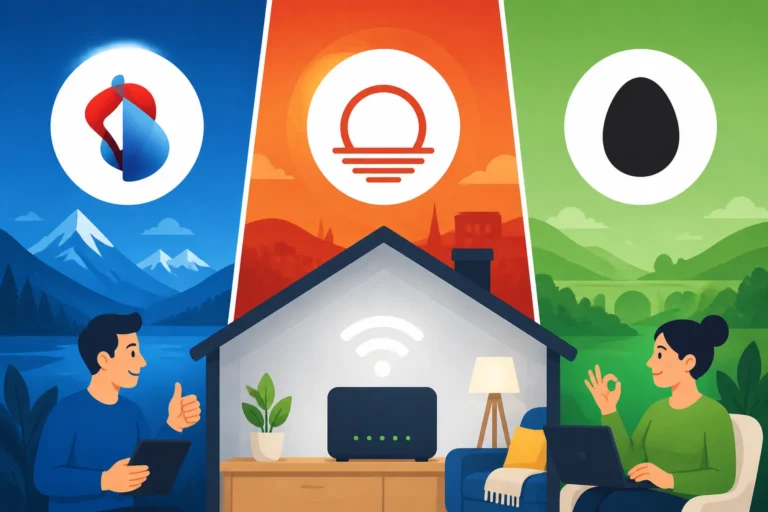
The market is dominated by Swisscom, Sunrise, and Salt. For a deep dive, see Setting Up Swiss Home Internet: Swisscom, Sunrise, and Salt Compared.
| Provider | Pros | Cons | Best For |
|---|---|---|---|
| Swisscom | Best coverage, top-tier support, highly reliable. | Most expensive, long contracts. | Families and home offices. |
| Sunrise | Good bundles with TV, often has "half-price" deals. | Support can be slow, complex billing. | Price-conscious power users. |
| Salt | Incredible speeds (up to 10Gbps), very cheap for Salt mobile users. | Fiber-only, customer service is hit or miss. | Tech enthusiasts in fiber-ready areas. |
Fiber Optic Availability and Installation
Before you sign a contract, check the availability on the provider's website using your exact address. Not every building has fiber yet. If your building only has copper (DSL) or cable (DOCSIS), your speeds will be lower. Swisscom owns most of the infrastructure, but they are legally required to lease it to competitors.
Installation is usually "plug and play" if the OTO socket is already active. If a technician needs to come out, be prepared to wait 5-10 working days. This is another reason why having a backup like Airalo or a mobile hotspot is essential during your first week. I’ve spent two weeks tethering my laptop to my phone because I underestimated the Swiss bureaucracy involved in "activating" a line that was already physically there.
Budget Brands and Fiber-Speed Tricks
If the "Big Three" are too expensive, look at their sub-brands. Wingo (owned by Swisscom) and Yallo (owned by Sunrise) offer the same networks for about 40% less. The trade-off is that everything is handled online; there is no shop to walk into if your router breaks.
For the best experience, always use an Ethernet cable for your main work computer. Swiss walls are often made of thick reinforced concrete, which is the natural enemy of Wi-Fi signals. If you find your signal dropping in the bedroom, you might need a mesh Wi-Fi system. You can easily find these on Amazon Germany for much less than the "official" boosters sold by the telecom companies.
Garbage and Recycling: The Waste Utility
In Switzerland, garbage disposal is treated as a utility that follows the "polluter pays" principle. This means you don't just pay a flat tax; you pay for every bag of trash you produce. This is managed through the use of official, taxed garbage bags.
The Zuri-Sack and Beyond
Each city or canton has its own bag. In Zurich, it’s the Züri-Sack; in Basel, the Bebbi-Sagg; in Bern, the Gebührensack. You can only buy these at the customer service desk or checkout of major supermarkets like Coop or Migros. If you put out a normal black bin bag, the "trash police" will literally rip it open to find an envelope with your name on it and fine you hundreds of francs.
For a full breakdown of the mechanics, see Swiss Recycling Rules: Cantonal Paid Garbage Bags (Züri-Sack, Bebbi-Sagg). This system is incredibly effective at encouraging recycling, as recycling paper, cardboard, glass, and aluminum is usually free. The more you recycle, the fewer expensive bags you have to buy.
Recycling Schedules and Rules
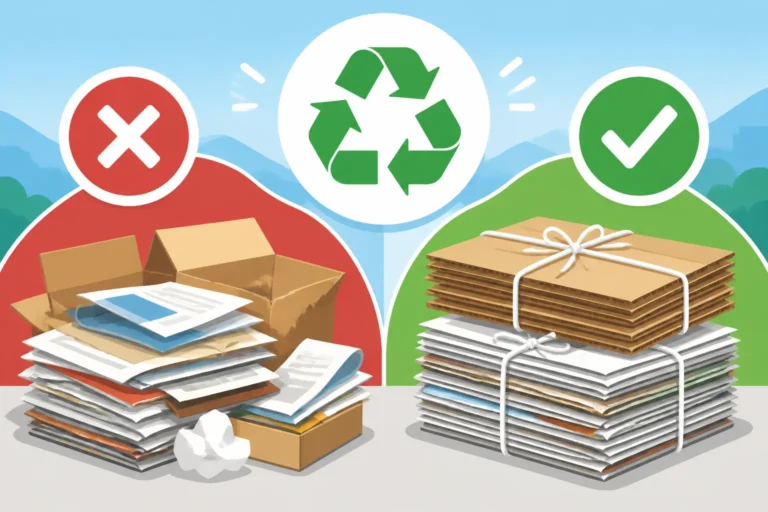
Recycling is a disciplined affair. Paper and cardboard are collected from your doorstep on specific days—usually once or twice a month. You must bundle them tightly with string; no tape allowed! If your bundle is messy, the collectors will simply leave it there with a "shame" sticker.
Glass, aluminum, and PET plastic must be taken to local "recycling islands." These are usually located near supermarkets or in neighborhood squares. Be careful: you are generally only allowed to drop off glass during certain hours (e.g., 7:00 AM to 8:00 PM) and never on Sundays or public holidays. The sound of clinking glass on a Sunday is enough to bring a whole neighborhood’s wrath upon you.
Telecoms and Staying Connected
Beyond your home internet, your mobile plan is your lifeline. Switzerland is not part of the EU, which means EU roaming regulations do not automatically apply here. If you have a French or German SIM card, you might get hit with massive roaming fees the moment you cross the border.
Mobile Subscriptions vs. Prepaid
If you are on a Student Visas in Switzerland: From Application to Post-Graduation Work, you might find it hard to get a long-term contract without a permanent permit. In this case, prepaid is your best friend. Most providers offer prepaid SIMs that you can top up at any kiosk or through an app.
For those staying longer, a subscription (Abo) is better. Many plans now include unlimited data and calls within Switzerland, and the higher-tier plans include roaming in the EU and North America. Always look for "lifetime" discounts; Swiss providers often run promos where a CHF 80 plan is offered for CHF 25 "for life" as long as you don't cancel.
Staying Online Abroad and at Home
If you travel frequently, check if your plan includes "Roaming." If not, don't use your Swiss data abroad—it’s extortionate. Instead, use Airalo to get a local data pack for wherever you are going. It’s integrated directly into your phone and saves you from the "bill shock" of a CHF 500 roaming charge for a weekend in Italy.
At home, make sure you set up The Serafe Fee 2026: Paying the Mandatory CHF 335 Media Tax. This is the mandatory TV and radio license fee that every household must pay, regardless of whether you actually own a TV. It’s billed annually per household, so if you live in a shared flat (WG), you only need to pay one fee between all of you.
Summary of Estimated Monthly Utility Costs for a 1-Person Household
| Utility | Estimated Monthly Cost (CHF) | Payment Frequency |
|---|---|---|
| Electricity | 40 – 70 | Quarterly |
| Water / Heating (Nebenkosten) | 150 – 250 | Monthly (included in rent) |
| Home Internet (Fiber) | 40 – 90 | Monthly |
| Mobile Plan | 20 – 60 | Monthly |
| Garbage Bags | 10 – 20 | As needed |
| Serafe (Media Tax) | ~28 | Annually (CHF 335 total) |
Disclaimer
The information provided in this guide is for general informational purposes only and does not constitute legal or financial advice. Utility regulations, providers, and costs in Switzerland can vary significantly by canton and municipality. While we strive to keep information up to date, the 2026 landscape may be subject to changes in federal law or regional tariffs. Always consult your rental agreement and local utility providers for the most accurate and specific information regarding your residence.