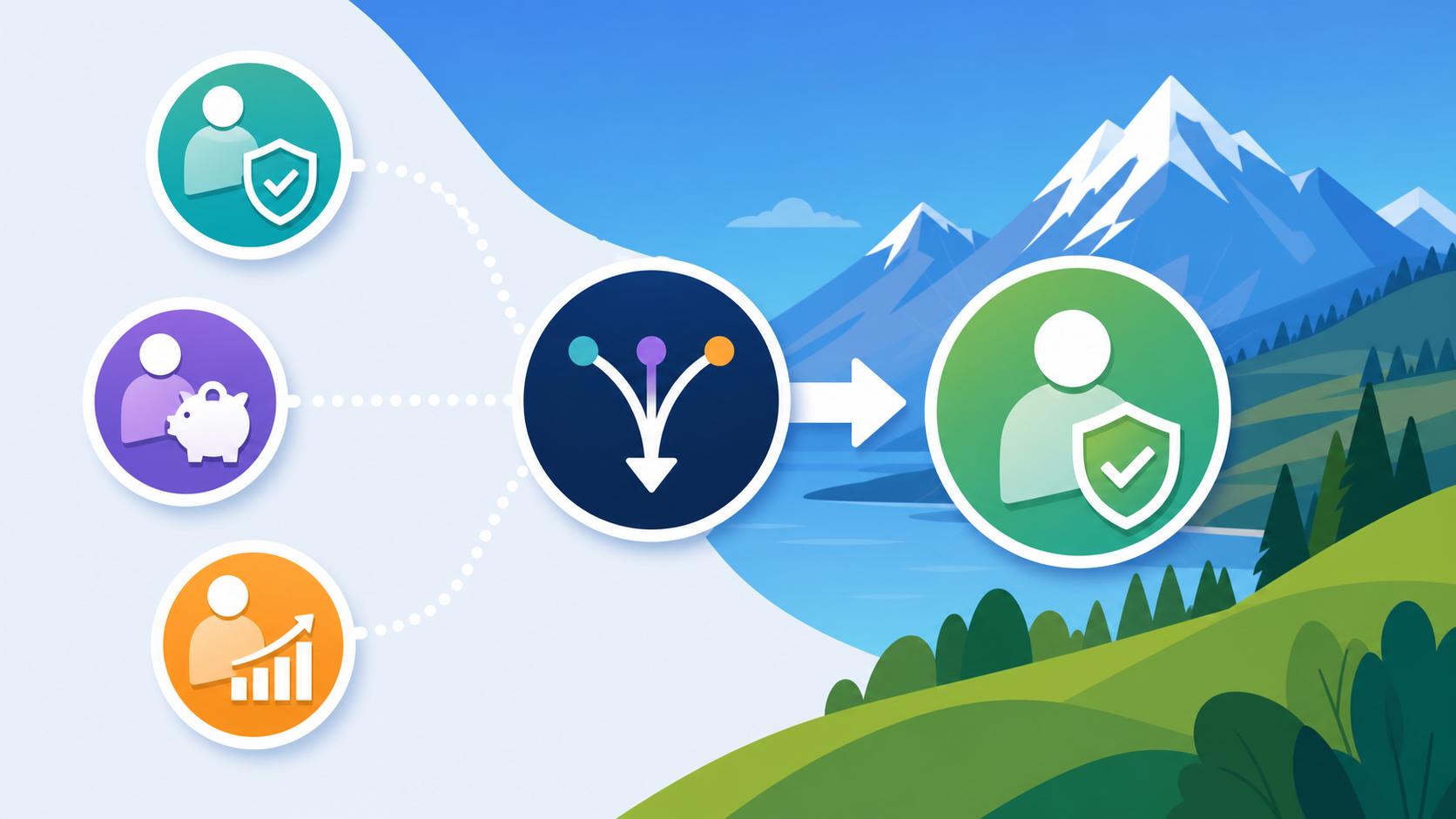
How to Consolidate Multiple Vested Benefit Accounts into One
Most expats arrive in Switzerland, work a few years across different companies, and eventually realize their pension money is scattered across various foundations they can barely name. I spent my first five years here completely ignoring those mysterious letters from the 2nd Pillar until I realized my retirement savings were slowly being eaten by administrative fees. This guide provides a clear path to finding and consolidating your scattered vested benefit accounts into one manageable, high-performing home.
The Chaos of the Swiss Pension Trail
If you have lived in Switzerland for more than a few years and changed employers even once, you likely have more than one pension pot. In the Swiss system, your occupational pension—known as the 2nd Pillar or BVG—is tied to your current employer. When you leave a job, that money doesn't just sit in the old company's vault. It must be moved to your new employer's pension fund. However, if you take a break, move to a company with a different pension structure, or leave the country temporarily, the money often ends up in a holding pen: the vested benefits account, or Freizügigkeitskonto.
Why You Likely Have Multiple Accounts
The most common reason for account fragmentation is the "gap year" or the transition period between jobs. When you resign, your previous employer is legally required to transfer your accumulated capital. If you don't provide them with the details of a new pension fund or a specific vested benefits foundation within a certain timeframe, they will eventually send the money to the Substitute Occupational Benefit Institution (Stiftung Auffangeinrichtung BVG).
I have seen fellow expats realize they had three different accounts simply because they did not understand that the transfer isn't always automatic. If you went from a full-time role to a period of Freelancing and Entrepreneurship: Setting Up a Business in Switzerland, your 2nd Pillar might be sitting in a low-interest bank account without you even realizing it. Other triggers include maternity leave where the workload drops below the entry threshold for the BVG, or periods of unemployment where you are registered with the RAV.
The True Cost of Pension Fragmentation
You might wonder why it matters if your money is in three places instead of one. The reality is that Switzerland is a land of administrative fees. Each foundation charges for the maintenance of the account, and while these might seem small, they compound over decades. More importantly, when your money is scattered, you lose the ability to implement a coherent investment strategy.
Small pots of money often sit in "cash" accounts earning near-zero interest. In an inflationary environment, your hard-earned Swiss francs are actually losing purchasing power. By consolidating, you can reach the minimum thresholds required to invest in more aggressive, higher-yielding funds that align with your overall strategy for Banking and Finance for Expats in Switzerland: The 2027 Guide. It is much easier to manage one robust portfolio than to track four different logins and paper statements every March.
Identifying and Tracking Your Scattered Assets
Before you can consolidate, you have to know what you are looking for. Many expats lose track of these accounts because they move apartments and forget to update their address with the old pension foundation. Since the 2nd Pillar is managed by private foundations rather than a central government office, there is no single "log-in" to see all your wealth.
Utilizing the Central Vested Benefits Office
The first step for anyone who has lost the paper trail is to contact the Zentralstelle 2. Säule (Central Vested Benefits Office). This is the national "lost and found" for Swiss pensions. They don't hold the money themselves, but they act as a clearinghouse. Every year, pension foundations report the names of individuals with dormant accounts to this office.
You can submit a search request for free. They will cross-reference your AHV number—the 13-digit number found on your health insurance card—against their database. It usually takes a few weeks to get a response, but it is the only way to be 100% sure you haven't left money on the table. Understanding Pillar 2 (BVG): Understanding Your Swiss Occupational Pension is vital here, as it helps you identify which former employers might have triggered these transfers.
Digital Tools and Modern Aggregators
The Swiss fintech scene has made finding these accounts much easier. Several digital-first vested benefit foundations now offer "pension hunting" services. When you open an account with a modern provider, they often include a feature where they handle the paperwork to find your old accounts for you.
They essentially act as your representative, querying the central office and then facilitating the transfer. This is a massive relief for those of us who break into a cold sweat at the sight of a German-language PDF form. Using these tools is often the most efficient way to handle Freizügigkeitskonto: Managing Vested Pension Benefits Between Jobs without spending hours on the phone with HR departments from your past.
The Step-by-Step Consolidation Process
Once you have identified your accounts, the actual movement of money is relatively straightforward, but it requires precision. You cannot simply withdraw the cash and deposit it elsewhere; the money must move directly from one "pension-approved" institution to another to maintain its tax-advantaged status.
Choosing Your New Destination Foundation
You have two main options for where to consolidate your funds: a traditional bank-held vested benefits account or a specialized investment foundation.
Traditional bank accounts are safe but offer almost no growth. If you are decades away from retirement, this is rarely the best choice. Investment foundations allow you to put your 2nd Pillar money into stocks, bonds, or real estate. Given the stability of the Swiss franc, many expats choose to keep their core savings in CHF but use platforms like Trade Republic for their personal, non-pension investments. For the pension itself, you want a provider with low management fees (below 0.50% if possible) and a high "equity component" if your risk tolerance allows.
Executing the Transfer Paperwork
After selecting your new foundation, you will need to request a "transfer of vested benefits" form from them. You then send this form to the institution currently holding your money.
| Step | Action Item | Documentation Needed |
|---|---|---|
| 1 | Open New Account | Passport, Swiss Permit, AHV Number |
| 2 | Request Transfer Form | Provide AHV number and old policy number |
| 3 | Submit to Old Foundation | Signed transfer order with new IBAN |
| 4 | Verify Receipt | Bank statement showing the incoming BVG capital |
| 5 | Update Personal Records | Save the "Closing Statement" for tax purposes |
Be prepared for a wait. While Switzerland is efficient, pension foundations can take 30 to 60 days to liquidate your old holdings and wire the money. They may also charge a small exit fee, though this is usually offset within the first year of better performance in a consolidated account. If you are planning on Leaving Switzerland Financially: Closing Accounts and Pension Payouts, consolidation is an absolute prerequisite to making that exit smooth.
Maximizing Returns and Investment Strategies
Consolidation isn't just about tidying up your digital life; it’s about making your money work. When you have CHF 100,000 sitting in a single account rather than five accounts of CHF 20,000, you gain access to institutional-grade fund shares that carry lower costs.
Cash vs. Market Exposure
The biggest mistake I see is "set it and forget it" in a cash account. In the current economic climate, holding 100% cash in your 2nd Pillar is a guaranteed way to lose value against the cost of living. You should ask yourself: when do I realistically need this money? If the answer is "in more than 10 years," you should consider a higher equity split.
Many modern providers allow you to choose your strategy. You can go for a sustainable ESG-focused fund or a standard global index tracker. While you are managing your pension, you might also be using Binance for a tiny percentage of your high-risk "play" money, but your 2nd Pillar should be the bedrock of your strategy. Consolidating allows you to see the "Big Picture" and ensure your total asset allocation—including what you hold in Pillar 3a in 2026: Tax Deductions, Limits, and Investment Options—isn't heavily over-weighted in one sector.
Tax Implications and Strategic Withdrawals
Consolidating into one account can also be a strategic move for future tax planning. In Switzerland, when you eventually withdraw your pension capital, you are taxed at a reduced rate, but it is still a significant hit. Some savvy expats actually choose to keep two consolidated accounts rather than one.
Why? Because you can withdraw them in different calendar years, which can keep you in a lower tax bracket for each withdrawal. This is a "pro-move" that requires careful coordination. If you have already looked into How to Choose the Right Deductible (Franchise) for Your First Year, you know that Swiss finance is all about the small, calculated decisions. Consolidation gives you the control to make these choices, rather than letting the foundations dictate your timeline.
Special Considerations for International Residents
For us expats, the pension isn't just a local concern; it is a global one. If you are an American citizen, for example, the way your Swiss 2nd Pillar is invested can have complex implications for your US tax returns. Consolidating into a transparent, English-friendly foundation makes it much easier to report your holdings to the IRS or other foreign tax authorities.
Moving Money Abroad
If you decide to leave Switzerland permanently, having all your funds in one place makes the payout process significantly faster. If you are moving to a non-EU country, you can often withdraw the full cash amount. If you are moving to the EU, the "mandatory" portion of your 2nd Pillar must usually stay in a Swiss vested benefits account until you reach retirement age. In these cases, you want that money in a low-fee, high-growth consolidated account where it can grow for decades while you are living in Spain or France.
When you do eventually move funds across borders, using a service like Wise is often the most cost-effective way to handle the currency exchange, as traditional Swiss banks can be quite expensive with their hidden margins on large transfers. This is especially relevant when navigating Withdrawing Pillar 2 When Moving to an EU Country: Rules and Restrictions where every percentage point matters for your relocation budget.
The Role of the Spouse in Pension Assets
Finally, remember that in Switzerland, pension assets are considered joint property in the event of a divorce or for inheritance. Consolidating your accounts makes it much easier to provide a clear financial picture for your family. If the unthinkable happens, your heirs will only have to contact one foundation rather than hunting through your old email archives for five different policy numbers. This level of organization is part of the "integration" process that goes beyond just learning the language; it is about mastering The Three-Pillar Pension System: AHV, BVG, and Private Savings to protect your family's future.
Legal Disclaimer
The information provided in this guide is for informational purposes only and does not constitute financial, legal, or tax advice. The Swiss pension system is subject to frequent legislative changes, and individual circumstances can vary significantly based on canton of residence, permit type, and nationality. You should consult with a qualified Swiss fiduciary (Treuhänder) or a certified financial planner before making significant changes to your pension structure or investment strategy. The author is a veteran expat sharing personal experiences and research, not a licensed financial advisor.