How to Officially Leave the Church in Switzerland to Stop Kirchensteuer
When you first arrived in Switzerland and stood at the communal desk to register, you likely encountered a small box on a form asking for your religion. Many expats, including myself, tick a box out of cultural habit or childhood tradition without realizing it is essentially a financial contract. This guide solves the mystery of the Swiss Church Tax and provides the exact steps to stop these mandatory monthly deductions from your paycheck.
Understanding the Swiss Church Tax System
The first time I saw my Swiss salary certificate, I was baffled by a line item deducting a significant chunk of change for a church I hadn't visited since my cousin’s wedding three years prior. In Switzerland, the relationship between church and state is unique. Unlike many countries where tithing is a private matter of conscience, several Swiss cantons have a legal framework that allows the state to collect taxes on behalf of the "Landeskirchen" (National Churches). This usually includes the Roman Catholic, Christian Catholic, and Protestant Reformed churches.
The logic behind this system is deeply rooted in Swiss history, where the churches provided social services, education, and record-keeping for centuries. Even today, the churches argue that the Kirchensteuer (Church Tax) funds social programs, youth centers, and heritage building maintenance. However, for an expat trying to navigate the Cost of Living in Switzerland 2026: Budgeting for Singles and Families, this additional 1% to 2.3% tax on top of your income tax can feel like a heavy burden you didn't knowingly sign up for.
It is important to understand that if you declared a religion upon arrival, you are legally a member of that parish. The tax office doesn't care if you attend mass; they only care about your registration status. If you are a B-permit holder, you will see this reflected in your Understanding Swiss Payslips: Deductions for AHV, ALV, and NBU, where the tax is automatically withheld.
The Cost of Faith: How Much Are You Actually Paying
The amount you pay in church tax depends entirely on two factors: your taxable income and your canton of residence. Each canton and even each municipality (Gemeinde) sets its own multiplier for the church tax. In some regions, like Zurich or Bern, the tax can be quite substantial, often amounting to several hundred or even over a thousand francs per year for high earners.
For many expats, the realization hits when they see their Withholding Tax (Quellensteuer) vs Standard Taxation for Foreigners calculations. Because the church tax is calculated as a percentage of your basic cantonal tax, as your salary grows, so does your "donation." In a high-earning household, leaving the church can be the equivalent of a significant annual pay rise.
| Canton | Mandatory Church Tax? | Average Rate (Percentage of Cantonal Tax) |
|---|---|---|
| Zurich | Yes | 10% – 12% |
| Geneva | No (Voluntary) | N/A |
| Vaud | Yes | Included in general tax |
| Zug | Yes | 9% – 11% |
| Basel-Stadt | Yes | 8% – 10% |
| Neuchâtel | No (Voluntary) | N/A |
| Ticino | Yes | 10% – 15% |
Note that Geneva and Neuchâtel are the exceptions where church and state are strictly separated, and payments are truly voluntary. In all other cantons, if you are registered as a member, the tax is mandatory. This is why Registering Your Religion on Your Residency Form: Tax Implications is one of the most critical things to understand during your first week in the country.
Step One: Drafting Your Resignation Letter
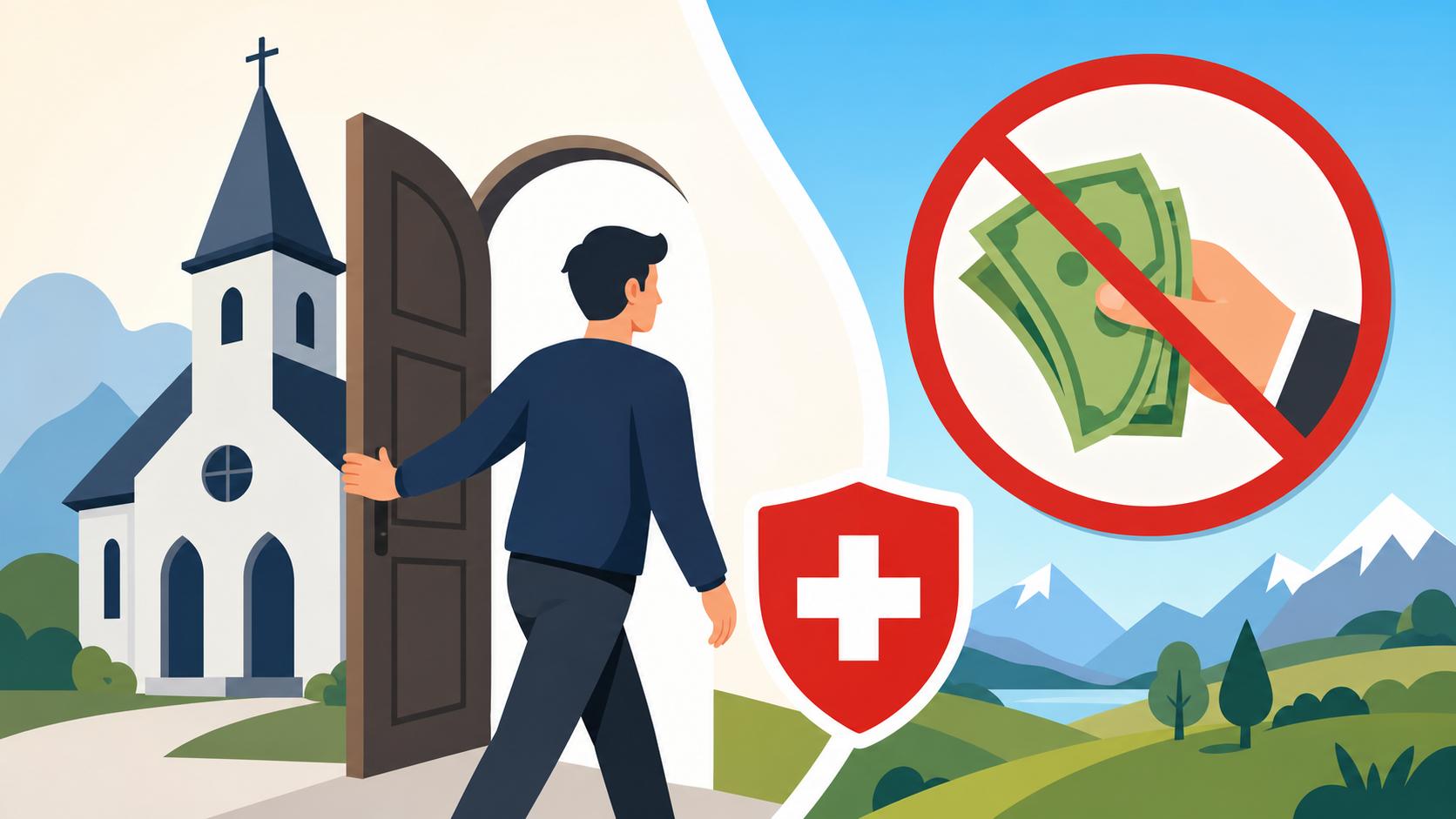
The process of leaving the church, known as "Kirchenaustritt," is a formal bureaucratic procedure. You cannot simply tell the person at the tax office that you are no longer religious. You must officially resign from the specific parish where you are registered.
Your letter must be written in the local language (German, French, or Italian) depending on your canton. It doesn't need to be a theological manifesto; in fact, the shorter and more formal, the better. You do not need to provide a reason for leaving. A simple statement saying "I hereby declare my exit from the [Church Name] effective immediately" is sufficient.
Make sure to include your full name, your address, your date of birth, and your AHV number. If you know when and where you were baptized, including that information can help the parish office locate your records faster. I learned the hard way that without these specifics, the parish might claim they "couldn't find you" in their books, delaying the process by months.
Step Two: Sending the Declaration via Registered Mail
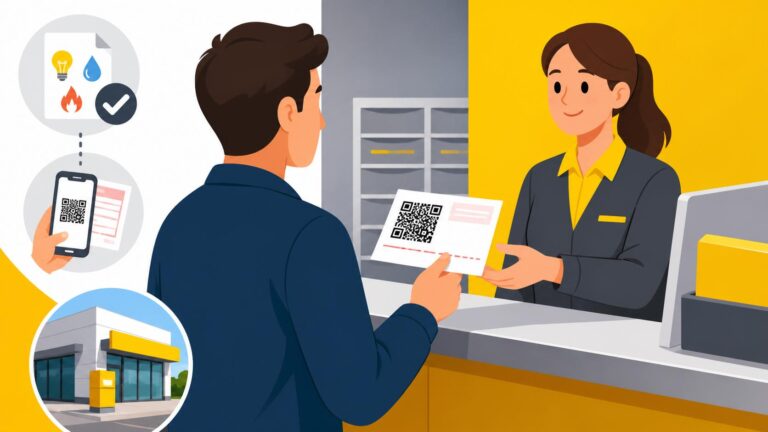
In Switzerland, the "Einschreiben" (registered mail) is your best friend. Never simply drop your resignation letter in a mailbox and hope for the best. You need a paper trail. When you send your letter to the local Kirchgemeinde (parish office), the post office will give you a tracking number and a receipt. Keep this in a safe place.
The parish office is legally required to process your request. Once they receive your letter, they will update their internal registry and notify the local Registering Your Address at the Kreisbüro Within 14 Days of Moving authorities and the tax office. However, this process can be slow. It is quite common for the church to send a "confirmation" letter that includes a subtle emotional plea or a questionnaire asking why you are leaving. You are under no legal obligation to answer these questions.
Once the exit is processed, you will receive an official document called the "Austrittsbescheinigung" (Confirmation of Exit). This is a golden document. Scan it, back it up, and keep the original. If you ever move to a different canton, the new authorities might see "Catholic" or "Protestant" on your old records and try to tax you again. Having this certificate is the only way to prove you have already left.
Step Three: Notifying the Tax Authorities
While the church is supposed to notify the state, I highly recommend being proactive, especially if you are a B-permit holder where Why Quellensteuer is Deducted Monthly from B Permit Holders applies. Take a copy of your confirmation letter to the cantonal tax office (Steueramt).
By notifying them directly, you ensure that the change is reflected in your next possible paycheck. In many cantons, the tax liability ends at the end of the month in which you submitted your resignation. If you wait for the church to tell the state, you might end up paying an extra month or two of tax unnecessarily.
For those who are required to perform Filing a Swiss Tax Return (C Permit or High Earners on B Permit), ensure that you mark yourself as "No Religion" or "Konfessionslos" on your next filing. Attach the confirmation of exit to your tax return as proof. The savings will be calculated pro-rata for the year you left.
Reinvesting Your Church Tax Savings
Once you have successfully stopped the bleeding of your monthly income, you’ll likely find yourself with an extra 50 to 150 CHF per month. In a country where every franc counts, this is a perfect opportunity to bolster your financial future rather than letting the money disappear into general consumption.
Many expats choose to redirect these savings into a Pillar 3a in 2026: Tax Deductions, Limits, and Investment Options account. Not only are you saving money by not paying church tax, but you are also reducing your overall taxable income by contributing to your private pension. It’s a double win for your wallet.
If you prefer more liquid investments, you might consider using a modern brokerage. For instance, putting that "former church tax" into a diversified ETF via Trade Republic can turn a small monthly saving into a significant nest egg over a decade. If your interests are more digital, you could allocate a portion of these savings to Binance to explore the crypto market, keeping in mind the Crypto Taxation in Switzerland: Declaring Bitcoin and Staking Rewards rules. Alternatively, if you are sending money home to pay off debts or support family, using a service like Wise ensures that your hard-won savings aren't eaten up by the high exchange rate margins of traditional Swiss banks.
The Cultural and Religious Consequences
Leaving the church in Switzerland is a administrative act with religious consequences. You should be aware that by officially resigning, you generally lose the right to a church wedding, a religious burial, or to act as a godparent in a religious ceremony. For some, this is a non-issue; for others, it’s a point of contention with family back home.
However, it is a common misconception that you are "banned" from the church. Most Swiss churches remain open to the public for prayer and services. You are simply no longer a "member" who contributes to the institutional overhead. In my experience, the local community rarely notices or cares about your tax status; it is a private matter between you and the Steueramt.
If you ever decide to rejoin later in life, the process is possible but usually involves another round of paperwork and potentially a meeting with a priest or pastor. But for the vast majority of expats who find the mandatory tax a surprise, the "Kirchenaustritt" is simply a necessary step in aligning their Swiss bureaucracy with their personal beliefs and financial goals.
Frequently Asked Questions about Kirchenaustritt
Can I get a refund for the years I already paid?
Unfortunately, no. The church tax is considered legally owed as long as you were a registered member. The state does not offer "back-payments" if you claim you didn't know about the tax. This is why acting as soon as you arrive is vital.
Does my spouse also have to leave if I do?
Each individual is taxed based on their own registration. However, if you are married and filing jointly, being in a "mixed marriage" (one member in the church, one out) can lead to complex "pro-rata" tax calculations. Generally, if both of you wish to stop paying, both must send individual resignation letters.
What if I move to one of the Lowest Tax Cantons: Moving to Zug, Schwyz, or Nidwalden for Tax Benefits?
Even in low-tax cantons, the church tax exists. In fact, because the base tax is lower, the relative "pain" of the church tax might feel smaller, but the procedure to leave remains exactly the same. Always keep your confirmation of exit when moving between cantons to avoid being re-registered by mistake.
Will leaving the church affect my C-permit or naturalization application?
No. Switzerland has freedom of religion (and freedom from religion) enshrined in its constitution. Your religious status—or lack thereof—has no bearing on your residency permits or your ability to become a Swiss citizen. Integration is measured by your language skills and community involvement, not by your tax contributions to a religious body.
Disclaimer
This guide is for informational purposes only and does not constitute legal or tax advice. Tax laws and cantonal regulations in Switzerland are subject to change, and the specific multipliers for church tax can vary significantly between municipalities. Always consult with a qualified tax professional or your local cantonal tax office for advice tailored to your specific financial situation.