Buying a Car in Switzerland: Leasing vs Financing Financial Comparison
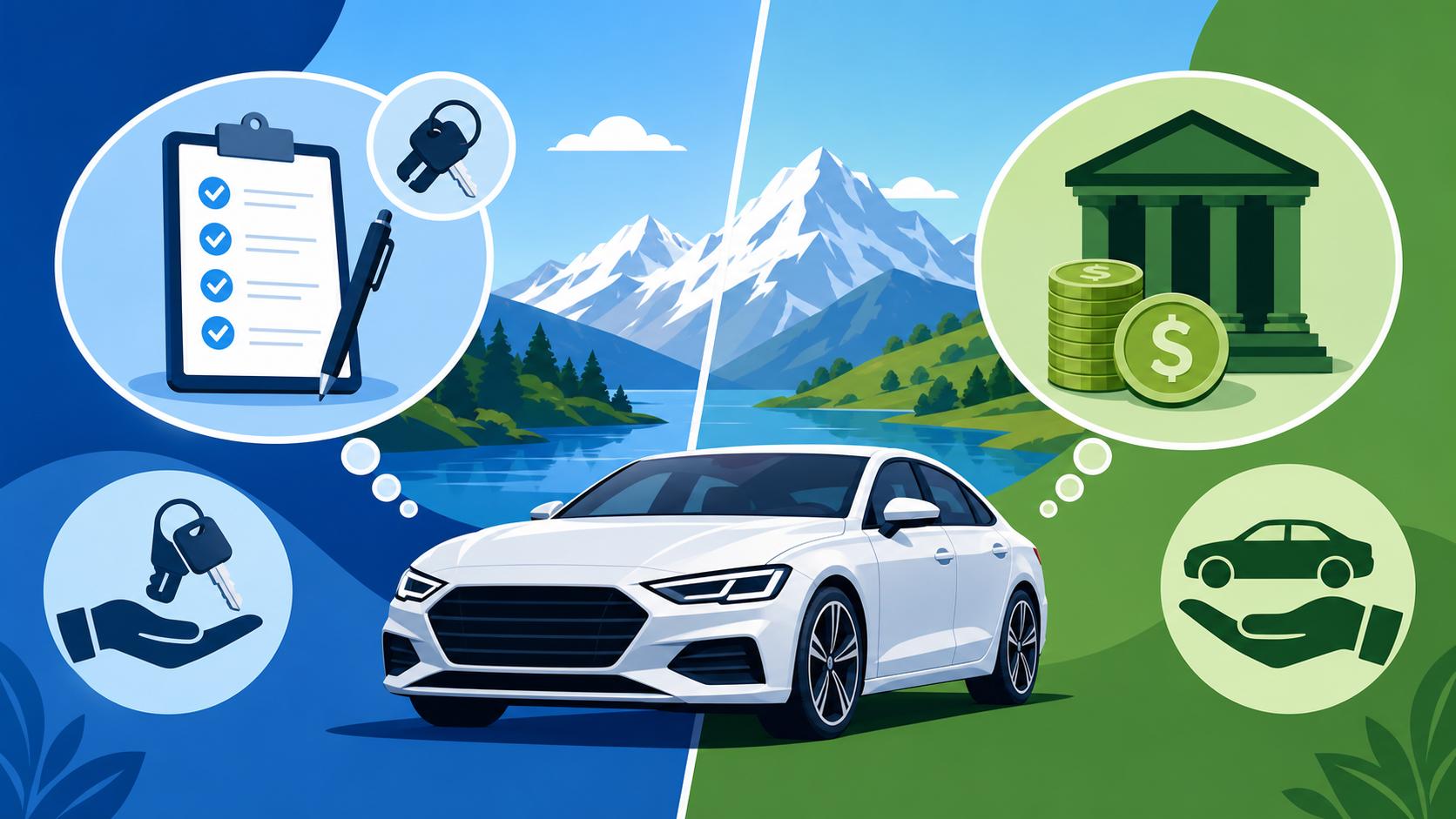
Buying a vehicle in Switzerland often feels like navigating a minefield of hidden costs and complex contracts that seem designed to drain your bank account. When I first arrived, I spent weeks staring at leasing brochures in German, paralyzed by the fear of making a massive financial mistake. This guide breaks down the cold, hard math of leasing versus financing so you can choose the path that protects your Swiss-earned savings.
The Financial Reality of Car Ownership in Switzerland
Living in Switzerland requires a shift in how you view large purchases. While the public transport system is legendary, many expats find that weekend trips to the Alps or commuting to remote offices makes a car a necessity. However, the sticker price is just the beginning of your financial journey. You have to account for the "Swiss premium," which affects everything from maintenance to the sheer administrative effort required to get on the road.
Initial Costs and the Hidden Paperwork Trail
When you first look at Buying a Car: Leasing, Autoscout24, and Mandatory Auto Insurance, the upfront price of the vehicle is often the easiest number to digest. The real challenge starts with the ancillary costs. You’ll need to factor in the "Ablieferungspauschale" (delivery fee), which garages charge to prepare the car, handle the registration, and provide the motorway vignette. This can range from CHF 300 to CHF 800 depending on the dealer.
Furthermore, your residency status plays a massive role in how much paperwork you'll face. If you are still navigating the nuances of Residence Permits in Switzerland: L, B, C, and G Permits Explained, you may find that certain lenders or leasing companies are hesitant to offer you their best rates until you have a B or C permit. This initial hurdle often forces expats into higher-interest brackets, making it vital to have your financial dossier—including your work contract and salary slips—in perfect order before visiting a showroom.
Understanding Depreciation in the Swiss Market
Switzerland is a "new car" country. The culture generally favors driving the latest models with the newest safety features, which means used cars can depreciate rapidly compared to other European markets. A brand-new car can lose 20% to 30% of its value the moment it leaves the lot. If you are using a service like Wise to bring in funds from abroad for a down payment, you need to be aware that your capital is being tied up in a rapidly depreciating asset.
For those planning to stay in the country long-term, this depreciation is a significant argument for buying a high-quality used car (Occasion) rather than a brand-new model. However, the Swiss used car market is strictly regulated, and vehicles are generally well-maintained, which keeps the floor on prices higher than you might expect in neighboring France or Italy. Understanding this balance is key to accurate Cost of Living in Switzerland 2026: Budgeting for Singles and Families planning.
Deep Dive into Leasing: The All-Inclusive Allure
Leasing is the dominant method for car acquisition in Switzerland, particularly for professionals who want a predictable monthly expense. It allows you to drive a car that might otherwise be out of your immediate price range, but it comes with strings attached that many expats overlook until it’s too late.
How Swiss Car Leasing Actually Works
In a Swiss lease, you are essentially paying for the "use" of the car over a fixed period, usually 36 or 48 months. You aren't paying off the car; you are paying the difference between its current value and its "Residual Value" at the end of the term, plus interest. This is why a CHF 60,000 car might only cost CHF 600 a month—you are only "consuming" a portion of its total value.
One major trap for foreigners is the mileage limit. If you plan to drive across the border frequently or spend your weekends exploring every corner of the Graubünden, you might easily exceed your 10,000km or 15,000km annual limit. The cost per extra kilometer can be as high as CHF 0.20 to CHF 0.50, which can lead to a multi-thousand franc bill at the end of the lease. Before signing, ensure your lease reflects your actual driving habits.
The Monthly Payment Trap: Interest Rates and Residual Value
The "Residual Value" (Restwert) is the most critical number in your contract. Garages often set this high to keep your monthly payments low. While this looks great on your monthly budget, it means that at the end of the lease, you don't own much of the car. If you want to buy the car at the end of the term, you will have to pay that large residual amount in one lump sum.
It’s also important to note that leasing interest is not tax-deductible for private individuals in Switzerland. Unlike a private loan, which can sometimes be deducted from your taxable income, lease payments are considered a pure consumption expense. This is a vital distinction when looking at Swiss Taxes Explained: Federal, Cantonal, and Municipal Rates. If you are in a high-tax canton, the lack of deductibility makes leasing more expensive than it appears on paper.
Traditional Financing: Ownership vs. Flexibility
Financing a car through a private loan or a bank credit line is the preferred route for those who value total ownership and the ability to sell the car whenever they please. While it requires a stronger credit profile, it offers a level of freedom that leasing simply cannot match.
Private Loans and Credit Options for Expats
A private loan (Privatkredit) allows you to borrow the full amount of the car, pay the dealer in cash, and own the vehicle outright from day one. This gives you the leverage to negotiate a better "cash price" with the garage, often netting you a 3% to 5% discount that lease-takers don't get. You can manage the loan repayments alongside your other investments, perhaps keeping your larger capital gains growing in an account like Trade Republic while paying down the car with your monthly salary.
However, the barrier to entry for loans is higher. Banks will meticulously check your Checking Your Debt Register Extract (Betreibungsauszug) for Loans. If you have even a single unpaid bill or a dispute with a former landlord, your loan application will likely be rejected. For newcomers, this means you need to be extremely diligent about your "Betreibung" record from the moment you arrive.
The Impact of Your Permit Status on Interest Rates
If you hold a C permit, you are treated essentially like a Swiss citizen, with access to the lowest interest rates (currently ranging from 4% to 7%). If you are on a B permit, expect the rates to be slightly higher, and you may be limited to a loan term that does not exceed the validity of your current permit. This can be frustrating for expats who have high salaries but haven't been in the country long enough to secure permanent residency.
Some expats choose to wait until they have been in the country for at least six months to a year before applying for financing. This "waiting period" allows you to build a local credit history and proves to the bank that you are a stable resident. During this time, you might rely on Car Sharing in Switzerland: How Mobility Works Without Owning a Car or short-term rentals to get around without committing to a long-term financial obligation.
Comparing the Numbers: A Side-by-Side Financial Analysis
When you sit down to compare these two options, it’s not just about the monthly payment. You have to look at the total cost of ownership over the entire period you plan to keep the car.
Tax Implications of Leasing vs. Buying
As mentioned, the interest on a private loan is generally tax-deductible in Switzerland. Depending on your income bracket and canton, this can effectively reduce the "real" interest rate of a loan by 20% to 30%. For those subject to Withholding Tax (Quellensteuer) vs Standard Taxation for Foreigners, this deduction might only be accessible if you file a full tax return (Tarifkorrektur), so check your specific situation carefully.
Additionally, when you own the car (via loan or cash), you are responsible for the "Motor Vehicle Tax" (Motorfahrzeugsteuer) in your canton. Leasing contracts often include some of these administrative hurdles, but they don't exempt you from the taxes. You also need to ensure you have the correct Private Liability Insurance (Privathaftpflicht): Why Expats Need It, as some lenders require specific coverage levels for financed vehicles.
Long-term Cost Comparison Over 48 Months
The following table compares the typical costs for a CHF 40,000 vehicle over a 4-year period.
| Feature | Leasing (Typical) | Private Loan (Financing) | Cash Purchase |
|---|---|---|---|
| Down Payment | CHF 0 – 8,000 | CHF 0 | CHF 40,000 |
| Monthly Payment | CHF 450 – 600 | CHF 850 – 950 | CHF 0 |
| Ownership | Bank owned | You own it | You own it |
| Tax Deductible? | No | Interest is deductible | No |
| Insurance Req. | Full Kasko (Mandatory) | Choice of Kasko | Choice of Kasko |
| End of Term | Return car or pay residual | Keep or sell the car | Keep or sell the car |
| Total Cost (4y) | Higher (due to fees) | Medium (tax benefit) | Lowest |
Leasing looks cheaper on a monthly basis, but the private loan builds equity. At the end of 48 months, the person who took the loan has a car worth roughly CHF 18,000. The person who leased has… nothing, unless they pay the residual value to keep the car.
Alternative Modern Solutions: Car Subscriptions and Sharing
For the modern expat who isn't sure if they will be in Zurich or Geneva for two years or ten, the traditional "Buy vs. Lease" debate is being disrupted by more flexible models. These are particularly useful for those who want to avoid the long-term commitment of a 48-month contract.
The Rise of Car Subscriptions in Major Cities
Car subscriptions (Abo) are becoming incredibly popular. For a flat monthly fee—usually starting around CHF 700 for a small car—everything is included: insurance, taxes, maintenance, tires, and even the vignette. You only pay for fuel (or electricity). The best part? You can often cancel with just 30 days' notice.
If you are just starting your journey and haven't yet mastered Understanding Swiss Payslips: Deductions for AHV, ALV, and NBU, a subscription can be a great way to have a car without the stress of a complex financial contract. It’s also a perfect solution if you are waiting for a permanent permit to get better financing rates. You pay for the convenience, and while it's more expensive than a long-term lease, the lack of risk is a huge benefit for new arrivals.
Mobility and Short-term Rental Strategies
In cities like Zurich, Basel, or Geneva, you might find that you don't actually need a car every day. Using a combination of the SBB rail network and car-sharing services like Mobility can save you thousands of francs annually. If you find yourself with extra cash because you aren't paying for a car, you could consider diversifying your portfolio. Some expats use Binance to explore Crypto Taxation in Switzerland: Declaring Bitcoin and Staking Rewards or simply put that "saved" car payment into a global ETF.
Car sharing is also a great way to "test drive" different models in the Swiss environment. You might think you want a massive SUV, only to realize that parking in a 19th-century underground garage in Lausanne is a nightmare. Experience the local roads before committing to a multi-year financial burden.
Practical Expat Advice for Buying and Budgeting
Before you step into a garage, there are a few "boots on the ground" tips that can save you significant stress and money. The Swiss car market is formal, and being prepared is the best way to get a fair deal.
Negotiating at the Garage: Tips for Non-German Speakers
While many dealers in major cities speak English, the contracts will be in a national language (German, French, or Italian). Never sign a contract you don't fully understand. If necessary, hire a relocation agent or a bilingual friend to review the "Small Print" (Kleingedrucktes). Specifically, look for the "Cancellation" clause. In Switzerland, terminating a lease early can be prohibitively expensive, often requiring you to pay a "retroactive" higher monthly rate for the months you already used.
Don't be afraid to negotiate on the "Extras." While the price of the car might be firm, you can often get the garage to include a second set of wheels (winter tires are a must), free servicing for the first three years, or a full tank of fuel. These small wins add up to significant savings in your first year.
Budgeting Beyond the Monthly Payment
The biggest shock for most expats isn't the car payment—it's the maintenance and storage. If you live in a city center, a parking spot can cost between CHF 150 and CHF 400 per month. This alone can be as much as half of your lease payment. Then there is the "Service" culture. Swiss garages are thorough, but their hourly rates are among the highest in the world.
Always keep a "rainy day" fund for your vehicle. If you are using Wise to manage multiple currencies, keep a reserve in CHF specifically for your car. One unexpected repair or a set of new brakes can easily top CHF 1,500. Being financially prepared for these spikes ensures that your Swiss adventure remains an exciting journey rather than a series of stressful bills.
Mandatory Disclaimer
This guide is for informational purposes only and does not constitute professional financial, legal, or tax advice. The Swiss automotive market and financial regulations are subject to change. Always consult with a qualified advisor and read the specific terms of any contract before signing. Car ownership involves significant financial risk and ongoing costs.