Household Contents Insurance (Hausratversicherung): Burglary and Fire Coverage
Moving into a Swiss apartment often feels like a never-ending checklist of administrative hurdles and unexpected costs. I still remember the confusion of my first "handover" in Zurich when I was told my basic liability coverage wasn't enough to satisfy the landlord's requirements. This guide breaks down the essential details of Household Contents Insurance (Hausratversicherung), ensuring your belongings are protected against the unique realities of Swiss living.
What Exactly is Hausratversicherung and Why Do You Need It
When you first arrive, the terminology thrown at you by brokers and HR departments can be overwhelming. In plain English, Hausratversicherung is insurance for all the "stuff" inside your home. A common rule of thumb I tell new arrivals is this: if you could turn your apartment upside down and shake it, everything that falls out is covered by your household contents policy. This includes your furniture, clothes, electronics, sports equipment, and even the food in your freezer.
In Switzerland, this isn't strictly mandatory by federal law (unlike health insurance), but in practice, it is almost impossible to live here without it. Most landlords will require proof of coverage before they hand over the keys. They want to know that if a pipe bursts and ruins the parquet flooring or if a fire starts in your kitchen, there is a robust insurance policy ready to handle the fallout. While the landlord’s building insurance (Gebäudeversicherung) covers the structure itself, it won't pay a cent for your designer sofa or your high-end gaming rig.
Understanding how this fits into your broader financial life is key. Many expats manage their initial moving costs and monthly premiums using Banking and Finance for Expats in Switzerland: The 2027 Guide to ensure they aren't losing money on currency conversions. You might even find yourself using Wise to transfer funds from your home country to cover the initial annual premium, which is often requested upfront in the first year. It’s one of those "boring" adult tasks that suddenly becomes very interesting the moment a neighbor’s washing machine overflows into your hallway.
Defining Household Contents in the Swiss Context
In Switzerland, the definition of "contents" is quite broad but very specific. It covers all movable items used for private purposes. This includes everything from your curtains and rugs to your jewelry and books. If you are a remote worker, it’s important to note that your home office equipment is generally covered as well, provided it is used for your personal employment and not for a large-scale commercial business you run out of your living room.
I often see expats get confused about high-value items like luxury watches or professional mountain bikes. Standard policies have "sub-limits" for these. For example, your policy might cover up to 5,000 CHF for jewelry but only if it's kept in a locked safe. If you have a collection of watches worth 50,000 CHF, you’ll need to declare this separately. I’ve lived through the stress of realizing my mountain bike cost more than the "simple theft" limit on my basic policy, so always check the fine print for your specific gear.
Another nuance is items belonging to guests. If a friend is staying with you and their laptop is damaged during a fire in your apartment, most comprehensive Swiss policies will actually cover their belongings too. This is part of the "guest coverage" that makes the Swiss system quite generous compared to other countries. However, this only applies to temporary guests, not long-term sub-letters, which is a common distinction made during Swiss Apartment Handovers (Wohnungsübergabe): Protocols and Deposits.
The Difference Between Hausrat and Privathaftpflicht
This is the number one area of confusion for foreigners. Hausratversicherung (Household Contents) covers your stuff. Privathaftpflicht (Personal Liability) covers damage you cause to other people or their property. In Switzerland, these two are almost always bundled together in one package. When a landlord asks for "insurance," they usually mean both.
Imagine you accidentally leave the bathtub running. The water ruins your expensive rug (Hausrat) and also leaks through the floor, ruining the neighbor’s ceiling and their antique piano (Privathaftpflicht). If you only have contents insurance, you’ll get a new rug, but you’ll be personally liable for the neighbor's massive repair bill. This is why Private Liability Insurance (Privathaftpflicht): Why Expats Need It is considered the single most important non-mandatory insurance in the country.
I always recommend that expats look at their insurance as a defensive wall for their savings. If you are building a portfolio on Trade Republic or keeping an emergency fund, a single liability claim without insurance could wipe out years of disciplined investing. By bundling these policies, you get a "peace of mind" package that allows you to focus on enjoying the Alps rather than worrying about accidental damages.
Why Your Landlord Demands Proof of Insurance
Landlords in Switzerland are notoriously risk-averse. They view the apartment as a high-value asset and you as a temporary custodian. By demanding Hausrat and Liability insurance, they are effectively outsourcing the risk of your residency. If you cause a fire that damages the kitchen cabinets, the landlord doesn't want to chase you through the courts for 20,000 CHF; they want to file a claim with your insurer and get it fixed immediately.
When you are Renting in Switzerland: The Complete 2027 Guide for Expats, you will find that the "application dossier" is competitive. Including a copy of your insurance policy—or at least a quote showing you intend to buy it—can actually give you an edge over other applicants. It signals that you are "Swiss-level" responsible and that you understand the local administrative culture.
It is also worth noting that in some cantons, such as Zurich, Nidwalden, and Glarus, fire insurance for your furniture is actually mandatory by law. In these cantons, you must insure your contents against fire and natural hazards through the cantonal building insurance or a private provider, depending on local regulations. Even if you think you don't have enough furniture to justify the cost, the law (or your lease) might disagree.
Core Coverage: Fire, Water, and Natural Hazards
The core of any Hausratversicherung policy is protection against the "big four": fire, water, theft, and natural hazards. In Switzerland, these aren't just theoretical risks. While we don't have many hurricanes, the heavy snowmelt in spring and the violent summer hailstorms in the Mittelland can cause significant damage. I’ve seen balconies flooded in minutes during a Lucerne thunderstorm, leading to water seeping under the door and ruining expensive electronics.
Most policies operate on a "new for old" basis. This means if your five-year-old laptop is destroyed in a fire, the insurance company pays you the amount it would cost to buy a brand-new, equivalent model today. This is a huge benefit, as it prevents you from being left with a payout that only covers the depreciated value of your used goods. However, this "new for old" rule only works if you have accurately calculated your Cost of Living in Switzerland 2026: Budgeting for Singles and Families and set your insurance sum correctly.
In 2026, we are seeing a slight increase in premiums due to more frequent "elemental" events. Insurance companies are meticulously adjusting their rates based on the "risk zone" of your postal code. Living near a lake or a river might cost you a few francs more per month, but given the precision of Swiss flood mapping, it’s a cost that reflects a very real risk.
Fire and Smoke Damage Protection
Fire coverage is the most traditional part of the policy. It covers damage from fire, lightning strikes, explosions, and even crashing aircraft (though that’s a bit of a "Swiss-style" extreme scenario). More importantly for everyday life, it covers smoke damage. If your toaster catches fire and doesn't burn down the house but leaves a thick layer of soot on every piece of clothing and furniture you own, the insurance pays for the professional cleaning or replacement.
I once had a friend in Basel whose apartment suffered smoke damage because of a fire in the basement of her building. She didn't lose a single item to flames, but the smell was so pervasive that everything had to be professionally treated. Her Hausrat insurance covered the entire cost, including a temporary stay in a hotel while the cleaning was done. This "indirect" damage is often more expensive than the direct fire damage itself.
It is vital to mention that most policies exclude damage caused by "gross negligence." If you leave a candle burning while you go out for dinner, the insurer might reduce your payout significantly. Some modern policies offer a "gross negligence waiver" add-on for a small fee. In my experience, this is the best 20 CHF you will ever spend, as it protects you from the financial consequences of a simple, human mistake.
Water Damage: From Burst Pipes to Heavy Rain
Water damage is far more common than fire. In the Swiss insurance world, this typically covers "internal" water issues: a burst pipe, an overflowing dishwasher, or a leaking aquarium. It also covers "atmospheric" water that enters through the roof or windows, provided the windows were actually closed. If you leave your skylight open during a storm and your bed gets soaked, you might have a hard time getting a full payout.
One hypothetical scenario I often discuss with new expats is the "vacation leak." If you go back to your home country for three weeks and a pipe under your sink develops a slow drip, the damage to your kitchen floor and your stored belongings could be massive by the time you return. Standard Swiss policies are excellent at handling this, but they often require you to have taken "reasonable precautions," like turning off the main water valve if you are gone for an extended period.
For those of us who live in older "Altbau" apartments, the plumbing can be temperamental. I always suggest checking if your policy covers "searching for the leak." Sometimes the damage is small, but the plumber has to tear up half the floor to find the source. If your policy doesn't cover these search costs, you could be left with a big bill even if the actual repair is cheap.
Natural Hazards: Dealing with Floods and Hail
In Switzerland, "Elementarschäden" (natural hazards) are legally defined and include things like floods, storms (winds over 75 km/h), hail, avalanches, and rockfalls. Earthquakes are usually not included in the standard list and require a separate rider. Because the Swiss landscape is so vertical, these risks are taken very seriously by insurers.
Hail is a particular menace in the summer. If a hailstorm shatters your balcony furniture or destroys your high-end Weber grill, your Hausratversicherung is the policy that responds. During the massive hailstorms of 2021, thousands of residents were glad they had upgraded their contents insurance. If you have expensive outdoor items, make sure they are included in your "total sum insured."
If you're moving to a mountain canton, avalanche and snow pressure coverage is essential. The weight of heavy snow on a balcony can cause structural failure or lead to melting water entering the home. This is the kind of "hyper-local" detail that you only realize matters once you’re living through your first Alpine winter. Most veteran expats will tell you that the peace of mind during a heavy snowstorm is worth every cent of the premium.
Theft and Burglary Coverage Options
Switzerland is generally very safe, but it is not a utopia. Burglary happens, particularly in major cities like Zurich, Geneva, and Lausanne. More importantly for expats, "simple theft" (theft without breaking and entering) is quite common. Your Hausratversicherung is your primary defense against these losses, but the way the Swiss categorize theft is very specific and can lead to "I didn't know that" moments if you aren't careful.
When I first arrived, I assumed that if my phone was stolen from my pocket at the train station, I was just out of luck. In reality, most Swiss policies offer an add-on called "Simple Theft Away from Home" (Einfacher Diebstahl auswärts). This is one of the most popular features for expats because it covers your belongings anywhere in the world—not just in your apartment.
If you are a frequent traveler, this coverage is a lifesaver. Whether you are using Binance to manage your digital assets or carrying a high-end camera through a crowded airport, having that "away from home" protection means you aren't devastated if a pickpocket strikes. I’ve seen this cover everything from stolen skis at a resort to a laptop snatched in a London coffee shop.
Simple Theft at Home: Breaking Down the Definitions
Inside your home, "Simple Theft" refers to someone taking something without using force. For example, if you are having a party and someone walks off with your watch, or if a delivery person takes something from your hallway. This is distinct from "Burglary," which involves breaking into a locked premises.
Most basic policies cover theft at home up to the full sum insured. However, there’s a catch: the "hallway rule." In many Swiss apartment buildings, residents leave their shoes or strollers in the common hallway. Technically, these are not inside your locked apartment. If someone steals your expensive sneakers from the hallway, it might not be covered under "theft at home" but rather under the "simple theft away from home" rider.
I always advise people to be meticulous about locking their doors. Swiss insurance adjusters are very thorough. If there are no signs of forced entry and you can't prove a "simple theft" occurred (like a guest taking it), they might classify the item as "misplaced," which is never covered. It sounds harsh, but it’s part of the local "accountability" culture that you’ll find in every Checklist for Your First 30 Days as an Expat in Switzerland.
Simple Theft Away from Home: Protecting Your Bike and Laptop
This is the "hero" add-on for most expats. In Switzerland, everyone seems to own a bike worth at least 2,000 CHF. Bicycle theft is arguably the most common crime in the country. Without this specific rider, if your bike is stolen from the street or the train station, your insurance company will pay exactly zero.
When Adding Bicycle Theft Coverage to Your Hausratversicherung, you usually choose a limit, such as 2,000 CHF or 5,000 CHF. This limit applies to each incident. If you and your partner both have your bikes stolen at the same time, the limit might apply to the total claim, so make sure the limit is high enough to cover your most expensive single item (or two).
This coverage also extends to your luggage. If your suitcase is stolen from a train overhead rack while you’re napping on the way to Geneva, this policy kicks in. Just remember: you must file a police report immediately. The insurance company will not even look at your claim without an official "Polizeirapport." I’ve spent a few hours in Swiss police stations for this very reason—it’s a rite of passage for many of us.
Burglary and Robbery: Worst-Case Scenarios
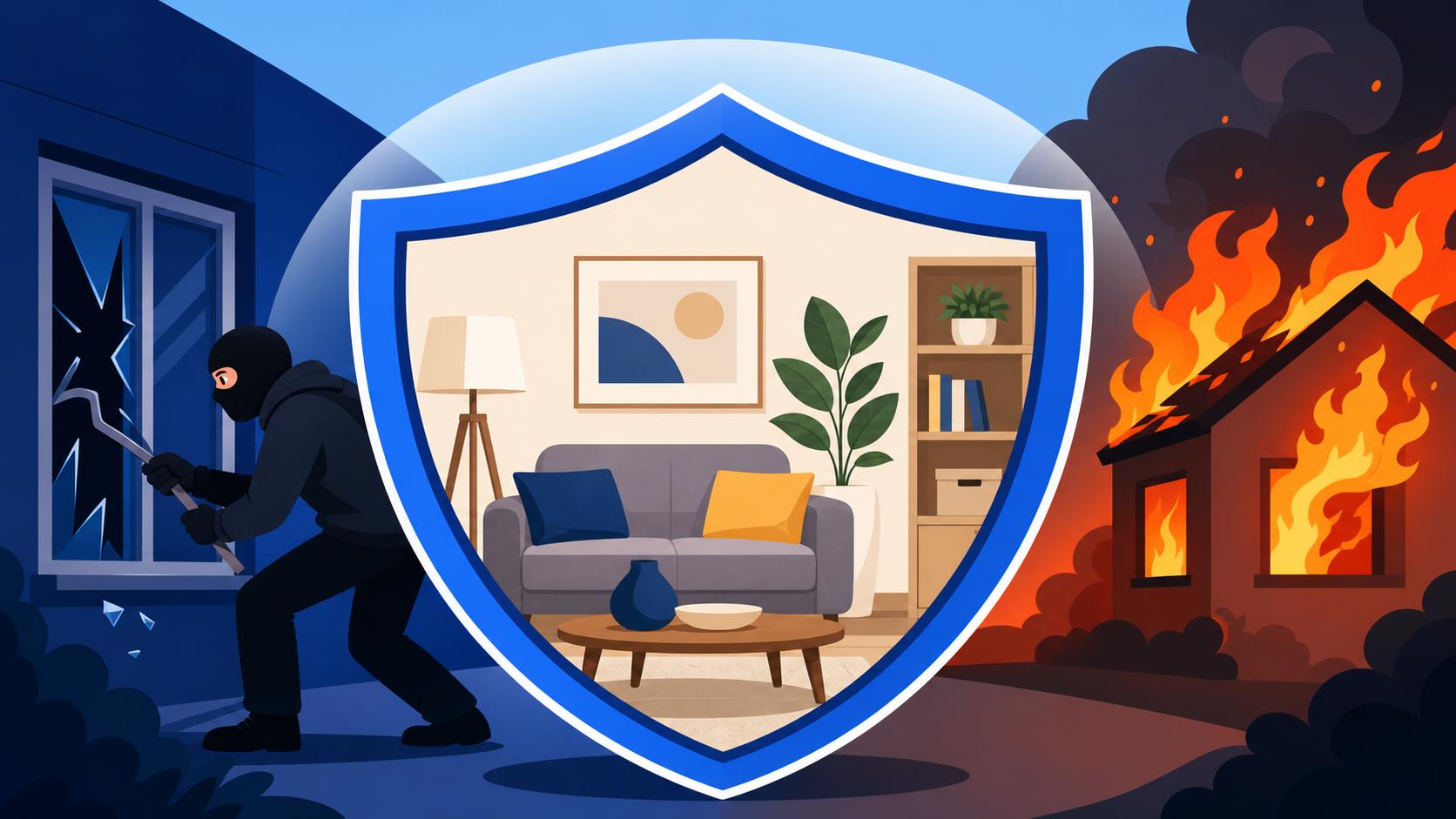
Burglary (Einbruchdiebstahl) involves someone breaking into your home using force. This is covered by all standard policies. Beyond just the stolen items, this also covers the damage the burglar did to your home—like a smashed window or a broken door frame. Even though the landlord owns the door, your contents insurance often handles the immediate repair costs to secure your home.
Robbery (Beraubung) is theft involving the threat or use of violence against a person. This is thankfully rare in Switzerland, but if it happens to you on the street, it is covered under your household policy. It’s a bit of a grim thought, but it’s part of the comprehensive nature of the Swiss system.
A key detail for burglary is the "locking" requirement. If you leave your ground-floor window in the "tilt" (Kipp) position and someone climbs in, the insurer may argue that the home wasn't properly secured. This can lead to a "reduction for negligence." In the eyes of a Swiss insurer, a tilted window is an open invitation, and they expect you to know better. Always close and lock everything before you head out for a fondue night.
Determining the Sum Insured (Versicherungssumme)
The biggest mistake expats make—and I made this too—is underestimating the total value of their "stuff." We look around and think, "I only have an IKEA bed and a desk," and we set the sum at 20,000 CHF. Then a few years pass, we buy a nice espresso machine, a few designer lamps, a high-end wardrobe, and suddenly we’re sitting on 60,000 CHF worth of goods.
In Switzerland, the "Sum Insured" must represent the replacement value of every single item in your home. If you have a fire and your sum is too low, you run into the dreaded "Under-insurance" (Unterversicherung) penalty. This is a mathematical trap that can cost you thousands of francs when you least expect it.
To stay organized, many savvy expats use digital tools to track their inventory. While you're managing your investments or checking your crypto on Binance, take ten minutes every six months to update a simple spreadsheet of your major household purchases. It sounds tedious, but in the event of a total loss (like a major fire), having a digital backup of your receipts and photos is the difference between a smooth claim and a bureaucratic nightmare.
The Danger of Under-insurance: The Pro Rata Trap
Let's look at a hypothetical scenario. You tell your insurance company that your belongings are worth 50,000 CHF. In reality, if you had to buy everything brand new tomorrow, it would cost 100,000 CHF. You are 50% under-insured. You might think, "That's fine, I'll never lose everything at once. I just want to be covered for a 10,000 CHF theft."
Here is the "Swiss Catch": if you suffer a 10,000 CHF theft, the insurance company will look at your total inventory. When they realize you only insured 50% of the true value, they will only pay 50% of the claim. Instead of 10,000 CHF, you get 5,000 CHF. This is called the "Pro Rata" rule, and it is applied strictly.
I have seen people devastated by this because they tried to save 40 CHF a year on their premium by low-balling their sum insured. Always err on the side of caution. It is much better to be slightly over-insured than to face a pro rata reduction during a major crisis. Most insurers provide a "sum calculator" based on the number of rooms and the "standard" of your furniture—use it as a starting point, but then add your specific high-value items.
How to Estimate the Value of Your Possessions
The best way to do this is room by room. Don't forget the hidden costs:
- The Kitchen: Plates, cutlery, high-end appliances, and even the contents of your pantry and wine cellar.
- The Closet: This is where most people fail. Count your shoes, suits, winter coats, and bags. A full wardrobe for two people can easily reach 15,000 CHF in replacement value.
- The Cellar (Keller): In Switzerland, your "contents" includes what you store in your building's basement storage unit. Skis, winter tires, and camping gear add up fast.
| Category | Typical Expat Range (CHF) | Veteran Tip |
|---|---|---|
| Living/Dining Room | 10,000 – 25,000 | Include curtains and lighting fixtures! |
| Kitchen Gear | 3,000 – 8,000 | High-end coffee machines are common targets. |
| Wardrobe (per person) | 5,000 – 15,000 | Don't forget the sports gear and suits. |
| Electronics | 4,000 – 12,000 | Include tablets, phones, and backup drives. |
| Cellar/Storage | 2,000 – 10,000 | Winter tires alone can be 1,000 CHF+. |
Inventory Lists and Digital Backups
You don't need a professional app, but you do need evidence. I suggest walking through your apartment once a year and taking a video. Open every drawer, every closet, and the cellar door. Upload this video to a secure cloud service. If your apartment is destroyed, you won't remember that you had 20 high-quality linen shirts or a specific brand of kitchen mixer. The video is your proof.
Keep your digital receipts. Most Swiss retailers (like Galaxus or Digitec) keep a history of your purchases online, which is incredibly helpful for insurance claims. For items bought elsewhere, scan the paper receipts. If you are using Wise to pay for items from international stores, those transaction records can also serve as secondary proof of value and ownership.
When you're doing your Checklist for Your First 30 Days as an Expat in Switzerland, setting up this digital folder should be a priority. It’s much easier to do it when you only have three suitcases of stuff than it is three years later when you’ve fully furnished a 4.5-room flat in the suburbs.
Glass Breakage and Special Add-ons
Glass coverage in Switzerland is surprisingly complex. Standard Hausrat policies usually cover "furniture glass"—things like mirrors, glass tabletops, and the glass in your display cabinets. However, they do not automatically cover "building glass," which includes windows, balcony doors, and—crucially—ceramic stovetops and stone countertops.
If you drop a heavy pot and crack your ceramic stovetop, the landlord will expect you to pay for the replacement. Since a new stovetop can cost 1,500 CHF or more, most expats choose to add "Building Glass for Tenants" to their policy. I’ve seen this save many a deposit during the Swiss Apartment Handovers (Wohnungsübergabe): Protocols and Deposits process.
Another common question is: Does Swiss Liability Insurance Cover Losing the Apartment Key? While that usually falls under the Liability (Haftpflicht) part of your bundle, some contents policies offer an add-on for "emergency locksmith services." Given that a Sunday afternoon locksmith call in Zurich can cost 500 CHF, it’s an add-on worth considering if you’re prone to leaving your keys on the kitchen table.
Building Glass vs. Furniture Glass
The distinction is simple: if it’s part of the building (windows, washbasins, toilets, stovetops), it’s building glass. If you can take it with you when you move (mirrors, glass in a sideboard), it’s furniture glass. As a tenant, you are responsible for damage you cause to the building glass.
I once broke a bathroom sink by dropping a heavy bottle of cologne. Because I had the "building glass" add-on for tenants, the 800 CHF replacement cost was fully covered, minus my 200 CHF deductible. Without that specific add-on, I would have had to pay the full amount out of pocket. In Switzerland, sinks and toilets are often categorized under "glass" or "sanitary ceramics" in insurance contracts.
When reviewing your policy, look for the term "Gebäudeglas für Mieter." If you have a high-end kitchen with a stone or granite countertop, check if that is included. Some insurers treat stone countertops as "glass" for the purposes of accidental breakage coverage, which is a massive relief if you ever manage to chip the edge of a marble island.
Accidental Damage: The "Oops" Clause
Standard contents insurance covers "sudden and unforeseen" events like fire or theft. It does not cover you accidentally knocking over a glass of red wine on your white sofa. For that, you need an add-on often called "All Risks" or "Extended Accidental Damage."
This is for the clumsier moments in life. It covers your own mistakes that damage your own stuff. If you trip and smash your television, or if your dog chews through an expensive rug, this is the only part of the policy that will pay out. For families with young children or pets, this is almost a mandatory upgrade.
I usually tell people that if their furniture is mostly second-hand "Brocki" finds, they can skip this. But if you’ve spent your hard-earned bonus on a high-end interior, the "All Risks" clause is the only way to protect that investment from your own daily life. It’s about matching the level of protection to the level of luxury in your home.
Cyber Protection: A Modern Addition
In 2026, many Swiss insurers have integrated "Cyber Insurance" into their household packages. This covers things like identity theft, online fraud, and even "cyber-bullying" legal support. While it won't help you if your Binance account is hacked due to poor password hygiene (always use 2FA!), it can help if your credit card details are stolen and used for a fraudulent shopping spree.
Some policies even offer data recovery services. If your hard drive crashes and you lose ten years of family photos, the insurance might pay for a professional data recovery lab to try and save them. It’s a reflection of how our "household contents" have moved from physical books and records to digital files and cloud accounts.
While you might already have some protection through your bank or credit card, having it bundled into your home insurance provides a central point of contact for assistance. In a country as digitalized as Switzerland, where even the laundry room is often operated via an app, this layer of protection is becoming less of a luxury and more of a standard requirement.
Costs, Deductibles, and Comparisons
So, what does all this cost? For a standard 2-person household in a 3.5-room apartment with a sum insured of 80,000 CHF and a standard liability bundle, you can expect to pay between 250 CHF and 450 CHF per year. The price varies significantly based on your canton, your age, and your insurance history.
To manage these costs, I recommend looking at your deductible (Selbstbehalt). The standard deductible in Switzerland is 200 CHF. This means for every claim, you pay the first 200 CHF. You can lower your annual premium by increasing this deductible to 500 CHF or even 1,000 CHF. If you are someone who keeps a healthy emergency fund in a high-yield account like Trade Republic, taking a higher deductible can save you a lot of money over the long run.
When comparing providers, don't just look at the price. Look at the ease of the claims process. Some of the newer "neo-insurers" in Switzerland have fantastic apps where you can file a claim by just uploading a photo. For an expat who might still be struggling with High German or French, a digital-first interface can be a lifesaver during a stressful situation.
Typical Premiums and How to Lower Them
Premiums are calculated based on risk. If you live in a ground-floor apartment in a high-theft area of Geneva, you will pay more than someone on the 4th floor in a sleepy village in Uri. However, there are ways to nudge the price down.
First, look for "bundle discounts." If you have your car insurance, contents insurance, and life insurance with the same company, they will often give you a 10-15% discount across the board. Second, check if your employer has a "partnership" with a specific insurer. Many large Swiss companies (and international ones like Google or Roche) have negotiated special rates for their employees.
Finally, pay annually. While some companies allow monthly payments, they often add a 3-5% "installment surcharge." If you have the cash available, paying the full year upfront is the cheapest way to handle it. I always use Wise to pay my annual bills if I’m moving money from abroad, as it ensures I’m getting the real exchange rate and not the inflated ones often used by traditional banks.
Choosing the Right Deductible
The "right" deductible depends on your cash flow. If a 500 CHF unexpected expense would ruin your month, stick to the 200 CHF deductible. If you have a solid "rainy day" fund, increasing it is a smart move. In the Swiss insurance market, the "break-even" point for a higher deductible is usually about 3 to 4 years of no claims.
| Deductible (CHF) | Premium Impact | Best For |
|---|---|---|
| 0 – 150 | Highest Premium | People who want zero surprises. |
| 200 | Standard | Most expats and local families. |
| 500 | ~15% Discount | Those with an emergency fund. |
| 1,000 | ~25% Discount | High-income households with few risks. |
One tip from my years here: if you have the "Simple Theft Away from Home" add-on, the deductible often applies per incident. If you lose your phone (worth 800 CHF) and your deductible is 500 CHF, the insurance only pays 300 CHF. For many, this makes the theft add-on feel less valuable. Always weigh the cost of the add-on against the deductible you’ve chosen.
Comparing Providers: From Big Names to Digital Options
In Switzerland, you have the "traditional giants" like Zurich, AXA, Helvetia, and Mobiliar. These companies have offices in almost every town and offer a high level of personal service. If you prefer to sit down with an agent who can explain things in English, these are great choices. Mobiliar is particularly famous for being a "cooperative," meaning if they have a profitable year, they actually return some of the premium to their customers.
On the other hand, we have the "digital-first" players like Smile, ELVIA, or the digital arms of the big insurers. These often have the lowest prices because they don't have the overhead of physical offices. For most expats, these are perfectly fine as long as you are comfortable managing everything through an app or a web portal.
Before you sign anything, use a comparison site like Comparis or Moneyland. But a word of caution: these sites don't always show every "special" expat deal. It is often worth asking in local expat Facebook groups for the name of a specific English-speaking broker who understands the nuances of international moves. A good broker can often find you a policy that covers things like "repatriation of remains" or "emergency travel" which a standard local policy might miss.
Final Thoughts for Your Peace of Mind
Managing your household insurance might feel like just another piece of Swiss bureaucracy, but it is actually one of the few systems here that is designed to be genuinely helpful. Compared to many other countries, Swiss contents insurance is comprehensive, relatively affordable, and remarkably reliable when it comes to paying out claims.
As you settle into your new life, take the time to get this right. Don't just tick the box on the cheapest policy you find. Think about your lifestyle—do you bike to work? Do you travel often? Do you have expensive hobbies? Tailor your policy to those realities. Once it's set up and the premium is paid, you can stop worrying about "what ifs" and start enjoying the incredible quality of life that Switzerland offers.
Disclaimer
This article is for informational purposes only and does not constitute professional financial or legal advice. Insurance regulations and cantonal laws in Switzerland are subject to change, and individual policy terms vary significantly between providers. Always read the General Insurance Conditions (GIC) of your specific policy and consult with a licensed insurance professional before making any financial decisions. While we strive to provide accurate information for 2026, we cannot guarantee the absence of errors or the applicability of this information to your specific circumstances.