Church Tax (Kirchensteuer): How to Opt Out and Save Money
When you first sit down at the local registration office to finalize your residency, the clerk will ask a series of seemingly routine questions, including one about your religious affiliation. I remember sitting in a drafty Kreisbüro in Zurich, nodding along as I checked "Roman Catholic" simply because I was baptized as a child, only to realize months later that this small checkmark was costing me thousands of francs. This guide solves the mystery of the Swiss church tax and provides the exact roadmap for opting out to keep more of your hard-earned salary.
Understanding the Swiss Church Tax System
The Swiss church tax, or Kirchensteuer, is a unique administrative quirk that often catches newcomers off guard. Unlike many countries where religious donations are strictly voluntary and private, Switzerland has a formal state-sanctioned system where the government acts as a collection agent for recognized religious institutions. If you declare yourself as part of the Roman Catholic, Christian Catholic, or Swiss Reformed Church during your initial registration, the tax office will automatically calculate and levy a tax on your income to support these institutions.
How the Tax is Calculated
The calculation of church tax is not a flat fee; it is usually a percentage of your basic cantonal tax. Depending on where you live, this can range from 10% to 23% of your cantonal tax bill. For a high-earner in a city like Zurich or Geneva, this "small" percentage can easily translate into CHF 1,000 to CHF 3,000 per year. It is one of those hidden costs that contributes to the high Cost of Living in Switzerland 2026: Budgeting for Singles and Families that expats must navigate.
The system relies entirely on your self-declaration. When Registering Your Address at the Kreisbüro Within 14 Days of Moving, the form asks for your religion. If you are baptized and choose to remain a member, the state views your membership as a legal status that justifies taxation. Because it is tied to your total taxable income, as your career progresses and your salary increases, so does your contribution to the church, often without you even noticing the incremental creep.
The Legal Connection Between Church and State
In most Swiss cantons, the main Christian churches have the status of public-law corporations. This gives them the legal right to tax their members. It is a historical arrangement designed to ensure the maintenance of historic buildings and the funding of social services provided by the clergy. However, this legal tie means that the only way to stop the payments is to legally sever your tie with the institution through a formal process called Kirchenaustritt.
It is important to note that this system is cantonal. Cantons like Geneva and Neuchâtel are "secular" and do not have a mandatory church tax collected by the state, though members are encouraged to donate voluntarily. If you are looking for ways to optimize your finances, understanding these geographic nuances is as vital as knowing the Lowest Tax Cantons: Moving to Zug, Schwyz, or Nidwalden for Tax Benefits to minimize your overall liability.
Why Expats Often Pay It by Accident
The most common reason expats pay church tax is a lack of "administrative literacy" during their first week in the country. When you are overwhelmed with permits and apartment hunting, you might check a box out of cultural habit or honesty regarding your baptismal history, not realizing it has immediate financial consequences. Many believe it is a voluntary donation you can opt-out of later on a tax return, but once you are in the system, the deductions are automatic.
For those on a B Permit, this tax is usually baked into your monthly deductions. You will see it reflected when Understanding Swiss Payslips: Deductions for AHV, ALV, and NBU. Because the money never even hits your bank account, it becomes an "invisible" expense. Reclaiming that money or stopping the deduction requires proactive effort, as the tax office will not prompt you to save money on their behalf.
The Financial Impact of Kirchensteuer
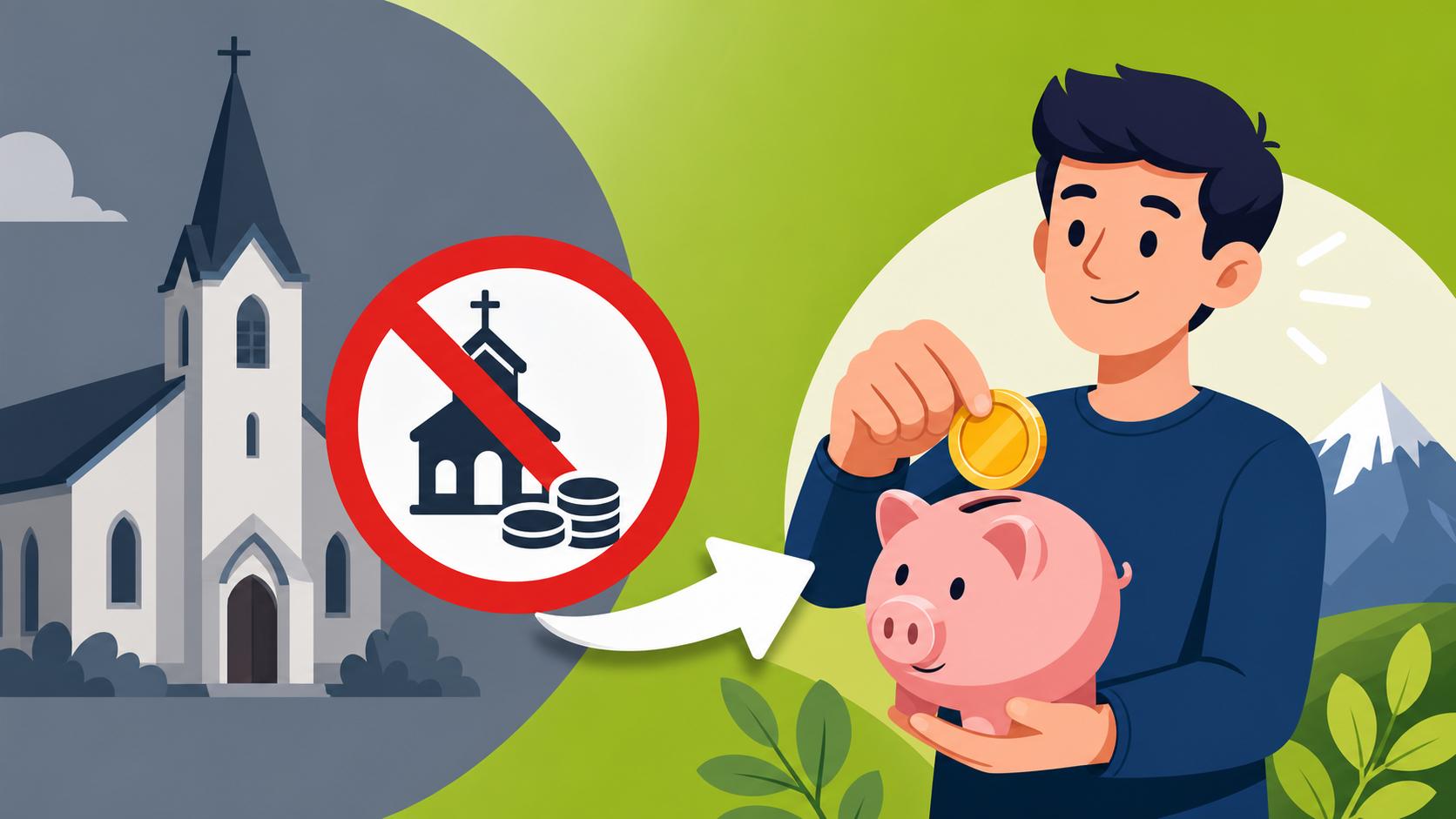
While a few hundred francs here and there might not seem like a dealbreaker in a country with high salaries, the cumulative effect of the church tax over a five or ten-year stay is significant. For many expats, this money could be better utilized in private pension schemes or investment portfolios. When you consider the compounding interest of investing those funds instead, the "opportunity cost" of the church tax becomes quite clear.
Cantonal Variations in Tax Rates
The impact of the tax depends heavily on your location. Each canton sets its own rules, and within those cantons, municipalities may also have varying rates. This complexity is similar to how you must research How to Choose the Right Deductible (Franchise) for Your First Year to manage healthcare costs; you have to look at the specific math for your zip code.
| Canton | Typical Church Tax Rate (as % of Cantonal Tax) | Estimated Annual Cost (on CHF 120k Salary) |
|---|---|---|
| Zurich | ~10-12% | CHF 800 – 1,100 |
| Bern | ~18-20% | CHF 1,500 – 1,900 |
| Zug | ~10% | CHF 400 – 600 |
| Basel-Stadt | ~8-10% | CHF 900 – 1,200 |
| St. Gallen | ~20-22% | CHF 1,600 – 2,100 |
| Geneva | 0% (Voluntary) | CHF 0 |
Long-term Savings Potential
If you invest the CHF 1,500 you save annually into a diversified portfolio via platforms like Trade Republic, the long-term results are impressive. Over 10 years, assuming a 7% average annual return, that "saved" tax money grows to nearly CHF 21,000. For an expat planning for a future either in Switzerland or abroad, this is a substantial sum that could cover a house deposit or a significant portion of a child's education.
Many expats choose to redirect these savings into a Pillar 3a in 2026: Tax Deductions, Limits, and Investment Options account. This creates a double financial win: you stop paying the church tax, and you get a further tax deduction for the amount you contribute to your private pension. It is one of the most effective ways to optimize your Swiss "net" income.
How Church Tax Affects Withholding Tax
For the majority of expats who are not yet on a C Permit, the church tax is part of your Quellensteuer (withholding tax). The tax office uses different "scales" (Tarif) to determine your monthly deduction. Scale A is for single people, Scale B is for married couples with one income, and Scale C is for dual-income households. Within these scales, there are sub-categories: "with church tax" and "without church tax."
If you are currently paying it, your HR department is likely using the "Y" (Yes) version of your tax scale. Once you successfully opt-out, you must ensure that your employer switches you to the "N" (No) version. This is critical for Withholding Tax (Quellensteuer) vs Standard Taxation for Foreigners because even if the church stops asking for the money, the tax office will keep taking it until your payroll profile is officially updated.
Step-by-Step Guide to Opting Out
Leaving the church in Switzerland is a formal administrative process. It is not enough to simply stop attending services or tell a priest you are no longer interested. You must follow a specific legal procedure to ensure the tax office recognizes your resignation. I’ve helped several colleagues through this, and while it feels bureaucratic, it is a one-time task that pays dividends forever.
Writing the Resignation Letter
The process begins with a physical letter. Emails or verbal requests are generally not accepted. The letter must be written in the official language of your canton (German, French, or Italian) and should be addressed to the specific parish (Kirchgemeinde) where you reside. The letter should be clear, concise, and state your intention to leave the church immediately.
You do not need to provide a theological reason or any justification for your departure. A simple statement such as "I hereby declare my resignation from the [Name of Church] effective [Date]" is sufficient. Make sure to include your full name, date of birth, address, and, if possible, your AHV number to ensure they can locate you in their database. If you have moved recently, it is helpful to mention your previous address as well.
Where and How to Send the Document
The letter must be sent via "Registered Mail" (Einschreiben). This is the most important step. In Switzerland, a registered mail receipt is your legal proof that the document was delivered. Churches are sometimes slow to process these requests, and having a tracking number ensures they cannot claim the letter was lost in the mail.
Once the parish receives the letter, they are legally obligated to process your resignation. Some parishes may send a follow-up letter asking for the "reason" you are leaving or inviting you to a conversation with a priest. You are under no legal obligation to respond to these inquiries or attend any meetings. The moment they receive your registered letter, your membership—and your tax liability—is technically terminated.
Receiving Confirmation and Notifying Tax Authorities
After a few weeks, you should receive a formal confirmation letter (Austrittsbescheinigung) from the church. Hold onto this document like it’s gold. It is your only proof if the tax office questions your status in the future. Once you have this letter, the next step is to notify the municipal tax office (Steueramt) and your employer’s HR department.
If you are on a B Permit, your HR department needs a copy of this confirmation to change your tax code from "with church tax" to "without church tax." This change usually takes effect from the first day of the month following your resignation. If you find yourself needing to move money around during this transition, using a service like Wise can help you manage your different currency accounts without high bank fees, especially if you are transferring your newly found savings to an offshore investment account.
Cultural and Social Implications of Leaving
While the financial benefits of opting out of the church tax are clear, it is important to understand what you are giving up. In Switzerland, the church tax is not just a fee; it is a membership "subscription" to specific religious services. Before you send that letter, consider how your lifestyle and future plans might be impacted by no longer being a formal member of the congregation.
Impacts on Rites of Passage
The most immediate consequence of leaving the church is that you lose the right to certain religious ceremonies. This includes the right to a church wedding, the right to have your children baptized in that specific denomination, and the right to a religious funeral service. For many expats, this is a non-issue, but for those with family back home who expect a traditional ceremony, it can cause social friction.
Additionally, you may no longer be eligible to serve as a godparent (Pate) in a formal religious capacity. If a friend or family member asks you to be a godfather or godmother, the church will often check your membership status. If you have legally resigned to save on taxes, they may refuse to let you participate in the ceremony. If these cultural rituals are important to you, you might find that the Cost of Living in Switzerland 2026: Budgeting for Singles and Families includes the "price" of maintaining these social ties.
Community Perception and Integration
In smaller, more traditional villages, the local church is often the center of social life. While modern Switzerland is quite secular, being a member of the Kirchgemeinde can sometimes facilitate integration into the local community through volunteer events and parish festivals. However, in major cities like Zurich, Geneva, or Basel, your religious status is almost entirely private, and leaving the church will have zero impact on your social standing or ability to make friends.
Most Swiss people view the Kirchenaustritt as a personal financial decision. In fact, thousands of Swiss citizens leave the church every year for the exact same reason: the tax burden. It is seen as a pragmatic move. If you are worried about integration, focusing on Volunteering and Local Clubs (Vereine): The Best Way to Meet Swiss People is a much more effective strategy than paying a tax for a church you never visit.
Alternative Ways to Support Local Causes
Many expats feel a sense of guilt about leaving, as the church tax does fund social programs, food banks, and the maintenance of historic architecture. If you still want to support these causes but prefer to have control over where your money goes, you can donate the equivalent of your tax savings to secular charities or specific religious projects of your choice.
By opting out, you gain the "sovereignty" of your capital. Instead of a mandatory deduction, you can choose to support local organizations directly. This allows you to be more intentional with your philanthropy while still enjoying the tax advantages of direct donations, which are also deductible if you are Exactly How to Claim the CHF 7,258 Pillar 3a Tax Deduction for 2026 or filing a full tax return.
Managing Your New Savings Wisely
Once the church tax stops appearing on your payslip, you will have a monthly surplus. While it might be tempting to spend this on a nicer dinner or a weekend in the Alps, the "veteran expat" move is to put that money to work immediately. Managing a small but consistent surplus is how wealth is built in a high-cost environment like Switzerland.
Reinvesting Tax Savings into Pensions
The most logical place for your church tax savings is your Pillar 3a. Since the money was already being deducted from your gross or net pay, you won't "miss" it if it goes directly into a retirement account. This is particularly effective if you use modern, low-cost providers. By Investing Your Pillar 3a: Finpension vs VIAC vs Frankly, you can ensure that your money is working for you in global equity markets rather than sitting in a low-interest bank account.
This strategy effectively turns a mandatory expense into a wealth-building tool. Because Pillar 3a contributions are tax-deductible, you are essentially getting a "discount" on your retirement savings from the government. It’s the ultimate financial pivot: you stop paying a tax you don't want, and you use that money to reduce the other taxes you have to pay.
Using Neobanks and Modern Investment Platforms
To make the most of your savings, avoid the high fees of traditional Swiss cantonal banks. For daily management of your surplus, look into the Best Neobanks in Switzerland: Neon, Yuh, and Zak Compared. These apps allow you to set up automated "pots" where you can funnel your church tax savings the moment your salary hits.
For those looking for higher returns, platforms like Trade Republic offer an easy entry point into ETFs and stocks with very low transaction costs. If you are more adventurous and want to diversify into digital assets, using a reputable exchange like Binance for a small portion of your portfolio is a common practice among the tech-savvy expat community in Zurich and Zug. The key is to keep your costs low so that the "savings" from the church tax aren't eaten up by bank commissions.
Diversifying Your Portfolio
As your savings grow, consider how they fit into your broader financial picture. Switzerland is a great place to earn, but it is a small market. Most veteran expats keep a portion of their wealth in Swiss Francs (CHF) for local stability but invest the rest in global markets to hedge against currency fluctuations.
Using a combination of a Pillar 3a for tax efficiency and a taxable brokerage account for liquidity is the standard "pro" setup. If you ever decide to leave the country, having these funds in a flexible, low-cost environment makes the "exit" process much smoother. Whether you are transferring funds back to your home country or moving to another expat hub, having a clean, optimized financial footprint starts with small decisions like opting out of unnecessary taxes today.
Disclaimer
The information provided in this guide is for educational and informational purposes only and does not constitute legal, financial, or tax advice. Tax laws and church regulations in Switzerland vary significantly by canton and municipality and are subject to change. While every effort has been made to ensure the accuracy of the information provided as of 2026, you should consult with a qualified tax professional or legal advisor before making any decisions regarding your religious affiliation or tax status. The author and publisher are not responsible for any financial losses or legal repercussions resulting from the use of this information.