Understanding Swiss Payslips: Deductions for AHV, ALV, and NBU
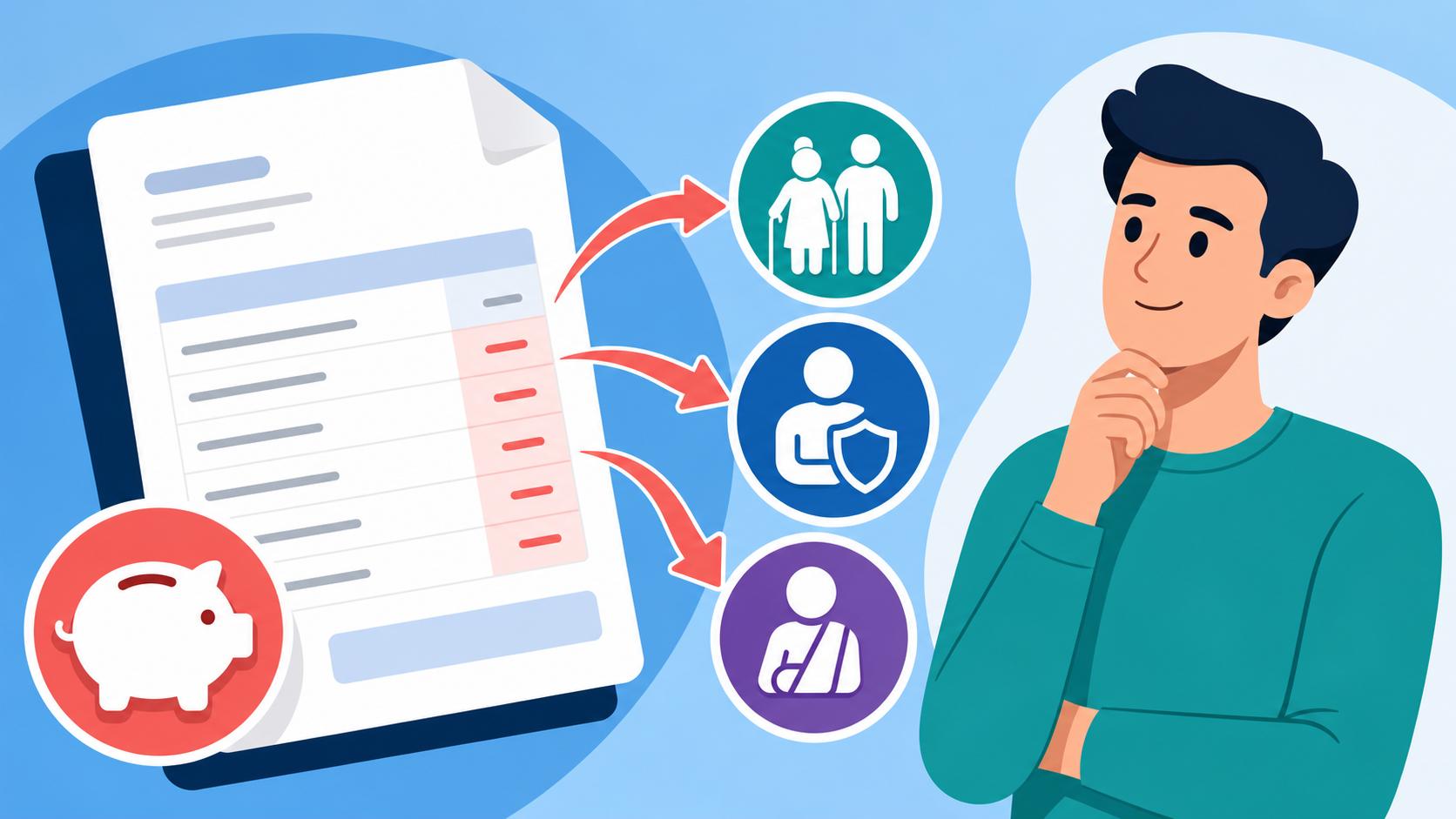
Opening your first Swiss payslip can be a genuine shock when you see the gap between your contract’s gross salary and the actual amount landing in your bank account. I remember sitting in my tiny studio in Oerlikon, staring at my first Lohnausweis and feeling like half my paycheck had vanished into an alphabet soup of acronyms. This guide decodes those deductions so you can master your monthly budget.
The Anatomy of a Swiss Lohnausweis
In Switzerland, your payslip, or Lohnausweis, is a meticulously detailed document that lists every single franc flowing in and out of your professional life. Unlike many other countries where deductions are bundled into a single "social security" tax, the Swiss system breaks everything down to the decimal point. This transparency is great once you understand it, but it’s overwhelming for a newcomer.
Gross vs Net Salary Bruttolohn and Nettolohn
The very first thing you’ll notice is the Bruttolohn (Gross Salary). This is the figure you negotiated during your interview. Below it, you will see a list of deductions, ending finally at the Nettolohn (Net Salary). It is important to remember that in Switzerland, "Net" doesn't always mean "money I can spend freely." You still have to pay your health insurance separately, which is a major difference from the UK or Germany. Understanding Salary and Compensation: Navigating Swiss Pay, Bonuses, and Deductions is the first step in realizing that your "take-home" pay has one more major invisible deduction: your mandatory health insurance premium.
Most Swiss companies pay on a 12-month or 13-month cycle. If you have a 13th-month clause, your monthly net might look lower, but you’ll receive a double payment in December. I’ve seen many expats panic in July thinking they’re underpaid, only to realize they didn't account for how The 13th Month Salary: How It Works and When It’s Paid affects their monthly cash flow.
Periodic vs Non Periodic Payments
Your payslip might also include line items for "Spesen" (expenses) or "Zulagen" (allowances). Standard expenses, like a monthly half-fare card or travel compensation, are usually non-taxable and added after the social security deductions. However, performance bonuses or "Gratifikation" are considered periodic income and are subject to the full suite of social security cuts.
If you are Working Models: Part-Time Percentages (e.g., 80% Workload) Explained, your payslip will reflect a pro-rated version of these figures. It is vital to check that your "Beschäftigungsgrad" (degree of employment) matches your actual hours, as this dictates how much you contribute to your pension and how much unemployment protection you have.
Social Security Deductions The First Pillar AHV IV EO
The most significant chunk of your deductions usually goes toward the "First Pillar" of the Swiss social security system. This is the state-run portion designed to provide a basic subsistence level of income during retirement or in the event of disability. These contributions are mandatory for everyone working in Switzerland, regardless of nationality.
AHV Old Age and Survivors Insurance
AHV stands for Alters- und Hinterlassenenversicherung. It is the bedrock of the Swiss retirement system. Currently, the deduction is 5.3% of your gross salary, and your employer matches this amount exactly. While it feels like a heavy hit every month, this is a "pay-as-you-go" system where today’s workers fund today’s retirees.
For expats, the big question is always: "Will I get this money back if I leave?" The answer depends on your nationality and how long you’ve stayed. It is crucial to understand The Three-Pillar Pension System: AHV, BVG, and Private Savings to know if you are eligible for a lump-sum refund or a partial pension later in life. I’ve seen colleagues move back to the US and successfully claim thousands in AHV refunds, but it requires meticulous record-keeping.
IV Invalidity Insurance and EO Loss of Earnings
Directly following the AHV line, you will see IV (Invaliditätsversicherung) and EO (Erwerbsersatzordnung). The IV portion funds support and pensions for those who cannot work due to health issues. The EO portion is particularly interesting; it covers salary compensation during military service, civil protection, and, most importantly for many expats, maternity and paternity leave.
These deductions are small—usually around 0.5% for IV and 0.25% for EO—but they are the reason Switzerland can offer statutory parental benefits. If you ever find yourself needing to navigate Maternity and Paternity Leave: Federal Mandates and Company Perks, you’ll be glad you’ve been paying into the EO fund.
Employment Related Insurances ALV and Accident Cover
Beyond the retirement and disability pillars, your payslip includes "risk" insurances that protect you while you are an active member of the workforce. These are arguably the most "valuable" deductions if things go wrong in your career or personal life.
ALV Unemployment Insurance
ALV (Arbeitslosenversicherung) is your safety net. You typically pay 1.1% of your salary into this fund. If you lose your job through no fault of your own, the ALV is what pays your unemployment benefits, usually 70% to 80% of your previous salary. However, there is a "cap" on the insured salary (currently around CHF 148,200 per year). If you earn more than this, you pay a "solidarity" contribution on the amount above the cap.
Knowing how this works is vital for long-term security. If you ever face a redundancy, you will need to know the specifics of RAV and Unemployment Benefits: How to Register and What You Get to ensure your years of contributions aren't wasted. I once had a friend who forgot to register correctly and missed out on two months of payments because he didn't realize the ALV requires proactive "searching" even before your contract ends.
NBU Non Occupational Accident Insurance
In Switzerland, your employer must insure you against accidents. There are two parts: BU (Betriebsunfallversicherung) for accidents at work, which the employer pays, and NBU (Nichtberufsunfallversicherung) for accidents outside of work. The NBU is usually deducted from your salary (around 1% to 2% depending on the industry and the insurance provider).
This is a fantastic benefit. If you fall while hiking in the Alps or crash your bike in Zurich, the NBU covers your medical costs and provides salary
continuation. It’s a much better deal than standard health insurance because it has no deductible (franchise). You should read more about Accident Insurance (UVG): Occupational vs. Non-Occupational Coverage to understand why you can tell your health insurance provider to "exclude accident coverage" and save roughly 7-10% on your monthly premium.
The Second Pillar Occupational Pension BVG LPP
The Second Pillar, known as BVG (Berufliche Vorsorge) or the Pensionskasse, is where your long-term wealth starts to build. Unlike the AHV, which is a collective pot, the BVG is an individual account in your name.
Understanding the Coordination Deduction
Your BVG deduction isn't calculated on your full salary. Instead, it’s calculated on your "coordinated salary." The Swiss government assumes that the first ~CHF 25,000 of your income is already "covered" by the First Pillar (AHV), so they subtract a "coordination deduction" (Koordinationsabzug) from your gross pay before applying the pension percentage.
This can be confusing. If you earn CHF 80,000, your pension contributions might only be based on CHF 55,000. For expats, this means your pension pot might grow slower than you expect. This is why many people choose to supplement their savings using tools like Trade Republic to invest in ETFs or other assets once they’ve settled their monthly bills.
Savings vs Risk Contributions
Your Pensionskasse deduction is usually split into two parts: "Sparen" (Savings) and "Risiko" (Risk). The savings part is the capital that earns interest for your retirement. The risk part covers death and disability benefits for your dependents. As you get older, the percentage deducted for savings increases—usually in steps at ages 25, 35, 45, and 55.
If you change jobs, your entire BVG balance moves with you. It is essential to track this, as many expats leave "vested benefits" in old accounts. To manage your finances effectively, you might even use services like Wise to move funds if you eventually decide to take your pension as a lump sum when leaving Switzerland for a non-EU country.
Tax at Source Understanding Quellensteuer
For most expats on a B-Permit or L-Permit, the "Nettolohn" isn't what you see on the payslip because the tax is already gone. This is called Quellensteuer, or Withholding Tax.
Who Pays Withholding Tax
If you are a foreign resident without a C-Permit (Permanent Residency) and you earn less than CHF 120,000 per year (in most cantons), your employer is legally required to deduct your income tax directly from your salary. The rate depends on your canton of residence, your marital status, and how many children you have.
This is actually quite convenient because it avoids a massive tax bill at the end of the year. However, if you are Withholding Tax (Quellensteuer) vs Standard Taxation for Foreigners, you should know that once you hit the CHF 120,000 threshold, you must file a regular tax return. This often leads to a higher tax bill in low-tax cantons like Zug, but can offer more deductions in high-tax cantons like Zurich or Geneva.
Calculating Your Tax Bracket
Your tax "code" (e.g., A0, B1, C2) determines your rate.
- Code A: Single person.
- Code B: Married person with a sole income.
- Code C: Married person with a dual income.
The number represents the number of children. If your employer has you on the wrong code, you could be overpaying by hundreds of francs a month. Always double-check this against your actual family situation. If you have extra savings from a bonus, you might look into Binance or other platforms for diversification, but remember that even crypto assets must be declared if you eventually move to the "Standard Taxation" model.
Comparing Deductions Across Cantons and Life Stages
The "cost" of being an employee in Switzerland varies. While federal laws govern AHV and ALV, the BVG rates and Quellensteuer vary wildly.
Comparative Overview of Mandatory Deductions
| Deduction Type | Acronym | Approx. Rate (Employee Share) | Mandatory? |
|---|---|---|---|
| Old Age Insurance | AHV/IV/EO | 5.3% | Yes |
| Unemployment | ALV | 1.1% | Yes |
| Pension Fund | BVG | 7% – 18% (age dependent) | Yes (if > ~CHF 22k income) |
| Accident (Non-Work) | NBU | 1% – 2% | Yes |
| Withholding Tax | Quellensteuer | 4% – 20% (canton/income dependent) | Yes (for B/L Permits) |
Maximizing Your Net Income
Understanding your payslip is the first step toward financial optimization. Once you see where the money is going, you can start making smarter choices. For example, knowing that Swiss Salary Deductions Explained: What is the ALV (Unemployment Insurance)? already covers your job loss risk might make you feel more comfortable investing your surplus.
If you send money home to pay off a mortgage or support family, using Wise can save you a significant amount compared to the hidden fees in traditional Swiss bank transfers. Similarly, if you find that your net salary is higher than your monthly needs, platforms like Trade Republic offer a way to put that money to work in a high-interest environment, which is often better than the near-zero rates offered by many local cantonal banks.
Disclaimer
This guide is for informational purposes only and does not constitute legal, financial, or tax advice. Swiss social security rates and tax laws change annually and can vary significantly by canton and individual circumstances. Always consult with a qualified tax professional or your HR department regarding your specific situation.