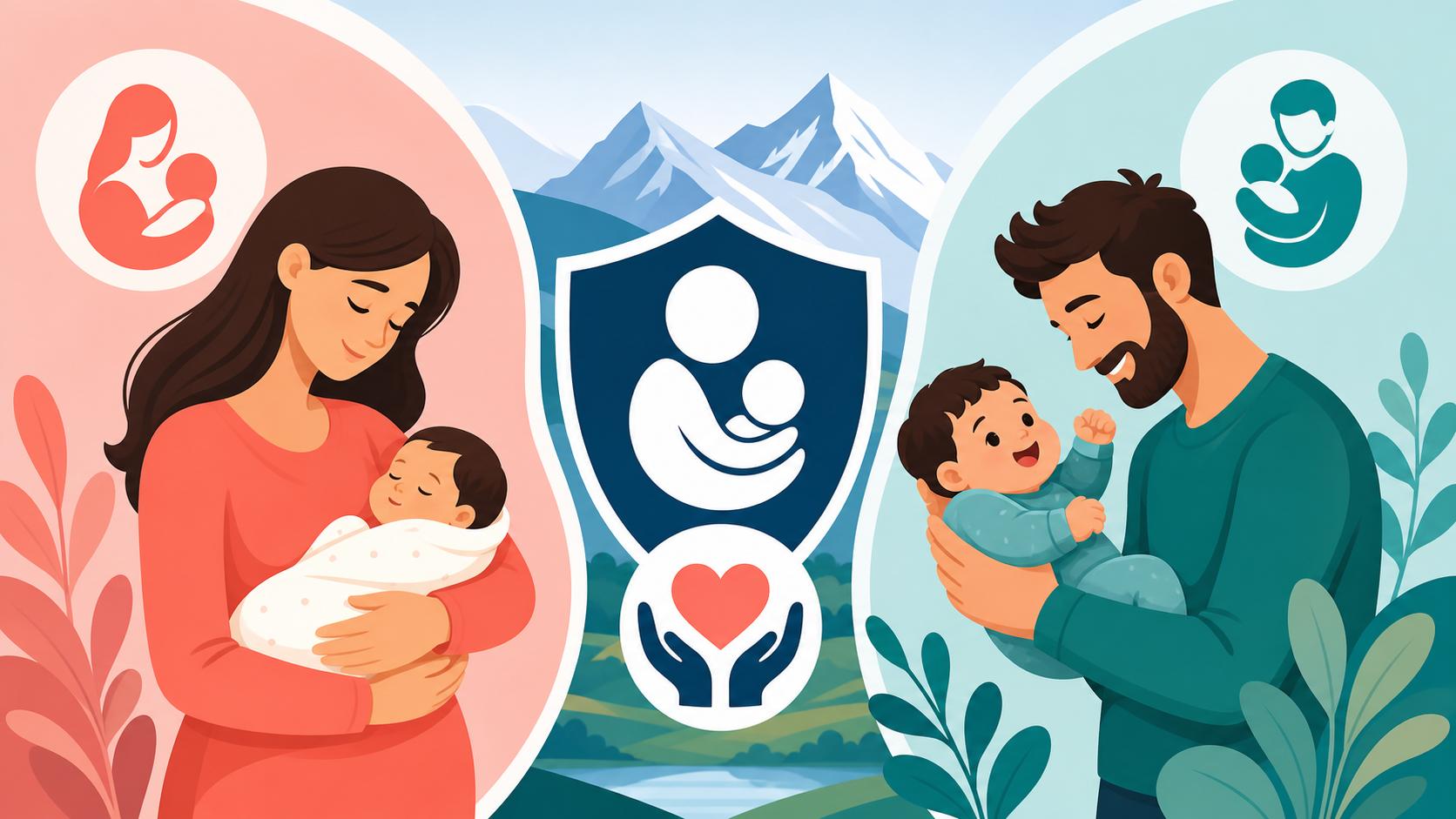
Maternity and Paternity Leave: Federal Mandates and Company Perks
Finding out you are expecting a child while navigating the high-pressure environment of the Swiss workplace can feel like a mountain-climbing expedition without a map. I remember the exact moment I realized that the 14-week federal minimum for maternity leave was significantly shorter than what my friends back home were receiving, and the panic of "how will we manage" set in immediately. This guide is designed to dismantle that confusion, explaining exactly what the law guarantees, where the cantonal differences lie, and how you can leverage company perks to secure a soft landing for your growing family.
The Federal Mandate for Maternity Leave
When it comes to maternity leave, Switzerland operates on a system of mandatory insurance known as the Loss of Earnings Compensation (EO/APG). Unlike some countries where the employer pays the salary directly, in Switzerland, the compensation is funded through social security contributions that you and your employer have been paying into throughout your employment. To qualify for this federal benefit, you must have been AHV-insured for at least nine months before the birth and have worked for at least five months during that pregnancy.
Duration and Eligibility Requirements
The federal law mandates a minimum of 14 weeks (98 days) of maternity leave. This leave must be taken in one block starting from the day the child is born. It is important to note that if you decide to return to work even part-time before those 14 weeks are up, you immediately forfeit the remainder of your benefit. For many expats, this 14-week window feels incredibly brief, especially when you are also managing the logistics of Maternity and Child Healthcare in Switzerland: From Pregnancy to Pediatrics. I found that many of my colleagues used their remaining vacation days or requested unpaid leave to extend this period, a common practice that you should discuss with HR as early as possible.
Eligibility isn't just about being employed on the day of the birth; it also covers those who are on unemployment benefits (RAV) or those who are unable to work due to sickness or accident, provided they meet the prior contribution milestones. If you are a freelancer or self-employed, you are still entitled to these benefits, but the administrative burden of filing the claim falls squarely on your shoulders. You’ll want to ensure your language skills are up to par when dealing with these offices; using tools like GermanPod101 or FrenchPod101 can be a lifesaver when you're trying to decode the specific terminology used in social security forms.
Compensation and the Eighty Percent Rule
During your 14 weeks of leave, you are entitled to 80% of your average pre-birth income, but there is a significant catch: the "cap." As of 2026, the maximum daily allowance is capped at CHF 220 per day. For high-earning expats in sectors like finance or pharma, this 80% might actually represent a much lower percentage of their actual take-home pay. This is where the distinction between "federal minimum" and "company perks" becomes vital. Many multinational corporations recognize that the federal cap is low and will voluntarily "top up" your salary to 100% for the duration of the leave.
Calculating your exact benefit involves looking at your salary over the months preceding the birth. If you have a variable bonus structure or commissions, this can complicate the math. It is highly recommended to sit down with your payroll department to get a written estimate of what your bank account will actually look like during those three and a half months. Understanding the financial nuances is just as important as Understanding Your Swiss Salary Certificate (Lohnausweis) for Tax Season because the maternity allowance is considered taxable income and is subject to social security deductions.
Protection Against Dismissal and Return to Work
One of the most robust features of the Swiss Code of Obligations is the protection against dismissal. Your employer cannot legally fire you during your pregnancy or during the 16 weeks following the birth. This "protected period" is designed to give you peace of mind, but it does not prevent the employer from terminating the contract after the 16th week, provided they follow the standard notice periods. I’ve seen expats get caught off guard by this, assuming the protection lasted until they returned to work, which isn't always the case if you take extended unpaid leave.
When you do return, Swiss law also provides specific protections for breastfeeding mothers. During the first year of your child's life, you are entitled to time off for breastfeeding or pumping during the workday. For a standard 8-hour day, you are generally allowed 90 minutes of paid time for this purpose. Many modern offices in Zurich or Geneva have dedicated "lactation rooms," but in smaller companies, you might need to advocate for a private space. If you are struggling with the transition, reaching out to local support groups or learning How the Mütter- und Väterberatung Supports New Expat Parents for Free can provide the emotional and practical scaffolding you need.
Paternity Leave in Switzerland
For a long time, Switzerland lagged behind its neighbors regarding fathers' rights, with "paternity leave" often consisting of a single "family day" granted at the employer's discretion. However, since the 2021 referendum, fathers and the second parent in same-sex couples are now entitled to a federal minimum of two weeks of paid leave. While this is a massive step forward, it still requires careful planning to integrate into a busy Swiss work schedule.
The Two Week Standard and Timing
The federal mandate for Paternity Leave in Switzerland: Taking the 2-Week Mandate allows for 10 working days of leave, which can be taken either all at once or as individual days within six months of the child’s birth. This flexibility is a godsend for expats who may not have extended family nearby to help. I know many fathers who took one week immediately after the birth to help with the hospital transition and then used the remaining five days to work a 4-day week for the next month.
Just like maternity leave, paternity leave is compensated at 80% of the father's income, capped at CHF 220 per day. To be eligible, the father must have been AHV-insured for nine months before the birth and have been employed for at least five months. If you are new to the country, this "nine-month rule" is critical. If you arrive in Switzerland and your child is born seven months later, you may not qualify for the federal benefit, though your specific employment contract might offer more generous terms.
Applying for the Benefit and Notification
The onus of "applying" for paternity leave usually falls on the employer, but you must provide them with the child's birth certificate as soon as possible. Because the compensation comes from the EO/APG fund, the employer pays you your salary as usual and then claims the money back from the compensation office. It is vital to notify your employer in writing about when you plan to take your days. In the Swiss corporate culture, punctuality and planning are everything, so giving three to four months' notice is considered professional etiquette.
If you are a non-EU citizen on a permit, you might worry about how taking leave affects your status. Rest assured that taking legally mandated family leave has no negative impact on The Swiss B Permit: Eligibility, Renewal, and Restrictions. In fact, being able to show you are integrated and utilizing the social system correctly is often viewed positively. However, if you are looking to improve your communication with your HR department during this time, taking a course with Lingoda to polish your professional German or French can make these administrative conversations much smoother.
Recent Legal Evolutions and Future Trends
The landscape of parental leave in Switzerland is shifting rapidly. There are ongoing political discussions about moving toward a "parental leave" model where a pool of weeks can be shared between parents, similar to the Scandinavian systems. While this hasn't passed at the federal level yet, some cantons and many private companies are already leading the way. For instance, some industries under a General Labour Agreement (GAV) have already negotiated three or four weeks of paternity leave as a standard.
It is also worth noting that if the mother dies within 14 weeks of the birth, the father is entitled to an additional 14 weeks of leave. Conversely, if the father dies within six months of the birth, the mother is entitled to an additional two weeks. While these are grim scenarios, the fact that the law now recognizes these needs shows a deepening of the Swiss social safety net. As you plan your future, staying informed via the Maternity Leave in Switzerland: 14 Weeks Federal Law vs Cantonal Upgrades list is essential for staying current with any 2026 legislative shifts.
Company Perks and Supplementary Benefits
While the federal law sets the "floor," many expats find that their actual experience is determined by the "ceiling" provided by their employers. In a competitive job market like Switzerland, benefits packages are a primary tool for talent retention. If you are in the middle of a job hunt or a contract negotiation, understanding what to ask for can result in thousands of francs in additional value.
Salary Top Ups and Extended Pay
The most common company perk is the "salary top-up." As mentioned, the federal cap of CHF 220 per day often falls short for professionals. Many companies will guarantee 100% of your salary for the full 14 weeks. Some "Gold Standard" employers in the Basel pharma hub or Zurich’s tech sector go even further, offering 100% pay for 16, 18, or even 26 weeks.
When reviewing your contract, look for clauses regarding "Maternity/Paternity Top-up." If it isn't there, this is a valid point for negotiation. I have seen expats successfully negotiate an extra two weeks of paid leave by highlighting their tenure or specific project contributions. Remember, however, that if a company pays you more than the federal mandate, they might include a "return to work" clause, requiring you to stay with the company for a certain period (usually 6 to 12 months) after your leave ends, or else you may have to pack back the supplementary portion.
Unpaid Leave and Flexible Returns
Another significant perk is the formal policy on unpaid leave (Sabbatical or Unbezahlter Urlaub). Many Swiss employers are open to mothers or fathers taking an additional 2 to 6 months of unpaid leave following their statutory leave. While you won't receive a salary, the company will often keep your social security and pension contributions active, or allow you to pay both shares yourself to avoid a gap in your Pillar 2 (BVG): Understanding Your Swiss Occupational Pension.
Flexible return-to-work schemes are also becoming the norm. The "80% workload" is a quintessential Swiss phenomenon where parents work four days a week instead of five. In my experience, this is the single best perk for maintaining sanity as a new parent. For more on how this works, see Working Models: Part-Time Percentages (e.g., 80% Workload) Explained. Some companies even offer a "phased return," where you work 50% for the first month back but are paid at 80% or 100% as a "re-boarding" bonus.
Childcare Subsidies and Family Allowances
Beyond just leave, some companies provide direct financial support for childcare. Given that a full-time "Krippe" (nursery) in Zurich can cost upwards of CHF 2,500 to CHF 3,500 per month, any subsidy is gold. This might come in the form of a monthly stipend or preferred access to a company-affiliated daycare center. Additionally, while every parent in Switzerland is entitled to a federal Child Benefit Payments (Kinderzulage) and Their Tax Implications, some employers add a supplementary "company family allowance" on top of the cantonal minimum.
| Benefit Type | Federal Minimum | Common Corporate Perk |
|---|---|---|
| Maternity Leave Duration | 14 Weeks | 16 – 26 Weeks |
| Paternity Leave Duration | 2 Weeks | 4 – 8 Weeks |
| Salary Compensation | 80% (capped at CHF 220/day) | 100% (No Cap) |
| Breastfeeding Time | Paid (capped by hours) | Fully Flexible |
| Childcare Support | None | Monthly Subsidies / Reserved Slots |
Navigating the Administrative Hurdles
The Swiss love their paperwork, and the birth of a child triggers a landslide of forms. As an expat, you are likely already familiar with the Registering Your Address at the Kreisbüro Within 14 Days of Moving process, but the post-birth administration is even more time-sensitive. Missing a deadline can lead to delayed payments or, worse, insurance gaps for your newborn.
Applying for EO/APG Benefits
You do not automatically receive your maternity or paternity pay; you must apply for it. Usually, your employer's HR department will handle the submission to the Compensation Office (Ausgleichskasse), but you are responsible for providing the necessary documentation. This includes the "Official Registration of Birth" certificate provided by the civil registry office.
If you are unemployed or self-employed, you must submit the forms yourself to the office where you last paid contributions. This can be a headache if your language skills are shaky. I highly recommend having a fluent friend or a relocation consultant double-check your forms. During your leave, you will receive a "settlement" statement every month. It’s important to check these against your previous payslips to ensure the 80% calculation (or company top-up) is correct.
Health Insurance and the Newborn Window
In Switzerland, every resident must be insured. For a newborn, you have exactly 90 days from the date of birth to sign them up for a health insurance plan. The beauty of the Swiss system is that the coverage is retroactive to the day of birth, meaning any hospital costs or pediatric checks in those first weeks will be covered once the policy is active. However, don't wait until day 89.
I made the mistake of waiting until the last minute and found the paperwork overwhelming while sleep-deprived. Many parents opt for a "pre-natal" registration, where you choose the provider before the birth, and then simply call them with the name and birth date once the baby arrives. This also allows you to secure supplementary insurance without a medical exam, which is crucial for things like Dental Care in Switzerland: Costs, Insurance Reality, and Alternative Options or private room upgrades in the future.
Impact on Permits and Residency Status
For those on a B or L permit, the arrival of a child requires a notification to the Cantonal Migration Office. You will need to apply for a residence permit for the child. Generally, the child receives the same permit status as the parents. This is usually a straightforward process of submitting the birth certificate and a copy of your passports.
If you are a non-EU citizen, be aware that you may need to prove you have sufficient financial means to support the additional family member. This is rarely an issue for those in stable employment, but it's something to be aware of if you are currently on RAV and Unemployment Benefits: How to Register and What You Get. The migration office wants to see that your "household budget" remains positive despite the added expenses of a child.
Cultural Realities and Workplace Integration
Beyond the laws and the money, there is the "Swiss Way" of handling parenthood. This is a culture that highly values the distinction between "work" and "life," but also has traditional roots that can sometimes feel at odds with the fast-paced expat lifestyle.
The Eighty Percent Workload Culture
If there is one thing you should take away from this guide, it is the concept of the Teilzeit (part-time) culture. Switzerland has one of the highest rates of part-time work in the world, particularly among parents. It is very common for both a mother and father to reduce their workload to 80%, allowing each parent to have one full day at home with the child.
In my office, "Daddy Day" was a respected institution. If a colleague's 80% schedule meant they were off on Wednesdays, no one expected them to answer emails. This cultural acceptance is a huge perk for expat families who don't have grandparents nearby to help with childcare. However, you must proactively negotiate this. Do not assume your role will automatically be converted to part-time; while employers are generally supportive, they are not legally obligated to reduce your percentage unless it was stipulated in your original contract.
Finding a Hebamme and Support Networks
In Switzerland, the "Hebamme" (midwife) is the cornerstone of postpartum care. The basic health insurance (KVG) covers several home visits by a midwife after the birth to check on both the mother and the baby. This is an incredible resource that I didn't fully appreciate until I was home and realized I had a thousand questions about feeding and sleep.
Finding a midwife can be competitive, especially in cities like Zurich or Geneva. You should start looking as soon as you hit the 20-week mark. For those in the Limmat city, Selecting a Hebamme (Midwife) for Postpartum Care in Zurich is a great place to start your search. Having an English-speaking midwife can significantly reduce the stress of those first few weeks, and they can also refer you to an Finding an English-Speaking Pediatrician in Zurich Oerlikon if you haven't found one yet.
Integration and the Local "Vereine"
Once the initial "baby bubble" pops, many expat parents feel a sense of isolation. This is where the Swiss tradition of the Verein (club) or local parent-child groups (Krabbelgruppe) comes in. These are not just social outlets; they are the key to long-term integration. Joining a local group helps you practice your language skills—again, those GermanPod101 lessons will pay off here—and helps you navigate the local school system later on.
The Swiss can be reserved, but they are incredibly consistent. If you show up to the local playground or the Mütter- und Väterberatung sessions regularly, you will eventually build a network of local friends who can give you the "real" advice on everything from the best local diapers to which kindergartens have the shortest waiting lists.
Cantonal Variations and Specific Exceptions
Switzerland is a confederation, which means that while federal law provides the baseline, cantons often have their own "upgrades." Depending on where you live and work, you might be entitled to significantly more than the 14-week minimum.
Geneva’s Maternity and Paternity Extensions
Geneva is consistently the most progressive canton regarding family leave. While the federal law says 14 weeks, Geneva mandates 16 weeks of maternity leave for residents. They also have a more generous "paternity" (or second-parent) leave policy that can sometimes exceed the 10-day federal minimum depending on the specific cantonal fund's health.
If you live in a border region and work in Geneva, you need to be very careful about whether you fall under the Geneva cantonal rules or the federal rules. This is a common point of confusion for those with a G Permit (Cross-Border Commuter): Complete Guide for Frontier Workers. Usually, the rules of the canton where the company is registered apply, but if you live in France or Germany, there are additional social security coordination rules to consider.
Self-Employed Parents and Freelancers
If you are your own boss, you are still entitled to the 80% daily allowance, but the calculation is based on your declared AHV-taxable income from the previous year. This can be tricky if you’ve had a "lean" year or if you've just started your business. You must be able to prove that you were working up until the birth.
The biggest challenge for self-employed expats is the "replacement" cost. Since you don't have a company to top you up to 100%, many freelancers take out private daily allowance insurance (Taggeldversicherung) to cover the gap. This is something to plan for well in advance, as most of these private policies have a "waiting period" (often 12 months) before they will pay out for a pregnancy.
Adoptive Parents and Special Cases
Interestingly, Swiss federal law does not currently mandate "adoption leave" in the same way it does for biological birth. However, many cantons and almost all major employers provide it as a perk. Typically, this mirrors the 14-week maternity leave or the 2-week paternity leave, depending on the role. Some political movements are pushing for a federal adoption leave mandate, so it is worth checking the latest updates if this applies to your family.
Lastly, for parents of children who must stay in the hospital for a prolonged period after birth (at least 2 weeks), the maternity leave can be extended by the duration of the hospital stay, up to a maximum of 56 additional days. This is a vital protection that ensures you don't "waste" your leave while your child is in neonatal care.
Legal Disclaimer
This article is provided for informational purposes only and does not constitute legal or professional advice. While we strive to provide the most up-to-date information regarding Swiss federal and cantonal laws, regulations can change. Always consult with your HR department, the official Swiss Compensation Office (Ausgleichskasse), or a qualified legal expert regarding your specific employment contract and situation. Use of the brands mentioned is at the user's discretion and does not guarantee specific legal outcomes.