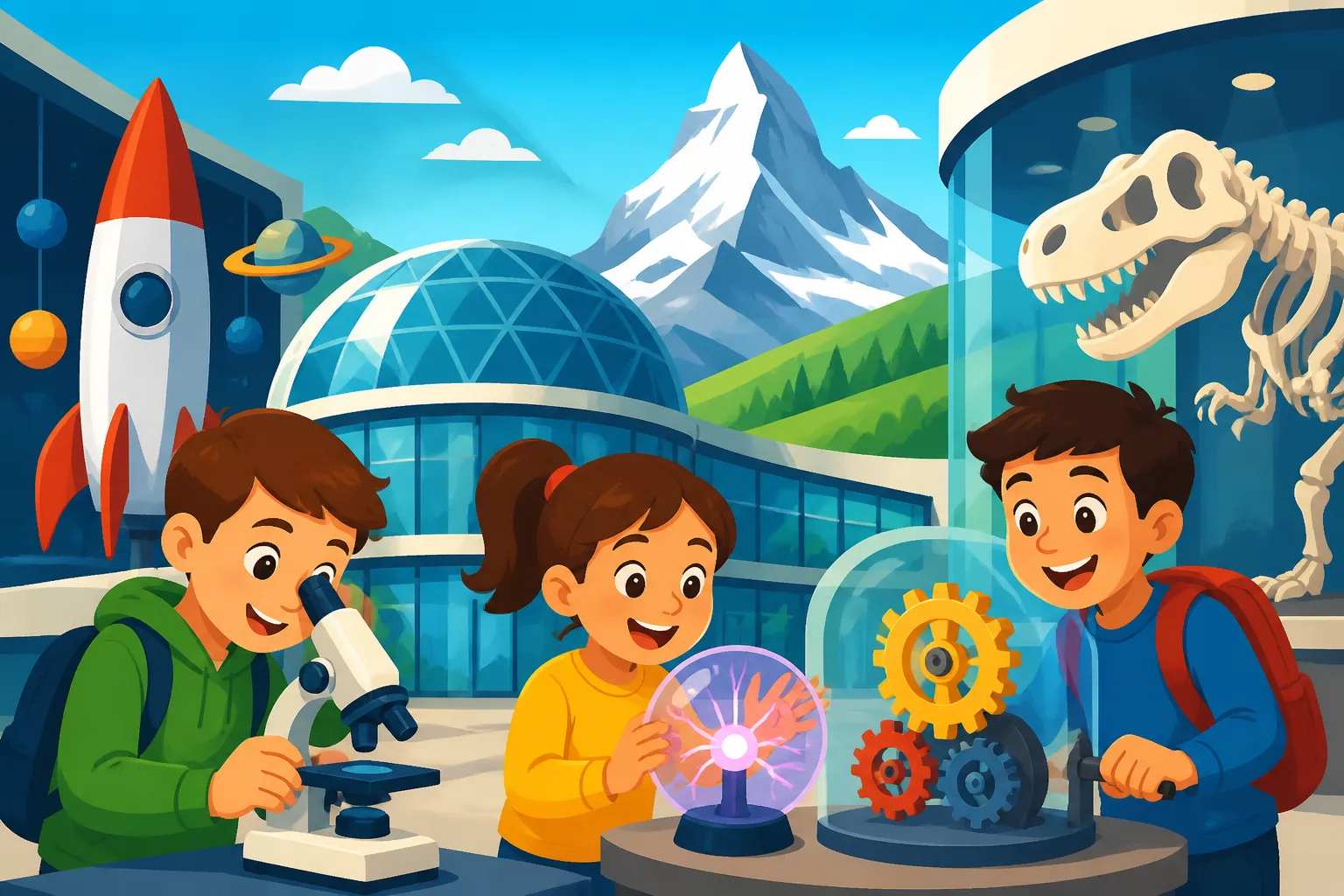
Science and Discovery Museums for Children in Switzerland
As an expat parent in Switzerland, you quickly learn that while the mountains are breathtaking and the lakes inviting, not every day can be an outdoor adventure. Sometimes, the Bise blows, the Föhn brings a headache, or the relentless rain traps everyone indoors. Finding engaging, educational activities that don't solely rely on language fluency can feel like searching for a needle in a hayst*ack, especially when your little ones are bursting with energy and curiosity. This guide is here to shed light on some incredible science and discovery museums across Switzerland that are absolute lifesavers for expat families, offering hands-on fun and learning that transcends linguistic barriers.
Why Science and Discovery Museums Are a Lifesaver for Expat Families
Let's be honest, the initial excitement of living in Switzerland can sometimes give way to the reality of grey, rainy days or simply the need for a change of pace from endless hikes. For children, especially, variety is the spice of life, and finding activities that truly engage their minds and bodies, rather than just passively observing, is key. This is where science and discovery museums shine like a beacon of hope for expat families.
These aren't your typical "look but don't touch" institutions. Far from it! Swiss science museums are meticulously designed for interaction, experimentation, and genuine hands-on learning. The beauty of this approach, particularly for expat kids who might still be grappling with a new language at school or among friends, is its universal appeal. Science, after all, speaks its own language through cause and effect, through tangible experiments, and through the sheer wonder of discovery. A child doesn't need perfect German, French, or Italian to understand that when they crank a lever, something moves, or when they mix two substances, a reaction occurs. This makes them incredibly inclusive spaces where every child, regardless of their language proficiency, can dive in and explore. For us parents, it's a huge relief to see our kids fully immersed, asking questions (even in English!), and genuinely learning without the added stress of a language barrier. It’s also a fantastic way to supplement their schooling with practical, real-world examples that bring classroom concepts to life.
Top Science and Discovery Museums Across Switzerland
Switzerland is home to some truly world-class science and discovery museums, each offering a unique experience. They are thoughtfully designed, often sprawling, and can easily fill an entire day – a welcome relief on those long weekends or during school holidays. Let’s dive into some of the best that consistently earn rave reviews from expat families.
Technorama, Winterthur
If there's one science museum that every expat family in the German-speaking part of Switzerland absolutely must visit, it's the Swiss Science Center Technorama in Winterthur, near Zurich. I can't stress this enough: this place is a wonderland of natural phenomena and technology, where hands-on interaction isn't just encouraged, it's the entire point. Forget polite whispers and museum ropes; here, kids (and adults!) are invited to press, pull, twist, jump, create, and explore.
Imagine a vast space filled with hundreds of experimental stations covering everything from magnetism and electricity to light, sound, and fluid dynamics. Your child can generate their own electricity, stand in a dizzying spinning room, experience a massive Tesla coil discharge, or even manipulate a robot arm. Each exhibit is meticulously designed to demonstrate scientific principles in an intuitive way. The sheer scale and variety mean there’s something for every age and interest, from toddlers fascinated by cause-and-effect to teenagers tackling complex physics puzzles. We've spent countless hours there, and every visit reveals something new. It’s the perfect antidote to cabin fever and a brilliant way to stimulate young minds. Make sure to check out their outdoor park too, which often has additional large-scale experiments and installations that are just as engaging. Getting there is easy by public transport; Winterthur is a major SBB hub.
Transport Museum Verkehrshaus, Lucerne
The Swiss Museum of Transport, or Verkehrshaus der Schweiz, in Lucerne, might sound like it’s just about trains and planes, but trust me, it’s so much more. This is an enormous complex that blends history, technology, and science discovery in a way that captivates every single member of the family. While it’s technically a transport museum, its interactive exhibits, particularly in areas like the Planetarium, Swissarena, and Media World, lean heavily into scientific principles and engineering marvels.
You’ll find meticulously restored locomotives, cars, aircraft, and even space capsules, but the real magic happens when you engage with the interactive displays. Kids can pilot a flight simulator, experience centrifugal force, or learn about communication technology in Media World, where they can even produce their own TV show. The Planetarium offers immersive shows that make astronomy accessible and exciting, while the Swissarena, with its huge aerial photograph of Switzerland you can walk on, is fantastic for understanding geography and cartography. The whole place is designed for active exploration, making it a fantastic destination for children to discover the science behind how things work. Lucerne itself is a gorgeous city, making a trip to the Verkehrshaus a perfect addition to a day spent Exploring Lucerne: Old Town, Lake Cruises, and Mount Excursions. You might even consider staying overnight, with many great options on Booking.com if you want to explore the region further.
Natural History Museum Muséum d'Histoire Naturelle, Geneva
Moving over to the French-speaking side of Switzerland, the Muséum d'Histoire Naturelle in Geneva is a treasure trove for budding biologists, paleontologists, and environmentalists. It might not be as overtly "hands-on science experiment" focused as Technorama, but it offers a deep dive into the natural world, fostering a sense of discovery and appreciation for biodiversity that is equally vital for young minds.
This museum houses impressive collections of animals, fossils, minerals, and a fantastic exhibit on dinosaurs that always seems to mesmerize children. What makes it special for expat kids is the immersive environment, often featuring dioramas and realistic displays that transport them to different ecosystems. They have living exhibits too, which are a huge hit, giving children a chance to observe creatures up close. While some of the information panels might be primarily in French, the visual nature of the exhibits, the sheer scale of the specimens, and the occasional interactive touchscreens make it accessible. It encourages questions, critical thinking about conservation, and a broad understanding of life on Earth. A visit here can easily be combined with other Day Trips from Geneva: Montreux, Gruyères, and the Lavaux Vineyards to make for a truly enriching cultural experience in the region.
Papiliorama, Kerzers
Just a short trip from Bern, in Kerzers (Canton Fribourg), lies Papiliorama, a truly unique and enchanting discovery experience that focuses on the delicate beauty of the natural world. While not a traditional "science museum" in the sense of physics and chemistry, it's an incredible place for children to learn about biodiversity, ecosystems, and animal life through immersive observation. It’s all about discovery, and what kid doesn't love butterflies and exotic animals?
Papiliorama consists of several domes, the most famous being the tropical jungle dome where hundreds of free-flying butterflies flutter around you in a humid, lush environment. It’s an almost magical experience, offering a vivid lesson in entomology and tropical ecosystems. Beyond the butterflies, there’s a nocturnal exhibit (Nocturama) where you can observe nocturnal animals from tropical rainforests, and a Swiss animal park (Petits Jurassiens) showcasing local wildlife. The whole concept is designed to awaken curiosity and wonder about nature, making it a fantastic educational outing. Children learn about life cycles, adaptation, and the interconnectedness of different species, all while being captivated by the vibrant beauty around them. It's a fantastic day out that marries education with sheer wonder, proving that science isn't just about formulas, but about understanding the world around us.
Other Notable Mentions for Discovery and Learning
While the big players like Technorama and Verkehrshaus often steal the spotlight, don't overlook some of the other fantastic, albeit perhaps smaller, institutions that offer wonderful learning opportunities.
For instance, many cantons have excellent natural history museums (Naturmuseen) in their capital cities. These might not have massive interactive exhibits, but they often focus on local flora and fauna, geology, and archaeology, which can be incredibly engaging for children who are curious about the specific environment they now live in. Think about the dinosaur footprints near Delémont or the rich fossil beds of the Jura. The focus on hyper-local natural history can be a wonderful way for expat kids to connect with their new Swiss surroundings. Even some historical museums incorporate elements of discovery, showing how technologies evolved or how people lived, sparking curiosity about the past.
Beyond dedicated museums, many science-related events or temporary exhibitions pop up throughout the year. Keep an eye on local municipality websites or expat forums, as these often provide great opportunities for unique learning experiences. Sometimes, universities like ETH Zurich will host open days or specific science events tailored for children, allowing them to peek behind the scenes of real scientific research. These can be incredible, often free, ways to expose your kids to cutting-edge science.
Planning Your Visit: Tips for Expat Parents
Visiting these fantastic science and discovery museums is more than just showing up. For expat parents, especially when navigating a new country and its systems, a bit of planning can turn a good day into an amazing one. And yes, dealing with Swiss prices means thinking smart!
Getting There with Public Transport
One of the greatest joys of living in Switzerland is the phenomenal public transport system. Seriously, it’s a game-changer! Most of these major museums are easily accessible by train or bus. Before you even think about firing up the car (and battling parking fees), check the SBB website or app. It's incredibly user-friendly and will give you the fastest routes, connections, and platform numbers.
Consider investing in a The Half-Fare Travelcard (Halbtax): The Must-Have Pass for Swiss Residents if you plan on traveling by train frequently, as it literally halves your ticket prices for a year. For families, the SBB Junior Travelcard or Children's Co-Travelcard (for kids 6-16) is an absolute steal at just CHF 30 per year, allowing them to travel free with a parent who has a valid ticket. Even better, kids under 6 travel free anyway! If you're going all-out with travel, or plan many day trips, the SBB Travelcards: Is the Generalabonnement (GA) Worth the CHF 4000+ Cost? might even make sense for your family, offering unlimited travel. Remember, buying tickets on the SBB app, through apps like Omio, or via ticket machines at the station is generally straightforward.
Making the Most of the Experience
To ensure everyone has a fantastic time, approach these museums not as a race to see everything, but as an opportunity for deep engagement. Allocate enough time – trying to squeeze Technorama into two hours is a recipe for tears (yours and theirs!). Many of these places are huge, so plan for at least half a day, if not a full one.
Dress comfortably and wear good walking shoes, as you’ll be on your feet a lot. Consider bringing a small backpack with snacks and drinks. While most museums have cafeterias, they can be pricey, and sometimes kids just need a quick fuel-up in between exciting experiments. Check the museum's website in advance for current opening hours, special exhibitions, and any workshops. Some offer specific guided tours or activities in English, which can be a real bonus. Don't be afraid to let your children lead the way; follow their interests. If they're obsessed with the electricity section, let them spend extra time there, even if it means skipping something else. The goal is engagement, not completion.
Membership and Annual Passes
If you find your family absolutely adores a particular museum, look into their annual passes or membership options. For places like Technorama or Verkehrshaus, which you can easily visit multiple times and still discover new things, a membership can quickly pay for itself. It’s also a fantastic way to ensure you have a reliable, engaging Rainy Day Activities in Switzerland for Families option always available, without the constant cost consideration.
These passes often come with perks like discounts in the museum shop or cafeteria, and sometimes even free or reduced entry to partner museums, both within Switzerland and internationally. For us expats, this is smart budgeting. When you consider the Cost of Living in Switzerland 2026: Budgeting for Singles and Families, finding ways to enjoy high-quality entertainment and education without breaking the bank is always a win. A membership provides not just access, but also a sense of belonging and community, which is so important when settling into a new country.
Beyond the Exhibits: Educational Value for Expat Kids
It's easy to see these museums as just fun outings, but for expat children, they offer so much more than mere entertainment. They are fertile ground for development, both academic and personal, helping them adapt and thrive in their new Swiss environment.
Fostering Critical Thinking and Problem Solving
The core design of science and discovery museums—with their interactive exhibits and open-ended questions—naturally encourages critical thinking. Instead of being told facts, children are invited to figure things out for themselves. Why does this pendulum swing like that? What happens if I change this variable? This isn't just about memorizing information; it's about understanding processes, testing hypotheses (even intuitively), and learning from outcomes.
For expat children, who are constantly encountering new ways of thinking and learning in their Swiss schools, this type of environment is invaluable. It teaches them resilience in problem-solving and fosters a sense of agency in their own learning journey. They learn that it's okay to try, fail, and try again, and that curiosity is a powerful driver of knowledge. These are skills that extend far beyond the museum walls, helping them navigate academic challenges and everyday life.
Language-Agnostic Learning and Confidence Building
As I mentioned before, the hands-on nature of these museums means that language is less of a barrier. This is huge for expat kids who might feel less confident expressing themselves in German, French, or Italian. In a science museum, the experience itself often conveys the message. Seeing an experiment, feeling the force, observing the reaction—these are universal understandings.
This language-agnostic learning environment builds confidence. When a child successfully makes something work, or understands a concept purely through interaction, they gain a sense of achievement that doesn't rely on their linguistic abilities. This can be incredibly empowering, especially if they are struggling with language in other areas of their lives. It's a place where they can feel smart, capable, and engaged without the pressure of finding the right words, which in turn can boost their overall confidence in their new country. For more ideas on how to keep them engaged, check out Kids' Activities and Sports Clubs in Switzerland for Expat Children.
Cultivating a Lifelong Love for Learning
Ultimately, science and discovery museums aim to do one thing: spark curiosity. By making learning fun, accessible, and exciting, they can ignite a lifelong passion for knowledge. For expat children, who are already experiencing a world much larger than their peers in their home country, this expanded view of science and the natural world can be particularly transformative.
They learn that learning isn't confined to textbooks or classrooms, but is an ongoing process of exploration and discovery that happens all around them. This intrinsic motivation to learn and explore is perhaps the greatest gift these museums offer. It helps them embrace new experiences, ask bigger questions, and develop a deeper appreciation for the wonders of science and the natural world, whether they're back in their Swiss school or embarking on a Budget Travel in Switzerland: Seeing the Country Without Overspending adventure with the family. These foundations foster adaptable, curious, and resilient individuals, which is exactly what we hope for our expat kids.
Disclaimer
Please remember that while I strive to provide accurate and up-to-date information, details such as opening hours, ticket prices, and specific exhibit availability can change. It is always recommended to check the official websites of the museums and transportation providers (like SBB) before planning your visit. This guide is based on general knowledge and web searches and should be used for informational purposes only.