Budget Accommodation in Switzerland: Hostels and Holiday Apartments
Oh, the infamous Swiss accommodation hunt! Believe me, as an expat who’s been through the wringer trying to find a decent, affordable place to lay my head without emptying my entire savings account, I truly get the struggle. Switzerland is breathtakingly beautiful, but it can also be breathtakingly expensive, and finding "budget" accommodation often feels like searching for a unicorn. This guide is here to walk you through the realistic options available for hostels and holiday apartments, helping you navigate the waters without diving headfirst into financial shock.
The Reality of "Budget" in Switzerland: Setting Expectations
Let's be brutally honest from the get-go: the concept of "budget" in Switzerland is a sliding scale, and it rarely aligns with what you might consider budget-friendly in other European countries. Many newcomers arrive with dreams of charming, inexpensive chalets, only to be met with a dose of Swiss reality. It’s crucial to adjust your expectations before you even start looking, otherwise, you'll just end up frustrated.
Why Accommodation Costs So Much Here
There are a few key reasons why you'll often gasp at the prices when browsing accommodation options in Switzerland. It's not just a conspiracy to fleece tourists and expats, though it can certainly feel that way sometimes! Primarily, Switzerland boasts one of the highest costs of living globally, and this permeates every aspect of the economy, including hospitality and real estate. Wages are high, which means operational costs for hotels, hostels, and even apartment rentals are significantly elevated compared to, say, Spain or Portugal. Property is also at a premium, especially in desirable areas near lakes, mountains, or major cities like Zurich, Geneva, or Lucerne. The demand for accommodation, both short-term and long-term, consistently outstrips supply, driving prices ever upwards.
Furthermore, the Swiss standard of living translates to high expectations for quality, even in more affordable options. You might pay more for a hostel bed here, but you’re often getting impeccably clean facilities, reliable infrastructure, and a level of safety and order that is simply par for the course in Switzerland. This isn't always the case everywhere in the world, so while your wallet might feel lighter, you're generally getting excellent value for the money, even if the absolute number seems daunting. This is particularly true when you consider the overall Cost of Living in Switzerland 2026: Budgeting for Singles and Families. So, when we talk about "budget" here, we're talking about the most economical choices within the Swiss context, not necessarily options that would be considered cheap by international standards.
Understanding Different Accommodation Types
To successfully navigate the Swiss accommodation landscape, it helps to understand the various types of stays available and which ones tend to offer better value for money.
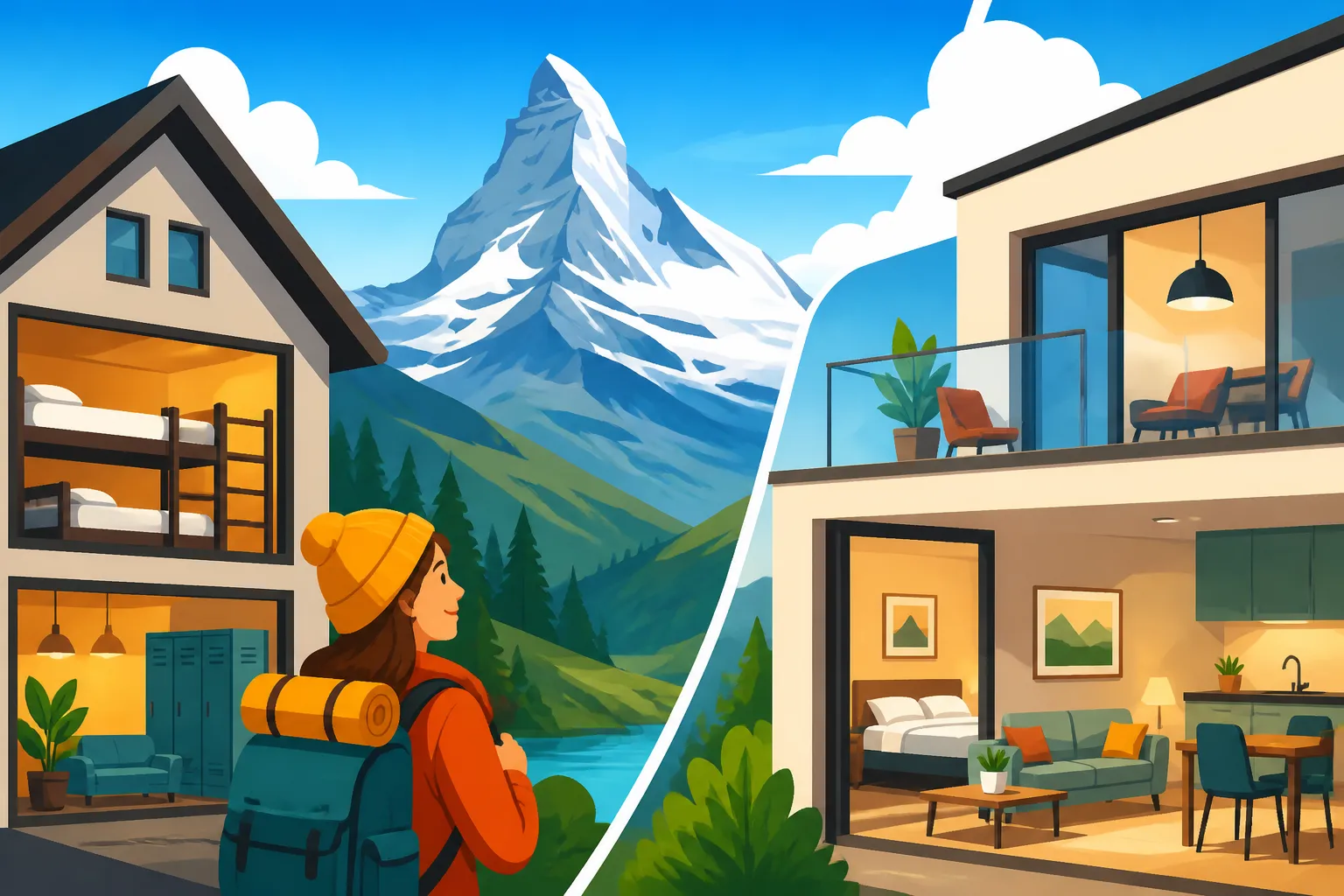
- Hostels: These are often the first port of call for budget-conscious travelers. Forget the dusty, dilapidated images you might have from movies; Swiss hostels are generally pristine, well-managed, and often offer a surprising array of amenities. They’re no longer just for young backpackers; many families and older travelers now opt for private rooms in hostels to save money.
- Holiday Apartments (Ferienwohnungen): These self-catering units are fantastic for longer stays or for groups and families. The ability to cook your own meals can dramatically reduce your overall trip costs, which is a massive win in Switzerland where restaurant prices can be eye-watering. They range from cozy studios to multi-bedroom flats.
- Bed & Breakfasts (B&Bs): While not always the absolute cheapest, some B&Bs, particularly in smaller towns or rural areas, can offer competitive rates with a more personal touch and often include breakfast. It’s worth checking these out if you prefer a homely feel.
- Camping and Glamping: Especially popular during the warmer months, camping offers significant savings. Switzerland has an excellent network of campsites, often located in stunning natural settings. For those who want more comfort but still a nature experience, glamping options are becoming increasingly available.
- Private Room Rentals: Platforms like Airbnb also host private rooms within someone's home. This can be a hybrid option, offering a lower price than an entire apartment but with more privacy than a hostel dorm. You get a local perspective, too!
Each of these options has its pros and cons, which we’ll dive into with more detail. The trick is to match the right accommodation type to your travel style, group size, and, most importantly, your "Swiss budget."
Hostels in Switzerland: More Than Just Backpackers
When I first moved to Switzerland, the idea of staying in a hostel felt like a throwback to my student travel days. But trust me, Swiss hostels are a different breed altogether. They’ve evolved considerably, and for budget-minded travelers and even families, they present a genuinely attractive option that shouldn't be overlooked.
Modern Hostels vs. Stereotypes
Let's bust some myths right now. The image of a grimy, overcrowded dorm room with dodgy facilities is largely a relic of the past, especially in Switzerland. Here, hostels adhere to the country’s famously high standards of cleanliness, safety, and efficiency. You’ll find that most Swiss hostels are incredibly well-maintained, spotless, and often feature modern designs.
Many hostels are part of well-regarded networks, the most prominent being Swiss Youth Hostels (Jugendherbergen Schweiz). This network operates dozens of properties across the country, from bustling city centers like Zurich and Lucerne to idyllic mountain villages and lakeside towns. What makes them so great?
- Cleanliness: Seriously, they are immaculate. You won’t be second-guessing the sheets here.
- Amenities: Expect fully equipped guest kitchens (a HUGE money-saver, more on this later!), comfortable common areas, laundry facilities, and sometimes even game rooms or on-site restaurants.
- Private Rooms: This is the game-changer for many. While dorms are available and cheaper, most Swiss hostels offer private single, double, or family rooms, often with en-suite bathrooms. This gives you the privacy of a hotel room at a significantly reduced price. Perfect for couples or small families who want to save but aren't keen on sharing a room with strangers.
- Location: Hostels are frequently situated in prime locations, close to public transport hubs, tourist attractions, or beautiful natural surroundings. For example, the one in Interlaken boasts incredible mountain views, and the one in Zurich is right in the heart of the city.
Think of them as a hybrid between a budget hotel and a traditional hostel, with the added benefit of community spaces and self-catering options. They are particularly popular with international visitors, meaning you'll often meet people from all corners of the globe, adding to the travel experience.
Finding and Booking Hostels
So, how do you actually go about finding these gems? The good news is that they are readily available and quite easy to book, especially if you plan a bit in advance.
Key Platforms:
- Booking.com: This is probably your best all-around platform for finding hostels, hotels, and holiday apartments. It offers a vast selection, user reviews, and often flexible cancellation policies. Just filter your search results by "hostels" or "budget" to narrow down the options. I've used it countless times to scout out places in cities like Geneva and Basel.
- Swiss Youth Hostels Website: If you're specifically interested in the reliable quality of the official network, booking directly through the Swiss Youth Hostels website is a solid choice. They often have special offers for members, and it’s a great way to support their non-profit mission.
- Hostelworld: A specialized platform for hostels, offering an extensive list of properties with reviews and ratings specifically tailored for the hostel experience.
- Omio: While primarily a platform for booking trains, buses, and flights, Omio can sometimes integrate accommodation options, especially those near major transport hubs, making it useful for a combined travel and stay planning. It helps visualize your entire journey.
Timing is Everything:
Switzerland is a popular destination year-round. While you might associate peak season with summer hiking and winter skiing, city breaks are popular too. Therefore, booking your hostel in advance is paramount, particularly if you’re traveling to popular cities like Lucerne, Zermatt, or Interlaken, or during major events and school holidays. I learned this the hard way trying to find a last-minute spot in Montreux during the Jazz Festival – practically impossible without a massive budget! Aim to book at least 2-3 months out for peak times, and even a few weeks for off-peak.
Here’s a quick table to give you a rough idea of typical hostel pricing (remember, these are averages and can fluctuate wildly by season, location, and how far in advance you book):
| City / Region | Dorm Bed (per night, CHF) | Private Room (per night, CHF) |
|---|---|---|
| Zurich | 40 – 70 | 100 – 180 |
| Geneva | 45 – 75 | 110 – 200 |
| Lucerne | 35 – 65 | 90 – 170 |
| Interlaken | 30 – 60 | 80 – 160 |
| Zermatt | 50 – 80 | 120 – 220 |
| Rural / Smaller Town | 30 – 50 | 70 – 140 |
Note: Prices are estimates for 2026 and can vary based on specific hostel, demand, and booking flexibility.
As you can see, a private room in a hostel can still be quite an investment, but it's usually considerably less than a standard hotel room. The real savings often come from the communal kitchen facilities, allowing you to whip up your own meals rather than constantly eating out.
Holiday Apartments: Your Home Away From Home (on a Budget)
If the idea of sharing a room (even a clean, modern one) isn't your cup of tea, or if you're traveling with family or a group, then holiday apartments are an absolute lifesaver for budget-conscious travelers in Switzerland. They offer a unique blend of privacy, space, and significant cost-saving potential.
The Appeal of Self-Catering
The biggest, most undeniable advantage of a holiday apartment in Switzerland is the ability to self-cater. Let's face it: eating out here can drain your budget faster than you can say "Rösti." A simple lunch can easily set you back CHF 20-30 per person, and dinner can be double that. With your own kitchen, suddenly those high Swiss grocery prices don't seem quite so terrifying, because you're preparing your meals at a fraction of restaurant costs.
Imagine this:
- Breakfast at "home": Instead of paying CHF 15-25 for a small hotel breakfast, you can grab some fresh bread, cheese, and coffee from a local bakery or supermarket for a few francs.
- Packed lunches for hikes: Heading into the mountains? Pack a sandwich, some fruit, and a chocolate bar. This saves you from overpriced mountain hut lunches. You can even enjoy your lunch with stunning views! For more tips on exploring the outdoors, consider checking out What to Pack for a Day Trip to the Swiss Alps.
- Dinner with local ingredients: Explore the local supermarkets – Coop, Migros, Denner, or even Aldi and Lidl – and cook up a delicious, affordable meal. You might even discover some local specialties to experiment with. This truly changes your budget dynamics, as explored in Grocery Shopping: Coop, Migros, Aldi, Lidl, and Denner Compared.
Beyond the financial aspect, holiday apartments offer other benefits:
- Space and Privacy: You get your own living area, separate bedrooms (if applicable), and a private bathroom. This is invaluable for families with children or for groups who need room to spread out.
- Authentic Experience: Staying in a local apartment, even for a short while, can give you a more authentic sense of what it's like to live in Switzerland. You'll be doing your shopping, using local amenities, and living like a local, rather than just passing through.
- Flexibility: No rigid meal times, no curfews, just your own schedule. This is especially good for those with kids or anyone who enjoys a more independent travel style.
- Longer Stays: Many holiday apartments offer better per-night rates for longer bookings (e.g., a week or more). If you're planning an extended visit, this can make a significant difference.
Key Platforms and Considerations
Finding a holiday apartment in Switzerland is relatively straightforward, but it requires a keen eye and some careful planning.
Where to Look:
- Booking.com: Again, this is a powerhouse. Filter for "apartments" or "aparthotels." The reviews are invaluable for assessing cleanliness, accuracy of descriptions, and host responsiveness.
- Interhome: This is a very established Swiss-based company specializing specifically in holiday homes and apartments. They have a vast inventory and a strong reputation for reliability, often managing properties directly.
- Local Tourism Office Websites: Don't underestimate the power of local tourism sites (e.g., "Zermatt Tourism" or "Lucerne Tourist Information"). They often list smaller, privately owned holiday apartments that might not appear on larger international platforms. You might even find charming local B&Bs this way.
- Airbnb / HomeAway / VRBO: These global giants are also very active in Switzerland. You'll find a range of options from single rooms to entire houses. Always check host ratings, read reviews thoroughly, and pay attention to cancellation policies and additional cleaning fees.
- Switzerland Tourism Website: The official tourism portal often has a dedicated section for holiday rentals.
What to Consider When Booking:
- Location vs. Price: Don't limit yourself to the absolute city center. Often, apartments just a few tram or train stops away can be significantly cheaper and still offer excellent connectivity. Switzerland's public transport system (SBB) is legendary for its efficiency. Staying a bit further out, but near a train station, can be a smart move. For example, staying in a smaller town easily reachable from Zurich can save you a bundle.
- Total Cost Breakdown: Beyond the nightly rate, always check for hidden fees. Cleaning fees, tourism taxes, and sometimes even utility costs can add up. Ensure you understand the full price before committing.
- Reviews, Reviews, Reviews: I can't stress this enough. Past guest experiences are the most reliable indicator of a property's true quality and potential issues. Pay attention to comments about cleanliness, noise, amenities, and host communication.
- Kitchen Facilities: If self-catering is your primary goal, confirm what kitchen equipment is provided. A basic stove, fridge, and some pots and pans are standard, but some might offer more.
- Deposit and Cancellation: Understand the terms for rental deposits (which can sometimes be substantial) and the flexibility of your booking. Sometimes, a slightly higher price for a free cancellation policy is worth the peace of mind.
While you're planning your stay in a holiday apartment, you might also be thinking about activities. Platforms like GetYourGuide can be great for booking excursions and experiences, whether it's a Mount Pilatus from Lucerne: The World's Steepest Cogwheel Railway trip or a Jungfraujoch 'Top of Europe': Planning the Trip and Saving Money excursion, without worrying about logistics, making your self-catering base even more convenient.
Other Creative Budget Accommodation Options
Beyond the popular choices of hostels and holiday apartments, there are even more innovative ways to find a place to stay in Switzerland without completely blowing your budget. These options often lean more into immersion with nature or local communities, offering a different kind of travel experience.
Camping and Glamping
For those who love the great outdoors, Switzerland is a camper's paradise. Camping is arguably the most budget-friendly way to stay in Switzerland, particularly during the warmer months (roughly May to September).
- Traditional Campsites: Switzerland boasts a fantastic network of well-maintained campsites, often located in incredibly scenic spots – by lakesides, at the foot of mountains, or nestled in peaceful valleys. These aren't just bare-bones pitches; many offer excellent facilities including clean showers, toilets, laundry rooms, and sometimes even small shops or restaurants. You can pitch your own tent, bring a camper van, or rent a small bungalow or mobile home at some sites. This is a brilliant way to enjoy the pristine nature of Switzerland without the hefty price tag of hotels. To learn more about where you can set up camp, check out our guide on Camping in Switzerland: Best Sites and Wild Camping Rules.
- "Schlaf im Stroh" (Sleep in Straw): This is a uniquely Swiss experience that offers ultra-budget, rustic accommodation, primarily on farms. You literally sleep in a barn, often on a bed of straw (don't worry, it's usually clean straw, and you bring your own sleeping bag). It's a fantastic, authentic, and incredibly cheap way to experience rural Switzerland, often including a hearty farm breakfast. It’s perfect for hikers and cyclists exploring the countryside.
- Glamping: If you want the nature experience but with a bit more comfort than a tent or straw bed, glamping (glamorous camping) is gaining popularity. This involves staying in pre-erected, often luxurious tents, yurts, or tiny homes, which sometimes include beds, heating, and private bathrooms. While usually more expensive than traditional camping, it's still often cheaper than a hotel and offers a unique, comfortable outdoor adventure.
Camping, in all its forms, allows you to immerse yourself in Switzerland's stunning landscapes. Wake up to fresh mountain air, enjoy a morning dip in a crystal-clear lake, and cook your meals under the stars. It’s an experience in itself and a serious money-saver.
Couchsurfing, House Swapping, and Private Room Rentals
For the truly adventurous and extremely budget-conscious traveler, these options can virtually eliminate accommodation costs, or at least drastically reduce them.
- Couchsurfing: This global community allows you to stay on someone's couch (or in a spare room) for free. The primary goal is cultural exchange, not just a free bed. You're expected to interact with your host, share stories, and perhaps even cook a meal together.
- Pros: Absolutely free accommodation, genuine local interaction, and insider tips.
- Cons: Requires flexibility, trust on both sides, and sometimes a less private experience. Availability can also be limited in popular areas or during peak times. It's not a transactional service, so both parties should be aligned on the cultural exchange aspect.
- House Swapping: If you own a home, house swapping involves exchanging your home with another traveler for a set period.
- Pros: Completely free accommodation, comfortable and familiar home environment, great for families.
- Cons: Requires you to own a suitable home, coordinate dates, and build trust with your exchange partner. It’s a niche option but incredibly rewarding if it works out.
- Private Room Rentals: As mentioned earlier, platforms like Airbnb often list private rooms in people's homes. This is a step up from Couchsurfing in terms of privacy and professionalism (you pay for it, after all), but still cheaper than renting an entire apartment or hotel room.
- Pros: More affordable than entire apartments, chance to interact with locals, access to kitchen facilities.
- Cons: Less privacy than a full apartment, potential for varying host quality, and you’re sharing common spaces.
These alternative options require a certain mindset – a willingness to be flexible, open, and sometimes a bit more hands-on in your travel planning. But for those looking to truly stretch their francs, they are invaluable strategies. Always prioritize safety and thorough communication, especially with Couchsurfing, and rely heavily on platform reviews for private rentals to ensure a good experience.
Maximizing Your Budget Accommodation Savings
Finding budget accommodation is one thing; making sure your overall trip to Switzerland doesn't secretly morph into a luxury holiday is another. Here are some seasoned tips for really squeezing those francs when it comes to your stay and related expenses.
Strategic Booking and Timing
When you travel to Switzerland, the when and how you book can be just as impactful as the where.
- Book Far in Advance: This is probably the golden rule for anything remotely "budget" in Switzerland. Whether it's a hostel bed in Zurich or a holiday apartment in a popular ski resort like Zermatt, demand is high. Booking months ahead, especially for peak seasons (summer, winter holidays, major festivals like the Montreux Jazz Festival or Fasnacht in Basel), will give you the best chance at securing better rates and more choice. Last-minute bookings are almost always more expensive and offer fewer desirable options.
- Travel During Off-Peak Seasons: Switzerland is stunning year-round, and visiting outside the absolute peak times (July-August and December-February) can yield significant savings.
- Spring (April-May): The valleys are green, flowers are blooming, and hiking trails are starting to open up, but it's still before the summer rush.
- Autumn (September-October): The foliage is spectacular, the air is crisp, and many tourist crowds have thinned.
- Shoulder Seasons: Even within peak seasons, consider traveling just outside the busiest weeks. For example, early June can be more affordable than late July, or early December cheaper than Christmas week.
- Weekday Stays vs. Weekend: Weekends, especially long ones, drive up prices significantly. If your itinerary allows, try to schedule your stays in popular cities or tourist hotspots for mid-week when demand from local weekenders is lower.
- Flexible Dates: If you have the luxury of flexible travel dates, use search engines' "flexible date" options to see which days or weeks offer the best prices. Sometimes shifting your trip by just a few days can save you a substantial amount.
Leveraging Public Transport and Location
Switzerland's public transport system is legendary – punctual, efficient, and reaching almost every corner of the country. This is your secret weapon for finding cheaper accommodation.
- Stay Outside the City Center: Don't feel you have to be in the absolute heart of Zurich or Geneva. Accommodation even a few tram or train stops away can be considerably cheaper. The commute will likely be quick, clean, and scenic. For instance, in Zurich, staying in a charming suburb like Oerlikon and taking a 10-minute train ride into the Hauptbahnhof can be much more economical than a central hotel. You can explore options like Public Transport in Zurich: ZVV Zones, Tickets, and Night Service to understand the local network.
- Utilize Regional Connectivity: Consider staying in smaller towns just outside major tourist hubs. For example, instead of Lucerne, look at places like Horw or even Zug if you're comfortable with a slightly longer commute. This often leads to lower prices for both accommodation and local services.
- Invest in a Travel Pass: If you plan on extensive travel by train, bus, or boat during your stay, a Swiss travel pass can save you a fortune.
- The Half-Fare Travelcard (Halbtax): The Must-Have Pass for Swiss Residents offers 50% off most public transport fares and many mountain railways, paying for itself quickly.
- For very intensive travel, the SBB Travelcards: Is the Generalabonnement (GA) Worth the CHF 4000+ Cost? might even be an option if your stay is long enough, offering unlimited travel.
- Even for shorter stays, look into Saver Day Passes (Spartageskarte) or regional passes that combine transport and local attractions. Sites like Omio can help you compare travel options and potential savings with these passes.
By strategically using the public transport network, you can unlock a wider range of affordable accommodation options that are still incredibly convenient for exploring.
Self-Catering and Food Hacks
As I mentioned with holiday apartments, self-catering is truly the king of budget travel in Switzerland. It’s not just about cooking in an apartment; it's a mindset that applies even if you’re staying in a hostel dorm with a communal kitchen.
- Embrace the Supermarket Experience: Get friendly with Migros, Coop, Denner, Aldi, and Lidl.
- Denner & Lidl/Aldi: These are your absolute best friends for budget groceries. You'll find staples like bread, cheese, cold cuts, pasta, and fresh produce at prices significantly lower than Coop or Migros.
- Coop & Migros: Still good for variety, especially if you're looking for specific items or fresh deli options. Look for their "Budget" or "Prix Garantie" own-brand products.
- Discounted Items: In all supermarkets, check the "reduced to clear" sections, often found near the dairy or fresh produce, especially later in the day. You can find excellent bargains on items nearing their expiry date.
- Picnics and Packed Meals: Switzerland is literally built for picnics. With stunning scenery at every turn, grabbing ingredients for a baguette, cheese, and some local charcuterie is not just economical, it's an experience. Pack your lunch for hikes and day trips to avoid expensive mountain restaurants.
- Water from the Tap: Don't ever buy bottled water in Switzerland. The tap water is of exceptional quality and perfectly safe to drink everywhere, even from most public fountains (if it says "kein Trinkwasser" or "eau non potable," then don't, but otherwise, fill 'er up!). This saves you a small fortune over your trip.
- Utilize Hostel Kitchens: If you're staying in a hostel, make full use of the communal kitchen. Plan simple meals like pasta, stir-fries, or even just sandwiches. This is where those savings really add up.
- Snacks from Home: Bring non-perishable snacks like granola bars, dried fruit, or nuts from your home country if you have space. Small snack purchases throughout the day can add up quickly in Switzerland.
- Restaurant Lunch Deals (Mittagsmenü): If you do want to experience a Swiss restaurant, aim for lunch. Many restaurants offer a "Mittagsmenü" (lunch menu) or "Plat du Jour" (dish of the day) that provides a main course, sometimes with a starter or small salad, for a significantly lower price than the evening à la carte menu. This is a great way to try local cuisine without breaking the bank.
- Street Food & Markets: In larger cities, keep an eye out for street food vendors or local markets, which can offer more affordable, delicious options.
By combining savvy booking strategies, leveraging Switzerland's excellent transport, and becoming a master of self-catering, you can indeed enjoy Switzerland without needing a second mortgage. It might take a bit more planning and a shift in mindset, but the rewards—both financial and experiential—are well worth it. Exploring local life and making mindful choices will not only save you money but also connect you more deeply with this incredible country.
Disclaimer
This article is for general informational purposes only and does not constitute professional advice. Laws, prices and regulations vary by location and change over time. Consult a qualified professional for guidance on your specific situation.