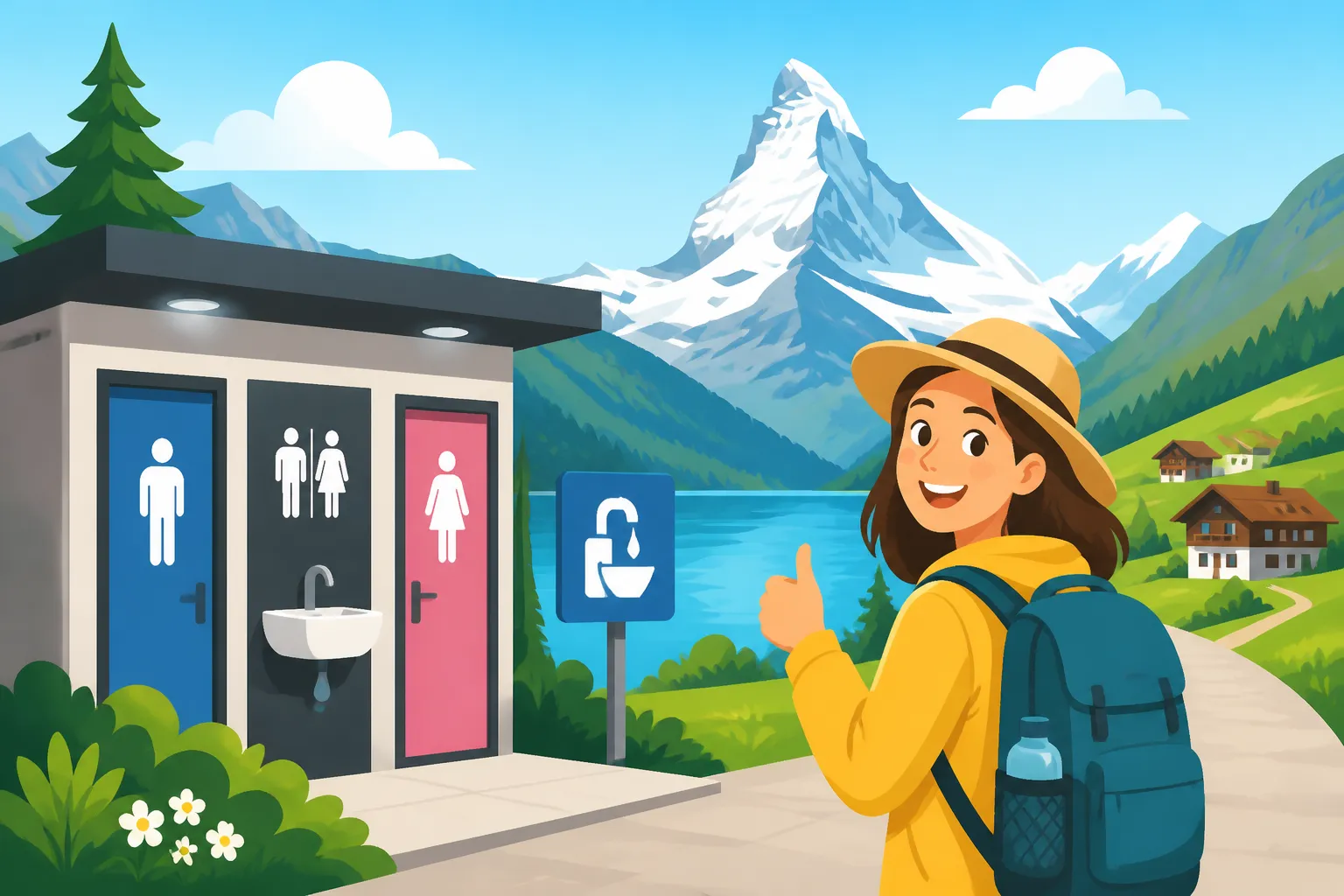
Free Public Toilets and Facilities While Traveling in Switzerland
Ah, the eternal quest! As an expat who’s spent more than a few moments desperately scanning the horizon for a "WC" sign while traversing this beautiful country, I can tell you that finding a free public toilet in Switzerland can feel like searching for a unicorn. You'd think a country as organized and pristine as Switzerland would have an abundance of easily accessible, free facilities, but alas, that's not always the case. This guide is here to save you from those frantic searches and unexpected coin scrambles, arming you with the knowledge to find relief without constantly reaching for your wallet.
The Reality of Swiss Public Facilities: Why Free is a Rarity
Let's face it, Switzerland sets a high bar for cleanliness and efficiency in almost everything, and public facilities are no exception. But this comes at a cost, literally. The "pay-to-pee" culture here isn't a ploy to inconvenience you; it's deeply rooted in the expectation of pristine, well-maintained amenities.
The "Pay-to-Pee" Culture Explained
When you stumble upon a public toilet in Switzerland, especially in high-traffic areas like major train stations or bustling city centers, chances are there's a turnstile or a collection plate involved. Typically, you'll find yourself needing to part with a franc or two, or sometimes 50 rappen. This isn't unique to Switzerland, of course, but it's far more prevalent here than in many other European countries where free facilities are more common.
The reasoning is pretty straightforward: maintaining public toilets to the Swiss standard of cleanliness requires constant cleaning, adequate supplies, and regular upkeep. These costs are then passed on to the user. While it can be a minor annoyance, especially if you're caught without small change, it does usually guarantee a remarkably clean experience. I've been in countless Swiss public toilets that are cleaner than some hotel bathrooms, and that's largely thanks to this user-pays system. It’s a trade-off: a few coins for a spotlessly clean, often wonderfully quiet moment of peace.
Costs and Payment Methods
The typical cost for a paid public toilet in Switzerland ranges from CHF 1 to CHF 2. Occasionally, you might encounter older facilities that only ask for 50 rappen, but these are becoming rarer. The real headache isn't the cost itself, but the payment method.
Most modern facilities accept coins, often only CHF 1 or CHF 2 coins. This can be a real pain if you primarily use cards or only carry larger denominations. Picture this: you're in a hurry, you've got a pressing need, and all you have is a CHF 20 note. Suddenly, that sparkling clean toilet feels miles away. Some newer, more advanced facilities, particularly in very modern train stations or shopping centers, might offer card payment options or even accept TWINT (Switzerland's popular mobile payment app). However, don't rely on this. Always try to keep a few small coins on hand for these inevitable situations. I've learned the hard way to always stash a couple of francs in a separate pocket just for this purpose.
Navigating Public Transportation Hubs for Facilities
Public transportation hubs are often the first place expats and tourists look for facilities, and while they are plentiful, they typically come with that small fee we just discussed.
Train Stations: Often Paid, But Look Closely
Major train stations across Switzerland, such as Zürich Hauptbahnhof, Geneva Cornavin, Basel SBB, or Bern Hauptbahnhof, are usually equipped with excellent toilet facilities. However, these are almost universally paid. You'll typically find them in the underground passages, near the main concourses, or sometimes on upper floors in shopping areas, clearly marked with "WC" or "Toiletten" signs. These facilities are often managed by external companies, like McClean, which explains the consistent pricing and high cleanliness standards.
When you're planning your train journeys between cities using a platform like Omio, it's useful to know that your stop might offer a brief chance to use a paid facility. While waiting for a connection, you might have just enough time to duck into one. For those who frequently travel by train, holding a SBB Travelcards: Is the Generalabonnement (GA) Worth the CHF 4000+ Cost? or even a Half-Fare Travelcard, doesn't usually grant you free access to these specific paid services.
Occasionally, you might get lucky and find a free, basic toilet hidden away near certain platforms, often intended for disabled access or staff, but accessible if you know where to look and if the gate happens to be open. These are few and far between and certainly not something to rely on. My advice is to assume any station toilet will cost you, and be pleasantly surprised if it doesn't.
Bus and Tram Stops: A Game of Chance
Unlike major train stations, bus and tram stops themselves very rarely have dedicated public toilet facilities. If you're caught short while waiting for your connection, you'll need to look beyond the immediate stop. Your best bet in these situations is to quickly scan the surroundings for a nearby restaurant, café, supermarket, or department store.
For example, if you're navigating the Public Transport in Zurich: ZVV Zones, Tickets, and Night Service, and find yourself far from a main station, you might need to pop into a nearby shopping arcade or even a small local shop that happens to have a customer toilet. This can add a layer of stress to your journey, especially if you’re not familiar with the area. It really highlights the need to "go" when you have the chance, rather than waiting until the last possible moment.
Reliable Spots for Free Relief Across Switzerland
Now, for the gold standard: places where you can usually find a free, clean toilet without the coin dilemma. These spots are your strategic havens when traveling or exploring Swiss cities.
Supermarkets and Department Stores: Your Best Bet
This is hands down one of the most reliable strategies for finding a free, clean toilet in Switzerland. Larger supermarket branches, particularly Coop and Migros, are often equipped with excellent, free facilities. Look for the bigger Coop City or Migros MMM (Mehrmals wöchentlich, or "several times a week" for groceries, not a typo!), which usually include restaurants or cafés within them. The toilets are typically located near these eateries or sometimes on an upper floor or in the basement.
Department stores like Manor or Globus also fall into this category. They invest in high-quality customer facilities, which are almost always free and impeccably clean. These can be lifesavers when you’re in a city center. Just stroll in, look confident, and follow the signs for "WC" or "Toiletten."
For example, in Zurich, the large Migros and Coop branches on Bahnhofstrasse or in the shopping centers like Sihlcity, often have fantastic, free facilities. In Geneva, the Manor department store or the larger Coop branches are similar reliable options. Keep an eye out for them as you go about your Grocery Shopping: Coop, Migros, Aldi, Lidl, and Denner Compared. It's a small victory when you find a pristine, free toilet tucked away in a busy shopping environment!
Restaurants, Cafés, and Bars: The "Customer-Only" Dilemma
While technically for patrons, restaurants, cafés, and bars can often be a fallback option. The unspoken rule is usually that if you buy something, however small (a coffee, a drink, a Gipfeli), you're welcome to use their facilities. This is often a perfectly acceptable transaction. However, the awkwardness arises when you just need to go and don't want to buy anything.
Many establishments, especially in touristy areas, might have toilets with codes, or they might be locked and require you to ask a staff member for the key. This can be intimidating if you don't speak the local language or if the place is incredibly busy. My advice? If you're truly desperate and the establishment doesn't have a visible "customer only" sign, try to be discreet. Walk in confidently as if you're meeting someone, find the "WC" sign, and if you're stopped, apologize profusely in English or the local language, offering to buy a small item. Most Swiss people appreciate honesty, even if it’s a little embarrassing.
Public Buildings and Tourist Information Centers
These are fantastic, often overlooked gems for free toilet access. Libraries, city halls (Gemeindehaus/Mairie), museums, art galleries, and official tourist information centers almost always provide free, clean facilities. These are particularly useful in city centers where other options might be scarce or paid.
For instance, when you're exploring the cultural side of a city, pop into a museum. You can combine a bit of sightseeing with your essential break. Many tourist information centers are designed to be welcoming and provide amenities for visitors, including restrooms. On GetYourGuide tours, it might even be worth asking your guide if they know of a nearby public building with facilities. This strategy works well across all major Swiss cities; whether you're in the busy streets of Swiss Cities Guide: Zurich, Geneva, Basel, Bern, and Beyond or a smaller town, these public resources are usually reliable.
Parks and Outdoor Areas: Seasonal and Basic
For those who enjoy the great outdoors, large public parks can sometimes offer free toilet facilities. However, there's a catch: these are generally more basic, often less consistently clean, and may be seasonal, meaning they might be closed during the colder winter months.
Locations like the larger parks in Zurich (e.g., the Chinese Garden area, Arboretum), Geneva (e.g., Parc La Grange, Parc des Bastions), or Bern (e.g., Gurten mountain park, though you need to get up there first) often have these types of facilities. They're usually clearly marked but don't expect the same spotless standard as you'd find in a department store or train station. Still, in a pinch, especially during a summer stroll, they are a welcome sight and free!
Tips, Tricks, and Tech for Finding Toilets
In a world where smartphones are extensions of ourselves, there are naturally ways to leverage technology and other clever hacks to find the nearest lavatory.
Leveraging Apps and Online Resources
In your quest for a free or even just an accessible toilet, your smartphone can be your best friend. There are several apps designed specifically for locating public restrooms, such as "Flush" or "Toilet Finder." These apps often have user-generated content, meaning real people have added and reviewed facilities. They can provide details on whether a toilet is free, paid, accessible, and even its cleanliness rating.
Beyond dedicated apps, simply using Google Maps and searching for "public toilet" or "WC" can yield good results. Maps often show public facilities, particularly in urban areas, and you can usually see reviews or even photos. The key here is to check the details: is it truly public, or is it a "customer only" spot in a café? Does it require a fee? While these apps and maps aren't always 100% accurate (especially with the ever-changing nature of local establishments), they offer a valuable starting point and can save you precious time when urgency strikes.
The "Hotel Lobby" Strategy and Other Hacks
This is a classic expat move! If you find yourself in a city center, and all other options seem to be paid or elusive, confidently stride into a 4- or 5-star hotel lobby. These establishments typically have beautifully maintained, free restrooms for their guests, and unless you stick around for too long or draw undue attention, no one is likely to question you. Just look like you know where you’re going, follow the signs to the "WC," and be discreet. Many luxury hotels, even if you’ve booked your overnight stay through Booking.com elsewhere, are quite accommodating in this regard, valuing their reputation for hospitality.
Another clever hack, particularly for families, involves specific travel passes. For example, the SBB Junior Travelcard or Children's Co-Travelcard, which allow children to travel almost free, sometimes also grant access to family-friendly facilities or changing rooms in larger stations, which often include a toilet. It's not a direct toilet pass, but it can sometimes open doors! For more on family travel benefits, check out our guide on Family Travel in Switzerland: Kid-Friendly Destinations and Tips.
Emergency Situations and Cultural Nuances
Switzerland might be known for its order and politeness, but even here, true emergencies happen. If you're genuinely caught in an urgent situation, the Swiss, while generally reserved, will often show compassion. Don't be afraid to approach a shop owner or a passerby, explain your predicament (even with hand gestures if language is a barrier), and ask for help. In a dire scenario, a small, local shop might even let you use their staff facilities.
Culturally, the Swiss place a very high value on public hygiene and discretion. This is why you rarely see litter, and why even "free" facilities are generally well-kept. Understanding these Swiss Everyday Rules: Recycling, Quiet Hours, and Neighborhood Etiquette helps to appreciate the "pay-to-pee" system rather than just resent it. The expectation is that you use facilities responsibly and leave them as you found them. In the most extreme emergencies, and this is a very last resort, one might consider that hospitals and their emergency rooms (Emergency Rooms in Switzerland: Triage, Waiting Times, and Billing) are open 24/7, but obviously, this is for genuine medical needs, not just a desperate pit stop!
Here’s a quick overview to help you decide where to look for your next relief point:
| Location Type | Likelihood of Free | Cleanliness | Notes |
|---|---|---|---|
| Major Train Stations (Zürich HB, Geneva Cornavin) | Low | High | Almost always paid (CHF 1-2). Excellent maintenance. Look for specific accessibility options. |
| Smaller Train Stations & Regional Stops | Medium | Medium | More likely to have free, basic facilities. Varies widely by location. |
| Large Supermarkets (Coop, Migros MMM/City) | High | High | Very reliable for clean, free toilets, often near in-store restaurants or cafes. |
| Department Stores (Manor, Globus) | High | High | Excellent, usually free and spotless facilities, often on upper floors or in basement. |
| Restaurants/Cafés/Bars | Low (customer only) | High | Generally for patrons. Consider buying a small item. Some require a code. |
| Public Buildings (Libraries, Museums, City Hall) | High | High | Often overlooked, but great spots for free, clean facilities, especially in city centers. |
| Large Public Parks | Medium | Low-Medium | Free but basic, may be less clean, and often seasonal (closed in winter). |
| Hotels (Lobby Strategy) | Medium | High | Best in 4-5 star hotels. Act confident and discreet. |
| Tourist Information Centers | High | High | Always worth checking for free, accessible facilities and local maps. |
Disclaimer
The information provided in this guide is for general informational purposes only and is based on typical experiences in Switzerland. Policies and availability of public facilities can change, and individual experiences may vary. Always exercise good judgment and respect local customs. While efforts have been made to ensure accuracy, we cannot guarantee that all mentioned facilities will always be free, open, or available at the time of your visit.