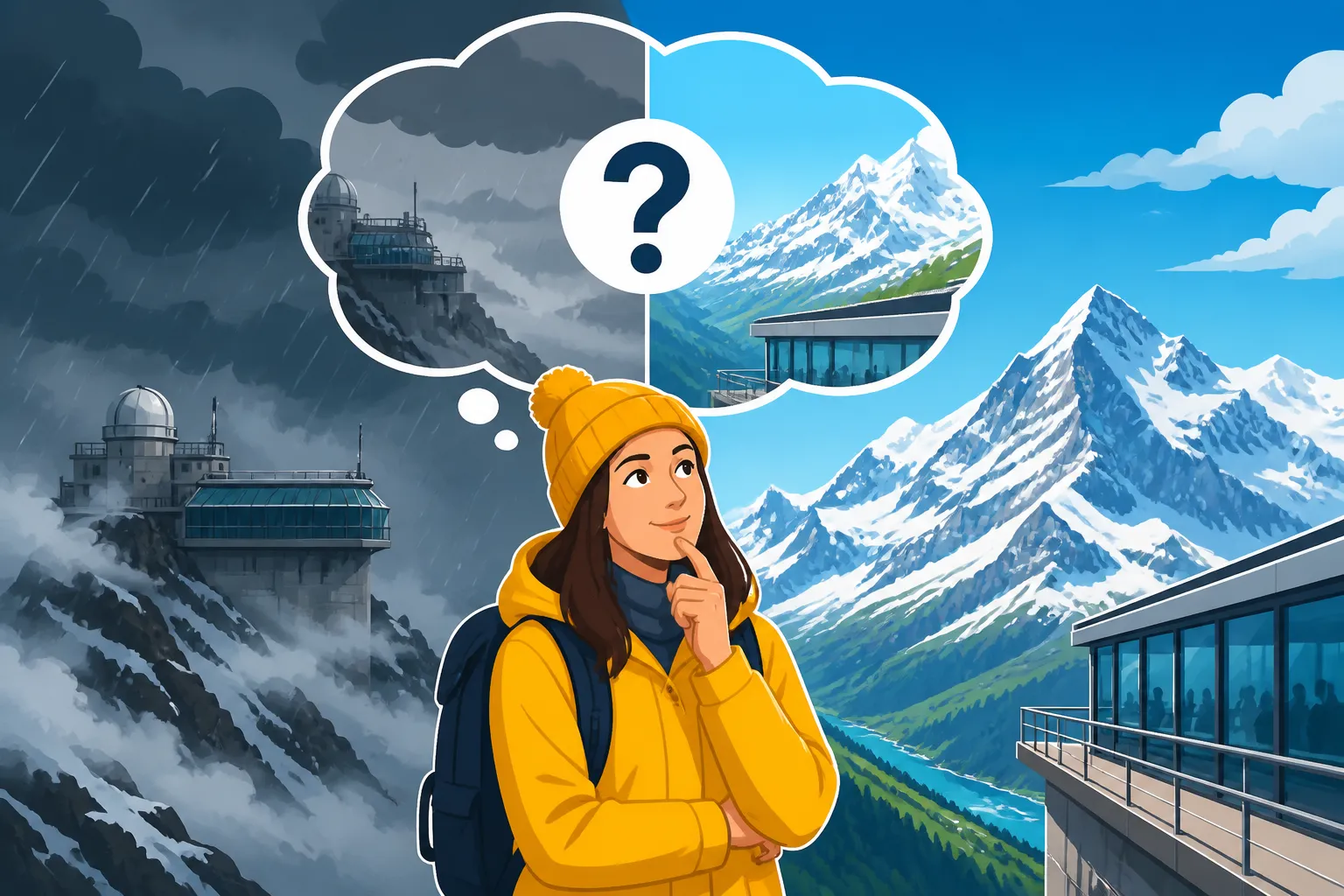
Is the Jungfraujoch Trip Worth It in Bad Weather?
Oh, the Jungfraujoch! It’s one of those quintessential Swiss experiences, isn't it? The "Top of Europe," a majestic pinnacle of snow and ice promising unparalleled views. But let’s be real, you’ve seen the price tag, and you're wondering if that breathtaking sum is worth it if you end up seeing nothing but white fog. Believe me, you’re not alone in this dilemma. As an expat who’s navigated this very question with countless visitors (and a few personal misadventures!), I’m here to tell you how to weigh your options when the Swiss mountain weather decides to play hide-and-seek.
Understanding the Jungfraujoch Experience Beyond the View
It’s easy to get fixated on the panoramic vistas, but the Jungfraujoch offers much more than just a view. It’s a marvel of human ingenuity and a unique high-alpine world that can still impress, even when the clouds roll in.
The Journey Itself: A Feat of Engineering
Let's start with the journey up. The Jungfraujoch Railway isn't just a means to an end; it's an experience in itself. From the moment you board the cogwheel train in Grindelwald Terminal or Lauterbrunnen, you're embarking on a historic climb. You wind through picturesque valleys, past charming chalets, and then, dramatically, burrow into the Eiger mountain.
The engineering behind this railway, completed in 1912, is nothing short of astounding. You’ll spend a significant portion of the ascent inside the mountain, with short stops at Eigerwand and Eismeer stations. These stops offer glimpses out through carved-out windows into the vast, icy world of the Eiger Glacier. Even if the actual "Top of Europe" is shrouded in mist, the sheer fact that you are traveling through a mountain, at such dizzying heights, to reach a station 3,454 meters above sea level, is a profound experience. You get a real sense of adventure, of pushing boundaries, and that’s something no amount of cloud cover can take away.
Indoor Attractions and Activities at the Top
Once you reach the Jungfraujoch station, you step into a world carved directly into the rock and ice. This isn’t just a simple viewing platform; it's an entire complex of indoor attractions designed to entertain and educate, making it significantly more weather-proof than many other mountain excursions.
For instance, there’s the famous Ice Palace. This isn't just a few ice sculptures; it’s a sprawling labyrinth of tunnels and halls carved directly into the glacier itself. Walking through it, surrounded by shimmering ice figures, feels like stepping into a frozen fairy tale. The temperature is consistently below freezing, reminding you of the extreme conditions just outside, but you're completely sheltered. Then there's the Alpine Sensation, a moving walkway that tells the story of the railway's construction, offering a multimedia experience with historical photos and anecdotes. It’s a fascinating tribute to the laborers and visionaries who made this incredible feat possible.
And, of course, you can't forget the Lindt Chocolate Heaven. This interactive chocolate experience and shop allows you to learn about Swiss chocolate making, watch a maître chocolatier at work, and, of course, sample some of Switzerland's finest. It’s a delicious distraction and a truly enjoyable activity, especially on a grey day. These elements ensure that even without a panoramic view, you’re not just staring at a wall of white. You're exploring an incredible man-made and natural wonder, insulated from the harsh alpine elements.
What Constitutes "Bad Weather" in the Mountains?
This is where it gets tricky, and where a lot of people make the wrong call. "Bad weather" in the mountains isn't a single, uniform thing. It manifests in various ways, and understanding the nuances can really help you decide if your Jungfraujoch trip is salvageable.
Fog, Clouds, and Whiteouts
The most common "bad weather" scenario at Jungfraujoch is fog, heavy clouds, or a complete whiteout. This means zero visibility. You might step out onto the Sphinx Observation Deck or the Snow Fun Plateau, and all you'll see is a boundless expanse of white. No mountains, no distant peaks, just white. It's disorienting, and yes, it can be disappointing if the view was your primary goal.
However, sometimes these conditions can be fleeting. Mountain weather is notoriously capricious. A thick blanket of fog can lift in minutes, revealing a spectacular panorama, only to descend again just as quickly. This unpredictability is part of the alpine charm, but also its frustration. When it's a true whiteout, especially coupled with strong winds, outdoor activities like visiting the Snow Fun Park will be less enjoyable, if not impossible. The "Top of Europe" sign might be barely visible, and taking those iconic photos becomes a challenge.
Snow, Wind, and Extreme Cold
Another form of "bad weather" involves snow, strong winds, and extreme cold. While snow often looks beautiful, heavy snowfall can severely reduce visibility and make being outdoors uncomfortable. The wind at 3,454 meters can be ferocious, easily dropping the "feels like" temperature far below zero, even in summer.
Even if you’re mainly exploring indoors, the experience of stepping out onto the Aletsch Glacier plateau and feeling the bite of the wind and the crisp, thin air can be a powerful sensory experience. It emphasizes the raw, untamed nature of the high Alps. You'll quickly retreat inside, but that brief, exhilarating moment of battling the elements can be a memorable part of the adventure. Just make sure you’re dressed for it! Layers are your best friend here, even if you don't plan to spend long outside.
Rain at Lower Altitudes
This is perhaps the most important distinction. If it's raining in Interlaken, Lauterbrunnen, or Grindelwald, it does not necessarily mean bad weather at the Jungfraujoch. In fact, often the opposite is true! Cloud cover can sit lower in the valleys, creating an "sea of clouds" effect. If you ascend above this cloud layer, you can emerge into brilliant sunshine and clear blue skies, with a spectacular view of mountain peaks poking through the fluffy white expanse below.
This scenario is often the best-case "bad weather" outcome, as it provides a unique and unforgettable perspective that even perfectly clear days don't offer. So, don't let valley rain automatically deter you. Always check the webcams, as they’ll show you exactly what’s happening at the top, regardless of what's falling in the villages below.
The Financial Reality and Time Investment
Let’s not beat around the bush: a trip to the Jungfraujoch is a significant investment. For many, it's one of the most expensive single attractions they'll visit in Switzerland. This high cost is precisely why the weather question weighs so heavily.
Ticket Prices and Savings Options
The standard return ticket from Grindelwald or Lauterbrunnen to Jungfraujoch can easily set you back over CHF 200 per person. From Interlaken Ost, it's even more. This isn't pocket change, and it’s a crucial factor in your go/no-go decision.
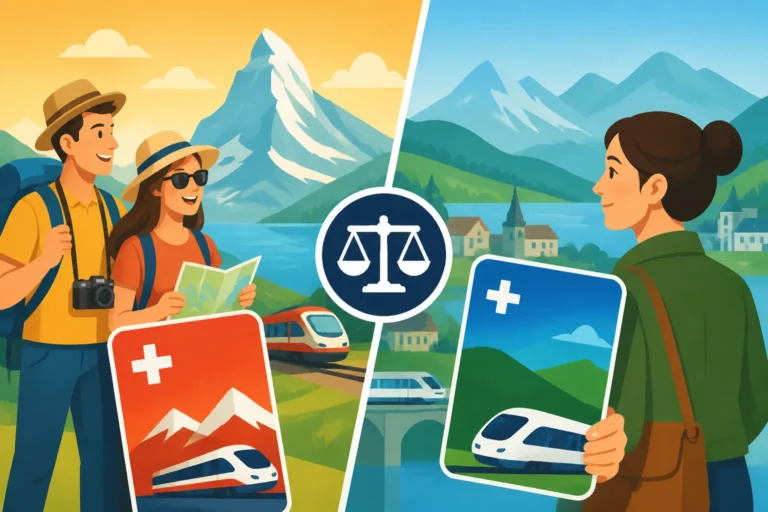
However, there are ways to soften the blow. If you're planning extensive travel in Switzerland, a Half-Fare Travelcard (Halbtax): The Must-Have Pass for Swiss Residents is almost a no-brainer. It cuts the price of almost all public transport, including the Jungfraujoch, in half. If you have a SBB Travelcards: Is the Generalabonnement (GA) Worth the CHF 4000+ Cost?, your Jungfraujoch ticket will also be heavily discounted, sometimes even fully covered depending on the specific route and pass type. Families should also look into the Traveling with Children: The SBB Junior Travelcard for CHF 30/Year, which allows kids aged 6-16 to travel free with a paying parent.
For visitors staying in the Jungfrau region for several days, consider the Jungfrau Travel Pass. This pass offers unlimited travel on most trains, buses, and boats in the region, including significant discounts or free travel on mountain railways like Jungfraujoch. Always check the Jungfraubahn website directly for the most up-to-date pricing and pass options, or if you're looking for flexible options and combined packages, platforms like GetYourGuide often have various ticket combinations that might save you a franc or two.
Here’s a simplified breakdown of typical adult return fares from Interlaken Ost to Jungfraujoch (as of 2026, prices can fluctuate):
| Ticket Type | Approximate Price (CHF) | Notes |
|---|---|---|
| Standard Adult Return | 230-260 | Full price, no discounts. |
| Half-Fare Card Holder | 115-130 | Requires a valid Half-Fare Card. |
| GA Travelcard Holder | 60-70 | Requires a valid GA, often a supplementary ticket for the final leg. |
| Jungfrau Travel Pass Holder | Free (within validity) | Specific travel pass required for this region. |
| Eurail/Swiss Travel Pass | 60-70 | Discounts vary, usually requires an extra ticket for the final leg. |
These are indicative prices and can change. Always check the official Jungfraubahn website.
The Time Commitment
Beyond the money, a trip to Jungfraujoch is a full-day commitment. Even from Interlaken, you're looking at 2.5 to 3 hours just to get to the top, then several hours exploring, and another 2.5 to 3 hours back down. This means you need to dedicate almost an entire day of your precious Swiss holiday to this one excursion.
If the weather is truly abysmal, and you spend all that time and money only to see grey, it can feel like a day wasted. This is why having a clear plan B or being mentally prepared for no views is crucial. If you only have a few days in Switzerland, and one of them gets eaten up by a cloudy Jungfraujoch, it might feel more impactful than if you have a longer itinerary. Consider checking train schedules and booking options via Omio if you are coming from further afield like Zurich or Geneva, as they can help you plan the entire journey efficiently.
Making the "Go/No-Go" Decision: Practical Advice
So, how do you actually make the call on the day? It’s tough, but these tips, gleaned from personal experience and countless conversations with fellow expats, will help.
Checking Live Weather and Webcams
Forget the weather forecast from the day before – especially in the mountains. Mountain forecasts are notoriously unreliable, often changing by the hour. Your absolute best friend here will be the live webcams.
The official Jungfraubahn website has multiple webcams strategically placed at various points along the ascent and at the top (Kleine Scheidegg, Eigergletscher, Jungfraujoch). Crucially, check these webcams the morning of your planned trip, just before you leave. Look at the webcams for the actual Jungfraujoch itself. If it’s a complete whiteout there, you’ll know. But also look at the mid-stations. If Kleine Scheidegg is clear but Jungfraujoch is cloudy, it might mean you'll ascend into a cloud layer. Conversely, if it's cloudy down low but clear at the top, that "sea of clouds" scenario is a real possibility.
I also highly recommend using the MeteoSwiss app. It provides hyper-local forecasts and has a feature showing weather conditions at different altitudes, which is incredibly useful for mountain trips. Combine this with visual confirmation from the webcams. Don't rely solely on a single weather report.
Alternative Activities in Bad Weather
Having a Plan B is essential, especially when you’ve set aside a day for a major mountain excursion. If the webcams show a complete whiteout at Jungfraujoch, don't despair! The Jungfrau region offers plenty of other activities.
- Lauterbrunnen Valley: Often called the "Valley of 72 Waterfalls," it's stunning even in the rain. Trümmelbach Falls, a series of glacier waterfalls inside the mountain, is a fantastic indoor/outdoor option that's more impressive with recent rain.
- Lake Brienz/Thun: A boat trip on one of these lakes can be incredibly serene, even on a cloudy day, offering beautiful views of the surrounding hills and charming lakeside villages.
- Local Towns: Explore Interlaken, Grindelwald, or Wengen. These towns have shops, cafes, and a lovely atmosphere.
- Other Cities: If the weather is generally bad across the region, consider a day trip to a nearby city that might have better weather or more indoor attractions. For example, Best Day Trips by Train from Zurich Under Two Hours or Exploring Lucerne: Old Town, Lake Cruises, and Mount Excursions are excellent alternatives, reachable by train from Interlaken. For accommodation in these areas, especially if you need to pivot your plans last minute, Booking.com can be incredibly helpful for finding deals.
Managing Expectations
This is probably the most crucial piece of advice. If you decide to go up to Jungfraujoch on a cloudy day, you must manage your expectations. Go with the mindset that you are going to experience an incredible feat of engineering and explore a unique high-alpine environment, irrespective of the views.
Consider any glimpse of a view – even just a partial one – a bonus. If you prepare yourself for a whiteout, you won't be disappointed, and any small break in the clouds will feel like a truly magical moment. If you go expecting those postcard-perfect panoramas on a day the webcams look grim, you're setting yourself up for frustration. Remember, the journey, the Ice Palace, the Lindt experience, and simply being at the Top of Europe are all parts of the package.
Expats' Perspective: Is it Ever Worth It in Bad Weather for a Resident?
As an expat, my perspective on a "bad weather" Jungfraujoch trip is a little different than a tourist's. We have the luxury of time, which significantly changes the calculation.
The "Been There, Done That" Factor
For long-term residents, the Jungfraujoch loses some of its urgent appeal. If I live here, I can always go next week, next month, or next year when the weather is predicted to be perfect. So, for my personal experience, I would almost certainly postpone a Jungfraujoch trip if the weather at the top looked anything less than spectacular. I've been there on perfect days, and those are the memories I want to hold onto.
We tend to be more selective, saving our money and our time for those genuinely blue-sky days. We're also more likely to hop on the train spontaneously when the weather window looks promising, rather than planning weeks in advance. If you're wondering about other high-alpine experiences, perhaps consider the Mountain Railways and Cable Cars: Reaching Switzerland's Peaks on a clear day, or even a hike like Hiking in Appenzell: The Ebenalp and Äscher Cliff Path for a different kind of natural beauty.
Bringing Visitors vs. Personal Experience
This is where the calculus shifts for expats. Often, we don't go to Jungfraujoch for ourselves, but to share the iconic Swiss experience with visiting friends or family who have limited time. If my parents or best friends are visiting for only a week, and a Jungfraujoch day is their only window, the decision becomes much harder.
In this scenario, if the webcams show a complete whiteout, I would still lean towards an alternative activity. The cost is simply too high for a pure disappointment. However, if the webcams show a "sea of clouds" – meaning it's clear at the top with clouds below – I'd be far more inclined to go. That unique experience, even if not the classic panorama, is still incredibly memorable and worth sharing.
It really comes down to open communication with your visitors. Explain the cost, explain the potential for no views, and let them be part of the decision. Are they okay with the "experience of the journey and the indoor attractions" being the primary payoff, with views as a bonus? If so, then perhaps it’s worth it for their once-in-a-lifetime trip. Just make sure everyone is dressed warmly, because even indoors, you're high up, and the air is thin – a small but tangible reminder of the incredible Weather and Geography: Föhn Winds, Winter Readiness, and Alpine Living of this country.
Ultimately, Jungfraujoch in bad weather is a gamble. It’s an expensive one, but the "Top of Europe" isn't just a viewpoint; it's a testament to human ambition, and an unforgettable journey into a frozen wonderland. Just make sure you know what you’re signing up for before you board that train!
Disclaimer
Please note that the information provided in this article is for general guidance only and reflects the typical experiences and regulations in Switzerland as of 2026. Prices, opening hours, and specific conditions for attractions like the Jungfraujoch can change without notice. Always check official websites and local weather forecasts for the most current information before planning your trip. The author is not responsible for any outcomes based on the information provided herein.