Diabetes Care in Switzerland: Insulin Costs and Endo Referrals
Managing a chronic condition like diabetes while navigating the complexities of a foreign administrative system can feel like an uphill battle against a very expensive mountain. I remember the sheer panic I felt during my first month in Geneva, standing at a pharmacy counter, wondering if my specific brand of insulin was even legal here and if I’d have to pay the full price out of pocket. This guide settles those nerves by breaking down exactly how insulin costs work, how to secure the right endocrinologist referrals, and how to optimize your insurance so you aren't buried in bills.
Navigating the Swiss Healthcare System with Diabetes
When you first arrive in Switzerland, the healthcare system can look like a beautiful but terrifying clockwork mechanism. For those of us living with Type 1 or Type 2 diabetes, the "mechanism" is the Federal Health Insurance Act, known as KVG or LAMal. This is the mandatory insurance every resident must have. Unlike some countries where chronic care is managed through a central government agency, Switzerland relies on private insurers to provide this mandatory coverage.
The most important thing to realize is that Understanding KVG/LAMal: Mandatory Basic Health Insurance Explained is the foundation of your care. Under this law, insurers cannot refuse you coverage based on pre-existing conditions like diabetes. You are guaranteed the same basic benefits as everyone else. However, the way you access these benefits—and how much you pay for them—depends heavily on your chosen insurance model and your deductible, or "franchise."
As a diabetic, you will likely be a "high-user" of the system. This means that The Swiss Franchise System: How Deductibles and Copays Work becomes the most critical financial decision you’ll make each year. While a healthy person might opt for the highest franchise of CHF 2,500 to keep their monthly premiums low, a person with diabetes is almost always better off with the lowest franchise of CHF 300. You will hit that CHF 300 limit within your first few months of lab work and insulin refills, after which the insurance starts covering 90% of your costs.
Choosing the Right Insurance Model for Diabetes Care
When signing up for insurance, you’ll be asked to choose a model: Standard, HMO, Telmed, or Family Doctor. If you have been used to managing your own care and seeing specialists whenever you want, the Swiss system might feel restrictive. Most expats find that Comparing Health Insurance Models: Telmed, HMO, Family Doctor, and Standard is essential reading before signing any contracts.
For diabetes, the "Family Doctor" (Hausarzt) model is often the most practical. In this setup, your GP acts as the gatekeeper. They manage your routine blood work and provide the necessary referrals for your endocrinologist. If you prefer more flexibility, the "Standard" model allows you to see any specialist without a referral, but your monthly premiums will be significantly higher. For those who want an extra layer of protection or international coverage, particularly if you travel often, looking into private options like Cigna Global can provide peace of mind that the basic KVG might not offer, especially regarding private room upgrades or specialized clinics abroad.
The Importance of the 10 Percent Copay
Even after you have paid your initial franchise, you are responsible for a 10% copay (Selbstbehalt) on all medical services and medications, up to a maximum of CHF 700 per year for adults. This means your "true" maximum out-of-pocket cost for a year of diabetes care (assuming you chose the CHF 300 franchise) is CHF 1,000. It is vital to budget for this. I’ve seen many expats get caught off guard by the steady stream of 10% invoices that arrive in the mail months after a doctor's visit.
Understanding Insulin Costs and Prescription Management
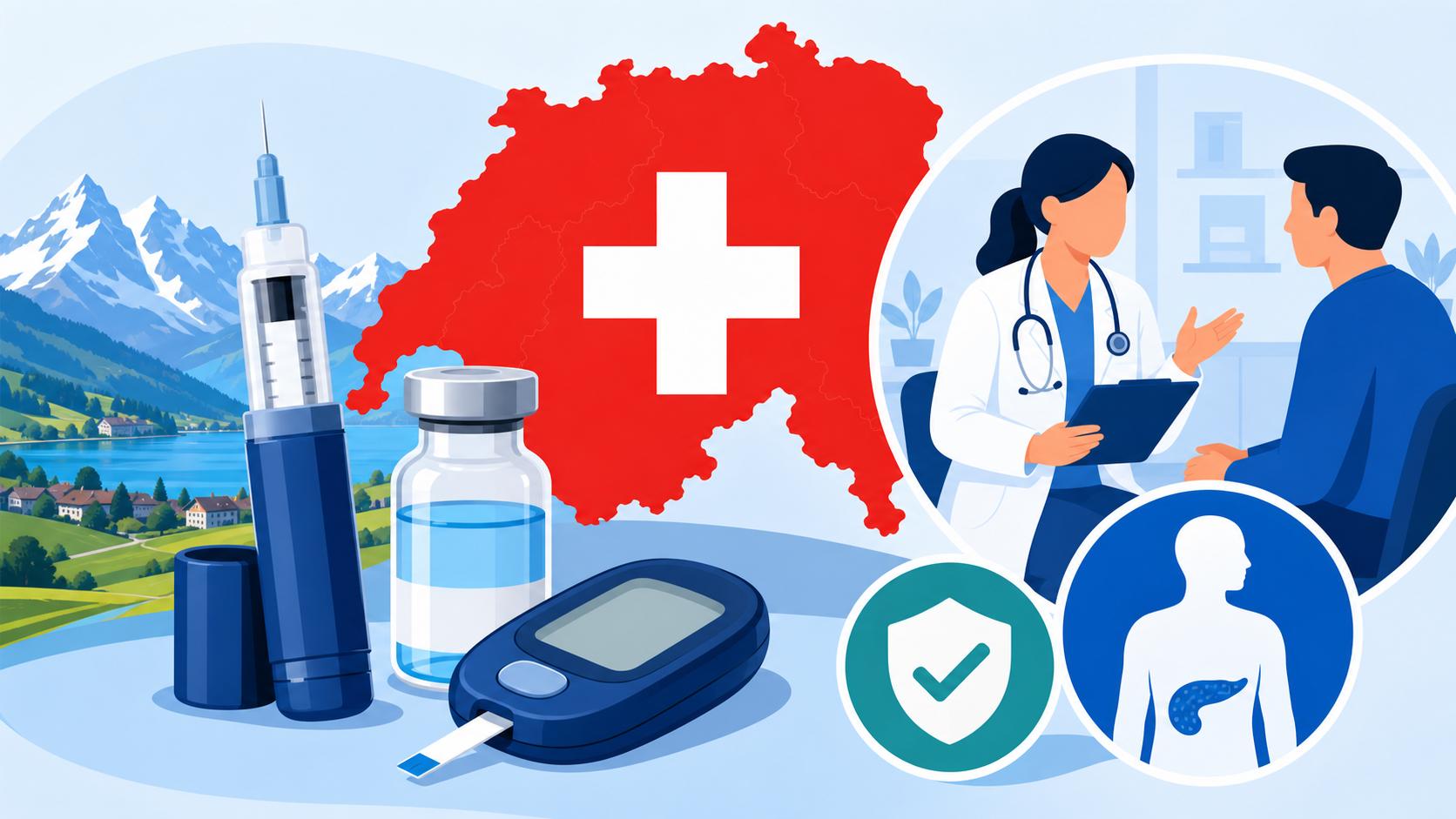
The price of insulin in Switzerland is regulated by the Federal Office of Public Health (FOPH). While it is significantly cheaper than in the United States, it is still a premium-priced product compared to some neighboring EU countries. The good news is that almost all modern analogs—like Humalog, NovoRapid, Lantus, and Tresiba—are fully covered under the basic insurance plan.
When you go to the pharmacy, you will need a Swiss prescription. Your foreign prescription might work for a one-time emergency refill at the pharmacist's discretion, but for regular supply, you must see a local doctor. The process of Pharmacies and Medication: Prescriptions, Costs, and OTC Regulations is quite strict here. You won't be able to "stock up" on a year's supply at once; pharmacists generally dispense one to three months' worth at a time to prevent wastage and manage insurance billing.
Tiers Garant vs Tiers Payant Billing for Insulin
One of the biggest logistical hurdles is understanding how you actually pay for your life-saving medication. There are two systems: Tiers Payant and Tiers Garant. In the Tiers Payant system, the pharmacy bills your insurance company directly. You only receive a bill later for your 10% copay. This is the gold standard for diabetics because insulin and CGM sensors are expensive, and paying upfront can hurt your cash flow.
In the Tiers Garant system, you pay the pharmacy the full amount upfront, and then you must send the receipt to your insurer for reimbursement. If you are on an expensive regimen involving an insulin pump and a Continuous Glucose Monitor (CGM), these costs can reach several hundred francs per month. Make sure to check How to Pay Medical Bills: Tiers Garant vs. Tiers Payant Billing Systems to see which insurers allow direct billing at the pharmacy. Many of the major players like CSS or Helsana usually offer Tiers Payant at the larger pharmacy chains like Amavita or Sun Store.
Coverage for CGM and Pump Supplies
Switzerland is quite progressive regarding diabetes technology. Devices like the FreeStyle Libre, Dexcom, and various insulin pumps (Omnipod, Tandem, etc.) are covered under the "MiGeL" list (Mittel- und Gegenständeliste). However, there is a catch: to get these covered, your endocrinologist must submit a specific "limitation" form to your insurer proving that you meet certain criteria, such as Type 1 diagnosis or Type 2 with severe hypoglycemia.
For daily maintenance items that aren't strictly medical—like high-quality alcohol wipes, specific glucose tabs, or skin-prep wipes for sensors—I often find the local Swiss pharmacy prices to be eye-watering. This is where I personally use iHerb to source my auxiliary supplies and specialized supplements. Getting a bulk shipment of diabetic-friendly snacks or skin care products from iHerb often saves me a significant amount compared to buying individual items at a high-street Apotheke in Zurich.
Getting Referred to a Swiss Endocrinologist
In Switzerland, you cannot simply walk into an endocrinology clinic and demand an appointment. You need a referral. The process usually starts with your Hausarzt. During your first visit, bring your medical history, your most recent HbA1c results, and a list of your current dosages.
The referral process is the primary way of Finding Medical Care in Switzerland: Doctors, Specialists, and Referrals. Your GP will write a "Überweisung" (referral letter) and often send it directly to the specialist's office. In major hubs like Zurich, Geneva, or Basel, you will find world-class endocrinology departments at the university hospitals (USZ, HUG, USB). These centers are excellent because they have "Diabetes-Berater" (diabetes educators) and nutritionists on staff who work alongside the doctors.
Finding English Speaking Specialists
While most Swiss doctors speak excellent English, discussing the nuances of insulin sensitivity and carbohydrate ratios is much easier in your native language. If you are struggling to find someone, I recommend Finding an English-Speaking Family Doctor in Zug or looking for specialists in the international quarters of Zurich and Geneva. Don't be afraid to ask the receptionist, "Spricht der Arzt Englisch?" before booking.
When you do meet your endocrinologist, be prepared for a different pace of care. You might find that Routine Blood Tests: Why Swiss Doctors Don't Order Them Automatically applies here too. In some countries, doctors run a full panel every three months. In Switzerland, if your HbA1c is stable, they might suggest moving to a six-month cycle. You have to be your own advocate if you feel you need more frequent monitoring.
The Role of the Diabetes Educator
One unique aspect of the Swiss system is the "Diabetesberatung." These are specialized nurses who spend an hour or more with you to fine-tune your pump settings or discuss lifestyle adjustments. Basic insurance covers a set number of sessions per year, provided they are prescribed by your doctor. These sessions are incredibly valuable for expats because they can also explain local food labels and help you navigate the "Migros vs. Coop" grocery landscape from a glycemic perspective.
Daily Living and Managing Supplies
Living as a diabetic in Switzerland requires a bit of local "hacking." For example, if you are traveling to the mountains, remember that insulin can freeze in your backpack during a winter hike in the Engadine. Always carry your supplies in an insulated pouch.
If you ever run out of insulin after hours, every major city has a "Notfallapotheke" (emergency pharmacy). You can find these at main train stations like Zurich HB or Geneva Cornavin. They are open 24/7, but be prepared to pay a "night fee" (usually around CHF 20-50) on top of the medication cost. This is another reason why having a robust insurance policy like Cigna Global can be helpful, as they often have 24/7 helplines to help you locate the nearest open facility in an emergency.
| Item | Estimated Cost (Full Price) | Insurance Coverage | Notes |
|---|---|---|---|
| Rapid-Acting Insulin (5 Pens) | CHF 50 – 80 | 90% after franchise | Brands like NovoRapid or Humalog |
| Long-Acting Insulin (5 Pens) | CHF 80 – 120 | 90% after franchise | Brands like Lantus or Tresiba |
| CGM Sensor (e.g., Libre 3) | CHF 65 per sensor | 90% after franchise | Requires endocrinologist "limitation" |
| Specialist Consultation | CHF 150 – 300 | 90% after franchise | Tarmed billing rates apply |
| HbA1c Lab Test | CHF 20 – 40 | 90% after franchise | Often done in-house at the GP |
Managing Costs Through Tax Deductions
At the end of the year, keep all your medical invoices. Even though insurance covers most of it, the amounts you pay toward your franchise and your 10% copay can sometimes be tax-deductible if they exceed a certain percentage of your income (usually 5% depending on the canton). When you receive your How to Read a Swiss Medical Bill (Rückforderungsbeleg) and Claim Refunds documents, file them away safely.
I also recommend checking iHerb for things like Vitamin D and Magnesium, which many endocrinologists suggest for diabetics but aren't always covered by basic insurance unless you have a severe deficiency. Buying these "supplementary" items through iHerb rather than the local pharmacy will keep your out-of-pocket costs down, allowing you to save your medical budget for the heavy hitters like insulin and technology.
Practical Tips for the Newly Arrived Diabetic
First, register with a GP immediately. Don't wait until you have one pen of insulin left. The waiting list for an endocrinologist can be six to eight weeks in popular cantons like Zurich or Zug. Having that referral in the system early is a lifesaver.
Second, carry your "Diabetes-Pass." This is a small booklet your doctor will give you to track your HbA1c and foot checks. It’s also a recognized medical ID. If you have an emergency, Swiss paramedics (Sanität) are trained to look for this or a medical alert bracelet.
Finally, join the local "Diabetesgesellschaft" (Diabetes Association) of your canton. They offer community events and sometimes discounts on supplies. Even if you don't speak the local language fluently yet, their newsletters provide vital updates on changes to the MiGeL list or new insurance regulations that could affect your wallet.
Important Medical Disclaimer
The information provided in this guide is for educational and informational purposes only and is based on the author's personal experience as an expat in Switzerland. It is not intended as medical advice or as a substitute for professional healthcare. Always consult with a qualified Swiss medical professional or your insurance provider regarding your specific medical condition, treatment plans, and insurance coverage. Healthcare regulations and drug pricing in Switzerland are subject to change, and you should verify all current laws with the Federal Office of Public Health (FOPH) or your local cantonal authorities.