Updating Your Permit After a Divorce in Switzerland
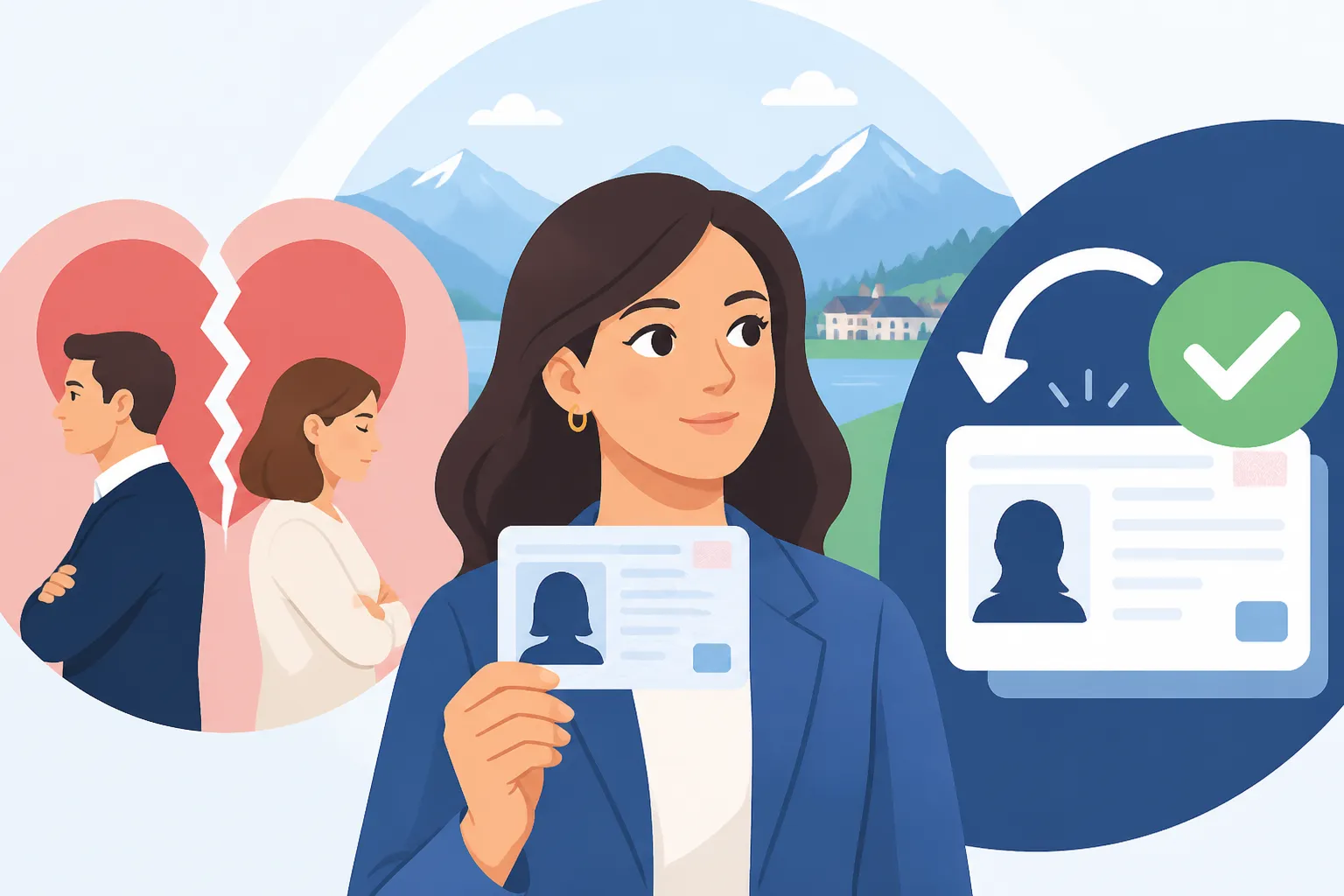
Going through a divorce is one of the toughest journeys you can face, and as an expat in Switzerland, the emotional turmoil is often compounded by a bewildering array of administrative hurdles. The process of legally separating is complex enough, but then comes the often-overlooked task of updating your residence permit, which can feel like yet another mountain to climb. This guide will walk you through the essential steps and considerations for managing your Swiss permit status after a divorce, offering practical advice to help ease this challenging transition.
The Immediate Impact of Divorce on Your Swiss Permit Status
When you first arrive in Switzerland as part of a couple, especially if one partner is the primary permit holder, your own residence status is often tied to theirs through a process called family reunification. This is a common path for many expats, whether you hold an L, B, or even a C permit. The moment your marital status changes through divorce, the legal basis of your permit can shift dramatically, requiring immediate attention. This isn't just about updating a piece of plastic; it's about re-establishing your individual right to live and work here.
Understanding Permit Dependence
For many, particularly non-EU/EFTA citizens who arrived on a family reunification visa, your permit (often a B permit) is inherently dependent on your spouse's. Essentially, you're here because of your marriage to a resident or citizen. When that marriage ends, the canton's migration office (Migrationsamt or Service de la population) will re-evaluate your right to reside in Switzerland independently. This isn't meant to be punitive, but rather to ensure that everyone has a clear legal basis for their stay.
If you're an EU/EFTA national, the situation is generally less dramatic. Your right to reside and work is based on the Agreement on the Free Movement of Persons. While your permit might initially be tied to your spouse's employment, the divorce usually doesn't immediately invalidate your right to stay, especially if you're working or can demonstrate self-sufficiency. However, you'll still need to update your details with the commune and potentially the cantonal migration office, as your household situation has changed. It's always best to be proactive and understand your specific scenario.
The Role of the Migration Office
The migration office is the central authority you’ll be dealing with. They are the gatekeepers, and their primary concern is the legal status of all foreign residents. Once a divorce is finalized or even initiated, they need to be informed. Delaying this notification can lead to complications down the line. They're not always the most empathetic, but they operate by strict legal guidelines, so presenting a clear, comprehensive case is crucial.
Keep in mind that if you came to Switzerland through family reunification with a Swiss spouse or a spouse holding a C permit, you might have a slightly stronger position, especially if you've been married for a significant period and have integrated well. However, for those married to a B permit holder, the path to an independent permit can be more challenging, often requiring you to meet the criteria for a stand-alone B permit, which typically means securing a job that qualifies for the limited quotas for third-country nationals.
The Paperwork Avalanche: Notifying Authorities and Required Documents
Divorce is already a bureaucratic nightmare, and doing it in a foreign country adds another layer of complexity. The first and most critical step is to formally notify the relevant Swiss authorities about your change in marital status. This is not something you can postpone.
Notifying the Cantonal Migration Office and Your Commune
As soon as your divorce is legally finalized, or even when separation proceedings begin, you must inform your cantonal migration office. They are the ultimate authority over your permit. Simultaneously, you should update your civil status with your local commune (Gemeinde/Commune). These two actions are intertwined, as the commune typically forwards changes to the cantonal office.
Key Documents You'll Likely Need:
- Final Divorce Decree: This is paramount. It must be a legally binding document, often requiring an official translation into one of Switzerland's official languages (German, French, or Italian), depending on your canton. Make sure it has an apostille if issued outside of Switzerland.
- Original Residence Permit Card (Ausländerausweis): Your current card will need to be updated or exchanged.
- Passport: Your valid national passport.
- Proof of Income/Financial Independence: This is where things get tricky, especially if you were previously financially dependent on your spouse. You'll need to demonstrate you can support yourself without recourse to social welfare. This could include:
- An employment contract with a sufficient salary.
- Bank statements showing substantial savings.
- Proof of pension or other regular income.
- For EU/EFTA citizens, the requirements are generally less stringent, but you still need to show you won't become a burden on the state.
- Proof of Accommodation: A new rental contract in your name, or a confirmation of continued residence if you remain in the same property and the lease is being transferred.
- Proof of Health Insurance: You need to show you have valid Mandatory Basic Health Insurance Explained. If you were on your spouse's family plan, you'll need to arrange your own.
- Integration Proof (for C permit aspirations): If you're aiming for a C permit or trying to retain one, showing active integration through language certificates (fide or Goethe), club memberships (Volunteering and Local Clubs (Vereine): The Best Way to Meet Swiss People), or community involvement can be beneficial.
The migration office will review your case to determine if you meet the requirements for an independent permit. They'll assess factors like the length of your marriage in Switzerland, your level of integration, and your financial autonomy. It’s not uncommon to receive an L permit (short-term) initially, even if you previously had a B, as they reassess your long-term prospects.
Dealing with New Housing and Financial Independence
After a divorce, finding new accommodation or re-establishing your existing one can be a major stressor. If you're moving, you'll need a new rental contract in your name. This, combined with the need to prove financial independence, often means hitting the job market if you weren't already working. The Swiss system is notoriously strict about self-sufficiency. If you rely on social welfare (Social Welfare (Sozialhilfe) and Its Impact on C Permit Revocation), it can complicate or even jeopardize your permit renewal.
When considering a potential move or even shipping belongings, remember that services like Sirelo can be incredibly helpful for comparing moving companies, whether you're relocating within Switzerland or considering options abroad. They understand the complexities of international moves and can offer tailored solutions.
Financial adjustments are also critical. Beyond rent and utilities, you'll be responsible for your own health insurance premiums. While basic KVG insurance is mandatory, you might want to consider supplementary options, especially if you're used to broader coverage. Companies like Cigna Global offer comprehensive international health insurance plans that can provide peace of mind, particularly if you envision future moves or extensive international travel. Even if you stick with a local provider, understanding How to Choose the Right Deductible (Franchise) for Your First Year becomes essential when you're managing your own budget.
Navigating New Permit Realities: Changing Status or Renewals
This is where the rubber meets the road. Depending on your original permit, nationality, and circumstances, you might face a different outcome.
For Non-EU/EFTA Citizens (Third-Country Nationals)
If you're from a non-EU/EFTA country and your permit was tied to your spouse, divorce can lead to a precarious situation. The migration office typically grants a grace period, often a year, to allow you to find independent grounds for residency. This means:
- Finding a Job: You'll need to secure an employment contract that meets the requirements for a standalone B permit. This is challenging due to the strict Third-Country National Quotas: How the Swiss Permit Limits Work and the "Inländervorrang" rule, which prioritizes Swiss and EU/EFTA workers. Your potential employer would have to prove that no suitable Swiss or EU/EFTA candidate could be found.
- Length of Marriage & Integration: If you were married to a Swiss citizen or a C permit holder for at least three years, and have demonstrated good integration (language skills, respect for laws, financial independence), you may be eligible for an independent B permit under certain hardship clauses (Härtefall). This is not guaranteed, and each case is assessed individually. The longer you've lived here, the better.
- Children: If you have minor children with your ex-spouse who are Swiss citizens or hold a B/C permit, and you have primary custody or significant shared parental responsibility, this can strengthen your case for retaining your permit, as the authorities prioritize the child's well-being.
It's a tough road, and many non-EU/EFTA expats find themselves having to leave Switzerland if they cannot meet these criteria within the grace period. This is a very real, very painful reality that many face.
For EU/EFTA Citizens
For EU/EFTA citizens, the situation is generally more straightforward. Your right to residency is less dependent on your marital status and more on your economic activity or self-sufficiency.
- Working: If you are employed, you simply update your details. Your right to reside and work remains, and your permit will be renewed based on your employment.
- Not Working / Financially Dependent: If you were financially dependent on your spouse and not working, you will need to demonstrate sufficient financial resources to support yourself. This can be through savings, other income, or by finding employment.
- Children: As with non-EU/EFTA citizens, if you have children who are Swiss residents, this will generally allow you to maintain your residency, especially if you have custody.
Even for EU/EFTA citizens, the administrative burden is significant. You’ll need to formally inform the commune and the cantonal migration office, fill out new forms, and submit updated documentation. While less likely to result in deportation, delays or incomplete information can still cause stress and complications. Remember, you might also be looking at Changing Cantons on a B Permit if your post-divorce living situation requires it, which is another set of administrative tasks.
The C Permit and Post-Divorce Status
If you already hold a C permit (permanent residency), your status is much more secure. A C permit is generally not revoked due to divorce, as it signifies a more independent and established right to reside in Switzerland. You will still need to update your civil status with the commune and the migration office, and your permit card will need to be re-issued with your updated marital status.
However, even with a C permit, if you were to rely on social welfare benefits for an extended period post-divorce, this could potentially impact your status, as sustained public reliance can lead to Social Welfare (Sozialhilfe) and Its Impact on C Permit Revocation. It’s a rare occurrence, but it highlights the Swiss emphasis on financial self-sufficiency for all residents.
Practical Considerations and Support Systems
Divorce is an emotionally taxing period, and navigating the Swiss system concurrently can be overwhelming. Don't underestimate the need for support.
Legal Counsel and Expat Networks
While I'm not a lawyer, seeking legal advice tailored to Swiss family law and immigration law is highly recommended. An attorney specializing in these areas can help you understand your rights, prepare documents, and liaise with authorities. Many expat groups and online forums also offer invaluable peer support and advice from others who have gone through similar experiences. The informal network of expats is often the best first line of defense against the administrative beast.
Reassessing Your Financial Landscape
Your financial situation will undoubtedly change. Beyond finding new employment or managing income, you need to understand the costs associated with the divorce itself and the new single-person household. This includes not only your increased health insurance premiums but also potentially new tax implications. Your tax situation will change significantly, especially if you were previously filing as a married couple. It might be wise to consult a tax advisor to understand Tax Allowances and Deductions: Commuting, Meals, and Childcare and how your income and wealth might be assessed under your new circumstances.
A detailed budget breakdown is essential. Suddenly, all those shared expenses become individual ones. From utilities to groceries, everything will fall solely on your shoulders. It's a stark reality, and it demands careful planning.
Here's a simplified overview of key considerations:
| Aspect | Pre-Divorce (Family Reunification) | Post-Divorce (Independent Status) | Key Action Required |
|---|---|---|---|
| Permit Basis | Tied to spouse's permit/employment (family reunification) | Independent basis (own employment, financial self-sufficiency) | Notify Migration Office; apply for independent permit |
| Documentation | Joint household, marital status | Divorce decree, proof of income, new address | Gather official divorce documents, employment contract, rental agreement |
| Financial Support | Potentially dependent on spouse's income | Must demonstrate independent financial means to avoid welfare | Secure employment, show significant savings, or other income streams |
| Health Insurance | Often part of a family plan | Individual mandatory basic insurance (KVG) | Register for your own health insurance plan; consider supplementary insurance |
| Housing | Shared rental contract or property | New individual rental contract or assumption of existing lease | Secure new accommodation or formally transfer lease into your name |
| Taxes | Filed jointly (marriage penalty often applies) | Filed as single, different deductions and rates | Update civil status with commune; prepare for single tax filing |
| Social Integration | Less formal requirement | Increasingly important, especially for non-EU/EFTA permit renewals | Pursue language courses, join clubs, demonstrate community involvement |
Mental Health and Wellbeing
Let's be honest, divorce is brutal. The administrative load on top of everything else can feel like too much. Don't neglect your mental health. Switzerland has excellent mental health resources, and it's okay to seek help. Many English-Speaking Therapists: Counseling and Psychological Support Directories are available in major cities, and basic health insurance (KVG) increasingly covers psychotherapy under the new Anordnungsmodell rules. Taking care of yourself is paramount during this period of immense change.
Remember, while the Swiss administrative system is rigid, it is also consistent. By understanding the rules, gathering your documents meticulously, and being proactive, you can navigate this challenging chapter and rebuild your life in Switzerland.
Disclaimer
The information provided in this article is intended for general guidance only and does not constitute legal, financial, or immigration advice. Swiss laws and cantonal regulations are complex and can change. It is highly recommended to consult with a qualified legal professional, immigration consultant, or the official cantonal migration authorities for advice tailored to your specific situation.