Moving From an Untied B Permit to Self-Employment
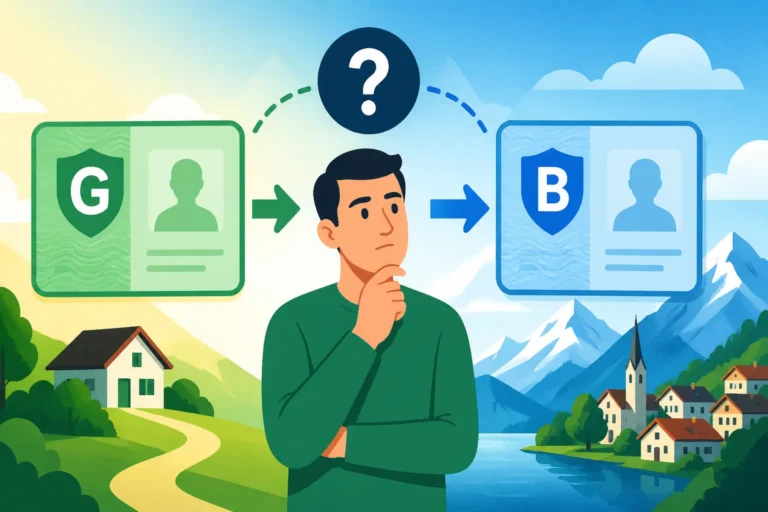
So, you've landed in Switzerland, navigated the initial bureaucracy, and secured that precious B permit. But not just any B permit – you've got the untied kind, which means you're not shackled to a single employer. That's fantastic! It opens up a world of possibilities, and for many expats, the dream of becoming their own boss, a Selbstständige or freelancer, starts to bloom. However, the path from an untied B permit to officially recognized self-employment isn't just a hop, skip, and a jump. It involves a very specific set of hoops to jump through, primarily with the AHV (Old Age and Survivors' Insurance) office, and it can feel like trying to solve a Swiss clock puzzle blindfolded. This guide is here to meticulously demystify that process, helping you understand the requirements, navigate the critical AHV recognition, and confidently transition into being your own boss in Switzerland.
Understanding Your Untied B Permit's Flexibility and its Limits
First off, let's toast to that untied B permit! It's a significant step towards greater autonomy in Switzerland, but it's vital to grasp exactly what "untied" means in the context of starting your own business. Many assume an untied permit automatically means you can wake up one morning and declare yourself self-employed. Unfortunately, it's not quite that simple.
The 'Untied' Advantage: What it Really Means for Expats
An untied B permit, often granted after a certain period of continuous employment or to specific categories of highly qualified individuals, signifies that you are generally free to change employers within Switzerland without needing explicit permission from the migration authorities each time. This is a huge relief compared to the "tied" B permit, which often locks you into a specific company and role for its duration. For many, this untied status feels like true liberation, offering job mobility and a sense of belonging in your new home. It’s a permit that says, "We trust you to manage your employment here."
However, this flexibility primarily pertains to employee roles. It means you can leave one company and join another with fewer administrative hurdles. It does not automatically grant you the right to transition from being an employee (receiving a salary, with your employer handling social security deductions) to being a self-employed individual (where you are solely responsible for all your contributions and business activities). The Swiss system views self-employment as a distinct professional status that requires formal recognition.
Key Differences from a Tied B Permit
Imagine your friend, also an expat, has a tied B permit. Every time they want to switch jobs, their new employer often has to justify hiring a non-Swiss national and get approval from the cantonal migration office. It's a lengthy, stressful process that ties them to their current employer, sometimes even to a specific job title. Their permit explicitly states their employer's name.
Your untied B permit, on the other hand, typically doesn't list an employer. This allows you to explore the job market more freely. If you want to move from working for Company A to Company B, you usually just notify the migration office of the change, and as long as your new role aligns with your permit conditions (e.g., maintaining sufficient income), it's a relatively smooth administrative process. This freedom is a cornerstone of why many dream of going independent. However, while you might think "I can change jobs, so I can become my own job!", the Swiss authorities distinguish sharply between working for someone else and working for yourself.
The Initial Misconception: Untied ≠ Automatically Self-Employed
This is where the rubber meets the road and many expats get a bit tripped up. Having an untied B permit means the migration office has fewer demands on who you work for, but it doesn't mean they've implicitly approved you to become an employer or a sole trader. The crucial distinction lies in your social security status. As an employee, your AHV, IV (disability insurance), EO (income compensation for military service/maternity), and ALV (unemployment insurance) contributions are automatically deducted from your salary by your employer. When you become self-employed, you take on the full responsibility for these social security contributions, and critically, your income is no longer considered "salaried" in the traditional sense.
The government needs to ensure you are genuinely self-employed and not merely trying to avoid employer-side social contributions or exploiting loopholes. This leads us to the most critical step: gaining official recognition of your self-employment status from the AHV/OASI office. Until you have this, you're not officially self-employed in the eyes of the Swiss system, even if you're running your business full-time.
The Critical First Step: Proving Genuine Self-Employment to AHV/OASI
This is perhaps the biggest hurdle and the most misunderstood part of the journey for many aspiring expat entrepreneurs. Your untied B permit gives you flexibility for employment, but to be recognized as self-employed, you need the blessing of the AHV (Old Age and Survivors' Insurance) office. Without it, you’re just a regular employee in their eyes, even if you're sending out invoices!
Why AHV/OASI Recognition is Paramount
The AHV/OASI is the backbone of the Swiss social security system, covering old age, survivors, and disability benefits. For employees, contributions are split between employer and employee. For the self-employed, you pay the entire contribution yourself. This is why the AHV office is the gatekeeper for official self-employment status. They need to verify that your activities meet their strict criteria for "genuine" self-employment. If they don't recognize you, you could be deemed a "pseudo-self-employed" person, meaning you'd still be liable for full employee social security contributions, potentially retroactively, which can lead to significant financial headaches.
Without this official AHV recognition, you cannot properly deduct business expenses for tax purposes, you won't be able to open certain business bank accounts, and you risk issues with your cantonal migration office when your permit renewal comes up. This recognition literally unlocks your ability to operate as a legitimate independent professional in Switzerland. For more on the specifics of the process, you might want to read our guide on Getting AHV Recognition of Self-Employment: The Application Process.
What Constitutes 'Genuine' Self-Employment in Switzerland?
The AHV office uses a set of criteria to determine if you are genuinely self-employed. It's not just about saying you are; it's about proving it. They look for evidence that you bear entrepreneurial risk and operate independently. Here are the key indicators:
- Multiple Clients: You shouldn't be dependent on a single client for the majority of your income. They typically look for at least three to five active clients. If 90% of your income comes from one client, they might argue you're still effectively an employee.
- Marketing and Acquisition Efforts: Do you actively market your services? Do you have a website, business cards, a professional email address, and demonstrable efforts to acquire new clients? This shows you're running a business, not just fulfilling a contract for a single entity.
- Investment in Business Assets: Have you invested in equipment, software, a dedicated workspace (e.g., a home office or co-working space), or training relevant to your business? This demonstrates a commitment to your enterprise.
- Invoicing in Your Own Name: You must issue invoices for your services in your own business name, clearly stating your payment terms and VAT (if applicable) number.
- Bearing Your Own Costs: You are responsible for all your business expenses, not reimbursed by a "client" in the same way an employer reimburses an employee.
- Price Risk and Liability: You set your own prices, and you bear the risk if clients don't pay or if a project runs over budget. You also assume professional liability for your work.
- Subcontracting: The ability to subcontract work to others, or to be replaced by another independent professional, is another indicator of self-employment.
- No Subordination: You are not subject to the instructions, working hours, or disciplinary rules of a client like an employee would be. You manage your own time and work process.
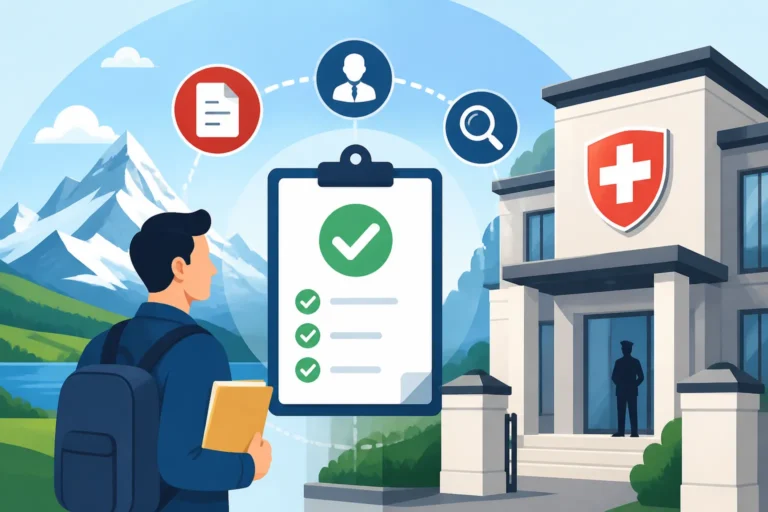
It’s a comprehensive checklist, and the more points you can confidently tick off, the stronger your case. It's about demonstrating a holistic picture of an independent business, not just a contractual agreement with a client.
Assembling Your Application Dossier for AHV/OASI
Once you understand what the AHV is looking for, you need to compile a robust application. This is your chance to present undeniable proof. You'll submit this to your cantonal AHV compensation fund (Ausgleichskasse). For example, if you're in Zurich, you'd apply to the Ausgleichskasse des Kantons Zürich.
Here’s a typical list of documents and information they'll require:
- Application Form: Usually available on your cantonal AHV office website (e.g., "Antrag auf Feststellung der Beitragspflicht als Selbständigerwerbender").
- Business Plan: A concise overview of your services, target market, marketing strategy, pricing, and financial projections. It doesn't need to be a corporate masterpiece, but it should show you've thought it through.
- Invoices and Contracts: Copies of at least 3-5 client invoices, ideally for different clients, and corresponding service contracts. This directly proves multiple clients and independent work.
- Evidence of Marketing: Screenshots of your website, social media profiles, business cards, flyers, or any other marketing materials.
- Proof of Business Expenses: Receipts or statements for business-related purchases (e.g., laptop, software, professional training, office rent, domain registration).
- Bank Statements: Showing incoming payments from various clients and outgoing payments for business expenses. A separate business bank account, if you have one, is a strong indicator.
- CV/Resume: Your professional background relevant to your proposed self-employment.
- Residence Permit Copy: Your untied B permit is crucial here.
- Lease Agreement (if applicable): If you rent a dedicated office space.
The more detailed and organized your dossier, the smoother the process tends to be. Be prepared for follow-up questions or requests for additional information. It’s a thorough review because it has significant implications for your social security standing. This also ties into Registering as Self-Employed (Selbständig) with the AHV Office, which is a critical administrative task for all new freelancers.
Navigating the Administrative Maze After AHV/OASI Approval
Once the AHV office gives you the coveted "OK, you're genuinely self-employed!" stamp, you might feel like you've conquered Everest. And honestly, you've overcome a huge hurdle. But the administrative journey isn't quite over. Now, you need to align your residence permit status, choose your business structure, and understand the tax implications of your new self-employed life.
Adjusting Your Residence Permit Status
While an untied B permit is excellent for employment flexibility, when you officially transition to self-employment, you still need to inform your cantonal migration office (Migrationsamt or Office Cantonal de la Population). Even with an untied permit, self-employment is a different category of activity than being an employee.
In most cases, if you have an untied B permit and get AHV recognition, the migration office will update your status internally. You won't typically receive a new permit card immediately, but your file will reflect your self-employed status. It's crucial to proactively notify them once you have your AHV decision letter. Keep a copy of your AHV recognition handy for future permit renewals, as they will definitely ask for proof of your stable income and legal status as a self-employed individual. They want to ensure you can financially support yourself without relying on social welfare, which is a common concern for permit renewals in Switzerland. Staying on top of your permit requirements is key to ensuring continuous residency in Switzerland, as detailed in our comprehensive guide on The Swiss B Permit: Eligibility, Renewal, and Restrictions.
Business Structure Choices: Sole Proprietor (Einzelfirma) vs. GmbH
For most independent professionals, the choice comes down to a sole proprietorship (Einzelfirma/Entreprise individuelle) or a limited liability company (GmbH/S.à r.l.). Each has its pros and cons, especially for expats.
Sole Proprietorship (Einzelfirma):
- Pros: It's the simplest and cheapest to set up. You don't need initial capital, and registration is quick (mandatory only if your annual turnover exceeds CHF 100,000, then you register with the Commercial Register). The administrative burden is minimal.
- Cons: You are personally liable for all business debts. Your personal and business assets are not legally separate. You pay taxes on your business profit as part of your personal income tax.
- Expat relevance: This is the most common choice for new expat freelancers, especially if your income is moderate and your risk exposure is low (e.g., a consultant, graphic designer, coach). It's straightforward to manage alongside your personal finances. More details can be found in Becoming a Sole Proprietor (Einzelfirma): Risks and Registration Steps.
Limited Liability Company (GmbH/S.à r.l.):
- Pros: Your personal assets are protected as the GmbH is a separate legal entity. This limits your liability to the company's capital. It can project a more professional image, which might be important for certain clients.
- Cons: Requires a minimum share capital of CHF 20,000 (fully paid up). It's more complex and expensive to set up, involving notary fees and commercial register entries. There are more administrative requirements (e.g., annual financial statements, board meetings).
- Expat relevance: More suitable for businesses with higher financial risks, those looking to raise external capital, or those with significant turnover. For a standard freelancer, it's often overkill initially. For more complex setups, refer to Setting up a GmbH or AG in Switzerland as a Foreign Resident.
The choice depends on your specific business, risk tolerance, and long-term goals. Many start as a sole proprietorship and transition to a GmbH later if their business grows significantly.
Understanding Tax Implications for the Self-Employed
As a self-employed individual, your tax situation shifts significantly compared to being an employee.
- Income Tax: Your business profit is added to your personal income and taxed at federal, cantonal, and municipal levels. You'll no longer have a "salary certificate" (Lohnausweis) but will need to submit a comprehensive tax return that includes your business accounting. If you're currently taxed at source (Quellensteuer), becoming self-employed will almost certainly mean you transition to regular taxation, where you file a full tax return and make provisional tax payments. Our guide on Filing a Swiss Tax Return (C Permit or High Earners on B Permit) can offer much more insight into this.
- Social Security (AHV/IV/EO): As mentioned, you pay the full social security contributions, not just the employee portion. The rate is progressive, decreasing slightly for higher incomes, but it's a significant expense.
- VAT (Mehrwertsteuer): If your annual turnover exceeds CHF 100,000 from services provided within Switzerland, you must register for VAT. Below this threshold, it's optional but usually not beneficial unless you have significant input VAT to reclaim.
- Pillar 2 (BVG/Occupational Pension): As a self-employed individual, you are generally not automatically covered by the mandatory Pillar 2 occupational pension system. This means you need to proactively make provisions for your retirement, either through voluntary Pillar 2 contributions (if available through certain associations) or, more commonly, by maximizing your Pillar 3a and Pillar 3b private savings. It’s crucial to understand these pension implications, which are detailed in our general guide on The Three-Pillar Pension System: AHV, BVG, and Private Savings.
- Pillar 3a: This becomes even more critical for the self-employed. You can contribute a much higher amount to your Pillar 3a (up to 20% of your net income, with a maximum cap that changes annually, significantly more than for employees) and deduct it from your taxable income. This is a powerful tax-saving tool. Learn more in Pillar 3a in 2026: Tax Deductions, Limits, and Investment Options.
It's highly advisable to consult with a local tax advisor specializing in self-employment for your canton. They can help you set up your accounting correctly and ensure you're taking advantage of all legitimate deductions.
Practical Considerations and Support for Expat Entrepreneurs
Beyond the administrative and financial hurdles, thriving as a self-employed expat in Switzerland requires practical planning and understanding where to find support. Don't underestimate the mental shift from employee to entrepreneur, especially in a foreign country.
Essential Insurance for the Self-Employed
Once you leave employment, you also leave behind your employer's group insurance policies. This means you need to proactively secure your own coverage.
- Health Insurance (Krankenversicherung): This remains mandatory. If you were on a specific employer group plan, you'll need to transition to a private basic health insurance plan. You’ll also need to consider supplementary insurance (VVG) for things like dental, semi-private hospital rooms, or alternative therapies. For expats seeking comprehensive health coverage, especially if you foresee international business travel, providers like Cigna Global offer plans that can be tailored to your needs. Make sure your health insurance plan is sufficient and aligned with your new income status.
- Accident Insurance (Unfallversicherung): As an employee, you were covered for both occupational (BU) and non-occupational (NBU) accidents. As self-employed, you're only mandatorily covered for occupational accidents via your AHV. You must secure private non-occupational accident insurance. This is non-negotiable, as even a minor skiing accident could leave you without income and significant medical bills. For detailed information, see Accident Insurance (UVG): Occupational vs. Non-Occupational Coverage.
- Sickness Daily Allowance Insurance (Krankentaggeldversicherung or KTG): This is not mandatory, but it is highly recommended. If you become ill and cannot work, basic AHV/IV/EO does not provide immediate income replacement. KTG insurance pays a daily allowance after a waiting period, ensuring you have an income stream. Given the high cost of living, being without income for several weeks or months due to illness can be catastrophic. Think of it as your safety net. Our article Sickness Benefits Insurance (KTG): Why It’s Crucial for Expats explains this in more detail.
- Professional Liability Insurance (Berufshaftpflichtversicherung): Essential if your work could cause damage to a client (e.g., a consultant giving bad advice, a web developer's code crashing a system). This covers claims for financial loss or damages resulting from your professional activities.
- Legal Expenses Insurance (Rechtsschutzversicherung): While not directly tied to your self-employment, this can be incredibly useful if you find yourself in disputes with clients, suppliers, or even landlord issues for your business premises. It's an often-overlooked insurance that can save you significant legal fees.
Building your insurance portfolio as a self-employed expat is critical for peace of mind and financial security.
Finding Support and Resources
Don't go it alone! Switzerland has a robust ecosystem of support, even if it sometimes feels hidden behind language barriers.
- Cantonal Business Support: Many cantons have economic development offices (e.g., Aargau Services, Greater Zurich Area) that offer advice and resources for new businesses, sometimes in English.
- Chambers of Commerce: The local chambers of commerce (e.g., Zürcher Handelskammer) can provide networking opportunities and information.
- Expat Networks: Communities like Internations, local expat groups, or even specific freelance expat groups on LinkedIn or Facebook are invaluable for sharing experiences and getting practical advice from those who have walked the path before you.
- Co-working Spaces: These are excellent for networking, finding potential collaborators, and escaping the isolation of a home office. Many cities have several, such as Kraftwerk in Zurich or Gotham Coworking in Geneva.
- Business Coaches/Mentors: Consider investing in a business coach who understands the Swiss market or connecting with mentors who can guide you through the initial phases.
- Professional Associations: Joining associations relevant to your industry (e.g., Swiss Association of Graphic Designers, Swiss Association of Translators) can provide credibility, networking, and sometimes even group insurance benefits for freelancers.
And don't forget the practicalities of setting up your professional life. When establishing your home office or a physical workspace, ensure you consider how your belongings will be managed. For any international removals of office furniture or specialized equipment you might need, services like Sirelo can help you find reliable moving companies experienced in handling shipments into and out of Switzerland, ensuring your business setup is smooth from a logistics perspective.
Transitioning from an untied B permit to self-employment in Switzerland is a journey that demands diligence, patience, and a thorough understanding of the local regulations. It's not the easiest path, but with careful planning and by diligently following the steps outlined here, you can absolutely build a thriving independent career in this beautiful country.
Disclaimer
The information provided in this guide is intended for general informational purposes only and does not constitute legal, financial, or tax advice. While we strive to provide accurate and up-to-date information, regulations in Switzerland are complex and subject to change. It is essential to consult with qualified legal, tax, and insurance professionals for advice tailored to your specific situation before making any decisions related to your residency status, business setup, or financial planning in Switzerland.