NIPT Tests and Pregnancy Screenings: What Basic KVG Covers
The 12-week scan in Switzerland is often a cocktail of joy and administrative anxiety, especially when you are staring at a consent form for genetic testing without knowing if it will cost you fifty francs or five hundred. I remember sitting in a sterile waiting room in Zurich Oerlikon, clutching a brochure about Trisomy screenings and wondering if my basic insurance was about to fail me. This guide clarifies exactly which NIPT tests and pregnancy screenings the mandatory Swiss KVG covers, helping you avoid the "bill shock" that many expats face during their first trimester.
The Standard Prenatal Protocol: What to Expect in the First Trimester
Navigating the medical system here starts with understanding that the Swiss approach to Pregnancy in Switzerland: Prenatal Care, Scans, and Midwife Support is highly regulated and follows a very specific timeline. Your first few appointments will likely be with a gynecologist (Frauenarzt) who will establish your due date and run basic blood work. In the Swiss system, the first major screening milestone occurs between week 11 and week 14. This is the window for the "First Trimester Test" (ETT), which is the gateway to further testing.
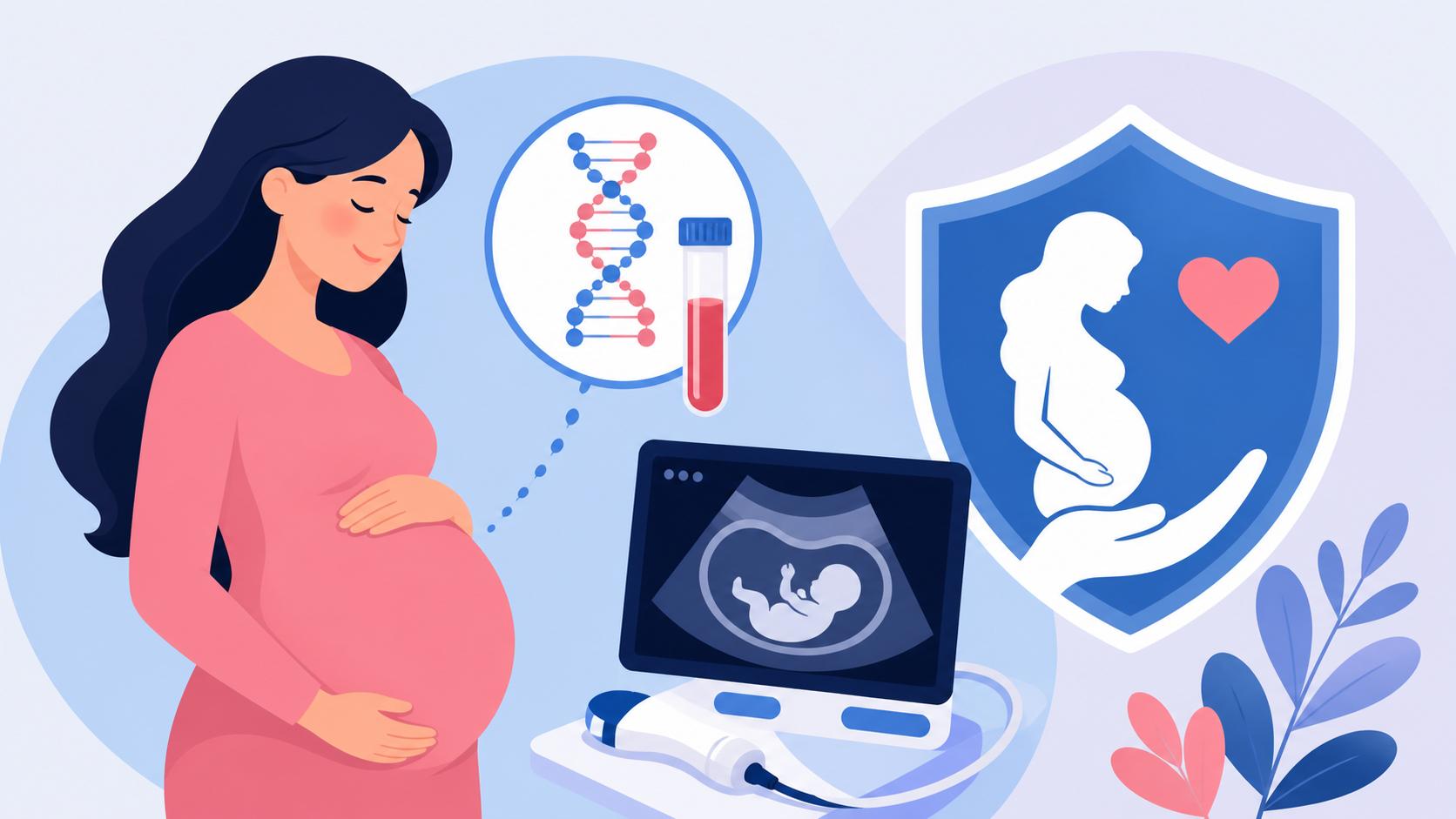
The ETT is a two-part process: an ultrasound to measure the nuchal translucency (the fluid at the back of the baby's neck) and a maternal blood test to check hormone levels. This test does not give a "yes" or "no" answer. Instead, it provides a statistical probability. For many expats, this is the first point of frustration. We often come from countries where NIPT (Non-Invasive Prenatal Testing) is offered as a first-line option, but in Switzerland, the Understanding KVG/LAMal: Mandatory Basic Health Insurance Explained rules require a "step-up" approach to justify the cost of more advanced DNA-based screenings.
During these early weeks, you might find that your doctor suggests a variety of supplements. While Swiss pharmacies are excellent, the prices for high-end prenatal vitamins can be eye-watering. Many expats, myself included, often turn to iHerb to stock up on specific brands of folate or prenatal DHA that are either unavailable locally or significantly cheaper online. This is particularly helpful when you are trying to manage the high daily costs of living in a city like Geneva or Zurich.
NIPT Coverage: The Million-Franc Question for Swiss Expats
The Non-Invasive Prenatal Test (NIPT), often referred to by brand names like Panorama, Harmony, or PraenaTest, is a highly accurate blood test that analyzes fetal DNA circulating in the mother's blood. In Switzerland, the KVG will cover the cost of an NIPT, but only under one very specific condition: your First Trimester Test (ETT) must show a risk of 1:1000 or higher for Trisomy 21, 18, or 13.
If your risk is calculated at 1:1500, for example, your doctor may still suggest an NIPT for peace of mind, but the insurance company is legally allowed to refuse payment. In this scenario, you would be looking at an out-of-pocket cost typically ranging from CHF 500 to CHF 800. This is where The Swiss Franchise System: How Deductibles and Copays Work becomes irrelevant because the cost isn't even "billed" to the insurance; it is a private transaction between you and the laboratory, such as Viollier or Unilabs.
For those who want more comprehensive coverage or who are considered "high risk" due to age but don't want to rely on the ETT statistical model, Supplementary Health Insurance (VVG): What It Covers and When to Buy It can sometimes offer broader laboratory coverage. However, most VVG policies must be in place long before you become pregnant. If you are already expecting and find the local coverage limits too restrictive, looking into international options like Cigna Global can provide an additional layer of security, especially if you plan on giving birth in a private clinic or want access to specialists without the rigid "gatekeeper" protocols of Swiss HMO models.
When NIPT is Fully Covered by KVG
To be absolutely clear, the KVG covers the NIPT for Trisomies 21, 18, and 13 if:
- The ETT has been performed by a qualified physician.
- The risk calculated is 1:1000 or higher.
- The test is performed after the 12th week of pregnancy.
If you meet these criteria, the laboratory bill should be sent directly to your insurer. If you are using a plan from Cigna Global, you may have different reimbursement pathways that allow for NIPT testing regardless of the ETT results, depending on your specific level of outpatient coverage.
Financial Realities: The 13th-Week Rule and Maternity Exemptions
One of the most important things to understand about Maternity and Child Healthcare in Switzerland: From Pregnancy to Pediatrics is the "13th-week rule." In Switzerland, pregnancy is not treated as an "illness" under the law, which has significant implications for your wallet. From the beginning of your pregnancy until the end of the 12th week, all medical costs (including your first scans and screenings) are subject to your chosen franchise and the 10% copay.
However, from the 13th week of pregnancy until eight weeks after birth, you are exempt from the franchise and the copay for "maternity-specific" benefits. This means that if your ETT happens at week 12 and shows a high risk, but you wait until the start of week 13 to have the NIPT blood draw, you might save yourself the 10% copay on that very expensive lab fee.
| Screening Type | KVG Coverage Status | Estimated Cost (Self-Pay) | Conditions for Coverage |
|---|---|---|---|
| First Trimester Test (ETT) | Covered | CHF 200 – 300 | Standard for all pregnancies |
| NIPT (Trisomy 21, 18, 13) | Conditional | CHF 500 – 800 | ETT risk must be > 1:1000 |
| NIPT (Microdeletions/Sex) | Generally Not Covered | CHF 200 (Add-on) | Usually considered elective |
| Anatomy Scan (20-week) | Covered | CHF 300 – 500 | Standard for all pregnancies |
| Chorionic Villus Sampling | Covered | CHF 1,000+ | If NIPT/ETT indicates high risk |
Understanding how to navigate these dates is crucial. If you receive a bill that seems incorrect, you should refer to How to Read a Swiss Medical Bill (Rückforderungsbeleg) and Claim Refunds to ensure the "Leistungsgruppe" (service group) is correctly marked as maternity. Doctors sometimes make coding errors, and you don't want to be paying your 2,500 CHF franchise on services that should be covered at 100%.
Navigating the Emotional and Practical Hurdles of Testing
The pressure to make decisions quickly during the first trimester is intense. In Switzerland, medical confidentiality is strictly guarded, but the system moves fast. If you are in a city like Geneva and are struggling with the language barrier, Finding an English-Speaking Gynecologist in Geneva is your first priority. You need a doctor who can explain the nuance between a "positive" NIPT result and a "high-risk" ETT result.
If your screening does come back with a high-risk result, the KVG will then cover invasive testing, such as an amniocentesis or Chorionic Villus Sampling (CVS). These are performed at major hospitals like the Universitätsspital Zürich or the HUG in Geneva. While the medical care is world-class, the emotional toll is heavy. This is a good time to ensure your support network is in place. Many expat moms find that Selecting a Hebamme (Midwife) for Postpartum Care in Zurich early in the pregnancy provides a secondary point of contact for these difficult medical questions. A midwife can often spend more time explaining the results than a busy OBGYN.
During this stressful period, don't forget the basics of self-care. If your doctor recommends specific iron supplements or magnesium to help with pregnancy-related cramping, check the ingredients. If you prefer organic or non-GMO options, iHerb remains a reliable source for high-potency supplements that meet international standards, often shipping to Switzerland within a few days. Keeping your physical health optimized while waiting for test results is a small but vital way to maintain a sense of control.
Beyond the Lab: Holistic Support and Post-Test Logistics
Once you have cleared the NIPT and ETT hurdles, the focus shifts to the 20-week anatomy scan. This is also covered by basic KVG insurance and is a much more detailed ultrasound where the doctor checks the development of the baby's heart, brain, and limbs. Unlike the first-trimester screenings, there is usually no statistical "risk score" involved; it is a diagnostic observation.
If you are a Cigna Global policyholder, you might have access to additional wellness benefits or second opinions from international specialists, which can be incredibly reassuring if the 20-week scan shows any minor "soft markers" (small variations that are often harmless but cause anxiety). Having that extra layer of private insurance often allows you to bypass the standard "wait and see" approach favored by some public health systems.
As you move into the second trimester, start organizing your paperwork. The Swiss system loves a paper trail. Keep a folder with every ultrasound photo, every lab result from your NIPT, and a copy of your insurance card. You will need these if you end up in the emergency room or if you choose to switch hospitals later in the pregnancy. Also, remember that while KVG is excellent for the "medical" side of things, it doesn't cover everything. For instance, most birth preparation classes are only partially subsidized (usually around CHF 150), and breastfeeding consultations are limited to three sessions.
| Practical Task | Timing | Insurance Relevance |
|---|---|---|
| First OBGYN Visit | Week 8-10 | Subject to Franchise/Copay |
| ETT Screening | Week 11-13 | Subject to Franchise if before Week 13 |
| NIPT Blood Draw | Week 13+ | Exempt from Franchise/Copay |
| Midwife Search | Week 15-20 | Covered by KVG (limited sessions) |
| Hospital Registration | Week 20-24 | Covered by KVG (Semi-private requires VVG) |
Finally, keep an eye on your mailbox. Swiss medical billing is decentralized. You will receive a bill from the laboratory, a separate bill from the gynecologist, and perhaps a third bill for any medications or vaccinations (like the Pertussis shot) administered during your visit. Using an app to track these or ordering your basics via iHerb to keep your pharmacy bills simple can save you hours of administrative headache in the long run. Pregnancy in a foreign country is a marathon of paperwork, but understanding these KVG boundaries ensures that you can focus on your health rather than your bank balance.
Disclaimer
The information provided in this guide is for educational and informational purposes only and does not constitute legal, financial, or medical advice. Health insurance regulations in Switzerland, including KVG and VVG mandates, are subject to frequent changes by the Federal Office of Public Health (FOPH). Always verify coverage details directly with your insurance provider and consult with a qualified medical professional regarding prenatal testing and screenings. The author is an expat sharing personal experiences and research, not a licensed insurance broker or medical practitioner.