Using PostBus (PostAuto) to Reach Swiss Mountain Villages
You’ve landed in Switzerland, seen the sleek trains, and heard whispers of the impeccable public transport. But then you look at a map, and your heart sinks a little. Those charming, tiny mountain villages, the remote trailheads, the tucked-away valleys that seem straight out of a postcard – how on earth do you get there without a car, especially when the train lines suddenly decide they’ve had enough of climbing? This guide is going to walk you through the magic of the PostAuto, Switzerland’s iconic yellow bus service, revealing how it seamlessly connects you to even the most secluded corners of this stunning country.
The Iconic PostAuto Experience: More Than Just a Bus Ride
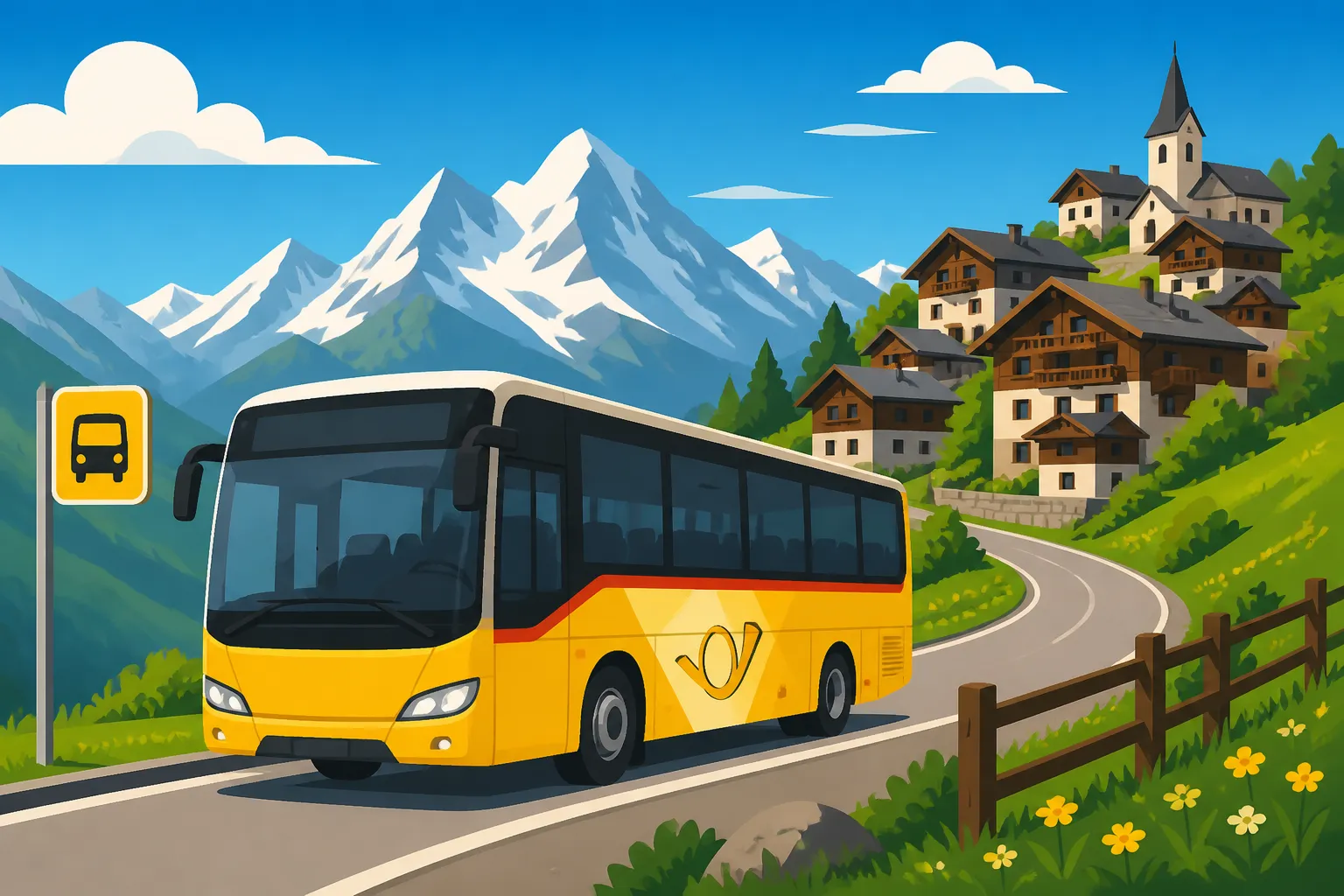
The PostAuto, or PostBus as it’s often called in English, is a quintessential part of the Swiss public transport network, and honestly, the expat experience here. It's not just a bus; it's an institution, a rolling piece of Swiss heritage that has been linking remote communities since the early 20th century, back when mail was still delivered by horse-drawn carriages. Today, those famous bright yellow buses are the backbone of rural connectivity, navigating winding mountain passes and narrow village lanes with a precision that will leave you in awe.
For many of us who’ve chosen to make Switzerland our home, the PostAuto represents freedom. Freedom from battling narrow mountain roads, freedom from worrying about parking in tiny villages, and the freedom to simply sit back, relax, and soak in the jaw-dropping scenery as a professional driver handles the twists and turns. It's often the final, crucial link in a journey that might start on a high-speed intercity train, transition to a regional rail, and then culminate in a scenic bus ride that takes you right to your destination’s doorstep. It truly embodies the seamlessness of Swiss public transport, making those seemingly inaccessible spots a reality.
When you see that distinctive yellow bus with its three-tone horn echoing through the valleys, you know you're in for an authentic Swiss experience. It’s a network that’s meticulously integrated into the broader public transport system, meaning your SBB journey planner will naturally include PostAuto connections, making multi-modal travel utterly effortless.
Why PostAuto is Your Best Friend in the Mountains
Let's face it, driving in the Swiss mountains can be a bit of a nail-biter. Narrow roads, blind corners, steep inclines, and often, little room for error. This is where the PostAuto truly shines as your ultimate travel companion. It effortlessly grants you access to places where private cars are either restricted, impractical, or simply not allowed, such as many car-free mountain villages like Zermatt (though Zermatt has its own electric taxis, the concept applies to many other smaller hamlets). Imagine arriving at a trailhead high up in the Alps, knowing you don't have to retrace your steps to get back to your parked car. The PostAuto is waiting for you at the next village, ready to whisk you back to civilization.
Beyond convenience, there’s a significant environmental benefit. By opting for the PostAuto, you’re contributing to reducing traffic and emissions in these sensitive alpine regions, helping preserve the pristine beauty that drew us all here in the first place. It’s a more sustainable way to explore, allowing you to enjoy the journey as much as the destination. Plus, it eliminates the inevitable stress of finding parking in overcrowded tourist spots or tiny village centers, which often comes with a hefty price tag anyway. You just hop off, and you're there.
The sheer reach of the PostAuto network is astonishing. From the bustling train stations in the valleys, these buses fan out, climbing thousands of meters to reach isolated farms, ski resorts, and picturesque hiking starting points. It makes truly remote destinations like Kiental, a quiet valley known for its hiking, or the stunning Engstligenalp near Adelboden, accessible to everyone, not just those with their own transport. It's genuinely about opening up the entire country for exploration.
The Three-Tone Horn: A Symbol of Swiss Travel
One of the most charming and instantly recognizable elements of the PostAuto experience is its distinctive three-tone horn. It’s not just for show; it serves a very practical and crucial safety purpose. On many of those incredibly narrow mountain roads and blind corners, especially where visibility is limited or where the road might only be wide enough for one vehicle, the PostAuto driver uses this horn to warn oncoming traffic. It’s a signal that a large vehicle is approaching, and other drivers should proceed with caution or pull over if possible.
Hearing that melodic "Fa-sharp, A, F-sharp" echo through a quiet valley is truly an auditory symbol of Switzerland. For expats, it quickly becomes a sound that evokes memories of scenic journeys, high alpine adventures, and the reliable rhythm of Swiss life. It’s a little piece of history that’s still very much alive and functional today, connecting you to the past while carrying you into the future. It’s a reminder of the ingenuity and meticulous planning that underpins even the smallest details of the Swiss public transport system.
Some of the most thrilling PostAuto routes are those traversing Switzerland's famous mountain passes during the summer months, such as the Simplon Pass, the Gotthard Pass (the old road, not the tunnel!), or the Flüela Pass. On these routes, the horn is in constant use, creating an unforgettable soundtrack to an equally unforgettable landscape. Each blast is a testament to the driver's skill and the intricate dance between man, machine, and mountain.
Planning Your PostAuto Journey: Tickets, Timetables, and Tips
Alright, so you're convinced – the PostAuto is the way to go for your next mountain adventure. Now, how do you actually plan one of these journeys? The good news is, like everything else in Switzerland, it's incredibly well-organized and integrated. You don't need a separate app or a special website; your trusty SBB Mobile app is your gateway to the entire public transport network, including the PostAuto routes.
The key to a smooth journey lies in a little pre-planning, especially if you’re heading to a truly remote spot or during peak season. While most PostAuto routes operate frequently, some very remote ones might have limited services, particularly on weekends or during off-peak times. Always double-check your connections and the last bus of the day – trust me, you don’t want to be stranded at the top of a mountain because you missed the final ride! A little bit of foresight goes a long way in ensuring your day out is nothing but glorious.
Once you get the hang of it, navigating the PostAuto network becomes second nature. It's designed to be intuitive, allowing you to switch between trains, boats, and buses without ever feeling like you're entering a different system. This seamless integration is truly one of the greatest perks of living here.
Navigating Schedules and Stops with the SBB App
The SBB Mobile app is truly your Swiss travel Bible, and it works perfectly for PostAuto as well. To find a PostAuto connection, simply input your starting point (often a train station like Interlaken Ost or Chur) and your mountain village destination (e.g., Saas-Fee, Arosa, or even a specific mountain restaurant stop). The app will show you all the available connections, including the PostAuto segments, complete with transfer times and platform numbers. You'll see the iconic yellow bus symbol right next to the journey details.
It’s crucial to pay attention to the exact stop names. Sometimes, a village might have multiple PostAuto stops, like "Village Name, Dorf" (village center) or "Village Name, Talstation" (valley station for a cable car). If you're hiking, remember that many trailheads also have designated PostAuto stops, which makes point-to-point hikes incredibly convenient. Just type in the name of the trailhead or mountain hut, and the app will often find it. Using the app's real-time information feature is also a lifesaver; it updates you on any delays or platform changes, which, while rare, can happen due to weather or traffic. If you're planning a trip, be sure to check out how to book scenic and regional journeys directly through this app for optimal convenience.
Moreover, the app allows you to save your favorite routes, making repeat journeys or complex itineraries easier to manage. You can even set up notifications for specific connections, so you don't miss your bus when you're busy admiring the scenery or enjoying an Apéro. The digital age has truly made Swiss public transport a joy to use.
Ticketing and Passes: Making Your Ride Affordable
When it comes to paying for your PostAuto journey, the Swiss integrated ticketing system once again makes life easy. If you have a Generalabonnement (GA) – the famous annual pass that covers almost all public transport – your PostAuto rides are, of course, included. For most expats, especially those new to Switzerland, the Half-Fare Travelcard (Halbtax) is an absolute must-have. This card gives you 50% off almost all train, bus, boat, and PostAuto tickets, making even expensive mountain journeys much more affordable. If you’re planning a lot of mountain excursions, figuring out if the GA is worth the CHF 4000+ cost is a smart financial move.
For those without a GA or Half-Fare card, you can purchase single tickets. You can do this easily through the SBB Mobile app, at any SBB ticket counter, or from the ticket machines at larger PostAuto hubs. For smaller, rural routes, you can often buy your ticket directly from the PostAuto driver. They typically accept cash (Swiss Francs) and often major credit/debit cards. Just be mindful if you’re trying to pay with a large note for a small fare in a remote area, as they might not have much change.
Here’s a quick overview of common ticketing options for PostAuto:
| Ticket Type | Coverage | Recommended For | Purchase Method |
|---|---|---|---|
| Single Ticket | One-way journey on a specific route | Occasional travelers, short trips | SBB App, ticket machine, PostAuto driver, SBB counter |
| Day Pass / Saver Day Pass | Unlimited travel on a specific day (valid across entire network) | Long day trips, multiple journeys | SBB App, SBB counter (Saver Day Pass needs to be bought in advance) |
| Half-Fare Travelcard (Halbtax) | 50% discount on almost all public transport (trains, buses, PostAuto, boats) | All residents, frequent travelers | SBB counter, SBB website |
| Generalabonnement (GA) | Unlimited travel on almost all public transport | Heavy commuters, extensive travelers | SBB counter, SBB website |
| Junior Travelcard (CHF 30) | Free travel for children (6-16) accompanied by a parent with a valid ticket | Families with children | SBB counter |
| Regional Passes | Specific regions (e.g., Berner Oberland Pass) often include PostAuto | Intensive travel within a particular tourist region | Regional tourist offices, SBB counter |
If you're traveling with children, don't forget the incredibly useful Traveling with Children: The SBB Junior Travelcard for CHF 30/Year which makes their PostAuto rides free when accompanied by a parent. It's a huge money-saver for families exploring the Alps.
Practicalities and Peculiarities of PostAuto Travel
While the PostAuto system is fantastic, there are a few practicalities and quirks to be aware of, especially when venturing into the high mountains. Unlike city buses, which are built for quick stops and standing room, PostAutos on longer routes are more akin to coaches, designed for comfort and luggage. However, space can still be a consideration, especially for bulky items.
Understanding the subtle nuances, like when a reservation is actually required or what to expect when you board, can make your journey even smoother. The Swiss are all about order and efficiency, and while they're generally patient with foreigners, knowing a bit of local etiquette never hurts. It’s all part of the charm of embracing life in the Alps.
These smaller details, once mastered, ensure that your PostAuto journeys are as relaxing and enjoyable as the destinations themselves. There's a real art to travel in Switzerland, and understanding these aspects helps you integrate into the flow seamlessly.
Luggage, Bikes, and Ski Gear: What Fits and What Doesn't
One of the big questions for adventurers is how much you can actually bring on a PostAuto. For standard luggage – think suitcases, backpacks, daypacks – there's usually ample space in the luggage compartments underneath the bus or on overhead racks inside. For hikers, this means you can comfortably take your What to Pack for a Day Trip to the Swiss Alps with you without issue. However, if you're planning a multi-day hike with massive trekking packs, just be mindful that exceptionally large items might be a tight squeeze if the bus is very full.
Bringing bicycles on PostAuto can be a bit more complex. Some routes, especially those popular with cyclists, have bike racks available, particularly in summer. However, space is often limited, and a reservation for your bike might be mandatory or highly recommended. You’ll usually need to purchase a separate bike ticket. Always check the specific route details on the SBB app or PostAuto website in advance, as rules can vary. If you’re contemplating using your bike, it's a good idea to research Luggage and Ski Transport on Swiss Public Transport specific to PostAuto. Don’t just show up expecting a spot, especially during peak season; you might be turned away if the rack is full or unavailable.
For winter sports enthusiasts, ski and snowboard equipment are generally accepted on PostAutos, often stored in dedicated compartments or racks. Again, common sense prevails: if the bus is packed, be considerate of other passengers. Most ski resorts that rely on PostAuto for access are well-equipped to handle winter gear, but it's always worth a quick check on their local transport websites for specific regulations during peak ski season.
Reservation Requirements and Rural Realities
While most PostAuto routes operate on a simple first-come, first-served basis, there are exceptions. Some highly popular or scenic routes, particularly those that cater heavily to tourists or connect to major attractions, do require advance seat reservations. The SBB app or PostAuto website will clearly indicate if a reservation is needed for your chosen journey. It’s always better to reserve than to risk being left behind, especially if you’re traveling in groups or during popular times like public holidays or the height of hiking season. Failing to reserve on a mandatory route can mean you can't board.
For truly remote PostAuto lines, particularly in lesser-known valleys, you might even encounter "Rufbus" or "On-Call Bus" services. These buses don’t operate on a fixed schedule but rather by demand. You’ll need to call a specific number (usually listed on the timetable at the stop or in the SBB app) a certain amount of time in advance to request the bus. This system ensures that resources aren’t wasted running empty buses in areas with minimal passenger traffic, highlighting the efficiency and practicality of the Swiss system.
A quick word on mountain safety: always keep an eye on the weather, especially if your PostAuto trip is part of a larger hiking plan. Sudden changes in mountain weather can affect bus schedules or even lead to temporary route closures. Be sure to consult reliable sources for Mountain Safety in Switzerland: Weather, Gear, and Emergency Numbers before heading out.
Connecting with Wider Switzerland and Beyond
The beauty of the Swiss public transport network is its incredible interconnectedness. PostAuto isn't just a standalone bus service; it's a crucial artery that integrates perfectly with the SBB train lines, mountain railways, and even boat services. This means you can plan a multi-modal journey from almost anywhere in the country to the most remote mountain village, all on a single ticket or with your existing passes.
This seamless connectivity is a game-changer for expats who want to explore every nook and cranny of their new home without the hassle of car ownership. It’s about leveraging the best of each transport mode to create an efficient, enjoyable, and often breathtaking travel experience. And in this digital age, staying connected throughout your journey, even in the Alps, is more important than ever.
It really illustrates why the Swiss transport system is often heralded as one of the best in the world. Every piece of the puzzle, from the high-speed trains to the local PostAuto, fits together perfectly.
Seamless Connections with the SBB Train Network
One of the most remarkable aspects of PostAuto service is its impeccable timing and integration with the Swiss Federal Railways (SBB). When you plan a trip using the SBB app, it will almost always provide you with connections where the PostAuto is scheduled to depart just minutes after your train arrives at a transfer station. This minimizes waiting times and ensures a smooth transition from rail to road.
For example, imagine taking a scenic train to a major hub like Chur in Graubünden. From Chur, a network of PostAuto lines fans out, taking you directly to renowned ski resorts like Arosa or Flims Laax, or charming smaller villages nestled deep in the valleys. The buses literally pull up right outside the train station, often at clearly marked platforms, making the transfer effortless. You step off the train, walk a few meters, and hop onto your waiting yellow bus. This level of coordination is something you quickly learn to appreciate when you live in Switzerland. It’s a stark contrast to the often disjointed public transport systems found in other countries, and it makes exploring even the most far-flung regions incredibly easy.
Whether you're heading to a remote village for a quiet retreat or a bustling ski resort, the SBB app will guide you through these transitions seamlessly, displaying the train and bus symbols side-by-side in your itinerary. This integrated approach saves you time and stress, allowing you to focus on the stunning landscapes passing by your window. While cities like Zurich have their own extensive local public transport like Public Transport in Zurich: ZVV Zones, Tickets, and Night Service, the PostAuto ensures that this level of seamlessness extends far beyond urban centers into the rugged beauty of the Alps.
Staying Connected on the Go (and beyond)
Even in the heart of the Swiss Alps, mobile phone reception is generally excellent, especially along main PostAuto routes and in populated villages. However, as you climb higher or venture into deep, narrow valleys, there can be intermittent signal loss. It's not usually a major issue, but something to be mindful of if you absolutely need constant connectivity. For visitors or new arrivals who haven't sorted out a local SIM card yet, consider looking into an eSIM from providers like Airalo for reliable data while you travel. This allows you to stay connected, check maps, or keep up with emergency contacts without worrying about roaming charges or searching for Wi-Fi. Many of the bigger PostAuto buses might even offer free Wi-Fi, but don't count on it for every route. For general travel tips on staying online, read about Staying Connected on Swiss Trains: Wi-Fi and Mobile Coverage.
Once you arrive at your mountain village destination, that’s when the real adventure begins. Whether you're hiking, skiing, or simply enjoying the tranquil atmosphere, the PostAuto ensures you get there reliably. Remember that while PostAuto takes you to many incredible places, some truly remote areas might require further exploration on foot, by cable car, or even by local taxi services if available. Always plan your return journey in advance, keeping in mind the operating hours of the last PostAuto or cable car. And if you're exploring on foot, make sure to use Hiking Apps for Switzerland: SwitzerlandMobility and Komoot to navigate safely. For those who considered bringing their own vehicle, comparing it to Driving in Switzerland: Licenses, Buying Cars, and Strict Traffic Laws might even convince you that the PostAuto is the less stressful option for mountain exploration.
Disclaimer
The information provided in this guide is for general informational purposes only and is subject to change. While we strive to keep the information up-to-date and accurate, transport schedules, prices, and regulations can change without notice. Always verify details with official sources like SBB, PostAuto, or local transport authorities before making travel plans. We are not responsible for any inaccuracies or outdated information.