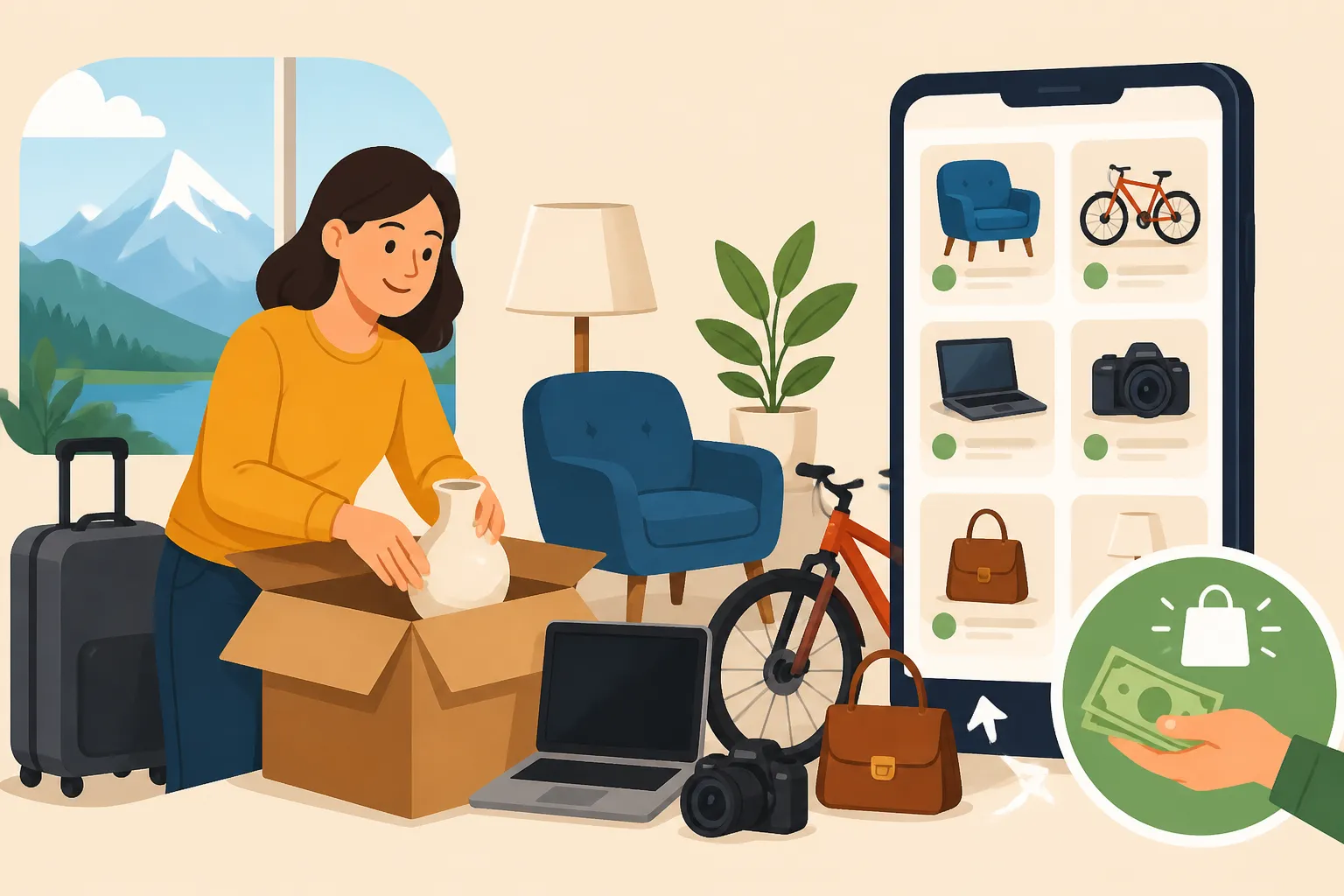
Selling Your Stuff Before Leaving Switzerland: Best Platforms
Oh, the bittersweet symphony of packing up your life in Switzerland! It’s a moment many of us expats face, often with a mixture of excitement for the next adventure and a hefty dose of existential dread about all the stuff we’ve accumulated. You arrive here with two suitcases, and somehow, within a few years, your apartment looks like a Swiss warehouse. The thought of moving it all, or worse, just throwing it away, can be overwhelming. This guide is here to walk you through the most practical, efficient, and even financially savvy ways to part with your beloved (or not-so-beloved) belongings before you close that Swiss chapter.
Why Selling Your Belongings is a Smart (and Sometimes Necessary) Move
Leaving Switzerland often means facing a logistical mountain, and your accumulated possessions are a significant part of that landscape. It's not just about decluttering; it's about making a strategic move that can save you stress, time, and, most importantly, money.
The Weight of Sentimental Clutter
We all do it, don't we? That little souvenir from a weekend trip to Gruyères, the beautiful fondue set that seemed so quintessentially Swiss, or that massive hiking backpack you bought for the Alps and used maybe twice. Each item carries a memory, a story, a reason why you had to have it. But when the moving date looms, those sentimental attachments quickly turn into literal weight and bulk. Shipping costs from Switzerland, particularly for international moves, can be astronomical. A decent-sized moving crate can easily cost thousands of francs, and every kilogram adds up. Imagine paying hundreds of francs to ship a set of kitchen utensils you could easily replace for far less in your new home. This isn't just a hypothetical scenario; it's the harsh reality that catches many expats off guard. Deciding what truly holds irreplaceable value and what can be sold or donated is your first crucial step in reducing this burden.
Financial Realities of Relocation
Let's be brutally honest: moving house is expensive, especially when it involves crossing borders. You're looking at flight tickets, temporary accommodation, new registration fees, and potentially even new furniture. Selling off your items, especially larger pieces like furniture, electronics, or even good quality kitchen appliances, can generate a welcome cash injection. While you might not recoup what you originally paid, even a few hundred francs can make a difference. Think of it as a small bonus for all your hard work living the expat dream! This extra cash could go towards your plane ticket, help set up your initial bank account in your new country, or simply give you some breathing room. Every franc you make selling reduces the financial hit of your departure. Moreover, by reducing the volume and weight of items you need to ship, you directly cut down on professional Hiring a Moving Company in Switzerland: Costs and Booking Tips. Many expats swear by comparing moving services on platforms like Sirelo before they commit, and they'll tell you that the less you have to move, the cheaper the quote will be.
The "Swiss Standard" of Apartment Handovers
Ah, the infamous Swiss apartment handover, or Wohnungsübergabe. If you’ve been here for any length of time, you’ll have heard the horror stories. Landlords or their representatives inspect your apartment with the precision of a Swiss watchmaker. Every scratch, every stain, every speck of dust is noted. The expectation for cleanliness, especially, is legendary. Selling off furniture and large items early gives you invaluable space and time to properly clean your apartment. It's much easier to deep-clean floors, walls, and corners when you don't have a massive wardrobe or a sofa blocking your access. This meticulous cleaning is often tied to getting your full rental deposit back. Failing to meet the landlord’s stringent expectations could mean forfeiting part of your deposit for professional cleaning or repairs. Remember to check your Swiss Apartment Handovers (Wohnungsübergabe): Protocols and Deposits carefully. Sometimes, despite your best efforts, you might need an End-of-Tenancy Cleaning Companies: Getting a Passed Inspection Guarantee to ensure you pass the final inspection. Selling your old bed frame or that bookshelf you squeezed into a tight corner makes the Grundreinigung (deep clean) significantly less daunting and helps ensure you aren't charged for damages that are simply normal wear and tear that you couldn't access to clean properly.
Top Platforms for Selling Your Used Items in Switzerland
Once you’ve decided what absolutely must go, the next step is finding the right avenue to sell it. Switzerland offers a variety of platforms, each with its own quirks and ideal for different types of items.
Online Marketplaces: Reach and Convenience
In our digital age, online platforms are often the go-to for selling items quickly and efficiently. They offer the broadest reach, connecting you with potential buyers across your canton or even the entire country.
- Tutti.ch & Ricardo.ch: These are Switzerland’s powerhouses for online second-hand sales, a bit like eBay Kleinanzeigen or Gumtree in other countries.
- Tutti.ch is fantastic for almost anything, from furniture and electronics to clothing and sports equipment. It’s free to list, and you can upload plenty of photos. The user base is huge, and it's generally quite active. You'll primarily deal with local pickups, so specify this in your listing. Be prepared for a fair amount of casual inquiries and some price haggling. You might list an item, and within minutes, you get a message asking "Is it available?" or "What's your best price?" It's part of the game!
- Ricardo.ch operates more like traditional eBay, with both auction-style listings and "Buy It Now" options. It’s particularly strong for higher-value items like electronics, watches, designer clothing, or collectibles. There are listing fees and a commission on successful sales, but it also attracts more serious buyers. If you have something truly valuable, Ricardo is probably your best bet for maximizing your return. You'll need to consider shipping costs if the buyer isn't local.
- Facebook Marketplace & Local Expat Groups: Never underestimate the power of social media for selling your wares.
- Facebook Marketplace is completely free and excellent for local sales. It's user-friendly, and you can easily connect with people in your area. Many expats find great success here for everything from baby gear to bikes to larger furniture pieces that require local pickup. It's less formal than Tutti or Ricardo, so be prepared for a wide range of inquiries and potentially less commitment from buyers.
- Local Expat Facebook Groups (e.g., "Expats in Zurich Sell & Buy," "Geneva Expats Marketplace") are invaluable. These groups are specifically tailored to the expat community, who often understand the struggles of relocation and are looking for specific items that suit their lifestyle here. You might find someone looking for exactly the type of kettle or adapter you're selling. The buyers are often English-speaking, which can simplify communication. You can find many useful items for sale on these groups, and they are also a great place to source Second-Hand Furniture in Switzerland: Tutti, Ricardo, and Anibis if you're not leaving quite yet.
- Specialized Forums & Apps: For specific categories, dedicated platforms can yield better results. For example, if you're selling high-end sports equipment, look for forums dedicated to skiing, cycling, or climbing in Switzerland. For clothing, apps like Vinted are gaining traction, though the user base might be smaller than in neighboring countries.
Local Second-Hand Stores and Consignment Shops
While online is king, sometimes you just want to drop everything off and be done with it. That's where brick-and-mortar options come in handy.
- Brockenhäuser (Brockis): These are Swiss second-hand stores, similar to charity shops but often run by private entities or social organizations. They accept a wide range of items, from furniture and household goods to clothing and books. While you won't get rich selling to a Brocki (some might offer a small fee, others take items for free to resell), it's a great option for larger items you want to offload quickly and ethically. They often offer pickup services for furniture, which is a huge bonus if you don't have a car. The downside is that they are selective – they won't take anything broken, dirty, or in poor condition. Always call ahead to see if they’re interested in your items and to arrange a pickup.
- Consignment Shops (Boutiques Dépôt-Vente): These are more curated shops, often specializing in designer clothing, antiques, or vintage furniture. You leave your items with them, and if they sell, you get a percentage of the sale price. This can be a good option for higher-quality goods that you don’t want to bother selling online yourself. However, they are selective, and the payment can take time. Research local options in your area to see what they specialize in and their terms.
Expat-Specific Networks and Social Media Groups
Beyond Facebook, many expat communities have established their own selling channels, which can be particularly effective.
- Company Internal Boards/Intranets: If you work for a large international company, check their internal communication channels. Many companies have bulletin boards or email lists where employees can post items for sale. This is often a trusted network, and you might find colleagues interested in taking items off your hands, especially if they are new arrivals themselves.
- International School Parent Groups: If you have children attending international schools, the parent networks (WhatsApp groups, internal forums) can be excellent for selling children's clothing, toys, books, and sports equipment. New families are always arriving and looking for these items.
- WhatsApp Groups: Many expat neighborhoods or communities have dedicated WhatsApp groups for buying and selling. Ask around in your local expat circles if such a group exists. These are super convenient for quick, local transactions.
Holding a Garage Sale or Flea Market Stall
For a more hands-on approach, especially if you have a lot of smaller items, these traditional methods can be fun and effective.
- Garage Sale (Flohmarkt zu Hause): While not as common in Switzerland as in some other countries (due to apartment living), if you have a house with a garden or a large garage, you might consider organizing a small "Flohmarkt." Check local commune regulations first, as some might require a permit. Advertise widely on local Facebook groups, Tutti.ch, and even with physical posters. This is great for clearing out a large volume of miscellaneous household items quickly.
- Flea Market Stall (Stand am Flohmarkt): Switzerland has many regular Flohmärkte in cities like Zurich (Bürkliplatz, Kanzleimarkt), Geneva (Plaine de Plainpalais), and Basel (Petersplatz). Renting a stall for a day can be a great way to sell a lot of items, especially if you enjoy the social aspect of selling. You'll need to book in advance and pay a fee, but the foot traffic is usually excellent. Be prepared to haggle – it's expected at Swiss flea markets! This option is more for smaller, easily transportable items rather than bulky furniture.
Pricing, Photography, and Negotiation: Mastering the Swiss Art of Selling
Selling your possessions effectively in Switzerland requires a bit of strategy, from how you price things to how you present them and how you interact with potential buyers.
Setting Realistic Prices: Research is Key
One of the biggest mistakes expats make is overvaluing their used items. What you paid for it, or what it means to you, isn't what the market will bear.
- Do your homework: Before listing anything, spend some time browsing Tutti.ch, Ricardo.ch, and Facebook Marketplace for similar items. See what they're listed for and, more importantly, what they actually sell for. This gives you a realistic benchmark. If you have a popular item, you can aim a little higher; if it's niche or worn, be prepared to lower your expectations.
- Consider depreciation: Electronics, furniture, and clothing depreciate rapidly. A laptop bought two years ago for CHF 1,500 might only fetch CHF 300-500, even in excellent condition. Expect to sell most items at 20-50% of their original price, depending on condition and demand.
- Bundle items: For smaller, related items (e.g., kitchen utensils, a set of children's books), consider selling them as a bundle. Buyers often appreciate the convenience, and you get rid of more stuff in one go.
- Be clear about condition: Honesty is the best policy. Don't hide flaws. If there's a scratch on the table or a missing button on a coat, mention it explicitly in your description and show it in a photo. Transparency builds trust and avoids frustrating misunderstandings during pickup. You want to avoid any issues that could prevent you from retrieving your rental deposit, so ensuring accurate descriptions is vital, similar to how you would document any damages during your initial What to Check During a Swiss Apartment Viewing (Besichtigung).
Capturing Attention with Great Photos
A picture is worth a thousand francs, or at least a quicker sale. Poor photos are the quickest way to turn off potential buyers.
- Good lighting is crucial: Take photos in natural daylight. Avoid dark, blurry, or yellowish images.
- Clean your items: This seems obvious, but a dusty lamp or a stained shirt won't sell. Wipe everything down before taking pictures.
- Multiple angles: Show the item from different sides, highlighting any unique features. If there are minor flaws (which you’ve already disclosed), take clear photos of them too.
- Context can help: For furniture, a photo showing it in a room can give buyers a better sense of its size and style, even if your apartment is starting to look empty due to your massive clear-out. Just make sure the background isn't too messy.
- Simple background: A plain wall or floor works best to make the item stand out. Avoid clutter in the background.
Navigating Communication and Negotiation
Swiss buyers can be direct, and haggling is often expected, especially on platforms like Tutti.ch and flea markets.
- Be prompt and clear: Respond to inquiries quickly and concisely. Provide all the information requested. If you’re offering an item for pickup only, state your general availability.
- Expect negotiation: Most buyers will try to get a lower price. Decide beforehand what your absolute minimum price is. If someone offers significantly less, you can politely decline or counter-offer. For example, if you've listed something for CHF 100, and someone offers CHF 50, you might counter with CHF 80. Don't be offended by lowball offers; it's part of the process.
- Language barriers: While many Swiss speak English, especially in international hubs like Zurich and Geneva, don't assume. If you're using a Swiss German platform, be prepared to use Google Translate or simple German/French phrases. A quick "Ist es noch verfügbar?" (Is it still available?) or "Kann ich es abholen?" (Can I pick it up?) will go a long way.
- Payment methods: Cash upon pickup is the most common and safest method. For higher-value items or shipping, bank transfers are also used. Avoid sending items before payment is received.
Arranging Collection or Delivery: Logistics for Buyers
This is often the trickiest part, especially for large items.
- Pickup only vs. delivery: For big furniture, always specify "Abholung" (pickup) or "A emporter" (to take away) in your listing. Most buyers will arrange their own transport.
- Assistance with loading: Be clear if you can or cannot help load heavy items. Many expats leaving often have furniture and boxes they need to move, so it's a good idea to assess what help you can offer.
- Shipping for smaller items: If you’re selling smaller items that can be shipped (e.g., books, clothing, small electronics), factor in postage costs. Either state that the buyer pays shipping, or include it in your price. Swiss Post rates can be surprisingly high, so research them before agreeing to ship. You might also want to look into Cheapest Ways to Transfer CHF Abroad: Wise vs Revolut vs Swiss Banks if you receive payments in different currencies or need to move the proceeds of your sales.
Beyond Selling: Donation, Disposal, and Alternatives
Sometimes, selling isn’t feasible or simply not worth the effort. In such cases, there are still responsible ways to part with your items.
Donating to Charities: Giving Back
If time is short or items aren't selling, donating is a fantastic alternative.
- Caritas & Salvation Army (Heilsarmee): These are two of the largest and most well-known charity organizations in Switzerland. They often have shops (Brockenstubben) where they sell donated items to support their social programs. They accept a wide range of goods, from clothing and small household items to furniture. Like Brockis, they prefer items in good, usable condition. Many branches offer free pickup services for larger furniture, which can be a lifesaver when you're trying to clear out an apartment. This can be a great way to give back to the community that has hosted you.
- Local Refugee Centers & Women’s Shelters: These organizations are often in desperate need of household items, children’s clothing, and toys. It's best to call them directly to inquire about their current needs and drop-off procedures. A gently used cot or a set of warm winter clothes could make a huge difference to a family in need.
- Freecycle & Give-Away Groups: Similar to expat selling groups, many communities have "freecycle" or "give-away" groups on Facebook or other platforms. Here, you list items you're willing to give away for free. People come to pick them up. It's an excellent way to quickly clear out items that might not have much monetary value but are perfectly usable. The joy of helping someone else is a nice bonus!
Responsible Disposal of Unsellable Items
Let’s face it, some things just won’t sell or be accepted as donations. Swiss waste disposal can be a bit of a labyrinth, but it’s crucial to do it properly. You wouldn't want to jeopardize your rental deposit over improper waste disposal, which could lead to a claim against your Contesting Withheld Deposits: How the Tenants' Association Can Help fund.
- Sperrmüll (Bulky Waste): For large items that are beyond repair or donation, check your local commune’s rules for Sperrmüll. Many communes have specific collection days a few times a year, or designated drop-off points (recycling centers, Werkhof). There’s usually a fee involved, often based on weight or volume, which you pay by purchasing special Sperrmüll stickers or bags. Don't just leave large items on the street; you'll likely get a fine.
- Recycling Centers (Recyclinghof / Déchetterie): For electronics, certain plastics, metals, paper, and glass, you can take them to your local recycling center. Switzerland is extremely strict and efficient with recycling, so make sure to separate everything correctly. Most electronics stores will also take back old electronics for free. Familiarize yourself with the system to avoid penalties; it’s a core part of Swiss Everyday Rules: Recycling, Quiet Hours, and Neighborhood Etiquette.
- Special Waste: Things like paint, chemicals, or old medicines cannot go in regular trash or recycling. Your local pharmacy often accepts old medications, and your commune website will have information on where to dispose of other special waste.
Professional Clear-Out Services
If you're completely overwhelmed, have very little time, or are moving at the last minute, professional services can be a lifesaver, albeit an expensive one.
- Entrümpelungsdienst (Clearance Service): These companies specialize in clearing out entire apartments, often in preparation for final handover. They will remove everything, dispose of it properly, and sometimes even do a basic clean. This is the most hands-off option but comes at a significant cost, often hundreds to thousands of francs, depending on the volume of items. Consider this a last resort if you have no other options.
- Combining with Moving Services: Some Moving to Switzerland: Shipping Your Belongings and Customs Clearance companies also offer partial or full clear-out services as part of their package. It might be worth inquiring if you’re already using their services for your international move. While you’re planning your departure, remember to also sort out essential financial matters like Closing Your Swiss Accounts and Settling Taxes When You Leave and Transferring Your Pension Abroad When Leaving Switzerland to ensure a smooth transition. Don't forget to grab an Using Airalo eSIMs When Traveling Just Across Swiss Borders for seamless connectivity while you're busy selling and travelling, as managing listings and communication can drain your local data quickly.
By taking a strategic approach to selling your items, you can transform a daunting task into a manageable one, potentially recouping some costs and ensuring a cleaner, less stressful exit from your Swiss home.
Comparison of Popular Selling Platforms in Switzerland
Here’s a quick overview to help you decide which platform might be best for your items:
| Platform | Best For | Cost to Sell | Buyer Type | Key Advantage | Key Disadvantage |
|---|---|---|---|---|---|
| Tutti.ch | General household items, furniture, electronics, clothing | Free | Local, casual, hagglers | Broad reach, high traffic, free listings | Many lowball offers, less committed buyers |
| Ricardo.ch | Higher-value items, collectibles, brand-name electronics, fashion | Listing fees + commission | Serious, often willing to pay more | Wider audience, structured sales | Fees can add up, requires more effort |
| Facebook Marketplace | Local sales, baby items, quick offloads, freebies | Free | Hyper-local, community-focused | Easy setup, quick local pickup, no fees | Less formal, can be unreliable |
| Expat Facebook Groups | Niche expat items, English speakers, community trade | Free | Expats, often looking for specific needs | Targeted audience, clear communication | Smaller reach, group-specific rules |
| Brockenhäuser | Large furniture, many smaller items (donations) | Free (sometimes small payment) | Second-hand shoppers | Easy offload, often offer pickup | Selective, low/no monetary return |
| Flea Markets | Small, varied items, vintage, collectibles | Stall rental fee | Enthusiasts, hagglers | Direct interaction, cash sales | Time-consuming, weather-dependent |
Disclaimer
Please remember that I am a lifestyle blogger and expat, not a legal or financial advisor. While I strive to provide accurate and up-to-date information based on personal experience and public resources, regulations in Switzerland can change, and individual circumstances vary. Always consult official government websites, professional legal advisors, or financial experts for advice tailored to your specific situation, especially concerning taxes, contracts, or complex immigration matters. This guide is for informational purposes only.