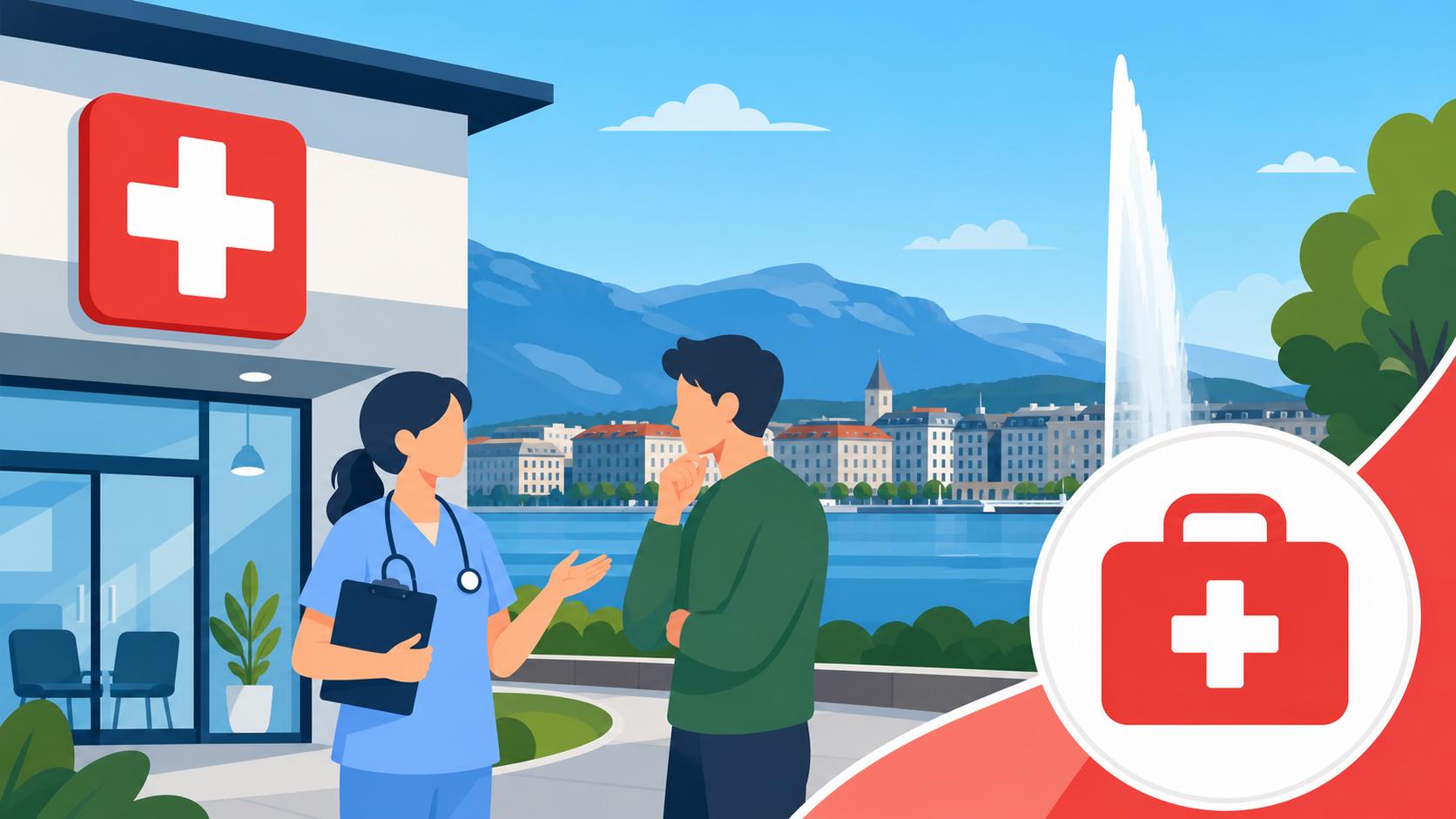
Walk-in Clinics in Geneva: Urgences Médicales Options
Waking up with a sudden fever or a twisted ankle in Geneva on a Saturday morning often leads to a frantic search for help that doesn't involve a six-hour wait at the HUG. I remember my first Swiss medical "crisis"—a deep kitchen knife cut—and the paralyzing fear that the emergency room would cost thousands. This guide identifies the best walk-in clinics in Geneva to ensure you get fast, professional care without the ER stress.
Primary Walk-in Options in Geneva
When you are dealing with a non-life-threatening issue like a lingering sinus infection, a minor burn, or a suspected sprain, the public hospital emergency room at Hôpitaux Universitaires de Genève (HUG) should generally be your last resort. It is a fantastic facility, but it is often overwhelmed with high-priority trauma cases. Instead, Geneva offers several "Permanences" or "Urgences Médicales" that function as high-efficiency walk-in clinics. These facilities are designed to bridge the gap between your family doctor and the hospital.
Permanence de Cornavin
Located right at the main train station, Permanence de Cornavin is perhaps the most famous walk-in clinic in the city. Because of its central location, it is incredibly convenient for expats commuting or living in the Paquis and Grotte areas. I have used this facility several times when I couldn't get a same-day appointment with my regular doctor, and the efficiency is generally impressive. They handle everything from basic infections to minor surgical procedures.
The staff here is very accustomed to international residents and travelers. While French is the primary language, you will almost always find a doctor or nurse who speaks excellent English. It is open 365 days a year, often with extended hours that go well into the night. However, because it is so central, the waiting room can get crowded during peak hours like Monday mornings or Saturday afternoons. If you have international coverage through a provider like Cigna Global, make sure to have your digital or physical card ready, as they are very used to processing various insurance types.
Centre Médical de la Chapelle and Eaux-Vives
For those living on the Rive Gauche or near Lancy, the Centre Médical Eaux-Vives or the newer facilities in La Chapelle offer a slightly calmer environment than the train station. These centers are part of larger medical networks and often have on-site X-ray machines and laboratories. This is a massive advantage because it means you don't have to be sent to a second location if the doctor suspects a fracture.
In my experience, the "vibe" here is more like a standard doctor's office and less like a frantic clinic. They often allow you to check waiting times online or via phone before you head out the door. If you are still in the process of Finding Medical Care in Switzerland: Doctors, Specialists, and Referrals, these walk-in centers are a great way to meet general practitioners who might be accepting new patients for long-term care. Just be prepared for the Swiss administrative precision; they will ask for your residence permit and insurance card before you even see a nurse.
Hôpital de la Tour Urgences
If you are on the outskirts of the city near Meyrin or the airport, Hôpital de la Tour offers a private emergency service that functions very much like a high-end walk-in clinic. While it is technically a hospital, its "Urgences" department is remarkably efficient for walk-in patients. This is often the preferred choice for those with Supplementary Health Insurance (VVG): What It Covers and When to Buy It because the facility feels more like a private hotel than a clinic.
The level of specialized care here is significant. If you have a sports injury, for instance, they have some of the best orthopedic specialists in the canton. I once took a friend here after a tennis injury, and we were seen, X-rayed, and braced within ninety minutes. While the costs might seem higher upfront, the speed and quality of care are often worth the premium, especially if your insurance covers the "semi-private" or "private" tier of service.
Navigating the Cost and Insurance Hurdles
One of the biggest shocks for new arrivals is how billing works at these walk-in clinics. In many countries, you pay a small co-pay or nothing at all at the point of service. In Geneva, the administrative side can be as complex as the medical side. You need to understand the difference between the two main billing methods used in the city.
Billing Systems Tiers Garant and Tiers Payant
In Geneva, you will encounter two main systems. Under "Tiers Payant," the clinic sends the bill directly to your insurance company, and you only receive a bill later for your share of the costs. Under "Tiers Garant," you pay the clinic upfront (or receive a bill at home), pay it yourself, and then send the receipt to your insurer for reimbursement. Most walk-in clinics in Geneva prefer Tiers Garant for new patients or those without a Swiss insurance card.
If you are still Understanding KVG/LAMal: Mandatory Basic Health Insurance Explained, you should know that most walk-in visits will count toward your annual deductible. To manage your recovery at home without breaking the bank on local pharmacy prices, many expats use iHerb to stock up on standard vitamins, minerals, and wellness products that don't require a Swiss prescription. This can be a savvy way to keep your "out-of-pocket" medical spending down throughout the year.
The Franchise and Your Out-of-Pocket Costs
Every walk-in visit in Geneva will generate a bill based on the "TARMED" tariff system. This is a point-based system that calculates the cost of the doctor's time, the materials used, and even the administrative work. Even a simple 15-minute consultation for a sore throat can end up costing between CHF 100 and CHF 200 once you factor in the "emergency" surcharge often applied on weekends or evenings.
Before you go, it is vital to remember The Swiss Franchise System: How Deductibles and Copays Work. If you have a high franchise (like CHF 2,500), you will likely be paying the full cost of the walk-in visit yourself. The clinic will take your insurance details, but the "reimbursement" won't actually hit your bank account until you have surpassed your total deductible for the year. Always ask for an itemized receipt, known as a "Rückforderungsbeleg," so you can track your spending correctly. For those with international plans like Cigna Global, the process is often smoother as they deal with "customary and reasonable" rates rather than the strict Swiss TARMED points.
Essential Protocol for Walk-in Visits
Walking into a clinic in Geneva isn't quite the same as "popping in" back home. There is a specific etiquette and a set of requirements that will make your life much easier. The Swiss medical system is built on documentation, and being unprepared can lead to long delays or even being asked to pay a large cash deposit upfront.
What to Bring and What to Say
When you arrive at a clinic like the one in Cornavin or Eaux-Vives, the first person you see is the receptionist, not a nurse. You must have your Swiss health insurance card (the small blue card) or proof of your international insurance. If you are a new arrival and haven't received your card yet, bring your insurance policy document or your work contract. They need to know who is responsible for the bill.
If you are Finding an English-Speaking Gynecologist in Geneva or another specialist and use a walk-in clinic for a referral, make sure to ask the doctor for a written "Bon de délégation." This document is crucial if your insurance model requires you to see a GP before a specialist. Without this paper, your insurance might refuse to pay for the follow-up specialist appointment.
When to Skip the Walk-in for the ER
While walk-in clinics are great, they are not equipped for everything. If you are experiencing chest pain, signs of a stroke, or severe breathing difficulties, do not go to a walk-in clinic. They will simply call an ambulance to take you to the HUG, and you will end up with two bills instead of one. For true emergencies, you should be looking at Emergency Numbers 144 vs 112: Which to Call in a Swiss Medical Crisis.
If you are simply looking for a way to manage minor symptoms like a seasonal cold or mild allergies, remember that Swiss pharmacies (Apotheken) are highly trained. Before spending CHF 150 at a walk-in clinic, talk to a pharmacist. They can dispense many effective over-the-counter treatments. For long-term health maintenance, such as high-quality supplements or specialized skincare, I often recommend ordering through iHerb to avoid the "Swiss price" on non-prescription items. It is all about balancing where you spend your "medical francs."
| Clinic Name | Location | Best For | Typical Hours |
|---|---|---|---|
| Permanence de Cornavin | Main Train Station | Central access, travelers | 24/7 or late night |
| Centre Médical Eaux-Vives | Rive Gauche | Families, minor injuries | 08:00 – 20:00 |
| Hôpital de la Tour | Meyrin | Specialized care, X-rays | 24/7 |
| Permanence Médico-Chirurgicale | Chantepoulet | Minor surgery, stitches | 07:00 – 22:00 |
Pediatric Urgencies and Specialized Care
If you are a parent, the "Urgences Médicales" situation is slightly different. While adult walk-in clinics will treat children, they often lack the specialized pediatric equipment or the "kid-friendly" bedside manner found at dedicated centers. Geneva is home to the Clinique des Grangettes, which has a renowned pediatric emergency service. It is a private clinic, but their pediatric walk-in is open to everyone with basic insurance.
For those living in the city center, the HUG also has a dedicated Children's Hospital (Hôpital des Enfants) with its own entrance. If it is a weekend and your child has a high fever, this is often the most comprehensive place to go. However, for a simple ear infection or a "school-required" check-up, many expats prefer the smaller private clinics because the waiting rooms are less stressful. If you are a new parent in the city, check out our Geneva Expat Healthcare Guide: International Clinics and Public Hospitals for a deeper dive into the specific pediatric wards and what to expect during a visit.
Finally, don't forget that dental emergencies are almost never covered by basic Swiss insurance. If you have a broken tooth, you will need a "Permanence Dentaire." There is a major one near the train station as well, but be prepared to pay the full amount via credit card on the spot. Most How to Pay Medical Bills: Tiers Garant vs. Tiers Payant Billing Systems guides will warn you that dental care is the one area where the Swiss "safety net" is quite thin, so having a bit of emergency cash or a dedicated dental insurance rider is a lifesaver.
Disclaimer
The information provided in this article is for informational purposes only and does not constitute professional medical or legal advice. Medical regulations and clinic operating hours in Switzerland can change frequently. Always consult with a qualified healthcare provider or your insurance company regarding your specific medical needs and coverage details. In the event of a life-threatening emergency, dial 144 immediately.