Finding an English-Speaking Family Doctor in Zug
Staring at a thermometer in your Zug apartment while trying to translate medical symptoms from English to German is a unique kind of expat stress. I remember my first winter here, feverish and confused, realizing that even in international Zug, finding the right "Hausarzt" feels like a high-stakes scavenger hunt. This guide solves that frustration by walking you through the exact process of finding, vetting, and booking an English-speaking family doctor in Canton Zug.
Why the Hausarzt System Matters in Zug
In Switzerland, the "Hausarzt" or family doctor is the sun around which the rest of your medical world orbits. Unlike some countries where you might head straight to a hospital for a minor ailment, the Swiss system is built on primary care. In Zug, because of the high density of multinational corporations and "Crypto Valley" startups, we are actually quite lucky. A significant percentage of medical professionals here have trained abroad or worked in international environments. However, knowing they can speak English and finding a clinic where English is the operational language are two different things.
Your choice of doctor is often dictated by your insurance policy. If you have opted for a specific model to save on premiums, you need to be very careful. For instance, Comparing Health Insurance Models: Telmed, HMO, Family Doctor, and Standard will show you that if you chose the "Family Doctor" model, you are legally required to visit your designated GP first for everything except emergencies. If you show up at a specialist without that GP’s referral, your insurance might simply refuse to pay the bill.
When I first arrived, I didn't realize how much The Swiss Franchise System: How Deductibles and Copays Work would influence my behavior. You might be tempted to avoid the doctor to save on your deductible, but having an English-speaking GP you trust makes it much easier to decide when a visit is actually necessary. For those on international plans like Cigna Global, the flexibility might be higher, but the need for a local point of contact remains the same.
Where to Look for English-Speaking Doctors in Zug
The search for a doctor in Zug usually starts online, but there is a nuance to the digital tools available. The most comprehensive directory is Doktor.ch, which allows you to filter by "Sprachen" (languages). You will find that nearly every doctor in Zug lists English. However, a pro-tip from someone who has lived here a decade: the doctor’s English might be perfect, but the receptionists often prefer German. If your German is shaky, look for clinics that offer online booking through platforms like OneDoc or Sanagate.
Practical Local Resources
Beyond the standard directories, Zug has several group practices (Gruppenpraxis) where English is very common. The Zuger Kantonsspital in Baar is the main hospital, but for daily needs, you want a private clinic. Places like the Arztezentrum Zug or the Permanence Zug (located right at the Zug train station) are excellent starting points. The Permanence is particularly useful because it operates as a walk-in clinic, which is a lifesaver when you haven't yet registered with a permanent family doctor.
Networking and Expat Recommendations
Don't underestimate the power of the local expat community. Zug is a small town in a small canton. Most of us share the same three or four favorite English-speaking doctors. If you are working for a large firm in the Baar or Steinhausen area, ask your HR department for their recommended list. Many of these companies have unofficial "expat-friendly" medical lists that have been vetted by hundreds of employees before you. This is often more reliable than a generic search for Finding Medical Care in Switzerland: Doctors, Specialists, and Referrals because it accounts for the "bedside manner" in English.
Making the Appointment and Cultural Etiquette
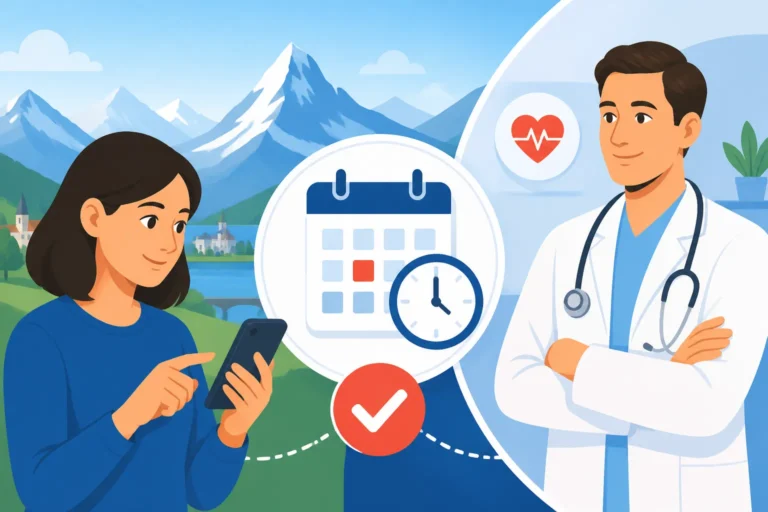
Once you have a name, the next hurdle is the phone call. If you are nervous, remember that "Guten Tag, sprechen Sie Englisch?" is a perfectly acceptable way to start. In Zug, the answer is almost always "A little" or "Yes."
Swiss medical culture is built on punctuality and preparation. If your appointment is at 09:00, the doctor expects you to be in the waiting room by 08:55. Being late is considered disrespectful and can sometimes result in a shortened consultation or even a "no-show" fee. When you go, bring your insurance card (the VeKa card). This card is your golden ticket; it contains all your billing information and ensures the clinic can process your claim correctly.
What to Bring to Your First Visit
- Your Swiss health insurance card.
- A list of current medications (use the English names, but be aware that Swiss brands might differ).
- Your vaccination record (Impfpass).
- Any relevant medical history translated into English or German.
I found that using services like iHerb to maintain my supply of familiar vitamins and supplements was helpful, but I always make sure to mention these to my Swiss doctor. They are very thorough about potential drug interactions. Also, if you are covered by an international provider like Cigna Global, keep your policy details handy, as the billing process for international insurance can sometimes require an extra step of manual filing.
Understanding Costs and Billing in Zug
Billing in Switzerland is standardized via a system called Tarmed. Every minute the doctor spends with you, every blood test, and even the time they spend writing up your notes after you leave is billed in "points." These points are then converted into Swiss Francs based on a value that varies slightly by canton.
In Zug, you will typically encounter two types of billing: Tiers Garant and Tiers Payant. Under Tiers Garant, the doctor sends the bill to you, you pay it, and then you send the receipt to your insurance company for reimbursement. Under Tiers Payant, the doctor bills the insurance company directly, and the insurance company later sends you an invoice for your share (the copay and deductible). Most pharmacies in Zug operate on Tiers Payant if you have your card with you.
| Feature | Family Doctor (Hausarzt) | Walk-in Clinic (Permanence) | Hospital Emergency (Notfall) |
|---|---|---|---|
| Best For | Chronic issues, checkups, referrals | Minor injuries, sudden flu, weekends | Life-threatening issues, broken bones |
| Wait Time | Usually by appointment (1-3 days) | 30 minutes to 2 hours | Based on triage (can be long) |
| English Level | High (usually 1-on-1) | High (diverse staff) | Varies by attending physician |
| Cost | Standard Tarmed rates | Standard + small "convenience" fee | Highest (due to facility fees) |
For a deeper dive into the financial side, I highly recommend reading How to Read a Swiss Medical Bill (Rückforderungsbeleg) and Claim Refunds. It will save you a lot of confusion when that first envelope arrives in the mail six weeks after your appointment.
Managing Prescriptions and Follow-up Care
If your doctor prescribes medication, they will give you a "Rezept." You can take this to any pharmacy in Zug. If you live in the city center, the Apotheke am Bahnhof is incredibly convenient and the staff are polyglots. They are very used to explaining dosage instructions in English.
For over-the-counter needs, the Swiss regulations are quite strict. You won't find high-dose painkillers in the supermarket; everything goes through the "Apotheke" or the "Drogerie." For more on this, see Pharmacies and Medication: Prescriptions, Costs, and OTC Regulations. If you are looking for specific international brands of health products that aren't available locally, iHerb is a common workaround for expats in Zug, as it ships quickly to Switzerland.
If your condition requires a specialist—say, a dermatologist or a cardiologist—your Hausarzt will write a referral letter. In Zug, specialists also tend to have excellent English. However, if your insurance allows it, you might want to check Finding an English-Speaking Family Doctor in Major Cantons if you are willing to travel to Zurich for a highly specialized English-speaking clinic, though Zug usually suffices for 95% of needs.
Routine Care and Wellness
Don't forget that your English-speaking GP is also there for preventative care. Whether it's the annual flu shot or the Cough and Cold Medicine in Switzerland: Local Brands and Pharmacy Advice you need for a nagging winter bug, having that established relationship makes the process seamless. If you have complex needs and are using a premium international insurer like Cigna Global, your GP can also help coordinate care between Swiss providers and your home country’s medical records.
Finding the right doctor takes a little bit of initial effort, but once you are in the system, the quality of care in Zug is world-class. You won't just be "another patient"; the Swiss model prizes the long-term relationship between the Hausarzt and the resident.
Disclaimer
This guide is for informational purposes only and does not constitute medical or legal advice. Healthcare regulations and provider availability in Switzerland can change frequently. Always verify with your insurance provider and the specific medical clinic regarding coverage, billing practices, and language availability before seeking treatment. In the event of a medical emergency, dial 144 immediately.