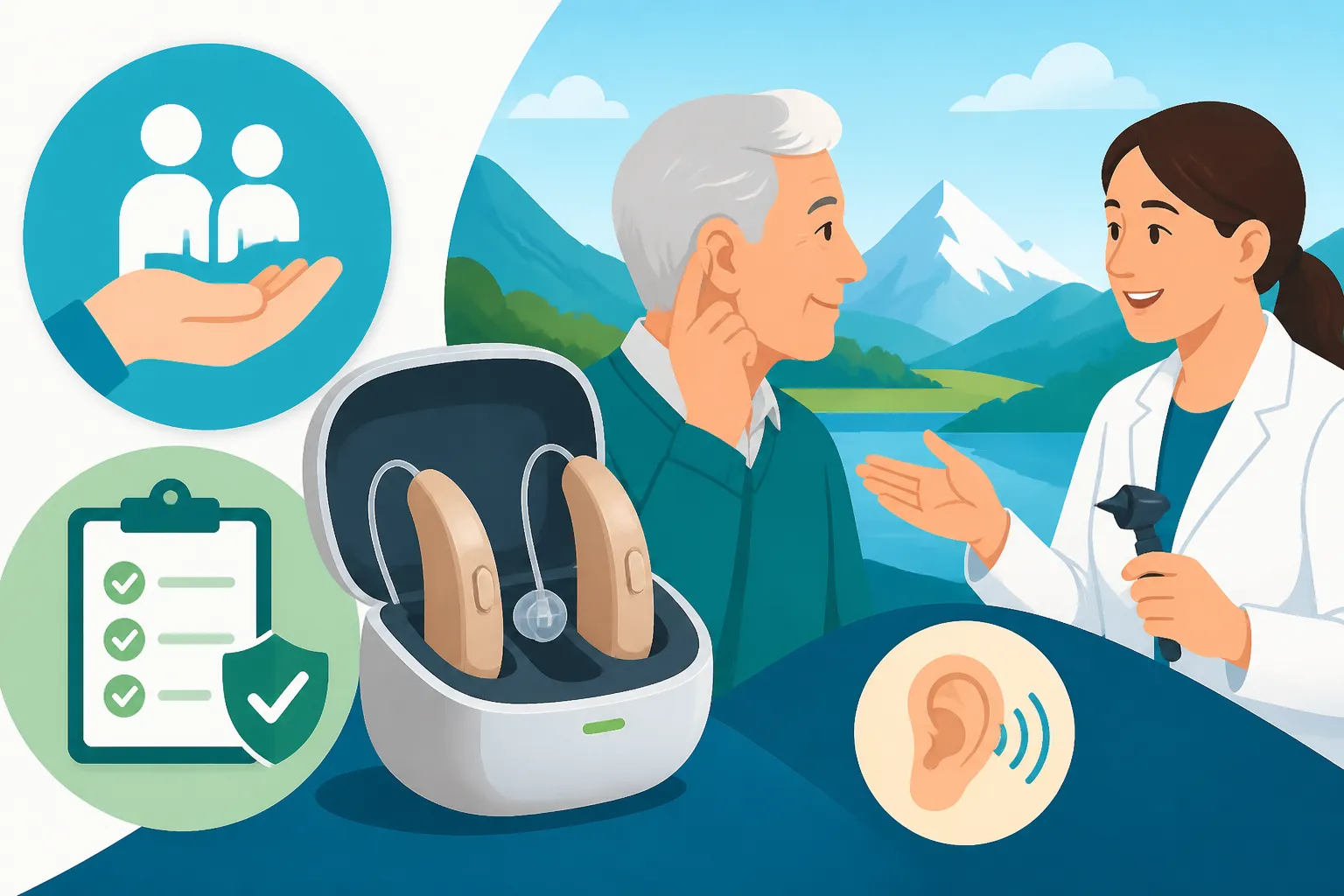
Hearing Aids in Switzerland: AHV/IV Subsidies and Audiologist Referrals
Many expats arrive in Switzerland only to discover that the country's pristine soundscape doesn't always translate to clear conversations, especially when battling an undiagnosed hearing loss. The whispers of Swiss German, the nuances of French, or even clear English can become a muffled struggle, leading to isolation and frustration. This comprehensive guide aims to demystify the often-complex process of obtaining hearing aids in Switzerland, focusing on how you can navigate the system to secure essential AHV/IV subsidies and obtain proper audiologist referrals.
Living in Switzerland, you quickly learn that while the quality of life is exceptional, the administrative hurdles, especially in healthcare, can feel like a labyrinth. Hearing loss, often a gradual and insidious condition, adds another layer of complexity. You might find yourself constantly asking people to repeat themselves, struggling in group settings, or even misinterpreting instructions at work or in social situations. This isn't just an inconvenience; it can genuinely impact your integration and overall well-being. Before you despair at the thought of exorbitant costs, know that the Swiss system, though intricate, does offer support for essential devices like hearing aids, particularly through the AHV/IV system. It’s all about knowing which doors to knock on first.
Navigating the Initial Steps: Recognizing Hearing Loss and Seeking First Contact
Recognizing that you might have hearing loss is often the hardest part. For many of us, it’s not a sudden event, but a slow fade that we might subconsciously compensate for. As expats, this can be even trickier because you're already grappling with new languages and cultural nuances, making it easy to attribute communication struggles to something other than your ears.
When to Suspect Hearing Loss
It’s easy to dismiss early signs of hearing loss as simply being tired or distracted. Perhaps you attribute it to the bustling noise of the train, or the fact that you’re still getting used to Swiss German accents. However, there are some clear indicators that it might be more than just language barriers or background noise. Are you constantly turning up the TV or radio louder than others prefer? Do family members or colleagues frequently comment on your hearing? Do you find yourself nodding along in conversations because you’ve missed too much to catch up, rather than admitting you can't hear? Maybe you struggle to follow conversations in noisy restaurants or at a vibrant Apéro. Or perhaps you feel increasingly isolated because social interactions have become a tiring guessing game.
These are not trivial concerns. Ignoring hearing loss can impact your quality of life, your professional performance, and even your mental health. It’s not just about missing words; it's about missing connection. Don't fall into the trap of thinking it's "just old age" or "just the Swiss accent." Your ability to communicate effectively is paramount to your life here.
The Role of Your Family Doctor (Hausarzt)
In Switzerland, your family doctor, or Hausarzt, is typically the gatekeeper to specialized medical care. This is your crucial first point of contact when you suspect hearing loss. Instead of directly booking an appointment with an audiologist or ENT specialist, you'll generally need a referral from your Hausarzt. This is a fundamental aspect of Healthcare in Switzerland for Expats: The Complete System Overview (2027). Your Hausarzt will perform an initial examination, ask about your symptoms and medical history, and rule out any obvious causes like earwax buildup or infections.
It's vital to find a Hausarzt you trust and can communicate effectively with, especially when discussing something as sensitive as hearing loss. If you’re in a major city, you might consider seeking an Finding an English-Speaking Family Doctor (Hausarzt) in Major Cantons to ensure nothing gets lost in translation. Your doctor will assess whether a specialized audiological examination is warranted. Once they confirm the need for further evaluation, they will provide a referral (a Überweisung) to an ear, nose, and throat (ENT) specialist (an Ohrenarzt or ORL-Arzt) or directly to an audiologist. This referral is important because it dictates how your basic health insurance, which falls under Understanding KVG/LAMal: Mandatory Basic Health Insurance Explained, will cover the diagnostic costs. While KVG covers diagnostic consultations, it generally does not cover the hearing aids themselves for age-related hearing loss.
The Audiologist Referral and Initial Assessment in Switzerland
Once you have your referral, you're on the path to understanding the extent of your hearing loss and exploring solutions. This next step is where the detailed evaluation happens.
Understanding the Audiological Examination
Your visit to an audiologist (or Hörgeräteakustiker) will involve a comprehensive battery of tests designed to precisely measure your hearing capabilities. This isn't just about determining how much you can hear, but what you can hear and how well your brain processes sounds. The main tests typically include:
- Pure-Tone Audiometry: This involves listening to tones of varying pitches and volumes through headphones and indicating when you hear them. This creates an audiogram, a graph that maps your hearing thresholds across different frequencies.
- Speech Audiometry: This test assesses your ability to understand spoken words at different volumes, often in quiet and noisy environments. This is particularly important because hearing aids don't just amplify sound; they aim to improve speech clarity.
- Tympanometry and Otoacoustic Emissions: These tests check the function of your middle ear and inner ear, helping to identify potential causes of hearing loss that might be medically treatable.
The audiologist will meticulously explain the results, detailing the type and degree of your hearing loss. Based on these findings, they will then discuss suitable hearing aid options. Unlike many other medical devices, hearing aids require a precise "prescription" from an ENT specialist before the final fitting and subsidy application. This isn't a formality; it ensures that your hearing loss has been medically assessed and that hearing aids are indeed the appropriate course of action. This medical evaluation provides the necessary documentation for potential AHV/IV subsidies.
Choosing Your Audiologist and Fitting Process
Finding the right audiologist is just as important as finding the right hearing aid. This person will be your partner throughout the fitting process and beyond, as hearing aids require ongoing adjustments and maintenance. In Switzerland, many optical shops also offer audiology services, such as Fielmann or Amplifon, alongside independent audiology clinics. You’re not tied to the first one you visit. Look for someone who is patient, speaks a language you’re comfortable with, and provides thorough explanations.
The fitting process itself is often a trial. You won't just walk out with a device on day one. Typically, you'll be given a set of hearing aids for a trial period, often several weeks. During this time, you'll wear them in your daily life – at home, at work, in social settings – to determine how well they perform for you. This is a critical phase where you provide feedback to the audiologist. They will then make adjustments to the programming of the devices, fine-tuning them to your specific hearing needs and lifestyle. It's not uncommon to have several follow-up appointments during this trial period. This personalized approach is what makes the Swiss system so effective, though it requires patience. Don't hesitate to ask questions, voice concerns, and insist on comfort and clarity. Remember, these devices are an investment in your communication and connection with the world around you.
Unpacking Swiss Subsidies: AHV/IV and Accident Insurance (UVG)
This is often where expats get lost in the financial maze. Unlike many other countries where basic health insurance directly covers hearing aids, the Swiss system is a bit different. For standard age-related hearing loss, basic KVG insurance generally does not contribute to the cost of hearing aids. Instead, you'll be looking primarily at state-sponsored social insurances: AHV/IV.
AHV/IV Subsidies for Hearing Aids
The good news is that Switzerland's social insurance system, specifically the Old Age and Survivors' Insurance (AHV) and Disability Insurance (IV), provides significant contributions for hearing aids if you meet certain criteria. This is a critical piece of The Three-Pillar Pension System: AHV, BVG, and Private Savings puzzle that can provide relief.
- For Seniors (AHV): If you are an AHV pensioner (typically age 65 for men, 64 for women, though this is evolving), and you have a doctor-diagnosed hearing loss requiring amplification, the AHV may contribute a fixed amount towards your hearing aids. As of recent years, this contribution is typically CHF 1,650 per ear for a single hearing aid, or CHF 825 per ear for bilateral hearing loss if purchased together, every five years. The key is that the hearing loss must be significant enough to warrant the aid, and it's generally for age-related presbycusis. To apply, you’ll need medical reports from your ENT specialist and audiologist, confirming the hearing loss and the need for amplification, along with the invoice for the hearing aids. You submit these documents to your cantonal AHV/IV office.
- For Individuals with Disability (IV): The IV scheme offers more comprehensive support, particularly for individuals whose hearing loss developed before they reached AHV retirement age and affects their ability to work or integrate socially. IV support is often more generous and aims to ensure professional and social integration. The contributions can be significantly higher, covering a larger portion of the cost of the hearing aids, and may include accessories or special fittings. The application process for IV subsidies is more extensive, requiring detailed medical assessments, an evaluation of your professional situation, and sometimes a review by an IV medical expert. If your hearing loss affects your ability to work, the IV is designed to provide rehabilitation measures, and hearing aids fall under this.
The important distinction: AHV covers fixed costs for older individuals, while IV focuses on rehabilitation for those with disabilities impacting their working or social life. Both require a proper medical diagnosis and prescription. Don't just assume you qualify; reach out to your cantonal AHV/IV office or an audiologist who can guide you through the application forms and required documentation. Missing crucial paperwork can delay your application significantly.
Accident Insurance (UVG) Coverage
While less common, your accident insurance (Unfallversicherung or UVG) can also cover hearing aids. This applies if your hearing loss is a direct result of an accident, either occupational (at work) or non-occupational (during leisure time, if you're employed for at least 8 hours a week). For instance, if you suffered acoustic trauma from an explosion or a severe head injury that led to hearing damage, your UVG provider (often part of your employer's insurance, or your personal Accident Insurance (UVG): Occupational vs. Non-Occupational Coverage) would likely cover the costs of the hearing aids, rehabilitation, and necessary follow-up care.
The process here involves reporting the accident to your UVG provider and providing all relevant medical documentation linking the hearing loss directly to the incident. They will then assess the claim. Unlike AHV/IV, which provides fixed contributions, UVG often covers the full cost of the medically necessary device. This is a very different scenario from gradual, age-related hearing loss.
What Basic Health Insurance (KVG) Does (and Doesn't) Cover
This is a common point of confusion for many expats. Your mandatory basic health insurance (KVG) in Switzerland covers the diagnosis of hearing loss, meaning consultations with your ENT specialist and audiologist, and the audiological tests themselves. However, KVG generally does not cover the cost of the hearing aids for common age-related or gradual hearing loss. This is why understanding the AHV/IV and UVG systems is so critical.
Think of it this way: KVG ensures you get the diagnosis and medical care to identify the problem. But for the actual device, the responsibility shifts to social insurances or your own pocket. This distinction is crucial for budgeting and managing expectations. If you’re just arriving in Switzerland and getting your insurance sorted, remember that while you need Mandatory Registration: How to Sign Up for Health Insurance Within 90 Days, this core coverage has its limits for prosthetic devices like hearing aids. You might have opted for a provider like KPT, Helsana, or Sanitas, but their KVG offerings will largely be the same in this regard.
Financial Considerations and Out-of-Pocket Expenses
Even with subsidies, acquiring hearing aids in Switzerland often involves a significant out-of-pocket expense. It's essential to understand the full financial picture to avoid surprises.
The True Cost of Hearing Aids in Switzerland
Hearing aids are sophisticated pieces of technology, and their prices reflect that. In Switzerland, a single hearing aid can range from roughly CHF 1,500 for a very basic model to upwards of CHF 6,000-8,000 for advanced, feature-rich devices (per ear!). These advanced models often include features like Bluetooth connectivity, artificial intelligence for noise reduction, rechargeable batteries, and personalized app controls.
If you have bilateral hearing loss and need two hearing aids, the cost effectively doubles. When you factor in the AHV subsidy (e.g., CHF 1,650 per ear every five years), you can see that for many models, there will still be a substantial amount to pay yourself. For example, if you purchase two mid-range hearing aids at CHF 3,500 each, your total cost would be CHF 7,000. With the AHV subsidy of CHF 3,300 (for two ears), your out-of-pocket expense would be CHF 3,700. This is a considerable sum, highlighting the importance of thorough research and understanding your options. The audiologist will present you with different technology levels, and it's important to weigh the features against your actual needs and budget. Don’t feel pressured into the most expensive option if a mid-range device meets your requirements perfectly well.
Bridging the Gap: Supplementary Insurance and Other Options
Given that basic KVG doesn't cover hearing aids, many expats naturally wonder if Supplementary Health Insurance (VVG): What It Covers and When to Buy It could help. Unfortunately, supplementary insurance policies rarely provide specific, comprehensive coverage for hearing aids for age-related hearing loss. Some niche supplementary plans might offer a small, fixed contribution towards certain "medical aids," but it's typically a minor amount, far from covering the bulk of the cost. Always check the specific terms and conditions of your supplementary policy very carefully, and don't assume coverage without explicit confirmation from your insurer.
What about other avenues?
- Tax Deductions: In some cantons, significant medical expenses not covered by insurance can be tax-deductible. Keep all your invoices and discuss this with your tax advisor when filing your annual tax return.
- Financing Options: Some audiologists offer payment plans, allowing you to pay for the hearing aids in installments. This can make the upfront cost more manageable.
- Cross-Border Shopping: While we focus on the Swiss system, some expats consider purchasing hearing aids in neighboring countries like Germany or France, where prices or coverage might differ. However, this comes with its own set of complexities regarding fitting, follow-up care, and warranty. If you do consider this, ensure you understand the implications for your Swiss subsidies and ongoing support.
- Travel Insurance for Visitors: If you're a visitor or on a short-term stay, your usual travel insurance might offer some emergency medical coverage, but it's highly unlikely to cover pre-existing conditions like hearing loss or the purchase of hearing aids. Companies like SafetyWing are excellent for specific travel needs, but they are not designed to replace comprehensive long-term health coverage for residents, especially when it comes to routine medical devices. For permanent residents, SafetyWing wouldn't be relevant for this particular need, but it's a good reminder of what typical travel insurance covers – generally acute, unexpected issues, not planned medical purchases. Always read the fine print!
The key is to proactively gather all information, understand your subsidy eligibility, and budget for the remaining costs. Don't let the financial aspect deter you from addressing your hearing loss, as the long-term benefits to your communication and overall well-being are invaluable.
Navigating the Application Process for Subsidies
Once you have your diagnosed hearing loss, your audiologist's report, and the ENT's prescription for hearing aids, the next crucial step is applying for those precious AHV/IV subsidies. This process, like many administrative tasks in Switzerland, requires diligence and attention to detail.
The AHV/IV Application Form and Required Documents
Your audiologist or ENT specialist will often have the necessary application forms (e.g., "Antrag für Hörgeräteversorgung" for AHV). If not, you can usually download them from your cantonal AHV/IV office website (Ausgleichskasse or Caisse de compensation).
The standard documents you'll need to submit include:
- Application Form: Fully completed and signed.
- Medical Report from ENT Specialist: This report must clearly state the diagnosis of hearing loss, the type (e.g., sensorineural, conductive), degree, and the explicit recommendation for hearing aids.
- Audiologist's Report: Detailing the results of your hearing tests (audiogram, speech audiometry) and the specific hearing aids recommended or provided during the trial.
- Invoice/Quotation for Hearing Aids: A detailed breakdown of the cost of the hearing aids, often provided by your audiologist after the trial period.
- Proof of AHV/IV Status: For AHV, this is usually straightforward as an existing pensioner. For IV, if you're not already receiving IV benefits, you might need to provide additional information about how your hearing loss affects your professional or social life.
It's absolutely critical that these documents are coherent and consistent. Any discrepancies or missing information will lead to delays. The process can take several weeks or even months, so be patient and follow up if you don't hear back within a reasonable timeframe. Keep copies of everything you submit. If you're managing complex health situations, especially involving multiple health needs, having a robust travel insurance for any sudden trips, like SafetyWing, might give you peace of mind, though it's separate from your core Swiss health funding.
What Happens After Submission?
Once you've submitted your application, the AHV/IV office will review it. They might contact you or your doctors for further clarification.
- For AHV applications: If approved, they will usually transfer the fixed contribution directly to your bank account. You then settle the full invoice with your audiologist, paying the difference out of pocket.
- For IV applications: The process can be more involved, potentially including an IV medical expert reviewing your case. If approved, the IV might pay a larger portion, or even the full amount, directly to the audiologist, depending on the severity and impact of your hearing loss on your ability to work or integrate.
Remember, the AHV subsidy is generally available once every five years. If your hearing aids need replacement before this period, you would typically bear the full cost yourself, unless there are exceptional circumstances or your IV coverage dictates otherwise. This five-year cycle is important for planning future replacements.
Table: Swiss Hearing Aid Subsidies at a Glance
| Category | Eligibility | Typical Coverage (approx.) | Application Process | Key Details |
|---|---|---|---|---|
| AHV | Pensioners with age-related hearing loss | CHF 1,650/ear (every 5 years) | Submit to Cantonal AHV/IV Office | Fixed contribution; for seniors. |
| IV | Hearing loss impacting work/social life (pre-AHV age) | More comprehensive; potentially full cost | Submit to Cantonal AHV/IV Office (more detailed) | Focus on rehabilitation & integration; can be higher, more flexible. |
| UVG | Hearing loss due to occupational/non-occupational accident | Potentially full cost | Report accident to UVG insurer | Requires direct link between accident and hearing loss; often covers all related costs. |
| KVG (Basic) | All residents with basic health insurance | Covers diagnostics (ENT, audiologist tests) | Via your selected KVG insurer | Does NOT cover hearing aid devices for age-related loss. |
| VVG (Supp.) | Dependent on specific supplementary policy | Rarely significant, check individual terms | Via your selected VVG insurer | Very limited, if any, coverage for hearing aid devices. |
Conclusion: Empowering Your Hearing Journey in Switzerland
Navigating the Swiss healthcare system, particularly for devices like hearing aids, can certainly feel like a marathon rather than a sprint. From recognizing the initial signs of hearing loss, to securing a vital referral from your Hausarzt, undertaking comprehensive audiological assessments, and finally applying for AHV/IV subsidies, each step demands attention and patience. But please, don't let this complexity deter you. Your hearing is a precious sense, foundational to how you experience the vibrant, multicultural tapestry of Switzerland, and to your overall quality of life and integration.
By understanding the distinct roles of KVG, AHV, IV, and UVG, you can confidently approach the process. Remember, your basic insurance covers the diagnostic journey, ensuring you get an accurate assessment. The AHV/IV system then steps in to provide substantial financial relief for the devices themselves, helping to make cutting-edge hearing technology accessible. While there will likely be out-of-pocket expenses, the benefits of improved communication, reduced social isolation, and enhanced clarity in your daily life far outweigh the effort. If you’re ever considering travel, just remember a good travel insurance like SafetyWing is key for those unexpected events, but it’s a separate beast from your essential Swiss health funding.
Take the first step. Speak to your Hausarzt today. Advocate for your hearing health. You deserve to fully engage with the sounds and conversations around you, from the tranquil cowbells in the Alps to the lively chatter in a Zurich cafe. Your hearing journey in Switzerland might have its twists and turns, but with the right information and a bit of persistence, you can ensure it's a clear one.
Disclaimer
The information provided in this guide is for general informational purposes only and does not constitute medical, financial, or legal advice. While we strive to provide accurate and up-to-date information, the Swiss healthcare and social insurance systems are complex and subject to change. Always consult with a qualified medical professional, audiologist, insurance advisor, or the official AHV/IV offices for personalized advice regarding your specific situation and eligibility for subsidies.