Reporting a Change of Address Within the Same Commune
You found a beautiful new flat just two blocks away, but the Swiss administrative machine expects the same level of precision as if you were moving to another country. I once spent three hours in a basement office just to prove I had moved three hundred meters. This guide solves the confusion surrounding reporting a change of address within the same commune.
The 14-Day Deadline: Why Precision Matters
In Switzerland, your relationship with the local authorities is based on a fundamental principle: they must always know exactly where you are sleeping. While this might feel intrusive to those coming from more laissez-faire countries, it is the backbone of the Swiss social and tax system. When you move within the same commune, the clock starts ticking the moment you officially take over the keys to your new residence.
The law typically mandates that you report your change of address within 14 days. This is not a "suggestion" or a "soft window." If you miss this deadline, you risk a fine that can range from a slap on the wrist to several hundred francs, depending on the mood of the official at the Einwohnerkontrolle (Resident’s Registration Office) and how long you delayed. It is also important to remember that Registering Your Address at the Kreisbüro Within 14 Days of Moving is the trigger for many other essential services, such as your school district assignments or your local voting rights.
Beyond the threat of fines, there is a practical reason to be prompt. Your mail, your tax bills, and your residence permit are all tied to your registered address. If the commune tries to send you a document and it is returned as "undeliverable," they will often launch an administrative inquiry. This can lead to a "Betreibung" (debt enforcement) if a bill goes unpaid simply because it was sent to your old mailbox. I have seen expats lose their chance at a C permit later down the line because of "administrative gaps" caused by failing to report a move correctly.
Understanding the Process: Umzug vs. Wegzug
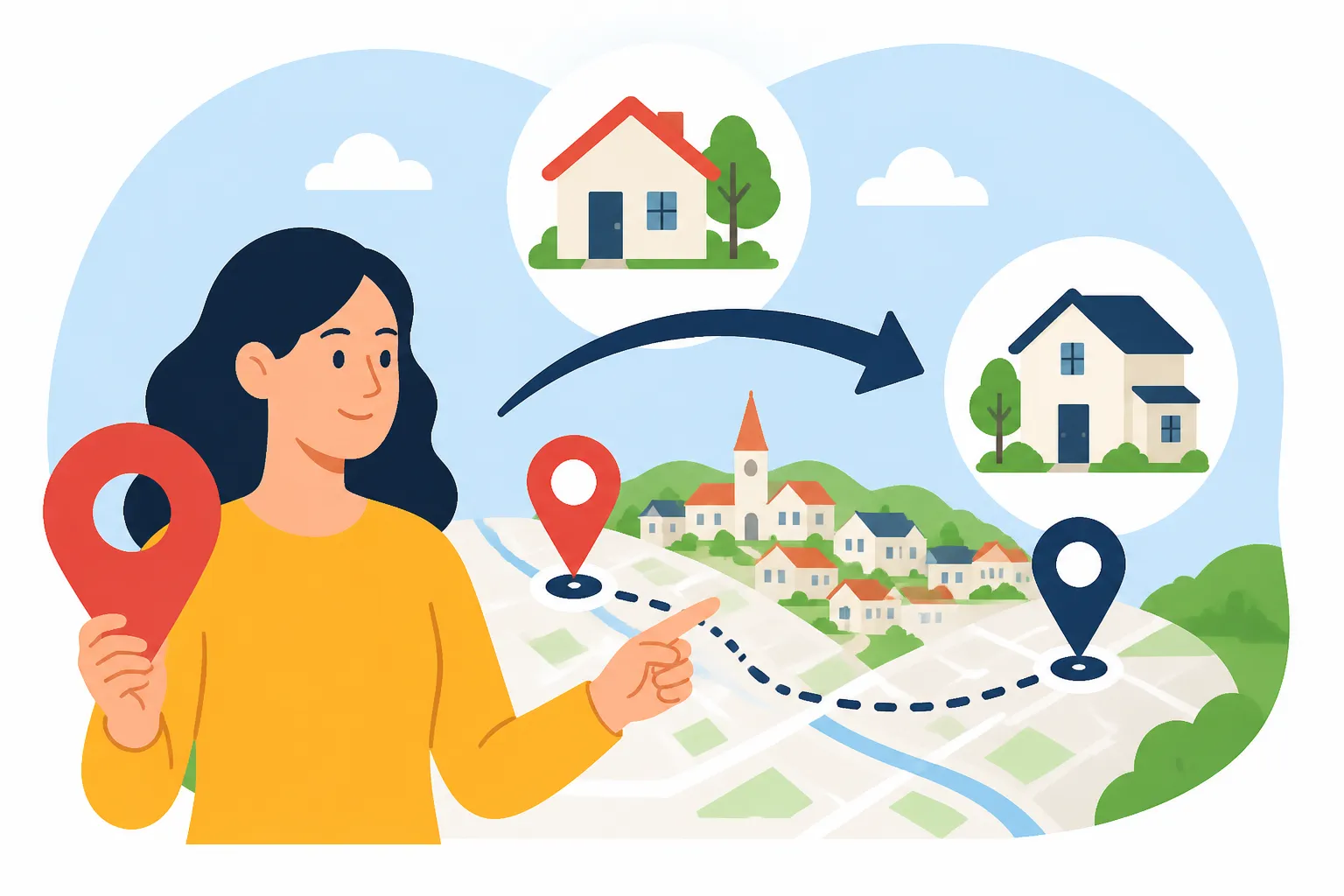
When you stay within the same commune, the process is technically referred to as an "Umzug" (move). This is significantly simpler than a "Wegzug" (moving out) followed by a "Zuzug" (moving in) to a new canton. However, simple does not mean informal. You cannot just send a quick email to the mayor and assume everything is updated.
The process involves notifying the Einwohnerkontrolle or the Office de la Population. This office is the gatekeeper of your residency data. Even though you are staying in the same jurisdiction, they need to update your file to ensure your tax "Steuerfuss" (tax multiplier) is applied to the correct municipal sub-district, if applicable. They also need to verify that your new living situation complies with local housing laws. For instance, Swiss law has specific rules about how many people can live in an apartment based on the number of rooms.
If you are a tenant, the commune will often cross-reference your notification with a report from your landlord. In many cantons, landlords are legally required to report when a new tenant moves in. If your story doesn't match the landlord’s report, you will be summoned for an explanation. This is where having a professional translation of your original documents can be helpful; if you moved from abroad and your marriage certificate or birth certificates weren't in a national language, RushTranslate can provide the certified versions required to keep your file consistent during the update.
The eUmzugCH Portal: The Digital Shortcut
In recent years, Switzerland has made great strides in digitalizing its bureaucracy. The eUmzugCH portal is the central platform for reporting moves. If your commune participates in this system, you can handle the entire address change from your laptop at 11:00 PM while sitting on a half-packed box.
However, there are caveats. To use the online portal, you generally need to be a resident with a valid residence permit (B, C, or L). Some communes still require Third-Country nationals to show up in person because they need to physically scan the biometric chip on the residence card. If you are moving within a tech-forward city like Zurich or Basel, the digital route is usually seamless. You upload your new lease, pay a small administrative fee via credit card or TWINT, and receive a confirmation via email.
If the digital portal rejects your application, do not panic. It often happens if there is a slight discrepancy in how your name is recorded in the system versus your permit. In these cases, a physical visit is mandatory. If you are dealing with complex family situations or if you are Changing Your Name on Your Residence Permit After Marriage, the online system might not be equipped to handle the simultaneous updates, requiring a face-to-face appointment.
Required Documentation for a Same-Commune Move
Whether you go in person or use the portal, the Swiss authorities will not take your word for it. You need proof. The most important document is your new rental contract. The authorities need to see the "Mietvertrag" to confirm the start date, the size of the apartment, and the names of all authorized residents.
If you are moving in with a partner or a friend and your name is not on the primary lease, you will need a "Wohnbestätigung" (housing confirmation) signed by the primary tenant and sometimes the landlord. This document proves that you are not "squatting" or living there illegally. If you find yourself in a situation where you need to prove your identity or status and your original documents are in English, using a service like RushTranslate ensures that the German or French-speaking officials have zero reasons to reject your paperwork.
Here is a quick breakdown of what you should have ready:
- Valid ID or Passport: This applies to every member of the household.
- Residence Permit: Your physical B, C, or L permit card.
- New Rental Contract: Signed by both parties.
- Old Residence Permit Fee: Be prepared to pay for a new card or an address update sticker.
- Health Insurance Confirmation: In some cantons, you must prove you are still covered by a Swiss provider, though this is more common for moves between cantons.
Updating Your Residence Permit (Ausländerausweis)
This is the part that surprises many expats. Even if you stay in the same building but move from the second floor to the fourth floor, your residence permit technically contains your address data. For older paper-style permits, the official will simply cross out the old address and write the new one with an official stamp.
For the modern biometric credit-card style permits, the address is often not printed on the card itself but is stored on the chip and in the central database. However, the commune will still want to "see" the card to ensure the data is synced. There is almost always a fee associated with this. Expect to pay between CHF 20 and CHF 40 per person for the administrative update. This fee is often billed to you later via post, though some offices prefer immediate payment.
During this update, the official might ask about your employment or financial status. While they aren't doing a full permit review, they are keeping the file "warm." This is a good time to ensure your Foreigner's Permit details are otherwise correct. If you have international insurance coverage that is recognized by the canton, ensure your Cigna Global policy details are updated in your own records so that if the commune asks for proof of insurance, your address on the policy matches your new residence.
Notifying the Utilities and the Serafe Fee
Once the commune is happy, your work is only half-done. In Switzerland, certain utilities are linked to your registration, but others are not. The most famous one is the "Serafe" (the mandatory radio and TV tax). The commune's database is directly linked to Serafe. When you move within the same commune, the system should update automatically, but it often fails.
I highly recommend checking your next bill carefully. If you receive a bill for your old address and your new address, you must contact them immediately. This is one of the most common administrative headaches for expats. Understanding the Serafe Fee 2026 regulations is crucial because they are aggressive with debt collection if you ignore a bill, even if it is sent to the wrong flat.
Furthermore, you need to contact your electricity provider (like EWZ in Zurich or SIG in Geneva). Unlike the commune registration, this does not happen automatically. You must report the "Zählerstand" (meter reading) of your old flat and your new flat. Failing to do this could mean you end up paying for the long, hot showers of the person who moved into your old place.
Comparing Notification Methods
| Feature | Online (eUmzugCH) | In-Person (Kreisbüro/Gemeinde) |
|---|---|---|
| Processing Time | 3-5 Business Days | Immediate (Once you reach the counter) |
| Convenience | High (No travel needed) | Low (Requires appointment/waiting) |
| Cost | Standard Fee + Credit Card Surcharge | Standard Fee |
| Document Upload | Digital Scans (PDF) | Physical Copies/Originals |
| Best For | Simple moves, tech-savvy residents | Families, complex leases, non-EU nationals |
| Verification | Automated/Backend | Face-to-face verification |
Insurance Adjustments and Local Taxes
When you move, even within the same street, your insurance risk profile changes. Your Household Contents Insurance (Hausratversicherung) is calculated based on the postal code and the "standard" of the building. A move from an older "Altbau" to a modern "Neubau" might actually lower your premium, or vice versa if the new area has a higher reported rate of bicycle theft.
If you are a high-earner or on a C permit, you should also be aware of the "Steuerfuss" (tax rate). Some large communes have different tax rates for different neighborhoods or "quarters." While moving within the same commune usually keeps you in the same tax bracket, it’s worth double-checking if your commune is one of the few that has sub-municipal tax districts.
Also, don't forget your health insurance. While your basic KVG premium shouldn't change if you stay in the same "region" (cantons are divided into premium regions), they need your new address for billing. If you are using a Swiss Health Card (VeKa) at your local pharmacy, having the correct address on file with the insurer ensures that your "Tiers Garant" reimbursements (where you pay first and get refunded) are sent to the right mailbox. If you are an expat with a more flexible, international plan like those offered by Cigna Global, updating your address is vital to ensure your "area of cover" remains valid and your local emergency contacts are updated.
The "Vermieter" Notification and Post Forwarding
While not a legal requirement for your visa, notifying the Swiss Post (Die Post/La Poste) is a life-saver. You can set up a "Nachsendeauftrag" (forwarding order) for six or twelve months. This ensures that any bank statements or official letters sent to your old address are redirected to your new one.
However, be warned: the Post charges for this service, and it does not notify the senders of your new address. It only forwards the mail. You still need to manually update your address with your bank, your mobile phone provider, and any subscriptions like Amazon Germany or local newspapers.
A "veteran move" is to also check your Swiss Lease Contracts: Notice Periods and Termination Dates Explained for any clauses about move-out protocols. Even though you are staying in the same commune, your old landlord will need a forwarding address to return your "Mietkautionskonto" (rental deposit). If they don't have your new address officially, that money could sit in a blocked account for months while they try to track you down.
Integration and the "Gemeinde" Vibe
Moving within the same commune is actually a great way to deepen your integration. When you visit the local office to report your move, you might find that your new neighborhood has a different "Quartierverein" (neighborhood association). In Switzerland, these associations are the heart of social life.
I always suggest asking the official at the counter if there are any specific local rules for the new street. For example, some streets have specific days for "Abfuhr" (garbage collection) that differ from the street just around the corner. Staying within the same commune means you already know the big rules, but the hyper-local details can change. Knowing Official Moving Dates: Why March 31 and September 30 Matter So Much can also help you understand why the elevators in your new building are so busy during those specific times of the year.
If you are feeling overwhelmed, remember that this is just another step in the Swiss journey. Every time you interact with the "Einwohnerkontrolle," you are building a paper trail of a "well-integrated" resident. This is gold when it comes time to apply for permanent residency or citizenship. They look for consistency, and reporting your move promptly is the hallmark of a reliable resident.
Final Checklist for Your Move
- Report to the Commune: Within 14 days, either via eUmzugCH or in person.
- Update Your Permit: Pay the fee and ensure the database reflects the new flat.
- Electricity/Water: Call your provider with the meter readings from the handover protocol.
- Serafe: Check your online portal or wait for the next bill to ensure it has moved with you.
- Insurances: Update your Hausratversicherung and your health insurance provider.
- Post Forwarding: Set up the redirection for at least 6 months.
- Bank & Work: Notify HR and your bank manager to avoid "lost mail" security freezes.
By following these steps, you turn a potentially stressful administrative hurdle into a routine task. Switzerland rewards the organized, and with a little bit of preparation, you can get back to enjoying your new home and your familiar neighborhood without the fear of a "Betreibung" hanging over your head.
Disclaimer
This guide is for informational purposes only and does not constitute legal advice. Swiss immigration laws and municipal regulations are subject to frequent change. While we strive to provide the most accurate and up-to-date information for 2026, you should always verify specific requirements with your local Einwohnerkontrolle or a qualified legal professional. The author and publisher are not responsible for any fines or administrative issues resulting from the use of this guide.