Entering Switzerland While Your B Permit Application is Still Pending
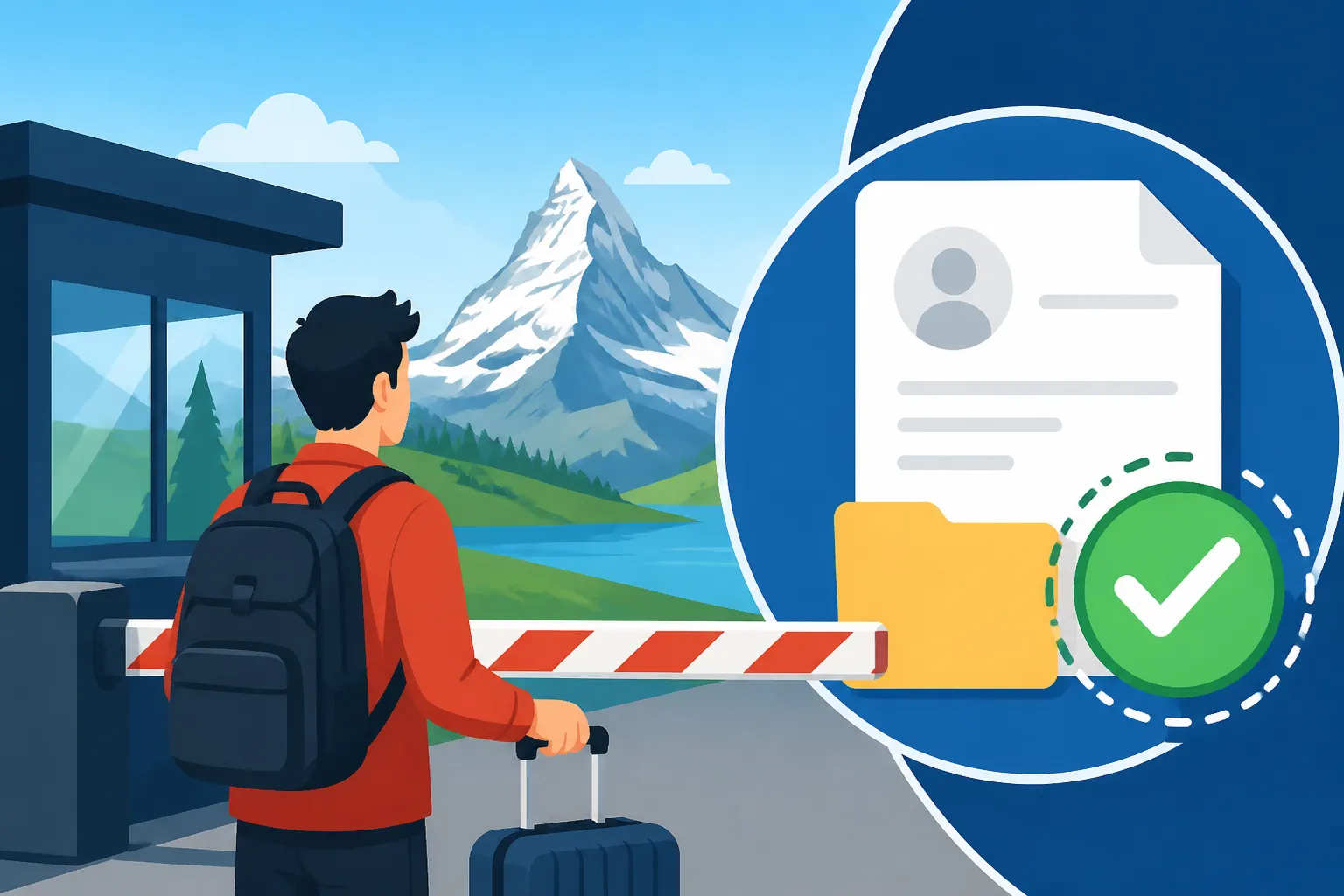
The transition period after arriving in Switzerland is often a blur of cardboard boxes, expensive grocery runs, and a mountain of paperwork. But the most stressful part is the "limbo" phase: you have registered at the Gemeinde, but your physical residence permit card hasn't arrived in the mail yet. I remember sitting in my half-furnished apartment in Zurich, staring at my mailbox for weeks, wondering if I was legally allowed to cross the border for a weekend trip to Italy without being barred from re-entry. This guide solves the mystery of traveling while your B permit is pending so you can move freely without a panic attack at the airport.
The Limbo Phase Understanding Your Legal Status After Registration
When you first arrive, one of your primary tasks is Registering Your Address at the Kreisbüro Within 14 Days of Moving or at your local Gemeinde/Commune. Once you complete this step, the clock starts ticking for the migration office to process your actual B Permit. However, the time between that appointment and the day the plastic card lands on your doormat can range from two weeks to three months, depending on the canton and the current backlog.
During this gap, you are technically a legal resident, but you lack the "gold standard" proof of that residency. You will likely receive a paper document called a Meldebestätigung (registration confirmation) or an Attestation de résidence. This paper is your lifeline. It proves to banks, landlords, and mobile providers that you are who you say you are and that you have a right to be in the country. But here is the catch: that paper is not a travel document. It does not replace a visa or a residence card when you are standing in front of a border guard at Zurich Airport or Geneva’s Cointrin.
The Meldebestätigung is Not a Passport
I’ve seen many expats make the mistake of thinking their registration paper allows them to skip through Schengen borders. While it is true that there are often no hard border checks when driving into France or Germany, the moment you board a flight or encounter a random spot check, the Meldebestätigung alone won't suffice. If you are an EU/EFTA citizen, the risk is lower because of your inherent right to movement. However, for third-country nationals, this is where the administrative "hurdles" become very real.
The Role of Your Original Entry Visa
If you are a non-EU citizen who entered on a Type D national visa, that visa is usually valid for 90 days. During those first 90 days, your Type D visa (if it allows for multiple entries) is often your primary travel document while the B permit is pending. You must check the "Entries" section on your visa sticker. If it says "MULT," you are generally in the clear to travel within the Schengen area while you wait. But what happens if those 90 days are up and the B permit still hasn't arrived? This is where the bureaucracy gets interesting.
Travel Rights for EU and EFTA Nationals
If you are lucky enough to hold a passport from an EU or EFTA country, the "pending" phase is much more of a minor annoyance than a legal wall. Your right to live and work in Switzerland is protected by the Agreement on the Free Movement of Persons. Because you already have the right to enter Switzerland with just your national ID or passport, the physical B permit card is more for administrative convenience than a "permission to stay."
Crossing Borders with a Pending Permit
As an EU citizen, you can travel in and out of Switzerland freely while your application is processed. If a border guard asks about your status, your passport is your primary proof. While the EU/EFTA vs Third-Country Nationals: Immigration Differences in Switzerland are vast, this is one area where EU citizens have it easy. You don't need a special "return visa" or additional stamps.
Necessary Documentation for EU Travelers
Even though it is easier for EU citizens, I always recommend carrying a digital or physical copy of your registration confirmation just in case. If you are moving between cantons, it is also helpful to have your old permit (if applicable) or the Residence Permits in Switzerland: L, B, C, and G Permits Explained documentation that shows your transition. The main thing is ensuring your passport remains valid; the permit is secondary for your actual travel rights.
The Return Visa Solution for Third-Country Nationals
For my fellow non-EU expats (Americans, Brits, Australians, etc.), the situation is significantly more rigid. If your Type D visa has expired or was only for a single entry, and your B permit has not arrived, you are effectively "grounded" in Switzerland unless you obtain a Rückreisevisum (Return Visa).
What is a Rückreisevisum
The Rückreisevisum is a temporary visa sticker placed in your passport that tells border control, "This person has a valid residency application in progress and is allowed to re-enter Switzerland." It is a bridge between your old status and your new B permit. I had to get one of these for an emergency trip back to the States, and while the process was straightforward, it felt like just another fee I shouldn't have had to pay.
How to Apply for a Return Visa
You must visit your cantonal migration office (Migrationsamt or Office de la population) in person. You generally cannot do this at the local Gemeinde. You will need to bring:
- Your valid passport.
- A recent passport-sized photo (though some offices scan your biometrics on the spot).
- Your registration confirmation (Meldebestätigung).
- A valid reason for travel (though in many cantons, "vacation" is now accepted).
- The fee, which is usually around CHF 90 to CHF 110.
It is vital to check Getting a 'Return Visa' (Rückreisevisum) When Traveling with an Expired Card if you find yourself in a situation where you are already outside the country without your permit, though that is a much harder problem to solve.
| Document Type | EU/EFTA Citizen | Third-Country National (Non-EU) |
|---|---|---|
| Proof of Identity | National ID or Passport | Passport |
| Entry Document | None (Freedom of Movement) | Type D Visa or Rückreisevisum |
| Pending Proof | Meldebestätigung | Meldebestätigung + Visa |
| Biometrics Required | No (usually) | Yes (for the permit card) |
| Travel within Schengen | Unrestricted | Restricted if Visa is expired |
Navigating the Biometrics Appointment
One of the main reasons for the delay in receiving your card is the biometrics appointment. Switzerland transitioned to the biometric "credit card" style permit years ago, which means you have to go to a cantonal center to have your photo taken and fingerprints scanned. The permit cannot be issued until this is done.
The Waiting List for Biometrics
In high-demand cantons like Zurich or Geneva, getting an appointment can take weeks. If you have urgent travel plans, you can sometimes try to How to Request an Expedited Biometrics Appointment in Zurich by calling the office directly and explaining your situation. Once your biometrics are taken, the card is usually printed and mailed within 7 to 10 business days.
Why Your Home Documents Matter
During this entire process, the migration office is verifying the documents you submitted during registration. If you arrived for a family reunification or a specific job, they might still be reviewing your marriage certificates or degrees. If these documents weren't in a national language (German, French, or Italian), you might face delays. I always tell newcomers to use a service like RushTranslate to ensure their documents are formatted exactly how the Swiss authorities expect. If there is a typo in your translated marriage certificate, your permit will stay in "pending" status much longer than expected. Ensure you understand the Translation and Apostille Requirements for Marriage Certificates before you even arrive.
Health Insurance and Travel While Pending
A common question I get is whether you are insured while your B permit is pending. In Switzerland, you are covered from the day you arrive and register, even if you haven't picked a provider yet (you have 90 days to do so). However, if you are traveling outside of Switzerland while your permit is pending, your "theoretical" Swiss coverage might be hard to prove in a foreign hospital.
Maintaining Coverage
For the peace of mind of a veteran expat, I highly recommend having an international policy like Cigna Global during your first few months. It fills the gap between your arrival and the moment your Swiss KVG insurance is fully active and you have your insurance card in hand. When you are traveling with a pending permit, the last thing you want is a medical emergency in another country and no physical "Swiss Health Card" to show the doctors. You can read more about the long-term system in Healthcare in Switzerland for Expats: The Complete System Overview (2027).
Using Your Swiss Health Card
Once your B permit is approved, you will finally receive your insurance card (VeKa). Until then, if you have signed up for a Swiss plan, carry your policy certificate. If you haven't signed up yet, you are still technically liable for all costs and must back-pay premiums to your arrival date. Having Cigna Global as a secondary safety net during the "permit limbo" can save you thousands in out-of-pocket costs if you're traveling back and forth.
Practical Tips for Border Crossings
If you do decide to travel while your permit is pending, you need to be prepared for the interaction with border officials. While most guards are professional and familiar with the Swiss system, a little preparation goes a long way.
The "Commuter" Strategy
If you live in Basel or Geneva and frequently cross the border for groceries or dinner, you are rarely checked. However, if you are flying into Zurich (ZRH) from outside the Schengen zone (like London or Dubai), you will go through passport control.
- Be Proactive: Hand the officer your passport and your registration paper (Meldebestätigung) together.
- Be Honest: If they ask where your permit is, simply say "Es ist im Prozess" (It's in process) or "C'est en cours."
- Carry the Visa: If you are non-EU, point out your Type D visa or your Rückreisevisum.
- Professional Help: If you ever run into a legal snag or need to verify a document's validity with a local authority, you might need to look into Finding English-Speaking Notaries for Visa Documents in Switzerland to get your paperwork in order.
What to Avoid
Do not try to "wing it" if your entry visa has expired and you don't have a return visa. The Swiss border police are meticulous. If they see you have stayed past 90 days without a physical permit or a return visa, they can technically flag you for an overstay, even if your application is sitting on a desk in the Migrationsamt. It isn't worth the risk of a fine or future permit renewal issues.
Final Administrative Checks Before You Leave
Before you head to the airport or hop on the SBB train to another country, do a quick audit of your situation. The "pending" state is a test of patience, but it is manageable.
- Check the Expiry: Is your Type D visa still valid? If yes, check if it's "MULT" (Multiple entry).
- Verify Your Mailbox: Is your name clearly printed on your mailbox? In Switzerland, if the postman doesn't see your name, they won't deliver the permit, and it will be sent back to the migration office, adding weeks to your wait.
- Confirm Your Address: If you moved into a temporary Airbnb first and then a permanent flat, make sure the migration office has your current address.
- Translation Review: Check that any documents requested by the office were translated by a recognized service like RushTranslate.
- Insurance Peace of Mind: Ensure you have your Cigna Global or local insurance policy details saved on your phone.
Living in Switzerland is an incredible experience, but the first 90 days are a gauntlet of rules. Once that plastic card arrives, you'll feel a massive weight lift off your shoulders. Until then, treat your registration paper like gold and your Rückreisevisum like a VIP pass.
Disclaimer
This guide is intended for informational purposes only and does not constitute legal advice. Immigration laws and cantonal practices in Switzerland are subject to change. Always verify current requirements with your local Cantonal Migration Office or the State Secretariat for Migration (SEM) before making travel plans. This article is based on the regulations as of 2026.