Does Switzerland Have a Digital Nomad Visa Available in 2026?
You are likely picturing yourself perched on a wooden balcony in Lauterbrunnen, laptop open, sipping a locally roasted espresso while the mist rolls off the North Face of the Eiger. I remember that exact dream when I first moved here, only to realize that the Swiss authorities have a very particular way of looking at "work." This guide clarifies the confusing reality of the digital nomad landscape in Switzerland for 2026.
The Reality of the Swiss Digital Nomad Landscape
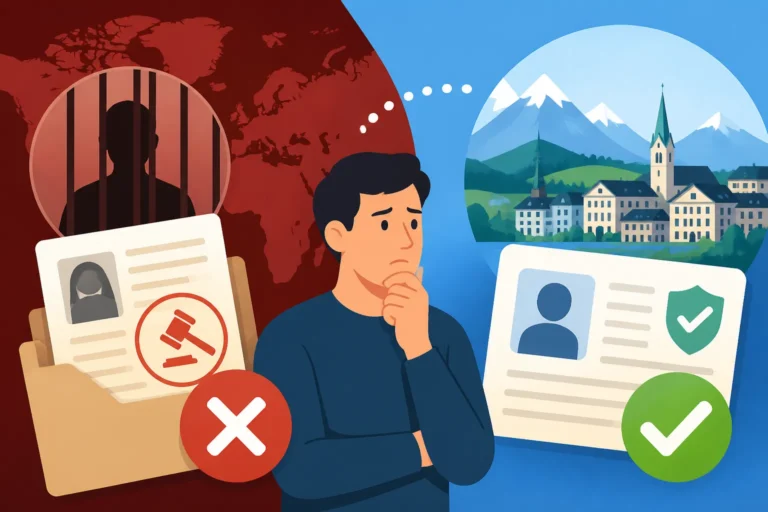
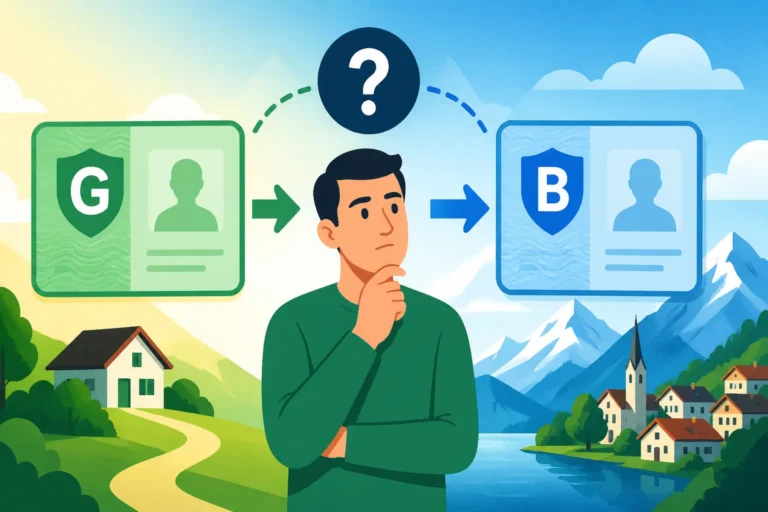
The short answer is no. As of 2026, Switzerland does not offer a specific "Digital Nomad Visa" in the way that countries like Portugal, Spain, or Estonia do. While many of our European neighbors have rolled out the red carpet for remote workers with simplified applications and tax breaks, Switzerland remains steadfast in its traditional permit system. This doesn't mean you can't live and work here, but it does mean you have to fit yourself into one of their existing boxes, which are often quite rigid.
When I first arrived, I assumed that as long as my income came from outside the country, the local Gemeinde wouldn't mind me staying for a few months. I quickly learned that the Swiss definition of "residence" is tied closely to where you are physically performing the labor, not where the company is headquartered. If you are sitting in a chair in Zurich and hitting "send" on an email, you are working in Zurich. This distinction is vital because it determines which Residence Permits in Switzerland: L, B, C, and G Permits Explained you might actually qualify for.
The Swiss authorities generally prioritize local labor market protection. They want to ensure that anyone living here is contributing to the social security system and isn't undercutting local wages. This makes the "nomad" lifestyle a bit of a square peg in a round hole. However, depending on your nationality and the nature of your work, there are several pathways you can navigate to make the Swiss dream a reality.
Navigating the 90 Day Rule for Remote Workers
For many, the first instinct is to simply arrive on a tourist visa (or a visa-waiver for citizens of countries like the US, Canada, or the UK) and work quietly from an Airbnb. Technically, The 90/180 Day Schengen Rule for Non-Working Foreign Homeowners applies to anyone entering for "tourism." In 2026, the legal grey area regarding remote work on a tourist status remains narrow. While answering a few emails while on vacation is generally overlooked, setting up a full-time home office for three months is technically a violation of your entry terms.
If you are a non-EU/EFTA citizen, you are subject to the strict 90-day limit within any 180-day period. If you are caught working without a permit, you risk more than just a fine; you could face an entry ban from the entire Schengen Area. I’ve met people who tried to "border run" to keep their remote work setup going, only to be flagged by the rigorous Swiss border checks.
For those who need to submit official documents during their stay or for future permit applications, accuracy is everything. I always suggest using a service like RushTranslate to handle your birth certificates or previous work contracts, as the Swiss cantonal offices are notoriously picky about the quality of translations. Having your documents ready can make the difference between a smooth conversation at the migration office and a flat rejection.
The EU EFTA Advantage versus the Third Country Struggle
Your experience trying to live the nomad life in Switzerland will be diametrically opposed depending on what passport you hold. Switzerland has a bilateral agreement with the European Union that allows for the free movement of people, though with some caveats for those not "traditionally" employed by a Swiss firm.
The Pathway for EU EFTA Citizens
If you hold an EU or EFTA passport, you have it significantly easier. You can move to Switzerland and look for work or set up a business for up to 90 days without a permit. If you wish to stay longer as a remote worker, you typically apply for a B Permit. To get this, you must prove you are "economically active." This usually means showing a work contract or proving your self-employment.
When you go to The Swiss B Permit: Eligibility, Renewal, and Restrictions page, you'll see that for nomads, the challenge is proving that your income is sufficient to support yourself in one of the world's most expensive countries. You will be expected to show that you won't become a burden on the state. Once you have this, you must complete the Mandatory Registration: How to Sign Up for Health Insurance Within 90 Days to stay compliant with Swiss law.
The Struggle for Third Country Nationals
If you are from the US, Australia, India, or any other non-EU country, the hurdles are much higher. You fall under the Third-Country National Quotas: How the Swiss Permit Limits Work. Switzerland limits the number of permits issued to non-EU citizens each year, and these are usually reserved for "highly qualified" individuals. To live here as a nomad, you would generally need to be hired by a Swiss company or prove that your presence in Switzerland is of "significant economic interest" to the canton.
| Permit Type | Eligibility for Nomads | Duration | Path to Permanent Residency |
|---|---|---|---|
| L Permit | Short-term contracts (under 1 year) | Up to 12 months | No direct path |
| B Permit | Long-term residency (EU or High-skilled TCN) | 5 years (renewable) | Path to C Permit |
| C Permit | Permanent residents (after 5-10 years) | Indefinite | Citizenship path |
| G Permit | Cross-border commuters | Annual | Not applicable |
The Self Employment Route for Highly Skilled Nomads
If you are determined to stay longer than 90 days and you aren't an EU citizen, your best bet is often the self-employment pathway. This is not for the faint of heart. To be approved, you must demonstrate to the cantonal authorities that your business has the capital and the clients to survive.
You will need to provide a comprehensive business plan, proof of startup capital (often around CHF 20,000 for a GmbH setup, though much more is practically needed for a residency application), and evidence that you have established professional connections. This is where Working in Switzerland as an Expat: Jobs, Culture, and Employment Laws comes into play—you are essentially trying to prove you are a Swiss business owner who just happens to work remotely.
The authorities will also check if your business can eventually hire locals. If you are just a "solopreneur" freelance writer or coder, it is very difficult to get a permit as a third-country national. However, for those who do succeed, the administrative requirements are heavy. You will need to ensure all your foreign educational and professional credentials are translated. Again, using a reputable agency like RushTranslate is essential because the migration office will not accept amateur translations of your degree or business references.
Essential Logistics for the Modern Nomad in Switzerland
Once you have navigated the permit minefield, the actual logistics of living in Switzerland can be a shock to the system. The cost of living is legendary, and as a nomad, you won't have a Swiss employer subsidizing your relocation.
Finding a Place to Stay
Finding a flat in cities like Zurich or Geneva is like competing in the Hunger Games. As a nomad without a Swiss salary certificate (Lohnausweis), you might find it nearly impossible to rent a traditional apartment. Many nomads start by Finding a WG (Shared Flat) as an International Student in Lausanne or Zurich to build a local footprint. Short-term serviced apartments are available but expect to pay a massive premium.
Health Insurance and Security
The moment you register your residency at the local Registering Your Address at the Kreisbüro Within 14 Days of Moving, the clock starts ticking on your health insurance. Healthcare in Switzerland for Expats: The Complete System Overview (2027) is world-class but mandatory and expensive. For many nomads who travel frequently, a traditional Swiss KVG plan might feel restrictive.
I often recommend looking into international options like Cigna Global if you are in a transitional phase or if your specific permit allows for private insurance exemptions (which is rare for residents but common for certain student or international organization statuses). Maintaining a plan with Cigna Global can provide that extra layer of international coverage that a local Swiss plan might lack when you decide to take a "working holiday" outside of the Confederation. Remember, if you are an official resident, you must satisfy the authorities that your insurance meets the Is Basic Health Insurance (KVG) Mandatory for Expats? A Plain-English Guide requirements.
The Hidden Costs of Nomading in the Alps
Budgeting for a nomad stint in Switzerland requires a complete recalibration of what you consider "normal" expenses. I remember paying CHF 25 for a standard pizza for the first time and feeling a physical pang in my wallet. In 2026, inflation hasn't made things any cheaper.
- Coworking Spaces: Since Swiss apartments are often small and the "quiet hours" rules are strict, you’ll likely want a coworking space. Expect to pay between CHF 300 and CHF 600 per month for a hot desk in a major city.
- Connectivity: While the internet is incredibly fast, mobile plans and home fiber can be pricey. Check out Cost of Living in Switzerland 2026: Budgeting for Singles and Families to see how these small bills add up.
- Transportation: You will absolutely want a Half-Fare travelcard. Without it, your weekend trips to the mountains will eat your entire budget in a single month.
Despite the lack of a dedicated digital nomad visa, the quality of life here is unparalleled. The trains run on time, the air is clean, and the infrastructure is built to perfection. If you can handle the bureaucracy and the Cost of Living in Switzerland 2026: Budgeting for Singles and Families realities, it remains one of the most stable and beautiful places to work from in the world. Just make sure you have your paperwork translated by a pro like RushTranslate and your health coverage through a provider like Cigna Global before you start trying to convince the local police that you're just "visiting" while you code 10 hours a day from a cafe in Oerlikon.
Disclaimer
This guide is for informational purposes only and does not constitute legal or immigration advice. Swiss immigration laws and cantonal regulations are subject to frequent changes. Always consult with the Swiss State Secretariat for Migration (SEM) or a qualified immigration lawyer before making any residency or employment decisions.