Registering a Dog in Your Canton and Taking the Mandatory SKN Course
Moving to Switzerland with your four-legged best friend or deciding to adopt a puppy once you have settled in often feels like trying to solve a Rubik's cube while blindfolded. I vividly remember the panic I felt when my local Gemeinde sent me a stern letter about a database I’d never heard of, despite thinking I had filled out every possible form. This guide provides the exact roadmap you need to navigate dog registration, AMICUS, and the confusing patchwork of cantonal training requirements.
The Evolution of the Mandatory SKN Course
To understand the current state of dog ownership in Switzerland, we have to look back at the legislative shift that happened in late 2016. Before then, there was a federal requirement called the Sachkundenachweis (SKN), which mandated that every single dog owner in the country take a theory and practical course. In 2017, the federal government abolished this requirement, leading many expats to believe the "dog license" was a thing of the past.
However, Switzerland is a confederation of cantons, and the cantons have the final say on public safety and animal welfare. While the federal mandate vanished, several cantons—most notably Zurich—immediately implemented their own versions of mandatory training. If you are living in Zurich and own a "large" or "massive" dog (List I breeds), you are still legally obligated to complete puppy and young dog training. Other cantons like Ticino or Valais have even stricter lists of forbidden breeds or mandatory muzzles.
When searching for a home via Finding an Apartment in Zurich: Relocation Agents vs Flatfox vs Homegate, it is vital to check the local dog laws before signing a lease, as a breed allowed in Zug might be restricted just ten minutes away in Zurich. This complexity is exactly why you cannot assume the rules you followed in your home country—or even in the next town over—apply here.
Step One: The AMICUS Database and Your Veterinarian
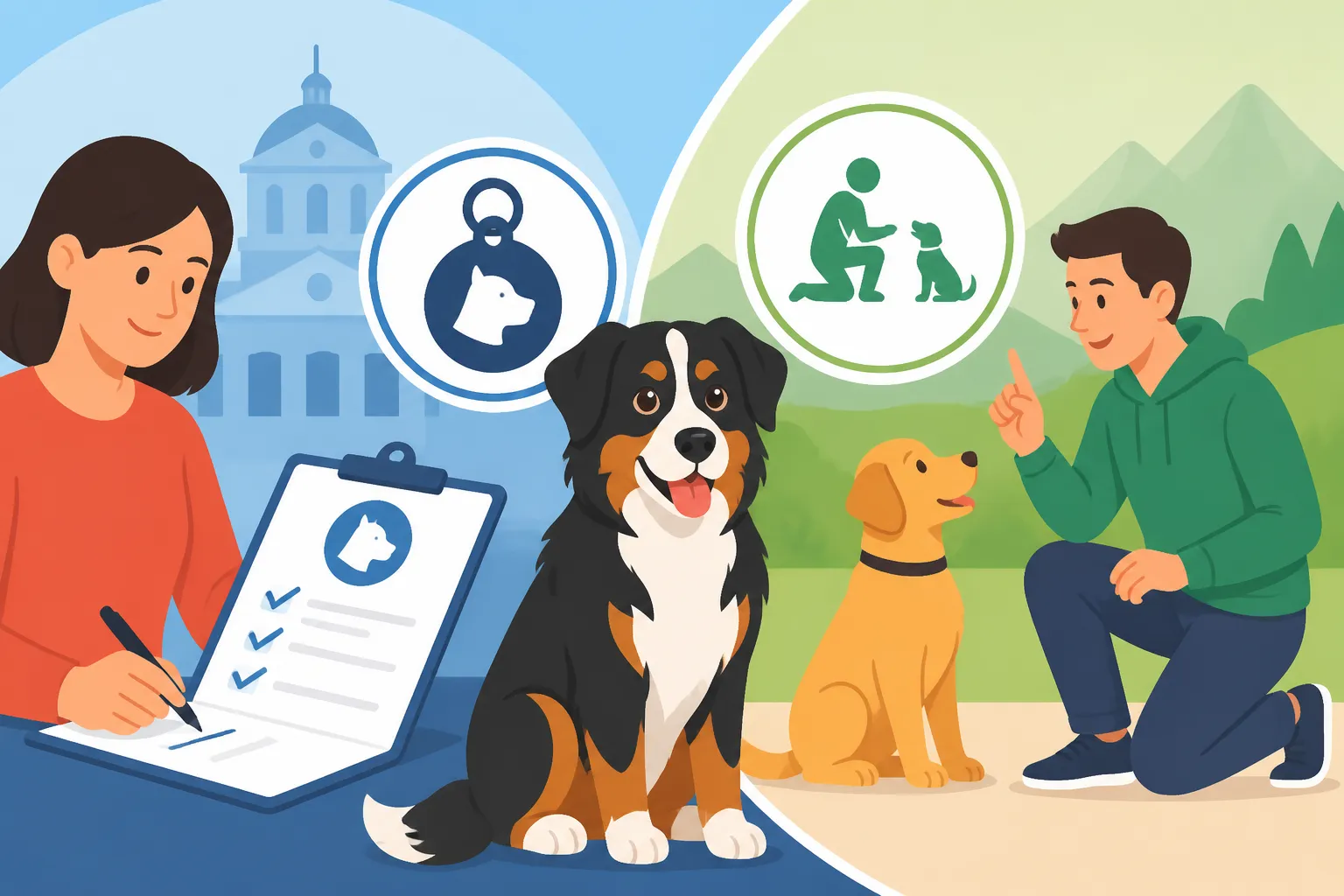
The absolute first thing you must do, whether you are importing a dog or getting one locally, is deal with AMICUS. This is the national database for all dogs in Switzerland. It is the digital "identity card" for your pet, and without an AMICUS entry, your dog effectively does not exist in the eyes of the Swiss government.
If you are moving from abroad, you cannot register yourself on AMICUS. You must first go to your local Registering Your Address at the Kreisbüro Within 14 Days of Moving to get your own residency sorted. Once you have your personal ID and address registered, you must take your dog to a Swiss veterinarian within ten days of arrival. The vet will scan the foreign microchip, verify the pet passport, and then they will create your profile in the AMICUS system.
Only a licensed veterinarian has the authority to link a dog to a person in the database for the first time. Once this link is established, you will receive your login credentials via post. It is your responsibility to keep this updated if you move house or if, sadly, the dog passes away. If you find yourself in a temporary living situation while searching for long-term housing on HousingAnywhere, ensure your vet knows your current reachable address, as AMICUS data is used by police and shelters if your dog ever gets lost.
Step Two: Registering with the Commune and Paying Dog Tax
In Switzerland, owning a dog is a taxable privilege. Once your vet has put the dog into AMICUS, the system doesn't automatically tell the tax office. You usually have to walk down to your local Gemeinde (commune) or Kreisbüro and formally register the dog.
The "Hundesteuer" (dog tax) varies wildly depending on where you live. In some rural communes, it might be as low as CHF 80 per year, while in expensive city centers like Geneva or Zurich, it can exceed CHF 200. Some cantons offer a discount if you have a working dog or if you provide proof that you have completed an optional or mandatory training course.
When you register at the commune, they will often ask for:
- Your dog's AMICUS ID.
- A copy of your pet's insurance policy.
- Confirmation of breed and age.
After registration, you will receive an annual bill. In the past, dogs had to wear a physical metal tag on their collar as proof of payment, but most cantons have phased this out in favor of the digital AMICUS record. However, keeping a digital copy of your payment on your phone is wise. If you're out hiking in the Alps and using Airalo to stay connected to your GPS, having a scan of your dog's registration can save you a lot of hassle if a forest warden stops you.
Understanding Cantonal Training Requirements
As mentioned, the "mandatory" nature of courses depends entirely on your canton of residence and the size of your dog. Zurich is the most famous for its strictness. They categorize dogs into "small" (under 45cm at the shoulder and under 15kg) and "large" (everything else).
For large dogs in Zurich, you typically have to complete:
- Welpenkurs (Puppy Course): Usually 4 lessons before the dog is 16 weeks old.
- Junghundekurs (Young Dog Course): Around 10 lessons before the dog is 18 months old.
- Erziehungskurs (Education Course): If you adopt an older dog, you may need to do this instead.
In cantons like Geneva, there is a mandatory theory exam for first-time dog owners, regardless of the dog's size. Even if your canton doesn't mandate a course, I highly recommend taking one. Swiss expectations for dog behavior are incredibly high. A dog that barks excessively or lunges at others is not just seen as a nuisance; it can lead to formal complaints to the veterinary office, which can jeopardize your permit if you are seen as an "irresponsible" owner. Understanding Swiss Everyday Rules: Recycling, Quiet Hours, and Neighborhood Etiquette extends to your dog’s behavior as well; Sundays are quiet days for everyone, including barking Labradors.
Insurance and Legal Liability
In almost every canton, Private Liability Insurance (Privathaftpflicht): Why Expats Need It is a legal requirement for dog owners. Your policy must specifically cover "dog ownership" and usually requires a minimum coverage of CHF 3 million to CHF 5 million.
This insurance covers you if your dog causes a traffic accident, bites another person or animal, or damages a rental property. When you are Renting in Switzerland: The Complete 2027 Guide for Expats, landlords will almost always demand to see your liability insurance certificate specifically mentioning the dog before they allow the pet in the building. Swiss landlords are notoriously protective of their parquet floors, and having the right insurance is often the only way to win a competitive apartment bid when you have a pet.
Importing a Dog from Abroad
If you are bringing a dog into Switzerland from the EU or a third country, the rules are strict. You must ensure the dog has a 15-digit ISO-compliant microchip, a valid Rabies vaccination (given after the microchip was implanted), and a pet passport or official veterinary certificate.
Crucially, Switzerland has a strict ban on "docked" tails and "cropped" ears. If your dog has had these procedures for cosmetic reasons, it is technically illegal to import them unless you can prove you are moving to Switzerland for work/residence and the dog is already part of your family. You will have to register the dog at customs when you cross the border and pay VAT based on the dog's value. More details on this can be found in our guide on Bringing Pets to Switzerland: Dog Taxes, Microchips, and Rabies Rules.
Comparison of Dog Ownership Requirements by Canton
| Canton | Annual Tax (Approx) | Training Required? | Restricted Breeds? |
|---|---|---|---|
| Zurich | CHF 180 – 200 | Yes (for large dogs) | Yes (List II banned) |
| Geneva | CHF 200 – 250 | Yes (Theory & Practical) | Yes (Specific list) |
| Zug | CHF 100 – 150 | No (Recommended) | No |
| Basel-Stadt | CHF 160 | No | No |
| Vaud | CHF 100 – 200 | Yes (for some breeds) | Yes |
| Ticino | CHF 100 – 150 | Yes (4-day course) | Extensive List |
Buying Supplies and Managing Costs
Once the administrative hurdles are cleared, you’ll find that pet supplies in Switzerland are quite expensive. While local shops like Fressnapf or Qualipet are excellent for emergencies, many expats save money by ordering bulk items like high-quality kibble, crates, and specialized harnesses from Amazon Germany, which often ships to Switzerland with the Swiss VAT already calculated at checkout.
Also, don't forget the hidden costs of Dental Care in Switzerland: Costs, Insurance Reality, and Alternative Options—but for your dog. Vet bills here are some of the highest in the world. Consider getting a dedicated pet health insurance policy (like Animalia or Epona) early on, as they rarely cover pre-existing conditions.
Social Etiquette and the "Robidog" System
Switzerland is a dog-friendly country, but only because owners are incredibly disciplined. You will see green bins labeled "Robidog" everywhere. These provide free plastic bags for dog waste. Failing to pick up after your dog is one of the fastest ways to alienate your neighbors and potentially land a fine.
In many forests and agricultural zones, there are seasonal leash laws to protect wildlife and livestock. Between April and July, keep your dog on a lead in the woods to protect fawns. If you're out in the countryside, always keep your dog away from cows. Swiss cows can be protective of their calves and have been known to charge dogs, which is a dangerous situation for both you and your pet.
Lastly, if you're navigating the process of Buying a Property in Switzerland: Process, Fees, and Real Estate Reality with the intention of building a fence for your dog, be aware that even fences require building permits in many residential zones. The Swiss system values the "visual landscape," so always check with the Bauamt (building office) before putting up a kennel or a high fence.
Summary Checklist for New Dog Owners
To ensure you haven't missed a step in the frantic first weeks of your move, follow this specific order:
- Register yourself at the local Gemeinde/Kreisbüro.
- Visit a Swiss Vet within 10 days to get registered on AMICUS.
- Update your Liability Insurance to include your dog.
- Register the dog at the Commune for tax purposes.
- Book a Hundeschule (dog school) if you live in a canton with mandatory training.
- Check local leash laws for your specific neighborhood and nearby forests.
The bureaucracy can feel heavy, but once you’re sitting at a mountainside restaurant with your well-behaved dog at your feet, and the waiter brings a bowl of water without you even asking, you'll realize that the effort was worth it. Switzerland is a paradise for dogs, provided you play by the rules.
Disclaimer
This guide is for informational purposes only and does not constitute legal or professional veterinary advice. Regulations regarding dog ownership, taxes, and mandatory training in Switzerland are subject to change at the cantonal and communal levels. Always verify requirements with your local migration office, veterinarian, and the official AMICUS helpdesk to ensure compliance with current laws.