Meat Import Limits: Why You Can Only Bring 1kg Across the Border
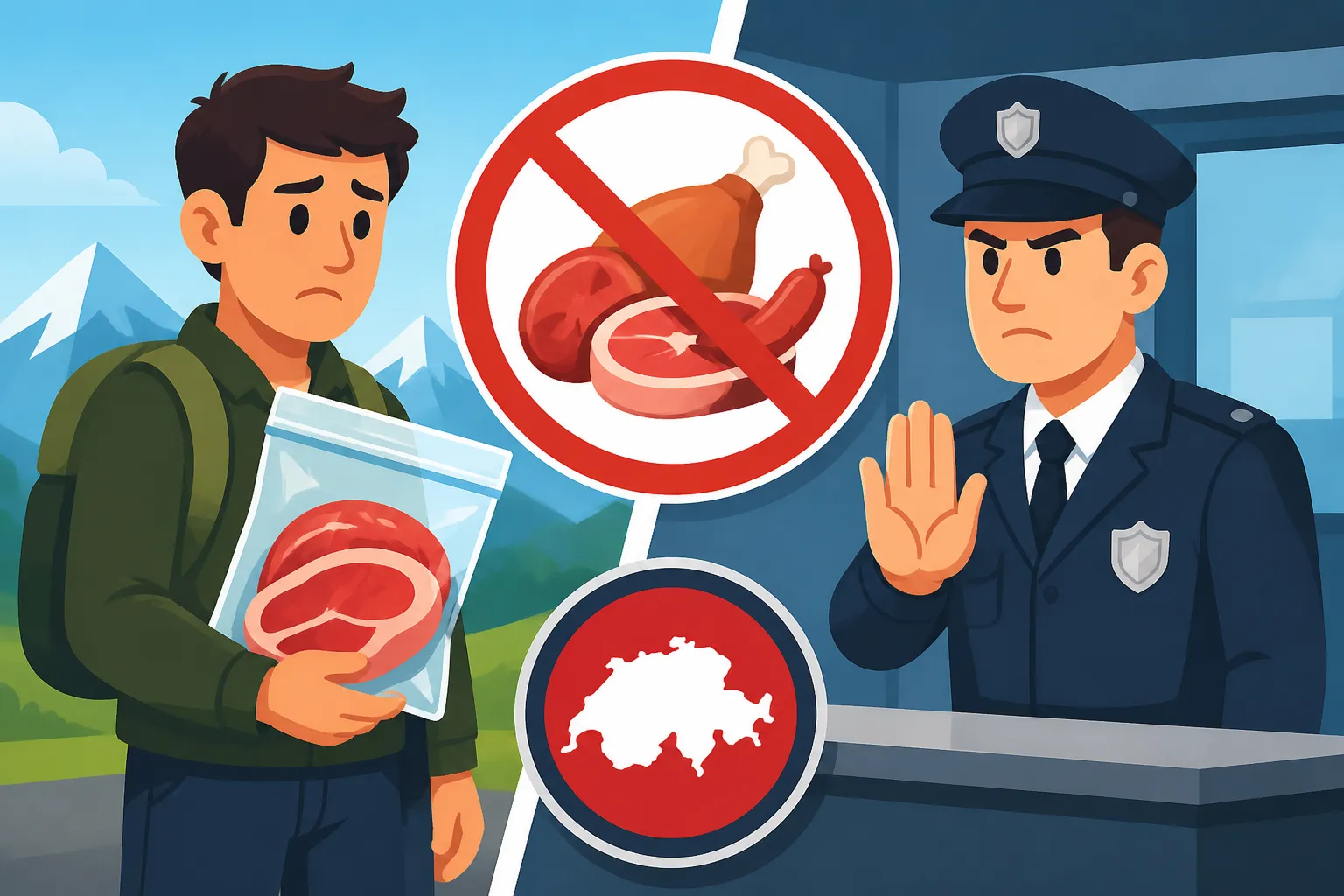
Crossing the border at Basel with a trunk full of German groceries seems like a financial win until the Swiss customs officer spots your butcher's haul. I still remember the sweat on my brow when I realized my bargain steak was actually three times the legal limit. This guide explains why the 1kg rule exists and how to avoid massive fines.
The Reality of Swiss Meat Prices and the Cross Border Allure
If you have spent more than twenty-four hours in Switzerland, you have already experienced the legendary sticker shock at the supermarket meat counter. It is a rite of passage for every new arrival to stand in front of a pack of two chicken breasts at a local Coop and wonder if the price tag is a typo. It isn't. Because meat prices are so high, the temptation to drive across the border to Germany, France, or Italy is overwhelming. We call this "shopping tourism," and while it is a perfectly legal way to manage your Cost of Living in Switzerland 2026: Budgeting for Singles and Families, the Swiss government has very specific ideas about how much you can bring back.
The high cost of local protein is not just a result of high Swiss wages. It is a deliberate economic strategy. You will find that Groceries in Switzerland Are So Expensive: Tariff Protection Explained by a system that prioritizes local agriculture. The Swiss government imposes heavy duties on imports to ensure that Swiss farmers can survive despite the high costs of land and labor in the Alps. This protectionism is why the 1kg limit is so strictly enforced; it is the line in the sand between personal consumption and undermining the national agricultural market.
For many expats living in border-adjacent regions, the weekly trip to a foreign Lidl or Edeka is a survival tactic. Whether you are Working in Switzerland with a G Permit and living in France, or a resident of Zurich taking a Saturday trip to Waldshut, the rules apply the moment you cross that invisible line back into Swiss territory.
Understanding the 1kg Limit per Person
The most famous—and most feared—rule in Swiss customs is the 1kg limit on meat and meat products. This is a per-person, per-day allowance. If you are alone in the car, you are allowed exactly one kilogram of meat. If you have a family of four, you can bring four kilograms. However, it is not as simple as just weighing a few steaks. The definition of "meat" in the eyes of the Swiss Federal Office for Customs and Border Security (BAZG) is incredibly broad.
This limit applies to almost everything that was once an animal. This includes fresh meat, frozen meat, smoked meats, sausages, and even canned meat. If you are buying charcuterie for a party, that weight counts toward your 1kg. Even that expensive prosciutto you bought in Italy is part of the same bucket. When I first moved here, I thought "processed" meat might have a different category, but the Zoll (customs) officers are very clear: if it is meat-based, it goes on the scale.
The only real exceptions are fish and seafood, which have a much more generous allowance, and certain pet foods, though even those have specific caveats. But for the beef, pork, and poultry that most expats are hunting for across the border, the 1kg rule is the hard ceiling. For a deeper look at other food categories, you should check out the guide on Cross-Border Shopping: Import Duty Limits for Meat, Alcohol, and Cheese to ensure your entire grocery list is compliant.
Customs Duties for Excess Meat Imports
What happens if you decide that the German ribeye is just too good to pass up and you buy 3kg instead of 1kg? You are allowed to bring more than the limit, but you must declare it and pay the duty. The Swiss system is designed to be fair but expensive if you choose to bypass the standard limits. The duties are calculated per kilogram and vary depending on the type of meat, but they are rarely "cheap."
The following table provides an overview of the typical costs associated with bringing meat into Switzerland beyond your tax-free allowance. Note that these rates are subject to change and may vary based on specific sub-categories.
| Meat Category | Tax-Free Limit | Duty per kg (approx.) | VAT Rate |
|---|---|---|---|
| Fresh Beef & Veal | 1 kg | CHF 17.00 – 22.00 | 2.6% |
| Pork | 1 kg | CHF 8.00 – 12.00 | 2.6% |
| Poultry | 1 kg | CHF 4.00 – 6.00 | 2.6% |
| Sausages / Charcuterie | 1 kg | CHF 10.00 – 15.00 | 2.6% |
| Fish and Crustaceans | 20 kg | None (within limit) | 2.6% |
As you can see from the table, if you bring an extra 2kg of beef without declaring it and get caught, you aren't just paying the duty; you are paying a fine that is often several times the value of the meat itself. This is why many expats living in Where to Live in Switzerland: Cantons, Cities, and Commuter Zones near the border become experts at calculating their "meat math" before they hit the checkout line.
The Total Value Limit and the CHF 300 Rule
While the 1kg meat limit is a quantitative restriction, there is another rule that catches many expats off guard: the total value limit. Even if you stay under the 1kg meat limit, your entire shopping trip must stay under CHF 300 per person to remain exempt from Swiss Value Added Tax (VAT). If the total value of all your goods—groceries, alcohol, electronics, and clothing—exceeds CHF 300, you must pay the 2.6% or 8.1% VAT on the entire amount, not just the excess.
This is where things get complicated for those who like to shop at Amazon Germany and have items delivered to a border pickup point. If you pick up a new coffee machine and a week's worth of groceries, you can easily sail past that CHF 300 mark. The customs officers are very efficient at totaling receipts. If you are using Airalo to stay connected while navigating the border roads, keep the "QuickZoll" app open. This official app allows you to declare goods and pay duties digitally before you even reach the border station.
It is also worth noting that the 1kg meat limit and the CHF 300 value limit are independent. You could be under the value limit but over the meat limit, or vice versa. In both cases, a declaration is necessary. For those moving into Finding Temporary Serviced Apartments: Vision Apartments and CityPop, this is often the first "Swiss lesson" learned when trying to stock a new pantry.
How to Handle the Border Crossing
When you approach the Swiss border in a vehicle, you will usually see two lanes: the Green lane (nothing to declare) and the Red lane (goods to declare). If you are within all your limits—1kg of meat, 5 liters of wine, 1 liter of spirits, and under CHF 300 total value—you can take the Green lane. However, "Green" does not mean "immune." Customs officers perform random checks constantly.
If they pull you over in the Green lane and find 1.2kg of chicken, you have technically committed a violation. The Swiss authorities do not usually accept "I didn't know" as an excuse. They expect you to be aware of the Cost of Living Realities: Groceries, Telecoms, and Household Expenses and the laws that govern them. The fine for a first-time offense might be relatively light, but your name goes into the system. Repeated offenses can lead to much higher penalties and even the revocation of certain privileges.
If you are unsure, always take the Red lane or use the QuickZoll app. The officers are generally very helpful if you are honest. If you show them 1.5kg of meat and say you want to pay the duty on the extra 500g, they will process it quickly, and you will go on your way with a clean conscience. This transparency is a core part of Swiss Everyday Rules: Recycling, Quiet Hours, and Neighborhood Etiquette that also extends to administrative interactions.
Strategic Tips for the Expat Meat Hunter
Since the 1kg limit is per person, the most effective strategy is "social shopping." Going to the border with friends or family members allows you to pool your allowances. A car with four adults can legally bring back 4kg of meat. This is often enough to fuel a weekend of Can I Barbecue on My Balcony? Swiss Apartment Grilling Rules without breaking the bank or the law.
Another tip is to focus your cross-border spending on high-value non-meat items. Personal care products, cleaning supplies, and dry goods are often 30-50% cheaper in Germany or France and do not have the same weight restrictions as meat. By saving money on those items, you can perhaps justify the higher prices for high-quality Swiss meat at your local butcher. Many expats find that while the price is higher, the quality and animal welfare standards of Swiss meat are exceptional.
If you are new to the country and searching for long-term housing through platforms like HousingAnywhere, consider how close you want to be to the border. Residents in cities like Basel, Geneva, and Lugano have a distinct advantage in managing their food budgets compared to those living in the heart of the Alps. However, regardless of where you live, understanding the customs culture is a key part of your integration.
The Cultural Context of Swiss Protectionism
It is easy to get frustrated by these limits, especially when you see the prices in Zurich or Geneva. However, the 1kg limit is deeply rooted in the Swiss desire for self-sufficiency. Switzerland is a small, mountainous country that takes its food security very seriously. By limiting imports, the state ensures that the local dairy and meat industries remain viable.
When you buy meat in Switzerland, you are often paying for a "guarantee" of sorts—shorter transport distances, strict regulations on antibiotics, and a landscape maintained by grazing cattle. While your wallet might prefer the French supermarket, the Swiss system is designed to make you think twice. It is a form of social contract. You get the high Swiss salary, but in return, you support the local infrastructure that makes the country what it is.
For further reading on how to navigate the social side of dining and food, our guide on Tipping in Switzerland: Is Service Included in Restaurant Bills? might help you understand the broader landscape of Swiss hospitality and service costs.
Final Thoughts on Meat Limits
Navigating the Swiss border with groceries is an art form that every expat eventually masters. The 1kg meat limit is a firm rule that reflects the country's broader economic values. By staying informed, using digital declaration tools, and shopping with a bit of "Swiss precision," you can enjoy the best of both worlds—the variety of the EU and the high standards of Switzerland—without ever having to worry about a stressful encounter at the Zoll.
Disclaimer
The information provided in this article is for informational purposes only and is based on Swiss customs regulations as of 2026. Import limits, duties, and VAT thresholds can change without notice. Always check the official website of the Swiss Federal Office for Customs and Border Security (BAZG) or use the QuickZoll app for the most current rules before attempting to import goods into Switzerland. We are not responsible for any fines or legal issues arising from your interpretation of these guidelines.