Winter Tires in Switzerland: Are They Legally Mandatory in 2027?
Waking up to a surprise ten-centimeter blanket of snow in Zurich or Lausanne is a classic expat rite of passage that usually ends in a frantic morning of scraping ice with a credit card. I remember my first winter here, staring at the slushy incline of my driveway and wondering if my summer tires would hold. This guide clarifies the confusing "recommended but not mandatory" legal landscape of Swiss winter tire regulations for 2026.
The Legal Status of Winter Tires in Switzerland
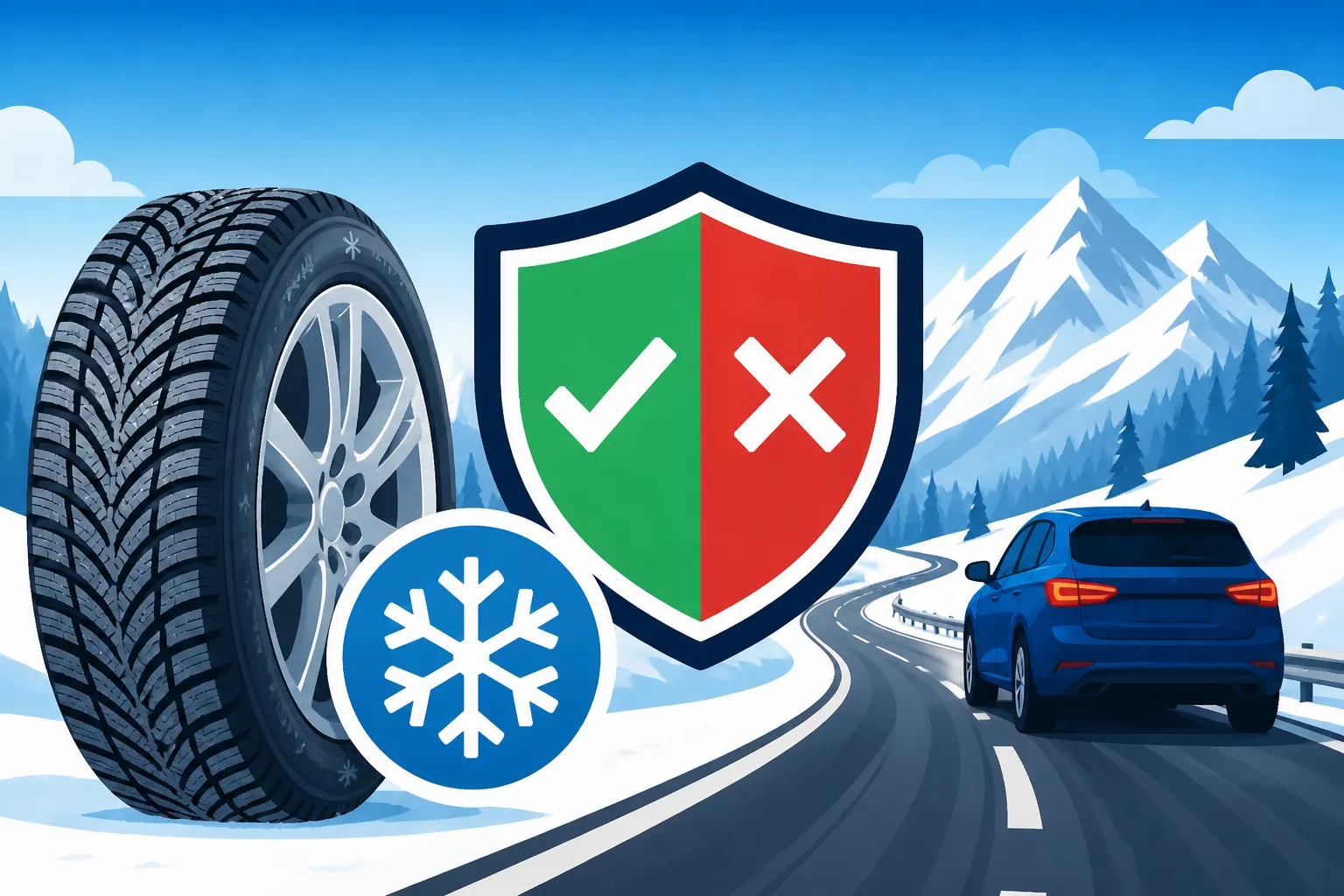
One of the most frequent points of confusion for newcomers is the absence of a specific date-based mandate for winter tires. Unlike some of our neighbors, the Swiss federal government does not dictate an exact day when you must swap your rubber. However, this lack of a hard deadline is a bit of a legal trap for the unwary. The law is structured around the concept of "roadworthiness" and the driver's responsibility to maintain control of their vehicle at all times.
Article 29 and the Concept of Roadworthiness
The core of the issue lies in Article 29 of the Federal Road Traffic Act. This statute mandates that vehicles must be in a safe and roadworthy condition. If you are driving on summer tires during a blizzard, your vehicle is technically no longer "roadworthy" for those specific conditions. I have seen many expats assume they are safe from fines because there is no "winter tire law," only to be pulled over because their car was visibly struggling to maintain traction on a standard city street.
The police have significant discretion here. If they deem your tires insufficient for the current weather, they can prevent you from continuing your journey. This is especially true if you are heading toward the mountains or navigating steep cantonal roads. While you might not get a ticket just for having summer tires on a clear January day, the moment the first flake hits the ground, the legal burden shifts entirely to you. You are expected to have read the forecast and prepared your vehicle accordingly, as part of the broader Driving in Switzerland: Licenses, Buying Cars, and Strict Traffic Laws framework.
Fines for Blocking Traffic and Obstructing Others
The real financial pain begins if your lack of winter tires causes an obstruction. If you get stuck on a bridge or a hill because your summer tires can't grip the slush, and you end up blocking a line of commuters, you are liable for a significant fine for "avoidable obstruction of traffic." In the Swiss mindset, being unprepared for predictable weather is considered a lapse in civic responsibility.
The administrative fees and fines for such an incident can quickly escalate, often exceeding the cost of a high-quality set of winter tires. When you factor in the potential for Speeding Tickets in Switzerland: Income-Based Fines and Strict Radars that might occur if you lose control and slide through a monitored intersection, the "savings" of skipping winter tires vanish instantly. The system is designed to penalize negligence rather than enforce a specific calendar.
Insurance Implications and Liability Risks
While the police might give you a warning on a lucky day, your insurance company will be far less forgiving. This is where the "non-mandatory" nature of the law becomes a massive financial risk. In Switzerland, insurance providers have a legal right of recourse if an accident is caused by gross negligence. Driving on summer tires in winter conditions is almost universally classified as gross negligence by Swiss courts.
The Right of Recourse and Reduced Payouts
If you are involved in a collision—even if it was technically the other person's fault—your insurance provider will inspect your tires. If they find that summer tires contributed to a longer braking distance or a loss of steering control, they can reduce their payout significantly. This means you could be left footing 20% to 50% of the repair costs for both your vehicle and the third party’s vehicle.
In a country where even a minor bumper-to-bumper scratch can cost thousands of francs, this is a terrifying prospect. I always tell friends who have just used HousingAnywhere to find their first apartment that they should budget for tires immediately, even before they buy their furniture. It is a fundamental part of Mandatory and Optional Insurance: Liability, Legal, and Household management. If bodily injury is involved, the situation becomes even more grave. You might find yourself navigating the complexities of Accident Insurance (UVG): Occupational vs. Non-Occupational Coverage while simultaneously fighting a liability claim from your car insurer.
Proving Negligence in Winter Weather Accidents
The burden of proof in these cases often falls on the driver to show that their equipment was appropriate for the conditions. Swiss weather can change in minutes, particularly with the Föhn winds or sudden temperature drops in the Jura and Alps. If a court determines you should have reasonably expected winter conditions, your defense will crumble.
Even if you have successfully completed Converting Your Foreign Driver's License to a Swiss Fahrausweis, the legal expectations of a Swiss resident are higher than those of a tourist. You are expected to know the local "O to O" rule and respect the safety of others. If you are injured in such a crash, you will also need to know How to Use Your Swiss Health Card (VeKa) at the Clinic, but be prepared for your insurer to scrutinize whether your own negligence led to those injuries, potentially affecting your supplementary benefits.
Practical Strategies for the Swiss Winter Season
To stay safe and legal, most veteran expats follow the "O to O" rule: Oktobers bis Ostern (October to Easter). This is the gold standard for tire changes in Switzerland. Even if the sun is shining in October, the rubber compound in summer tires hardens significantly once temperatures drop below 7°C, losing its ability to grip the road even on dry surfaces.
The O-to-O Rule and Recommended Tread Depth
While the legal minimum tread depth in Switzerland is 1.6mm (the same as summer tires), all major automotive clubs like the TCS (Touring Club Switzerland) strongly recommend a minimum of 4mm for winter tires. Anything less than 4mm is effectively useless in deep snow. I personally check my tread every November using a simple depth gauge I picked up from Amazon Germany. It is a small investment that provides immense peace of mind when you are driving through a mountain pass.
| Feature | Summer Tires | Winter Tires | All-Season Tires |
|---|---|---|---|
| Rubber Compound | Hardens below 7°C | Remains flexible in cold | Intermediate |
| Tread Pattern | Large blocks for dry grip | Deep grooves and sipes | Hybrid pattern |
| Best Performance | Above 7°C / Wet & Dry | Below 7°C / Snow & Ice | Moderate climates |
| Swiss Legal Min | 1.6 mm | 1.6 mm (4mm recommended) | 1.6 mm |
| Insurance Risk | High in winter | Low | Moderate |
If you are a G Permit Germany: Withholding Tax Rules for Cross-Border Commuters in Basel holder, remember that Germany does have a situational mandate. If you cross the border into Germany in winter conditions with summer tires, you are in immediate violation of German law, regardless of your Swiss registration.
Buying and Storing Tires in the Swiss System
The cost of tires and labor in Switzerland can be a shock, fitting perfectly into the broader Cost of Living Realities: Groceries, Telecoms, and Household Expenses that catch expats off guard. A full set of premium winter tires plus wheels and sensors can easily run between CHF 1,200 and CHF 2,500. Most Swiss residents store their "off-season" tires at a Reifenfriedhof (tire hotel) at their local garage. This usually costs around CHF 100 to CHF 150 per season, including the swap and cleaning.
For those looking to save money, buying accessories like snow chains or high-quality ice scrapers from Amazon Germany can be more cost-effective than local specialized shops, provided you stay within the import limits. Also, when searching for a home, I always check if the building has a Keller or a shared garage space. This is part of Swiss Everyday Rules: Recycling, Quiet Hours, and Neighborhood Etiquette; storing your tires neatly in your designated cellar space is expected, but leaving them in a common hallway is a major faux pas.
International Driving and Cross-Border Rules
Switzerland is a small country, and most of us find ourselves crossing into France, Italy, or Germany for weekend trips or cheaper groceries. Each of these countries has its own specific rules regarding winter equipment that you must follow the moment you cross the border.
Navigating Different Mandates
In France, specifically in many mountain regions (Loi Montagne), winter tires or chains are mandatory from November 1st to March 31st. In Italy, rules vary by province, but many motorways require you to carry chains or have winter tires during the cold months. If you are using Airalo to navigate these cross-border trips, make sure your GPS is set to avoid restricted roads if you haven't made the switch yet.
When planning these trips, ensure you have your Swiss Autobahn Vignette: E-Vignette vs Physical Sticker for 2026 correctly sorted, but don't let a valid vignette give you a false sense of security. The vignette pays for road access, but it doesn't waive your responsibility for proper equipment. I once saw a line of cars turned back at the Italian border because they lacked the proper "M+S" (Mud and Snow) or "Three-Peak Mountain Snowflake" (3PMSF) symbols on their tires.
All-Season Tires: A Viable Compromise?
You might wonder if all-season tires are a good middle ground. In the Swiss Plateau (the flatter areas between Lake Geneva and Lake Constance), they can be sufficient if you don't plan on driving into the Alps or the Jura. However, if you enjoy skiing or live in a higher-elevation village, all-season tires are generally a poor choice. They aren't as good as summer tires in the heat, and they aren't as safe as winter tires in the snow. Given the high stakes of Swiss insurance liability, most veterans prefer the safety of a dedicated two-set system. It is simply part of the price of living in this beautiful, albeit vertical, landscape.
Legal Disclaimer
The information provided in this article is for general informational purposes only and does not constitute legal or professional advice. While we strive to keep the information up to date and correct, laws and insurance regulations in Switzerland can change. Always consult with the Federal Office of Roads (ASTRA) or a qualified legal professional regarding your specific situation and vehicle requirements.