Normal Wear and Tear (Lebensdauer): What Swiss Landlords Cannot Charge For
Moving out of a Swiss apartment often feels like facing a grand jury where the judge is obsessed with the cleanliness of your window tracks. I remember my first handover in Zurich; I spent six hours scrubbing a radiator only to be told the shadows on the wall from my bookshelves were a problem. This guide clarifies exactly what Normal Wear and Tear means so you don't lose your hard-earned deposit to unfair claims.
Understanding the Legal Concept of Lebensdauer in Switzerland
In the Swiss rental market, everything inside your four walls has a "birth date" and an "expiration date." This is what the law refers to as Lebensdauer, or the life expectancy of an object. The Swiss authorities, specifically through organizations like the Mieterverband, have co-developed a standardized "Parity Life Table" (Lebensdauertabelle). This table is the holy grail for determining who pays for what when you move out.
The logic is simple: if you move into an apartment with brand-new walls and live there for eight years, the paint has reached the end of its legal life. Even if the walls look a bit dingy, the landlord cannot charge you for repainting because the value of that paint has depreciated to zero in the eyes of the law. I learned this the hard way after almost paying for a full parquet sanding on a floor that was already twelve years old. Understanding this depreciation is your strongest shield against a landlord who wants to modernize their property on your dime.
When you are preparing for your Swiss Apartment Handovers (Wohnungsübergabe): Protocols and Deposits, keep this life expectancy in mind. If a landlord points out a scratch on a fifteen-year-old stovetop, you should politely remind them that the item has already exceeded its expected lifespan. You are only responsible for the remaining "pro-rata" value of an item if you have caused excessive damage.
The Parity Life Table and Depreciation Math
To calculate what you might owe, you need to know the age of the item and its total life expectancy. For example, synthetic wall paint generally has a lifespan of 8 years. If you move out after 4 years and you’ve drawn a permanent marker mural in the living room (which qualifies as excessive damage), you would only be liable for 50% of the repainting costs, not 100%. The landlord already "consumed" 50% of that paint's life before you ruined it.
This math applies to almost everything: carpets (10 years), dishwashers (15 years), and even the silicone joints in your shower (10-15 years). If you are moving between cities and need a place to stay while sorting out these disputes, platforms like HousingAnywhere can be a lifesaver for finding mid-term accommodation that doesn't involve the stress of a permanent Swiss lease.
Small Repairs vs Major Maintenance
There is a category of costs known as "small repairs" (Kleinreparaturen). These are things that any tenant is expected to fix at their own expense during the tenancy, regardless of wear and tear. Usually, anything that costs less than CHF 150 falls into this bucket. This includes replacing shower hoses, light bulbs, oven filters, or broken tooth-brush tumblers.
Landlords will often try to bundle these small items into the final bill. However, if an item requires a specialist—like an electrician or a plumber—to fix, it usually falls outside the "small repairs" scope and becomes a maintenance issue for the landlord, provided you didn't break it through negligence. Before your move-out day, I highly recommend ordering a professional-grade cleaning kit or replacement small parts from Amazon Germany to ensure you aren't caught off guard by a CHF 50 charge for a CHF 5 plastic part.
What Specifically Qualifies as Normal Wear and Tear
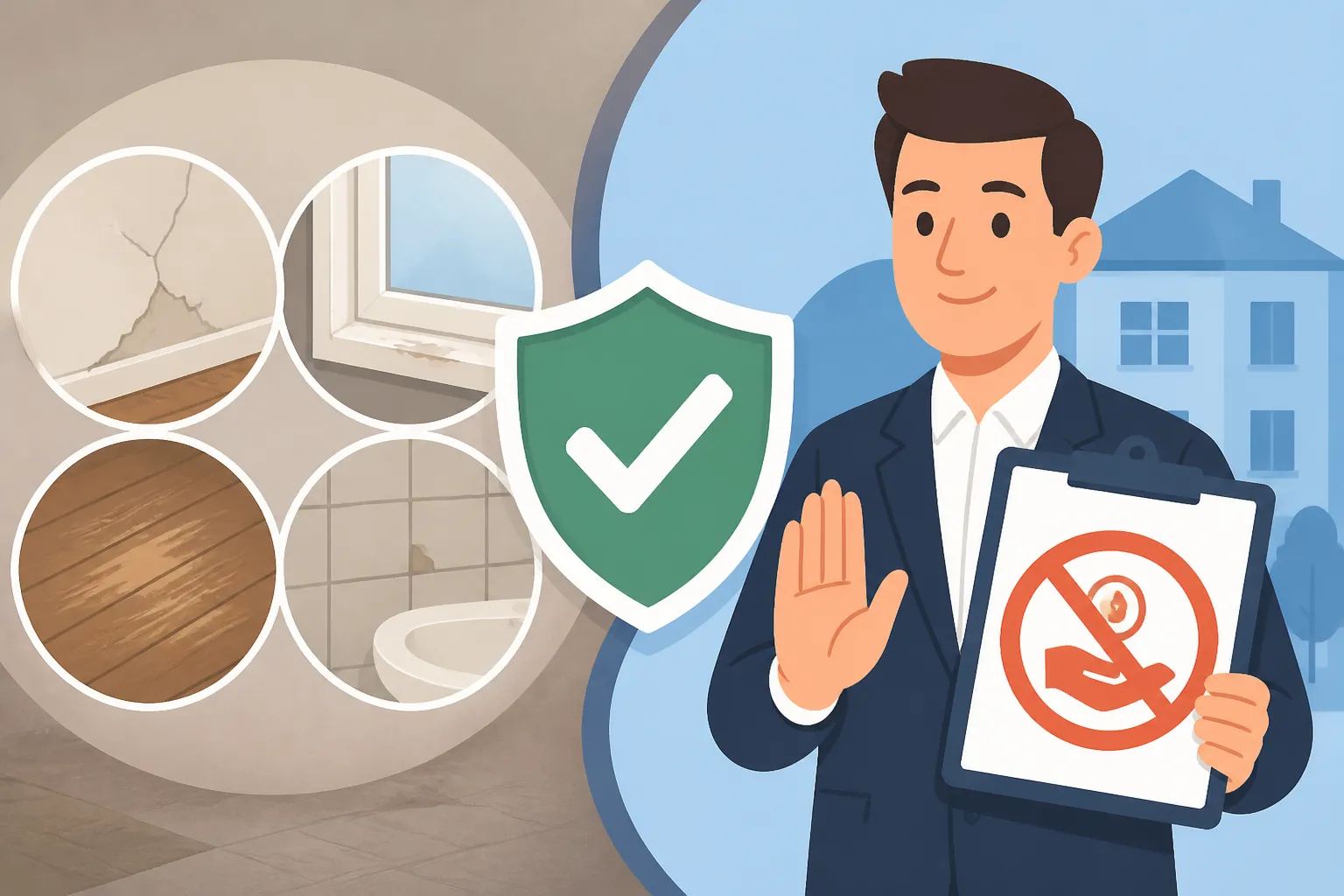
The most common point of friction during a handover is the definition of "normal." In Switzerland, normal wear and tear includes the typical signs of life that occur when a person inhabits a space reasonably. This isn't just a vague feeling; there are decades of court cases that define these boundaries. If you've been living in your flat and using it as a home rather than a workshop, most of the aging you see is the landlord's financial responsibility.
A classic example is the "shadow" left on walls by furniture or picture frames. In many countries, this might be considered damage, but in Switzerland, it is explicitly recognized as normal wear. If you hang a painting and the wall behind it stays white while the rest of the wall yellows slightly from sunlight, that is the landlord's problem. You are not required to repaint the room to even out the color.
Flooring and Walls
Parquet floors are notoriously delicate, and Swiss landlords are notoriously protective of them. However, light scratches caused by walking or moving furniture slightly are generally considered normal wear. What is not normal are deep gouges from high heels, heavy water damage from over-watering plants, or cigarette burns. If the floor just looks "dull" compared to when you moved in, that is normal.
Walls follow a similar rule. Small nail holes are acceptable as long as they are filled professionally. Many expats make the mistake of using toothpaste or cheap putty to fill holes, which actually makes the damage worse because the texture doesn't match. When I moved, I made sure to get the correct filler from a DIY shop to avoid a repainting fee. If you're doing this work and need to stay connected to coordinate with your moving company, an eSIM from Airalo is a great way to keep your data active if you’ve already canceled your home fiber plan.
Kitchen and Bathroom Usage
In the kitchen, "normal" includes the slight discoloration of the stovetop, minor scratches in the sink, and the inevitable aging of the oven. If the fridge handle breaks because of a manufacturing flaw or age, that's on the landlord. If you cracked the glass ceramic cooktop by dropping a heavy cast-iron pan, that is excessive wear.
The table below provides a quick reference for common items and their typical life expectancy according to Swiss standards.
| Item | Life Expectancy (Years) | Normal Wear Example | Excessive Damage Example |
|---|---|---|---|
| Wall Paint (Synthetic) | 8 Years | Furniture shadows, fading | Crayon marks, deep stains |
| Kitchen Dishwasher | 15 Years | Worn-out racks, dull finish | Broken door hinges from force |
| Parquet Flooring | 10-20 Years | Light surface scratches | Deep gouges, water rot |
| Carpeting | 10 Years | Slight matting in walkways | Permanent wine stains, burns |
| Bathroom Sink | 30-40 Years | Faded shine, lime scale | Cracks, large chips |
| Window Glass | 30+ Years | Minor surface cleaning needs | Cracks, deep scratches |
How to Defend Your Rights During the Handover
When the day of the Swiss Apartment Handovers (Wohnungsübergabe): Protocols and Deposits arrives, you must be prepared to be your own advocate. The landlord or the property manager (Verwaltung) will walk through the flat with a form. Do not sign anything until you have read every single line. If they list an item as "damaged" but you believe it is "normal wear," you have the right to insist that your disagreement is recorded on the form.
If the landlord tries to force you to sign a protocol where you admit liability for things you didn't do, simply refuse. You are not legally obligated to sign a protocol you disagree with. Instead, take high-quality photos of every single corner of the room. I mean everything—inside the oven, the tracks of the sliding doors, and the ceiling. These photos will be your evidence if the case goes to the arbitration board (Schlichtungsbehörde).
The Role of the Handover Protocol
The Handover Protocol (Übergabeprotokoll): Documenting Damages to Protect Deposits is the most important document in this process. If you signed a protocol when you moved in that didn't mention a scratch, the landlord will assume you caused it. This is why you must be extremely diligent during the move-in phase as well.
If a dispute arises, the first thing a court will look at is the move-in protocol versus the move-out protocol. If you find yourself in a heated debate, remember that The ASLOCA / Mieterverband: Why Every Swiss Tenant Must Join is your best friend. For a small annual fee, they provide legal advice and can even send a representative to attend the handover with you. Having a Mieterverband expert stand next to you often makes the landlord suddenly "remember" that a certain scratch was actually normal wear.
Using Insurance to Your Advantage
In many cases, even if you did cause excessive damage, you shouldn't pay out of pocket. This is where your Private Liability Insurance (Privathaftpflicht): Why Expats Need It comes into play. Most Swiss liability policies cover "Mieterschäden" (tenant damages). If you accidentally dropped a bottle of perfume and cracked a bathroom tile, you report it to your insurance.
The insurance company doesn't just pay whatever the landlord asks; they also act as a shield. They will verify if the landlord's claim is fair based on the age of the item. If the landlord wants CHF 500 for a 20-year-old tile, the insurance company will point out the Lebensdauer and only pay a fraction of that. This effectively protects you from being overcharged. Be sure to check if your policy has a deductible; usually, it’s around CHF 200, which is still much cheaper than a full floor renovation.
Moving Out Strategy and Final Checklist
To ensure a smooth transition, you need to start preparing weeks in advance. Don't leave the cleaning to the last minute. The Swiss standard for "clean" is often higher than what most people are used to. It usually involves cleaning inside the window frames, descaling every faucet, and even cleaning the cellar.
Many expats choose to hire End-of-Tenancy Cleaning Companies: Getting a Passed Inspection Guarantee. This is a "clean with a guarantee" service. If the landlord isn't happy, the cleaning company must come back and fix it for free. This takes a massive weight off your shoulders. If you go this route, make sure the contract includes an What is an Abgabegarantie? Why You Need It for Move-Out Cleaning clause.
Documenting the Condition
Before you hand over the keys, do a final walkthrough alone. Use your phone to record a video of the entire apartment. If you’ve ordered last-minute packing supplies or specialized cleaning agents from Amazon Germany, keep those receipts as proof that you used appropriate materials.
If you are already moving into your new place and need to manage the transition, Renting in Switzerland: The Complete 2027 Guide for Expats provides a broader look at the next steps in your journey. Whether you are moving to a different canton or just down the street, the rules of Lebensdauer remain your constant companion.
Dealing with Key Loss and Security
One final tip: check your keys. If you lose an apartment key, landlords often try to charge for replacing the entire building's locking system, which can cost thousands. Before panic sets in, check your insurance coverage. You might find that Does Swiss Liability Insurance Cover Losing the Apartment Key? is a standard feature of your policy.
If the landlord insists on a high-cost replacement for a key that shows only "normal wear" (like a slight bend from years of use), this again falls under the maintenance category. Only a lost or snapped key due to force is typically your responsibility. Keeping a cool head and quoting the relevant life expectancy will save you more money than any cleaning hack ever could.
Legal Disclaimer
The information provided in this article is for informational purposes only and does not constitute legal advice. While every effort has been made to ensure the accuracy of the details regarding Swiss rental laws and the Lebensdauertabelle as of 2026, laws and cantonal regulations may change. We strongly recommend consulting with a legal professional or joining a tenants' association such as ASLOCA or Mieterverband to address specific disputes or legal concerns related to your rental agreement.