Accessible Travel in Switzerland for Visitors With Reduced Mobility
Navigating Switzerland, with its stunning but often rugged terrain, can feel like an Olympic challenge for anyone with reduced mobility. The thought of cobblestone old towns, steep mountain paths, and a public transport system known for its efficiency but also its sometimes-tight connections, might feel overwhelming. But fear not, my friends! Having lived here long enough to see countless visitors come and go, I've gathered the ins and outs of making Switzerland an accessible and truly enjoyable destination. This guide will help you unearth the fantastic resources available and confidently plan your Swiss adventure, proving that mobility challenges don't have to put a brake on your dreams of alp-kissed vistas and charming cityscapes.
Navigating Swiss Public Transport with Reduced Mobility
Let’s be honest, Switzerland’s public transport system is legendary. It’s punctual, extensive, and generally reliable – but how does it fare when you have a wheelchair, use crutches, or simply need a bit more assistance? The good news is, Switzerland is genuinely striving to make its network accessible, though it's still a journey in progress, especially with older infrastructure.
SBB: Switzerland's Lifeline for All
The Swiss Federal Railways (SBB) is the backbone of Swiss travel, and they've invested significantly in accessibility. You might be surprised by how much support is available, but the key, like so much in Switzerland, is pre-planning.
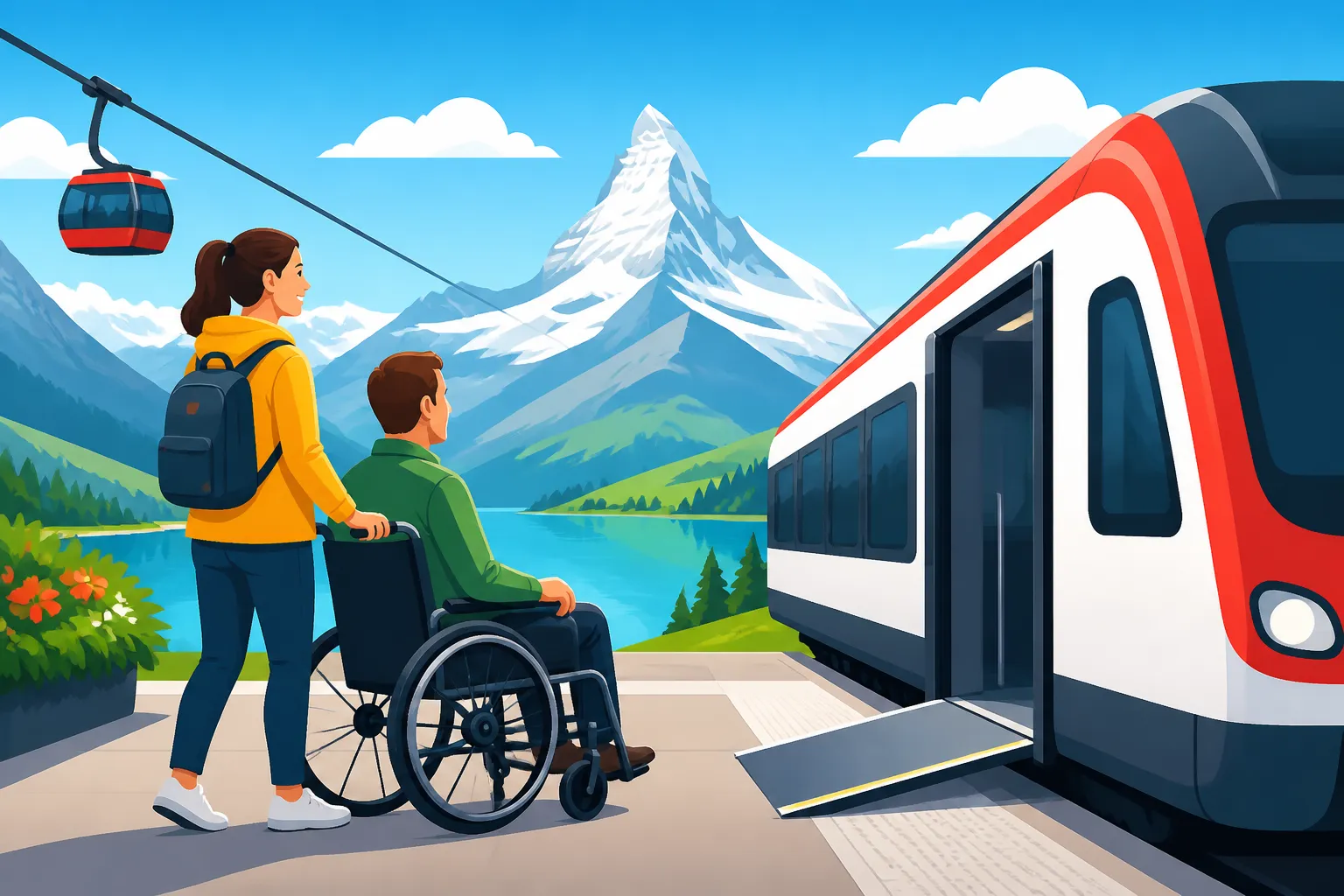
For starters, SBB offers a dedicated service for "Reisenden mit Handicap" (travelers with disabilities). This isn’t just a fancy name; it’s a tangible service that can make a world of difference. If you need assistance boarding, alighting, or changing trains, especially for those with wheelchairs or severe walking difficulties, you can and absolutely should request it. They recommend booking this assistance a minimum of one hour in advance, but for complex journeys or early/late connections, giving them a day or even two notice is much wiser. Imagine arriving at a busy station like Zurich Hauptbahnhof, the main train station, during rush hour, and expecting spontaneous assistance – it’s just not how things work here. You'll find designated meeting points at larger stations where staff will meet you, often with a mobile ramp to bridge the gap between the platform and the train. Many newer train models are equipped with low-floor entry, making it much easier to roll or step on. Plus, most modern long-distance trains have accessible toilets and dedicated spaces for wheelchairs.
Now, a little nugget of insider info: while many major stations are fully equipped with ramps and lifts, some of the smaller, more charming stations tucked away in valleys might still present challenges with stairs or steep ramps. Always, always check the accessibility information for your specific route and stations on the SBB website or app. It's comprehensive and usually accurate. And if you're thinking about investing in a pass, it’s worth looking into how different options apply, such as the Generalabonnement (GA) – you can learn more about if SBB Travelcards: Is the Generalabonnement (GA) Worth the CHF 4000+ Cost?. For those visiting, the Travelcards for Tourists vs Residents: Which Swiss Pass Suits You can also be a game-changer for overall travel.
PostBus, Trams, and Boats: Local and Scenic Journeys
Beyond the trains, Switzerland's network extends to the famous yellow PostBuses, city trams, and a myriad of lake boats, each with its own level of accessibility.
PostBuses are often your only option for reaching quaint mountain villages and remote areas. Many of the newer PostBuses are low-floor and equipped with ramps, especially those serving more populated routes or specific cantons that have pushed for greater accessibility. However, some of the older fleet or routes traversing very winding, steep roads might still pose issues. Again, contacting the specific PostBus office for your route or checking their website is paramount. It’s not just about getting on the bus, but also about whether the bus stop itself is accessible.
In cities like Zurich, Geneva, or Basel, the tram and bus networks are generally quite good. For instance, in Zurich, a large percentage of the ZVV fleet is low-floor, and stops are gradually being upgraded to be step-free. The same goes for Geneva's TPG network, where newer trams are a blessing. However, older trams, particularly in parts of the city center with historic tracks, might still have a step. If you're planning on relying heavily on city transport, it's wise to check out specific guides like the Public Transport in Zurich: ZVV Zones, Tickets, and Night Service or the Public Transport in Geneva: TPG Network and Cross-Border Trams for detailed local information. For checking specific routes and connections across all these modes, I often use Omio – it’s a handy tool for visualizing your journey, and while it doesn’t always highlight every accessibility detail, it’s a good starting point for planning.
Then there are the beautiful lake boats, a quintessential Swiss experience. Many of the larger, modern ferry services on popular lakes like Lake Lucerne, Lake Geneva, or Lake Zurich are surprisingly accessible, often with wide gangways and accessible lower decks. However, historic paddle steamers or smaller boats might have steps or narrow doorways. If a lake cruise is high on your list, absolutely confirm accessibility directly with the boat company. There’s nothing worse than getting to the pier, excited for your journey, only to find you can’t board comfortably.
Accessible Accommodation and Essential Services
After a day of exploring, you need a comfortable, truly accessible place to rest. This is where the term "accessible" can sometimes be a bit of a moving target, so a healthy dose of skepticism and proactive questioning is essential.
Finding Truly Accessible Stays
Many hotels in Switzerland claim to be "accessible," but what that really means varies wildly. For some, it might just mean they have a lift; for others, it means roll-in showers, grab bars, and wide doorframes. My advice is to never rely solely on a website's "accessible room" checkbox.
When you're searching, platforms like Booking.com are fantastic for filtering by accessibility features. They let you narrow down by "wheelchair accessible," "adapted bath," etc. But after you've found a promising candidate, always follow up with a direct call or email to the hotel. Ask specific, detailed questions:
- "What is the width of the bathroom door?"
- "Does the shower have a roll-in entry or a lip/step?"
- "Are there grab bars next to the toilet and in the shower?"
- "Is there space under the bed for a hoist if needed?"
- "Is the entrance to the hotel step-free? How about the path from the parking area?"
Don't be shy; these are crucial details for your comfort and safety. You're paying for it, so you have every right to ensure it meets your needs. Look for hotels that are certified by organizations like Procap Switzerland, which offer genuine, audited accessibility information. While these might be fewer and further between, they offer peace of mind.
Another thing to consider is the location. Staying close to main transport hubs, like near Zurich Hauptbahnhof or Geneva Cornavin, can greatly reduce the stress of getting around. However, these areas might also be pricier. Weigh up convenience versus cost.
Healthcare and Support on the Go
Even on the most meticulously planned trip, unexpected health needs can arise. Switzerland has an excellent healthcare system, but knowing how to access it with reduced mobility is key.
For immediate emergencies, calling 144 for an ambulance is the standard. Switzerland’s emergency services are highly professional and well-equipped. You can get more details about this at Emergency Numbers 144 vs 112: Which to Call in a Swiss Medical Crisis. For non-emergencies but urgent situations, look for a "Permanence" clinic at major train stations (like Zurich HB or Geneva Cornavin) or in larger towns. These are walk-in clinics that can handle minor illnesses or injuries, often with staff who speak English. Many are designed to be accessible.
If you need a pharmacy, they are ubiquitous and easily identifiable by a green cross. Most are accessible at street level. Pharmacists here are highly trained and can offer advice for minor ailments, and importantly, can direct you to a doctor if needed. Information on Pharmacies and Medication: Prescriptions, Costs, and OTC Regulations is a good read to understand how things work here. For more comprehensive medical care or to find English-speaking doctors, larger cities have more resources. The Zurich Expat Healthcare Guide: Hospitals, Clinics, and Emergency Contacts can give you a feel for what to expect in a major Swiss hub.
Organizations like Procap Switzerland or Mobility International Switzerland are invaluable resources. They often have lists of accessible doctors, therapists, or support services, and their websites are packed with practical advice for disabled travelers. Don't hesitate to reach out to them before or during your trip.
Exploring Switzerland: Accessible Activities and Destinations
Now for the fun part: what can you actually do? Switzerland, despite its mountainous reputation, offers a surprising array of accessible attractions.
Mountain Magic and Lakeside Serenity
You absolutely can experience the majesty of the Swiss Alps, even with reduced mobility. Many of Switzerland’s famed mountain railways and cable cars are wheelchair-friendly, offering breathtaking views without strenuous hiking.
Consider Mount Pilatus near Lucerne. Its "Golden Round Trip" combines a lake cruise (accessible on modern boats), the world’s steepest cogwheel railway (also accessible), and panoramic cable cars, all leading to a summit station with accessible viewing platforms and restaurants. You can find out more about this specific trip here: Mount Pilatus from Lucerne: The World's Steepest Cogwheel Railway. Similarly, Mount Rigi (often called the "Queen of the Mountains") offers accessible cogwheel trains and spectacular views. Even some parts of the iconic Jungfraujoch, the "Top of Europe," are accessible, with lifts taking you to the ice palace and viewing platforms, although navigating all aspects of such a high-altitude attraction requires careful planning (and layers!). You might want to check out Jungfraujoch 'Top of Europe': Planning the Trip and Saving Money before you head out.
Lakeside promenades are a gentle way to soak in the scenery. Many towns, such as Montreux along Lake Geneva, Lucerne by its namesake lake, or Zurich with its Limmatquai, have flat, paved paths perfect for wheelchairs or scooters. Combine this with an accessible lake cruise, and you have a perfect, serene day out.
If you’re looking for guided experiences, GetYourGuide sometimes lists tours with explicit accessibility notes. While not exhaustive, it's a good place to start for finding accessible excursions or even private drivers who are equipped to assist.
City Sights and Cultural Experiences
Swiss cities are a blend of ancient charm and modern convenience. While the picturesque old towns with their cobblestone streets can be a challenge (those tiny, uneven stones are a curse for wheels!), many newer areas and specific attractions are wonderfully accessible.
In Zurich, Geneva, Basel, or Bern, most major museums, art galleries, and modern shopping centers are designed with accessibility in mind. Think wide entrances, lifts to all floors, and accessible restrooms. For example, the Landesmuseum (Swiss National Museum) in Zurich is very accessible. Before visiting any museum, check its website for specific accessibility information, or call ahead. If you're planning a cultural deep dive, a read of Swiss Museums and Pass Options: Art, History, and Science can help you map out your stops.
Many city parks also offer paved paths, perfect for a gentle stroll. Restaurants and cafes in newer buildings or those that have recently undergone renovation are usually more accessible than those in historic buildings. It’s always a good idea to check reviews or call ahead, especially for smaller, independent eateries. Don't forget that most public restrooms in modern buildings (train stations, shopping centers) are accessible, often with Eurokey access for specialized facilities.
Planning Your Accessible Swiss Adventure
Thorough planning is your best friend when traveling with reduced mobility in Switzerland. It allows you to anticipate potential hurdles and ensures a smoother, more enjoyable experience.
Essential Resources and Organizations
Beyond the SBB's dedicated service, there are other invaluable resources that can make your trip much easier. Organizations like Procap Switzerland and Mobility International Switzerland are champions for accessibility. Their websites (available in German, French, and sometimes Italian and English) offer a wealth of information, from accessible hotel lists to detailed guides on public transport and leisure activities. They are excellent first points of contact for specific questions or general advice. They also campaign for greater accessibility, so their information is often rooted in lived experience.
Don't underestimate the power of simply asking. Swiss people, while sometimes perceived as reserved, are generally very helpful when approached politely and directly. If you need a hand with a small step or navigating a busy area, most will gladly assist. Learning a few basic phrases in German, French, or Italian (depending on the region) can also go a long way, though English is widely spoken in tourist areas and major cities. This might align with what you read in Swiss Customs and Etiquette: Social Norms Every Newcomer Should Know.
Remember to carry your essential medical information, any necessary prescriptions, and a list of emergency contacts in both your native language and the local language (German, French, or Italian). While Switzerland has a fantastic medical system, being prepared with your own details is always prudent. Checking your options for Emergency Medical Services: Ambulances, REGA, and Crisis Protocols is always a good idea too.
Realistic Expectations and Mindset
Switzerland is beautiful, but it's not a perfectly flat, entirely barrier-free paradise. You will encounter challenges, whether it's an unexpectedly steep ramp, a small step, or an accessible toilet that's temporarily out of service. A realistic mindset, coupled with a good sense of humor and patience, will serve you well.
Sometimes, the most scenic routes or the most charming villages might still present significant accessibility issues. It's about finding the balance between wanting to see everything and prioritizing your comfort and safety. Focus on what is accessible and enjoy those experiences fully. The stunning mountain vistas, the pristine lakes, the efficient transport, and the generally welcoming atmosphere more than make up for the occasional inconvenience.
Always leave a bit of buffer time in your schedule. Rushing can exacerbate stress, especially when navigating unfamiliar territory. Building in extra time for transfers, unforeseen delays, or simply to take a moment to enjoy a view without feeling pressured by a tight schedule, can transform your experience from a stressful dash to a leisurely exploration.
Remember, every journey is an adventure, and adapting to unexpected situations is part of the fun. With careful planning and the right attitude, Switzerland truly can be an incredible, accessible destination for all.
Accessible Travel Overview
| Aspect | Accessibility Level (General) | Key Tips | Brand Mentions |
|---|---|---|---|
| SBB Trains | High (with pre-booking) | Request assistance 1-2 days ahead, check specific station/train info. | Omio (for booking) |
| PostBuses | Moderate to High | Check local routes/models, especially for mountain villages. | |
| City Trams/Buses | Moderate to High | Newer fleets are accessible; older lines/stops might have steps. | |
| Lake Boats | Moderate to High | Larger, modern ferries generally accessible; confirm for historic vessels. | |
| Accommodation | Varies widely | Call hotels directly, ask specific questions about room/bathroom dimensions. | Booking.com |
| Mountain Excursions | Moderate to High | Many cable cars/cogwheels are accessible; check specific routes (e.g., Pilatus). | GetYourGuide (for tours) |
| City Centers (Old Town) | Low to Moderate | Cobblestones are a challenge; newer areas/main attractions are better. | |
| Museums/Attractions | High (generally) | Check individual websites; most modern/renovated sites are accessible. | |
| Emergency Services | High | Call 144; clinics at major stations are accessible. |
Disclaimer
The information provided in this guide is for general informational purposes only and does not constitute professional advice. While we strive to keep the information accurate and up-to-date, accessibility standards, services, and policies can change rapidly. Always verify specific details with relevant service providers, organizations, or official sources before making travel arrangements. We cannot be held responsible for any inaccuracies or omissions.