Buying a Property in Switzerland: Process, Fees, and Real Estate Reality
Finding a home in Switzerland often feels like a full-time job where you are constantly rejected by landlords despite having a perfect salary and a stack of references. I remember the soul-crushing silence after my tenth apartment application in Zurich was ignored, and it was that exact moment I decided to look into buying. This guide breaks through that frustration by detailing how to skip the rental queue and successfully navigate the complex world of Swiss property ownership.
The Reality Check: Is Buying in Switzerland Right for You
The first thing you need to understand is that Switzerland has one of the lowest homeownership rates in the developed world, hovering around 36%. Unlike in the US or the UK, where buying is seen as a natural rite of passage in your 30s, many Swiss professionals rent for their entire lives. When I first arrived, I couldn't wrap my head around why people with high salaries were happy living in a managed block, but the reality is that the Swiss system is designed to favor long-term stability over quick equity gains. If you are looking for a "fixer-upper" to flip in two years, you are in the wrong country. The high transaction costs and capital gains taxes make short-term ownership a financial black hole.
Buying here is an emotional marathon. You will likely be competing against institutional investors and multi-generational Swiss families who have deep pockets and even deeper local roots. I’ve seen expats get their hearts broken because they approached a viewing with a "negotiation" mindset, only to find the property sold for 10% over the asking price before they even finished their coffee. You must be prepared for a market that moves with clinical efficiency and very little room for sentimentality. Before you dive in, it’s worth reading about Renting in Switzerland: The Complete 2027 Guide for Expats just to ensure you aren't running away from a rental problem that could be solved more easily than taking on a million-franc debt.
The financial commitment is also fundamentally different here. In most countries, you aim to pay off your mortgage as quickly as possible. In Switzerland, due to the tax system, many people never fully pay off their debt. The "imputed rental value" (Eigenmietwert) is a tax on the fictional income you "earn" by not paying rent to a landlord. To offset this tax, you need mortgage interest deductions. It’s a counterintuitive system that requires a complete shift in how you view debt. You aren't just buying a roof; you are entering a complex, lifelong tax-optimization strategy with the Swiss government.
Lastly, consider your mobility. If your C-permit is still years away or your company has a habit of "realigning" departments every eighteen months, the rigidity of the Swiss property market might be a trap. While platforms like HousingAnywhere are fantastic for finding mid-term stays while you scout neighborhoods, a property purchase is a twenty-year anchor. You need to be certain that the Canton you choose is where you want your life—and your taxes—to be settled for the foreseeable future.
Legal Restrictions: Can You Actually Buy
The biggest hurdle for many of us is the "Lex Koller." This federal law limits the acquisition of real estate by persons abroad to prevent "over-foreignization" of Swiss soil. If you are an EU or EFTA citizen with a valid residence permit (usually a B or C permit) and you live in Switzerland, you generally have the same rights as a Swiss citizen when it comes to buying a primary residence. You don't need a special permit, and you can buy a single-family home or an apartment without much bureaucratic fuss. I’ve seen my German and Italian friends breeze through this, but for the rest of us, it’s a bit more of a climb.
For third-country nationals (like Americans, Brits, or Australians), the rules are tighter. If you hold a B permit, you are generally allowed to buy one primary residence in the place where you actually live. You cannot buy it to rent it out, and you cannot buy it through a legal entity. If you decide to move out of that Canton or leave Switzerland, you may even be required to sell it, though this is often debated and depends on the specific circumstances of your permit. For a deeper dive into these nuances, check out Lex Koller: Can Non-EU B Permit Holders Buy Property in Switzerland? to see where you stand. It is vital to get this right before you put down a reservation fee.
Holiday homes are a completely different animal. These are subject to strict quotas and are only allowed in specific "tourist zones." Even then, the "Lex Weber" initiative limits the number of secondary residences in any given commune to 20%. This has made the market for mountain chalets incredibly competitive and expensive. If you’re dreaming of a weekend getaway in Verbier or Zermatt, you’ll be fighting for a very small piece of a very regulated pie. Often, these properties come with "management" requirements where you must make the bed-nights available to the tourist market when you aren't there.
Then there is the issue of land. If you are looking to buy a plot of land to build your dream home, the restrictions are even more intense. You usually have to start construction within a year or two of the purchase. You can't just "land-bank" property here as a foreigner. The authorities want to see that the land is being used to house residents, not just sitting on a balance sheet. Always verify the zoning (Zonennutzungsplan) at the local Gemeinde office before you fall in love with a grassy slope in the Alps.
The Financial Foundation: Mortgages and Deposits
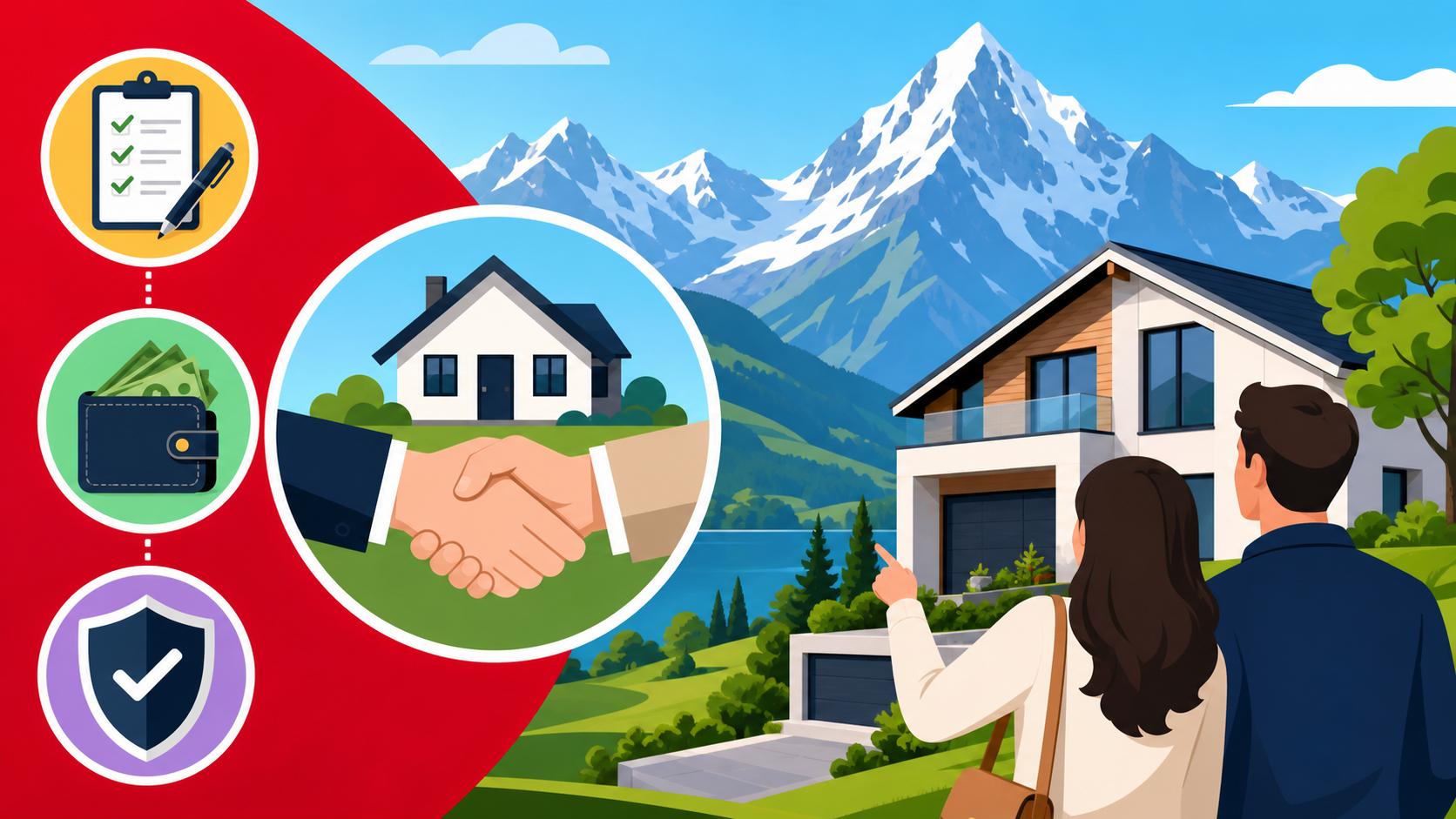
When I first sat down with a mortgage advisor at UBS, I thought my 10% deposit was a strong start. I was quickly corrected. In Switzerland, the "20% rule" is non-negotiable. You must provide at least 20% of the purchase price as equity. But here’s the kicker: at least 10% of that purchase price must be "hard cash"—savings, investments, or a gift from family. The other 10% can come from pledging or withdrawing your pension funds. This is a huge barrier to entry for many expats who haven't had a decade to build up a Swiss pension pot.
The "Affordability Test" is the second monster you’ll face. The bank won't calculate your ability to pay based on today’s low interest rates. Instead, they use a "theoretical interest rate" of usually 5%. They also add about 1% of the property value for maintenance and ancillary costs. Total housing costs (interest + amortization + maintenance) cannot exceed 33% of your gross annual income. This is why even people earning CHF 150,000 often find themselves priced out of the Zurich or Geneva markets. You can read more about how this works in Swiss Mortgage Affordability Test: Passing the 5% Theoretical Interest Rate.
Using your pension is a common strategy, but it comes with risks. You can use your "Second Pillar" (the company pension) or your "Third Pillar" (private pension). While this helps you hit that 20% mark, it reduces your retirement benefits and increases your tax liability upon withdrawal. Some choose Pledging vs Withdrawing Pillar 3a Funds for a Swiss House Purchase to keep the capital growing while using it as collateral. This is a sophisticated move that requires a good tax advisor, especially since Pillar 3a in 2026: Tax Deductions, Limits, and Investment Options change annually.
| Financial Component | Minimum Requirement | Source Options |
|---|---|---|
| Total Equity | 20% of Sale Price | Cash, Pension, Gifts |
| Hard Cash Equity | 10% of Sale Price | Savings, 3rd Pillar |
| Pillar 2/3 Pledge | Up to 10% | BVG (Pillar 2), 3a (Pillar 3) |
| Mortgage Limit | 80% of Bank Valuation | First and Second Mortgages |
| Affordability Ratio | < 33% of Gross Income | Based on 5% theoretical rate |
Don't forget the "Second Mortgage." In Switzerland, the first mortgage typically covers up to 65-67% of the property value and does not have to be paid back (amortized). The second mortgage covers the gap up to 80% and must be paid back within 15 years or by the time you reach retirement age. This dual-layered debt structure is unique and is one reason why the Swiss debt-to-GDP ratio looks so high on paper while the actual default rates are incredibly low.
The Step-by-Step Purchasing Process
The process starts with the "Reservation Agreement." Once you find a place you love, the seller will ask for a deposit, usually between CHF 10,000 and CHF 50,000, to take it off the market. Be very careful here. Unlike in some countries where this is just a formality, in Switzerland, if you back out, you might lose part of this fee to cover the seller's administrative costs. Always make sure the reservation is "subject to financing." If the bank's valuation comes in lower than the sale price—which happens more often than you’d think—you’ll need that exit ramp.
Once the reservation is signed, the "Notar" (Notary) enters the scene. In Switzerland, the notary is a public official who acts as a neutral middleman. They don't represent you, and they don't represent the seller; they represent the law. They will draft the "Kaufvertrag" (Purchase Contract). In some Cantons like Zurich, the notary is a state employee working in a district office. In Vaud or Geneva, they are private professionals. The contract will be read aloud in a formal meeting—often in the local language—so if your German or French isn't up to par, you must bring a professional translator.
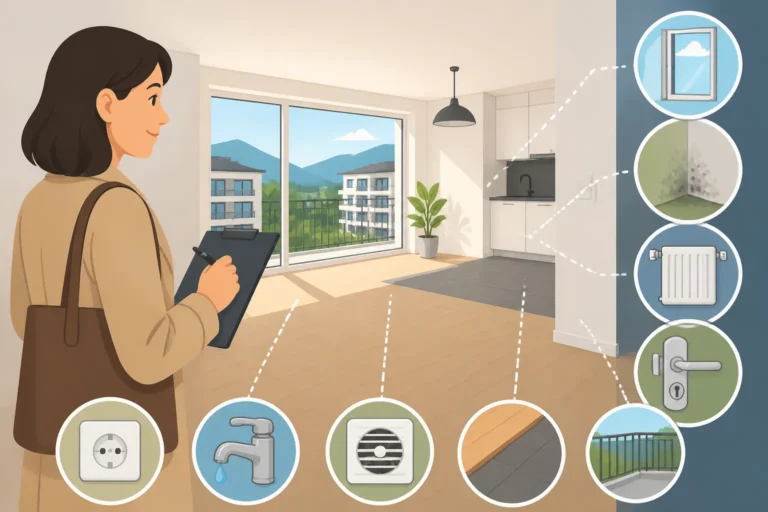
The "Handover" (Übergabe) is the most Swiss part of the whole thing. It is meticulous. You will walk through the property with the seller and the agent, checking every shutter, every appliance, and every tile. If there’s a scratch on the parquet that wasn't there during the viewing, it needs to be documented. This is also when you’ll want to make sure you have your connectivity sorted; I usually recommend getting an eSIM from Airalo the moment you move in so you aren't reliant on a delayed Swisscom installation to coordinate your move.
Finally, the "Land Registry" (Grundbuch) entry is made. This is the official moment you become the owner. It can take a few weeks or even months for the final deed to be processed, but the "Transfer of Possession" usually happens on a specific date agreed upon in the contract. This date is often months in the future, as the previous owners might be waiting for their own new home to be ready. Patience isn't just a virtue here; it's a legal requirement.
Closing Costs and Taxes: Budgeting Beyond the Sale Price
One of the biggest shocks for expats is realizing that the sale price is just the beginning. Closing costs vary wildly by Canton. In Zurich, you might pay around 0.25% to 0.5% in total fees, shared between the buyer and seller. In Geneva or Vaud, you could be looking at nearly 5% of the purchase price in taxes and fees. This money cannot be borrowed; it has to be part of your "extra" cash on top of the 20% deposit. If you’re buying a million-franc apartment in Lausanne, you need to have CHF 50,000 sitting in a bank account just for the paperwork.
The "Handänderungssteuer" (Property Transfer Tax) is the main culprit. Some Cantons have abolished it for primary residences to encourage homeownership, while others use it as a major revenue stream. You also have to pay for the "Notariat" fees and the "Grundbuch" (Land Registry) entry. If you are setting up a new mortgage, there is also a fee for the "Schuldbrief" (Mortgage Note), which is a physical (or now digital) document that proves the bank’s claim on your property. This note itself costs a percentage of the mortgage amount.
Ongoing taxes are the next layer. You will pay "Liegenschaftssteuer" (Property Tax) in many Cantons, which is an annual percentage of the property's value. Then there's the "Eigenmietwert" I mentioned earlier. Every year, you have to declare the "rental value" of your home as income. This is why homeowners are so obsessed with deductions. You can deduct mortgage interest and maintenance costs. For big renovations, many people split them over two tax years to maximize the deduction. It’s a game of chess played with the cantonal tax office.
| Canton | Transfer Tax | Notary/Registry Fees | Who Pays? |
|---|---|---|---|
| Zurich | 0% | ~0.1% – 0.2% | Split 50/50 |
| Geneva | 3.0% (Casatax may apply) | ~1.1% | Buyer |
| Vaud | 2.2% | ~1.1% | Buyer |
| Bern | 1.8% | ~0.5% | Buyer (usually) |
| Zug | 0% | ~0.2% | Split 50/50 |
Lastly, consider the Wealth Tax in Switzerland: How Global Assets Are Assessed. Your property's " Steuerwert" (tax value), which is usually lower than the market value, will be added to your total worldwide wealth. If you have significant savings or property abroad, this could push you into a higher wealth tax bracket. It’s also worth looking into Does Switzerland Have an Inheritance Tax? Cantonal Differences Explained because how you title the property (sole ownership vs. joint ownership with a spouse) can have massive implications for your heirs down the line.
Property Types and Terminology
When browsing listings on local sites, you’ll see the term "Stockwerkeigentum" (STWE). This is essentially a condominium or an apartment where you own your specific unit and a share of the common areas. This comes with a "Reglement," a set of rules that can be incredibly strict. I’ve seen regulations that dictate what color of curtains you can have or what time you are allowed to use the communal laundry room. Always ask to see the minutes of the last three "Eigentümerversammlung" (Owners' Association) meetings. If they’ve been arguing about a noisy neighbor or a leaky roof for three years, run away.
Then there is "Baurecht." This is a leasehold. You own the building, but someone else (often the city or a church) owns the land. You pay a "Baurechtszins" (ground rent) every year. These properties are significantly cheaper, but they are risky. When the lease expires (usually after 50 to 100 years), the land owner can take the building back, often for a fraction of its value. Most banks are very hesitant to finance Baurecht properties for expats because the value disappears as the lease end-date approaches.
Energy efficiency is a massive topic. Look for the "GEAK" (CECB in French) certificate. This rates the building’s energy efficiency from A to G. Since the Swiss government is pushing for a "Net Zero" future, properties with low ratings (E, F, or G) are going to face mandatory, expensive retrofitting in the coming decade. A "cheap" older house might end up costing you CHF 200,000 in new insulation and a heat pump. When you need to find specialists for these tasks, searching for Finding an English-Speaking Plumber or Electrician in Geneva or Zurich can be a lifesaver.
Finally, pay attention to the "Nebenkosten" (Ancillary Costs). In an apartment building, you’ll pay a monthly fee into a "Erneuerungsfonds" (Renovation Fund). This is a collective pot of money used for big repairs like a new roof or a lift. If the fund is empty and the roof starts leaking, the owners will be hit with a "Sonderumlage" (special assessment)—a bill for tens of thousands of francs that must be paid immediately. Always check the health of the renovation fund before signing anything.
Regional Nuances: Where to Buy
Where you buy in Switzerland is often a trade-off between "Life" and "Tax." Buying in the city of Zurich is nearly impossible for most, so people look at the "Gold Coast" (the sunny side of Lake Zurich) or the "Silver Coast." But the tax rates in places like Kilchberg or Herrliberg are significantly lower than in Zurich city, which allows you to afford a higher mortgage. However, prices in these low-tax communes are astronomical. You have to do the math: is it better to pay CHF 2,000 more in monthly mortgage to save CHF 2,500 in monthly tax? Usually, the answer is yes.
If you are a Cross-Border Commuter (G Permit): Health Insurance Exemptions and Rules holder, you might be considering buying just across the border in France or Germany. While the property is cheaper, the tax implications of being a "Frontalier" with property can be a nightmare. Buying within Switzerland, perhaps in an emerging hub like Zug or parts of Canton Aargau, often provides a better long-term "Real Estate Reality." Zug, in particular, is the holy grail of low taxes, but you'll be competing with every crypto-millionaire and multinational exec in Europe for a 2-bedroom flat.
The mountain regions offer a different kind of value, but remember the "Lex Weber" restrictions. Commuter towns like Olten (the "junction" of Switzerland) or Thun offer a more "Swiss" experience at a lower price point than the international hubs. You’ll get more space for your money, and you can still be in Bern or Zurich in under 40 minutes by train. Just remember that the further you go from the cities, the more "local" the culture becomes. You might find that your neighbors expect you to participate in the local "Verein" (club) or help with the communal snow shoveling.
Finally, don't overlook the logistics of outfitting your new home. While local stores like Migros Do It + Garden are great, many expats find that for specific home improvement tools or high-end fixtures, ordering from Amazon Germany can be more cost-effective, even with the customs fees. Just ensure you’ve factored in the Cost of Living Realities: Groceries, Telecoms, and Household Expenses of your new Canton, as moving just ten kilometers can change your car insurance, your health insurance premiums, and your grocery bills.
Disclaimer
This article is for informational purposes only and does not constitute financial, legal, or real estate advice. Property laws and tax regulations in Switzerland are subject to frequent changes and vary significantly by Canton and Commune. Always consult with a qualified Swiss notary, tax advisor, and mortgage specialist before making any financial commitments. The author and publisher are not responsible for any actions taken based on the content of this guide.