Are International School Fees Tax-Deductible in Switzerland?
The sticker shock of Swiss international school tuition can make even a seasoned corporate executive double-take, often reaching upwards of thirty thousand francs per child. I still remember staring at my first tuition invoice in Zurich, wondering if I’d accidentally signed up to fund a small space program rather than a third-grade education. This guide clarifies exactly when you can claw back some of those costs through tax deductions and when you are unfortunately on your own.
The General Rule for Private Education Deductions
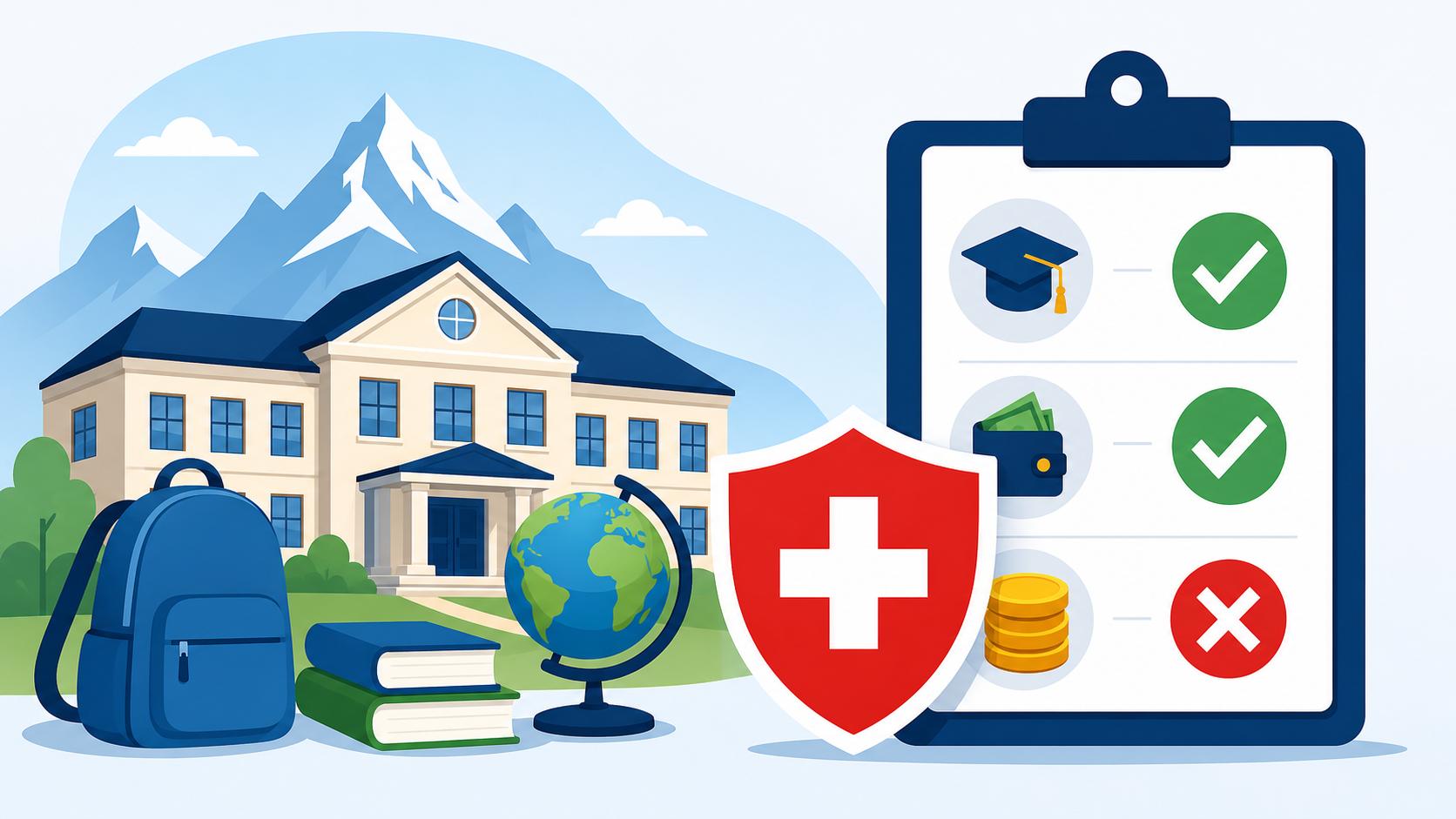
In the eyes of the Swiss Federal Tax Administration, education is a personal choice, and the state provides an excellent, free alternative. Therefore, the baseline rule is that international school fees are considered private living expenses and are not tax-deductible for the average resident. This often comes as a crushing blow to families who moved here under the assumption that "work-related education" might cover their children’s schooling.
The logic used by the authorities is consistent: because the local public school system is available to everyone at no cost, choosing a private international school is viewed as a "luxury" or a lifestyle preference. Whether you are navigating Cost of Living in Switzerland 2026: Budgeting for Singles and Families or looking for ways to trim your tax bill, it is vital to understand that the "education" portion of your school bill is almost never deductible on a standard tax return. However, there is a very important distinction between "education" and "childcare." While the hours spent learning math and history are private costs, the hours spent in after-school care or supervised lunch programs may fall under the category of Fremdbetreuung (third-party care).
Most international schools provide a breakdown of their fees upon request. If your child is under the age of 14, you may be able to deduct a portion of the bill that specifically covers supervision outside of core teaching hours. This is highly cantonal, meaning your experience in Geneva will differ wildly from someone in Zug. You will need to ensure your Salary and Compensation: Navigating Swiss Pay, Bonuses, and Deductions are correctly documented so that these childcare offsets don't get rejected during your annual assessment.
The Expat Status Exception and Special Professional Expenses
There is one major "loophole," though it has become significantly harder to jump through in recent years. This is the official "Expat Status" as defined by the Ordinance on the Deduction of Special Professional Expenses of Expatriates (OED). To qualify as an "expat" in the legal tax sense, you cannot simply be a foreigner living in Switzerland; you must be a specialist or manager seconded to Switzerland by a foreign employer for a limited period of time.
If you hold this specific status, the tax authorities may allow you to deduct the cost of international school fees if the local public schools do not offer an education in the child's native language. This is intended to facilitate the temporary stay of high-level professionals who will eventually move their children back to their home country's school system. However, the moment you transition to a local Swiss contract or receive a C Permit, this deduction usually evaporates. If you are currently Filing a Swiss Tax Return (C Permit or High Earners on B Permit), you should double-check if your "Expat Status" is still valid or if the tax office now views you as a permanent resident.
For those lucky enough to maintain this status, the deduction can be substantial, but it is often capped. Furthermore, the school must be "necessary." If there is a public school nearby that offers a bilingual program that could reasonably accommodate the child, the tax office might challenge the deduction. It is a nuanced area where having a clear Understanding Your Swiss Salary Certificate (Lohnausweis) for Tax Season is essential, as your employer must often certify the necessity of the private schooling.
Employer Paid Tuition and Fringe Benefits
In many high-level expat packages, the employer agrees to pay the international school fees directly. While this is a massive relief for your monthly cash flow, you must be aware that this is considered a "fringe benefit" and is treated as taxable income. The amount the company pays for the school will be added to your gross salary on your certificate, effectively increasing your tax burden.
If you are paying the fees yourself from a foreign account or receiving a reimbursement from abroad, using a service like Wise can help you manage the currency exchange without losing a fortune to bank spreads. Schools usually require payment in CHF, and if your "education allowance" is denominated in USD or GBP, the hidden fees in a traditional bank transfer can add up to thousands over a few years.
When the employer pays, it is essentially like getting a raise that you never see in your bank account, which then triggers a higher Withholding Tax (Quellensteuer) vs Standard Taxation for Foreigners rate. You are essentially paying the "tax" on the school fees rather than the fees themselves. This is still a net win for the employee, but it can lead to a surprise bill at the end of the year if your payroll department hasn't adjusted your monthly withholding to account for the value of the tuition.
| Canton | Max Childcare Deduction (Federal) | Max Childcare Deduction (Cantonal) | Notes |
|---|---|---|---|
| Zurich | CHF 25,500 | CHF 10,100 | Per child, up to age 14 |
| Geneva | CHF 25,500 | CHF 25,048 | One of the most generous cantons |
| Zug | CHF 25,500 | CHF 10,000 | Flat rate for third-party care |
| Basel-Stadt | CHF 25,500 | CHF 10,000 | Requires proof of dual-income or single-parent workload |
Maximizing Tax Allowances for Childcare
Since the core "tuition" is rarely deductible, you should focus your energy on the Tax Allowances and Deductions: Commuting, Meals, and Childcare section of your return. Most international schools operate as "all-day" schools. This means they provide lunch, supervised study halls, and extracurricular clubs. In many cantons, these specific components are deductible as "third-party childcare" costs, provided both parents are working (or the single parent is working).
To make this claim stick, you need an itemized invoice. A single line item saying "Tuition: CHF 35,000" will get you zero deductions. An invoice that breaks down "Tuition: CHF 28,000" and "Supervised Lunch/After-school Care: CHF 7,000" allows you to potentially deduct that CHF 7,000 (subject to cantonal caps). This is why I always tell new arrivals to speak with the school’s finance office early. They are used to these requests and can often provide the necessary documentation to satisfy the tax office.
If you find that your tax savings are lower than expected, you might want to look at other ways to offset your high cost of living. For instance, putting the money you do save into a Pillar 3a in 2026: Tax Deductions, Limits, and Investment Options plan is a guaranteed way to reduce your taxable income. Many expats then use platforms like Trade Republic to invest those tax savings into long-term ETFs, or even Binance if they have a higher risk tolerance for crypto-assets, though you must remember to declare these in your wealth tax section.
Strategic Financial Planning for School Years
If you are looking at a decade or more of international schooling, you need a long-term strategy that goes beyond simple tax deductions. Since the state isn't going to subsidize your choice of private education, you have to be aggressive with other deductions. Ensure you are claiming every possible cent on Child Benefit Payments (Kinderzulage) and Their Tax Implications—even if the amount seems small compared to the tuition, every franc helps.
One strategy used by many families is to move to a lower-tax canton. The difference in tax between a high-tax commune in Zurich and a low-tax commune in Zug can sometimes cover half of a child's annual tuition. This is why Lowest Tax Cantons: Moving to Zug, Schwyz, or Nidwalden for Tax Benefits is such a popular topic for families with multiple children in private school. You aren't just looking for a cheaper house; you're looking for a lower tax rate to offset the private school "tax" you've imposed on yourself.
Lastly, keep a folder of every receipt. Switzerland is a country of "proof." If you claim a deduction for a school-run summer camp or a mandatory school trip that you believe qualifies as "care" during working hours, you must have the paperwork ready. If you are in your first year, following a Financial Checklist for Your First 30 Days as an Expat in Switzerland will help you set up the organizational systems you need to survive the first tax season without losing your mind.
Legal and Administrative Disclaimer
The information provided in this guide is for informational purposes only and does not constitute professional tax or legal advice. Swiss tax laws are subject to frequent changes and vary significantly between cantons and municipalities. We strongly recommend consulting with a qualified Swiss tax advisor or the relevant cantonal tax authorities to discuss your specific situation before filing your tax return or making significant financial decisions regarding private education. While we strive to provide the most current information, we cannot guarantee the accuracy of data as cantonal practices can shift without notice.