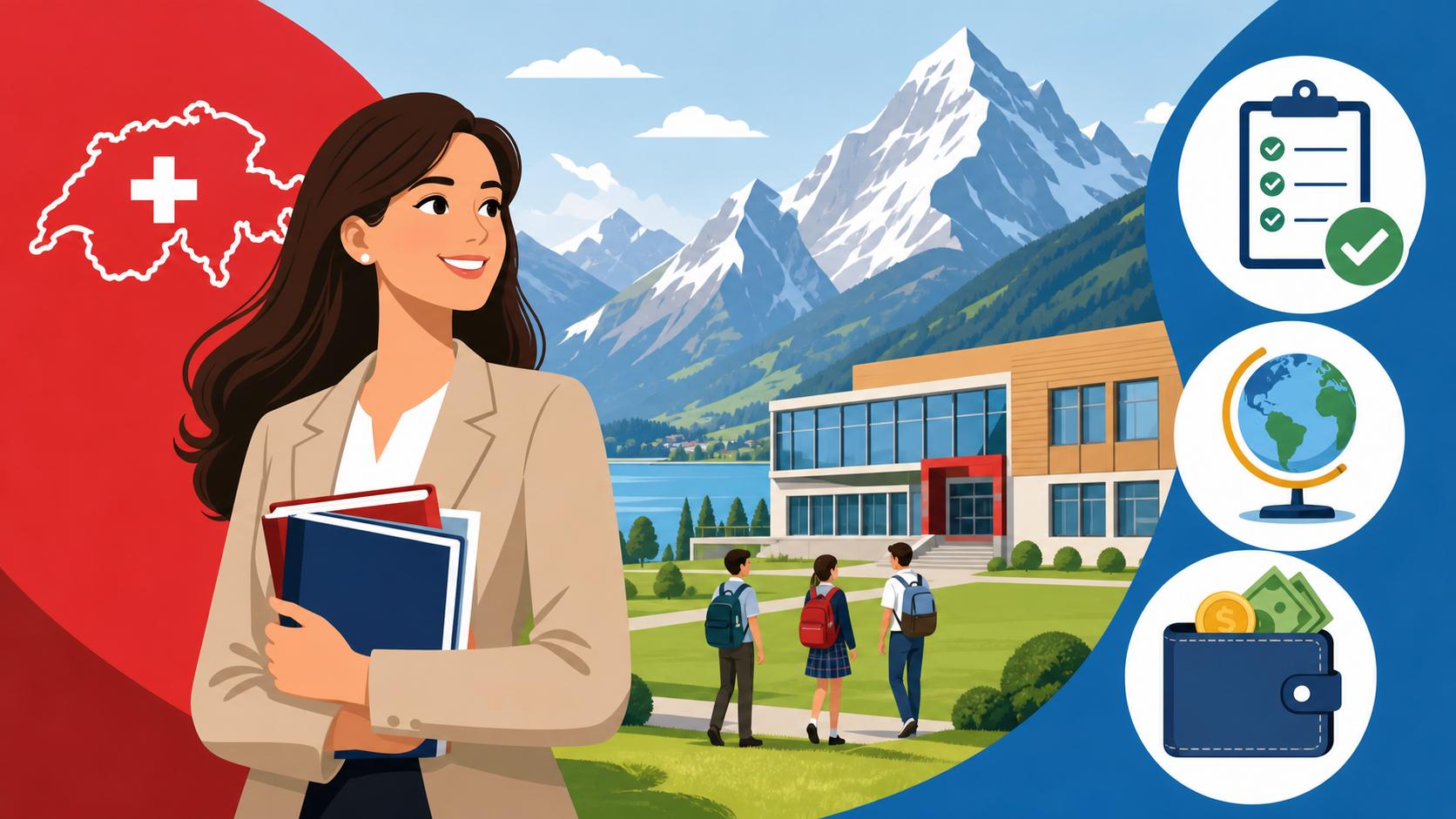
Teaching at International Schools in Switzerland: Requirements and Pay
Landing a teaching gig in Switzerland sounds like the ultimate expat dream until you realize the competition is as stiff as a frozen Alpine peak. I remember sitting in a tiny café in Zurich Oerlikon, clutching my foreign teaching credentials and wondering why my inbox was silent despite years of experience back home. This guide solves that frustration by detailing exactly how to navigate the international school hiring cycle, the qualifications that actually matter, and the salary figures you need to survive.
The Landscape of International Schooling in Switzerland
The first thing you need to understand is that the "international school" label in Switzerland covers a broad spectrum. You have the heavy hitters like the International School of Geneva (Ecolint), which is practically an institution in itself, and the Zurich International School (ZIS). These schools primarily serve the children of multinational executives, diplomats, and high-net-worth expats. Because the student body is so diverse, the primary language of instruction is English, but don't let that fool you into thinking you can ignore the local tongue.
While you'll be teaching in English, the administration, the janitorial staff, and the local parents will often communicate in German or French. To truly integrate and handle the parent-teacher conferences for bilingual families, using a platform like Lingoda to brush up on your professional vocabulary is a lifesaver. You aren't just a teacher here; you are an ambassador of your curriculum, whether that is the International Baccalaureate (IB), the British IGCSE/A-Levels, or the American Common Core.
The geographical hubs for these schools are predictable: Zurich, Geneva, Zug, and Basel. These are the cities where the big pharma and finance companies are headquartered. However, don't overlook the "hidden" gems in places like Lugano (TASIS) or the boarding schools in the mountains like Le Rosey or Aiglon College. These boarding schools operate on a completely different level of prestige and workload, often requiring teachers to live on-site and participate in pastoral care. If you are looking for a more standard "9-to-5" teaching role, sticking to the day schools in the major cantons is your best bet for maintaining a healthy work-life balance.
Essential Requirements and the Permit Hurdle
If you are coming from outside the EU/EFTA, the biggest wall you will hit isn't your resume—it is the permit system. Switzerland operates on a strict hierarchy for work authorizations. Before a school can hire you, they must prove to the authorities that they couldn't find a suitable Swiss or EU candidate. This is why Understanding the Swiss Job Market Quota System for Non-EU/EFTA Nationals is vital for your mental health. If you don't have a passport from a Schengen country, you need to be a "high-demand" specialist—think IB DP Physics, Higher Level Mathematics, or specialized Learning Support.
Degrees and Teaching Certifications
To teach at an international school, a Bachelor’s degree in your subject area is the bare minimum, but a Master’s degree is increasingly becoming the industry standard in Switzerland. More importantly, you must have a recognized teaching license from your home country (e.g., PGCE from the UK, State Certification from the US, or a B.Ed. from Canada).
The Swiss authorities (EDK/CDIP) generally don't need to formally recognize your foreign teaching diploma for you to work at a private international school, but they definitely will if you ever want to transition to the public system. However, the international schools themselves are very picky. They want to see that you’ve actually spent time in a classroom. If you’re a fresh graduate, your chances are slim unless you’re applying for an internship or an assistant role. If you are teaching in the German-speaking cantons, spending some time with GermanPod101 can help you navigate the paperwork and administrative staff meetings that often happen in High German.
The Paperwork Trail
When you apply, you need a "Bewerbungsmappe" or a digital equivalent that is flawless. Swiss HR departments love a good dossier. You will need:
- Your teaching certificate and university transcripts.
- Recent background checks (International Child Protection Certificate or equivalent).
- Letters of recommendation. In Switzerland, The Arbeitszeugnis (Reference Letter): How to Decode Swiss HR Language is a specific art form. Even though international schools use more standard English references, they still look for that same level of detailed performance evaluation.
- A valid residence permit or proof that your prospective employer is initiating the application for Residence Permits in Switzerland: L, B, C, and G Permits Explained.
Salary Expectations and the True Cost of Living
Let’s talk about the numbers, because this is where Switzerland either shines or scares people away. A starting salary for a qualified teacher in a top-tier international school typically ranges from CHF 85,000 to CHF 105,000 per year. With significant experience and a Master’s degree, you can see that climb to CHF 120,000 or even CHF 135,000 for leadership positions.
However, you have to look at Salary and Compensation: Navigating Swiss Pay, Bonuses, and Deductions to see what actually lands in your bank account. Your gross salary will be subject to deductions for old-age insurance (AHV), disability insurance (IV), and unemployment insurance (ALV). Then there is the "13th-month salary" culture. Many Swiss contracts split your annual pay into 13 installments, with the extra payment coming in December. It feels like a massive bonus, but it is actually just part of your agreed annual total, helping you cover those steep holiday expenses or your annual insurance premiums.
Comparative Salary and Benefits Table
| Canton | Est. Starting Salary (Annual Gross) | Est. Senior Salary (15+ Years) | Housing Allowance |
|---|---|---|---|
| Zurich | CHF 92,000 – 100,000 | CHF 125,000+ | Rarely (Luxury Boarding Only) |
| Geneva | CHF 95,000 – 105,000 | CHF 130,000+ | Occasionally for Specialists |
| Zug | CHF 90,000 – 98,000 | CHF 120,000+ | No (But lower taxes) |
| Basel | CHF 88,000 – 95,000 | CHF 118,000+ | No |
Keep in mind that while Geneva and Zurich pay the most, they also have the highest Cost of Living in Switzerland 2026: Budgeting for Singles and Families. Rent will likely consume 30% of your take-home pay. If you’re teaching in the Vaud region, near Lausanne, you might find a slightly better balance, and using FrenchPod101 will help you negotiate with local landlords who might not speak a word of English.
Navigating Contract Culture and Benefits
Swiss work contracts are robust and heavily regulated. When you sign on at an international school, you are entering a world of "100% workloads." This usually means about 22 to 26 "contact hours" (actual teaching periods) per week, plus duties, meetings, and prep time. It is a full-time commitment. You should also pay close attention to Employment Probation Periods in Switzerland: What You Need to Know. In Switzerland, the first three months are usually a trial period where either party can terminate the contract with very short notice (often seven days). It sounds terrifying, but as long as you show up and do your job, it is rarely invoked.
Pensions and Insurance
One of the best parts of teaching here is The Three-Pillar Pension System: AHV, BVG, and Private Savings. Your school will contribute to your "Second Pillar" (BVG), which is a massive forced-savings account that you can actually take with you if you leave Switzerland permanently later in life.
However, you must remember that Healthcare in Switzerland for Expats: The Complete System Overview (2027) is your responsibility. Unlike in the UK or parts of the EU, your employer does not provide health insurance. You have 90 days from the day you arrive to sign up for a plan, and it is a mandatory monthly expense that will cost you at least CHF 350-500 depending on your deductible.
Integration and the Social Reality
Teaching at an international school can feel like living in a bubble. You spend all day speaking English with other expats and teaching children who fly to the Maldives for spring break. To avoid the "golden cage" syndrome, I always recommend my fellow teachers make a concerted effort to learn the local language. Whether you use Lingoda for structured classes or just chat with the "Hauswart" (caretaker) using the phrases you picked up on GermanPod101, it changes how the locals view you. You stop being a "guest worker" and start being a resident.
Final Practical Steps for Applicants
The hiring season in Switzerland starts early. Most top schools begin their recruitment in November and December for the following August. If you are waiting until April or May, you are looking at the leftovers.
- Update your LinkedIn: Swiss recruiters are extremely active on the platform.
- Check the "Big Three" Portals: Search on TES (Times Educational Supplement), Search Associates, and Schrole.
- Tailor your CV: Remove the fluff. Swiss employers want to see bullet points of your responsibilities, the specific IB modules you've taught, and your extracurricular contributions (coaching, drama, etc.).
- Tax Planning: Understand that Swiss Taxes Explained: Federal, Cantonal, and Municipal Rates will vary wildly depending on where you live. If you work in Zurich but live in a neighboring canton with lower taxes, you might save thousands, but your commute will cost you more.
Teaching here is a marathon, not a sprint. The first year is always the hardest—navigating the health insurance, the apartment hunts, and the quiet Sundays when everything is closed. But once you receive that first 13th-month salary and spend your February break skiing in the Engadin, you’ll realize why so many of us never leave.
Disclaimer
This guide is intended for informational purposes only. Labor laws, visa regulations, and salary benchmarks in Switzerland are subject to change. Always consult with the official Swiss Federal Office for Migration (SEM) or a qualified legal professional regarding your specific residency and employment situation.