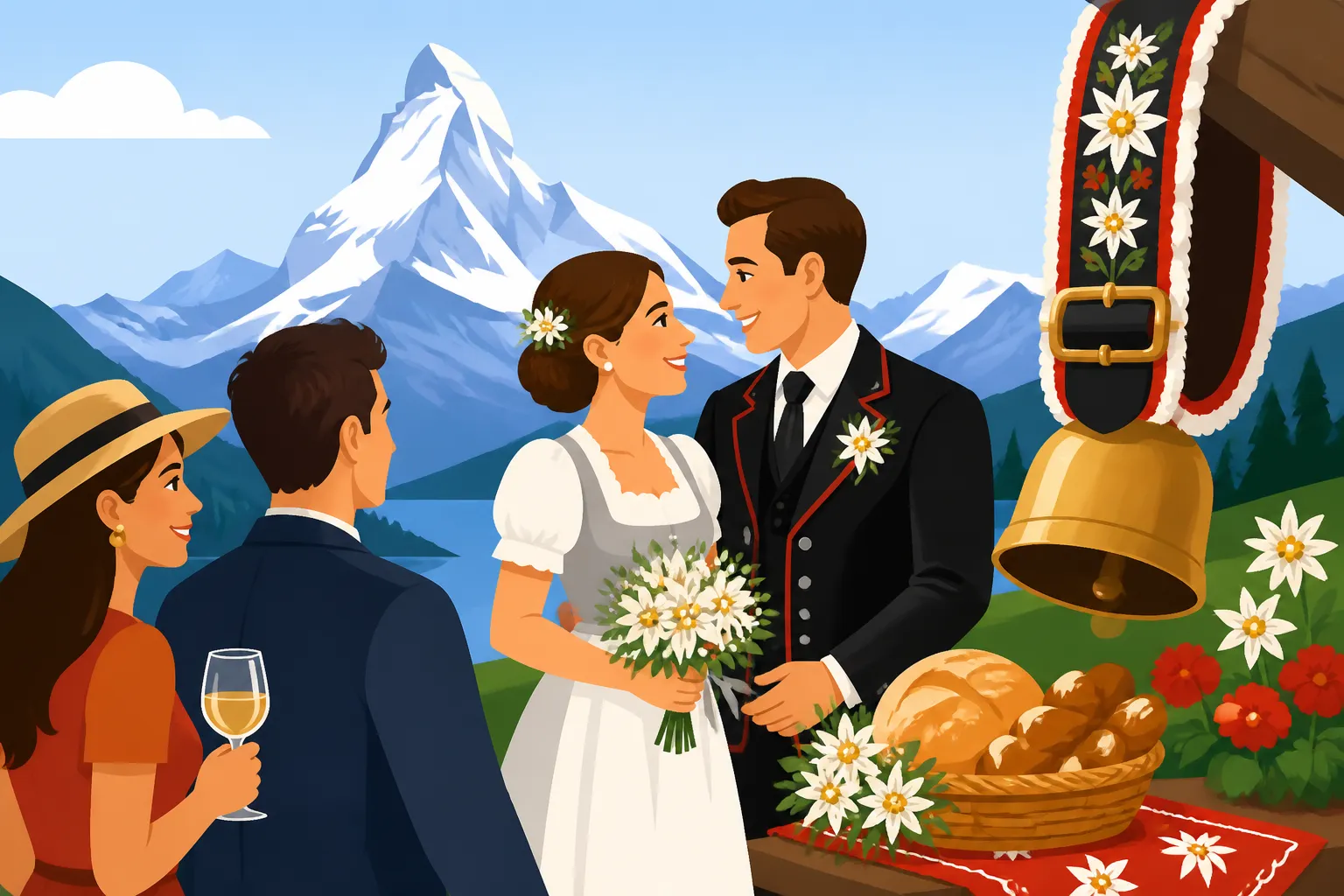
Swiss Wedding Traditions and Customs for Expat Guests
So, you've received that gorgeous, often elegantly minimalist, wedding invitation in Switzerland, and your first thought might be, "Oh, how lovely!" Your second thought, if you're anything like me when I first arrived, probably spirals into, "Wait, what do I do? What's expected? Is it like back home, or am I about to commit a major cultural faux pas?" Trust me, I've been there, fumbling through my first few Swiss Hochzeiten (weddings), trying to decipher the unwritten rules.
Navigating a Swiss wedding as an expat guest can feel a bit like learning a new dance: the steps are similar, but the rhythm and flair are subtly different. This guide is here to walk you through the delightful, sometimes formal, often surprising, and always heartwarming traditions and customs you're likely to encounter, so you can relax and truly celebrate with your friends.
The Formalities and First Steps: Understanding the Legalities (and the Party!)
The Swiss approach to marriage is wonderfully pragmatic, yet they know how to throw a fantastic party too. But understanding the layers of formality is key, especially if you come from a country where a church wedding is often the only legal one.
Civil Ceremony First, Always
This is perhaps the most crucial distinction for many expats. In Switzerland, the civil ceremony (the one at the Zivilstandsamt or registry office) is the only legally binding part of a marriage. It’s where the "I do" legally happens, papers are signed, and you're officially, irrevocably wed in the eyes of the state.
For many Swiss couples, this civil ceremony is often a very small, intimate affair. We're talking immediate family, maybe a few close friends, and the two witnesses. It’s usually brief, efficient, and typically held on a weekday, sometimes even a week or two before the bigger celebration. As an expat, don't be surprised if you're not invited to this part unless you're truly part of the inner circle. If you are invited, consider it a real honour. Dress smart but not necessarily "wedding formal" unless specified – think business casual or smart daywear. It's truly a no-frills legal procedure that happens before any of the big fun kicks off.
Invitations and RSVPs: What to Expect
Swiss wedding invitations tend to be beautifully designed, often understated, and very clear about what part of the celebration you’re invited to. Pay close attention to the wording! You might receive:
- An invitation to the Apero only: This is incredibly common and where many guests, especially friends, will participate. The Apero is a reception, usually held after the civil or religious ceremony, where guests enjoy drinks, finger foods (often delicious and substantial enough to tide you over), and mingle. It can last anywhere from 1.5 to 3 hours. It's a wonderful opportunity to congratulate the couple and feel part of the joy without committing to an entire day.
- An invitation to the Ceremony and Apero: This usually means you'll attend the religious ceremony (if there is one, following the civil part), then move on to the Apero.
- An invitation to the Entire Day (Tagesgäste): This is for the closest friends and family – those invited to the civil ceremony (if not held separately), the religious blessing, the Apero, the dinner reception, and the evening party. This is a full-day commitment, starting early and often going late into the night.
The RSVP instructions will also be very specific, often with a clear deadline and a preferred method of response. Don't be late! Punctuality and adherence to instructions are highly valued here, as outlined in general Swiss Customs and Etiquette: Social Norms Every Newcomer Should Know. You might be asked to indicate any dietary restrictions, which is always helpful for the hosts. If you need to travel to the wedding, remember to check Public Transport in Switzerland: SBB, GA, Half-Fare Cards, and Commuting or consider accommodation options via platforms like Booking.com well in advance, especially if it's a popular wedding season.
Dress Code and Gifts: Navigating Swiss Wedding Etiquette
Now, let's talk about looking the part and showing your appreciation without overdoing it or underdoing it. This is where expat anxieties often peak, but with a few pointers, you'll be absolutely fine.
Attire: Smart-Casual to Elegant
The dress code for a Swiss wedding typically falls into "festlich" (festive) or "élégant" (elegant), which generally means smart and polished. For men, a suit is almost always a safe bet – a dark suit for an evening reception, or a lighter suit for a daytime Apero. Ties are usually worn but might come off later in the evening if the party gets lively. For women, a beautiful dress, a stylish jumpsuit, or an elegant skirt-and-blouse combination is appropriate.
However, the specific vibe can vary depending on the couple and the location. A wedding in a mountain village might lean slightly more towards "smart rustic chic," while a city wedding in Zurich or Geneva could be quite sophisticated. It's rarely about flashy, over-the-top outfits. Think quality, well-fitting garments in tasteful colours. Avoid anything too revealing or overly casual.
If in doubt, a safe bet for women is a midi or maxi dress in a nice fabric, and for men, a well-tailored suit. Always consider the time of year and location; a summer wedding near Lake Geneva will have a different feel than a winter one in the Bernese Oberland. And please, don't forget comfortable shoes – there's often a bit of walking, mingling, and maybe some dancing!
The Gift Registry (or Lack Thereof)
Ah, the Swiss wedding gift. This is where many expats often stumble because it's not quite what you might be used to from Anglo-Saxon cultures. While some younger, more internationally-minded couples might have a small online registry for specific items, the overwhelming preference in Switzerland is for cash contributions.
Most Swiss couples getting married have already established their homes, often living together for years, so they don't typically need toasters or blenders. Instead, cash gifts are seen as a practical way to contribute to their honeymoon, a new furniture purchase, a house fund, or simply to help offset the considerable cost of the wedding itself.
How do you give cash gracefully? It’s usually placed in a nice card with a heartfelt message, tucked into an elegant envelope. At the reception or Apero, there’s often a designated box or table where you can discreetly drop your card. The amount is entirely up to you and your relationship with the couple, but typically ranges from CHF 50 for an Apero-only invitation to CHF 150-300+ if you’re invited for the entire day and dinner. Don't feel pressured to overspend. The gesture and your presence are truly what matters most. For more general advice on showing appreciation, check out our guide on Gift-Giving Etiquette in Switzerland: Dos and Don'ts. The couple might even use some of the contributions for a unique experience booked through a site like GetYourGuide for their honeymoon!
The Big Day: Traditions and Festivities
Once you’ve nailed the logistics and attire, it's time for the fun stuff! Swiss weddings, while perhaps more structured than some, are full of charm, good food, and genuine joy.
Ceremony Nuances: From Church to Apero
If the couple opts for a religious ceremony (which is a blessing, remember, not the legal part), it typically takes place in a church, often after the civil ceremony has already occurred on a different day or earlier that morning. These ceremonies are usually solemn, can include hymns sung by the congregation, and often feature personal readings or musical performances. Depending on the canton and the couple's background, this could be Catholic or Protestant. They usually last about an hour.
Following any ceremony, the Apero is the heart of most Swiss wedding celebrations. This is where a wider circle of friends, colleagues, and extended family gather to toast the newlyweds. It's a lively standing reception, often held at the church, the civil registry, or a rented venue with beautiful views. Expect excellent local wines, Prosecco, beers, and non-alcoholic options, accompanied by an array of small, exquisite finger foods – think mini quiches, local cheese platters, cold cuts, and delicious pastries. This is your chance to congratulate the couple, mingle, and use some of those Swiss Greetings and the Three-Kiss Custom Explained with new acquaintances. The atmosphere is usually relaxed and joyous. Many guests, especially if only invited to the Apero, will depart after this part. For those lucky enough to be invited for the full day, the Apero serves as a lovely transition before the evening meal.
Reception Revelry: Food, Speeches, and Games
If you're a "Tagesgast" (full-day guest), prepare for a multi-course dinner that is typically served in a beautifully decorated hall or restaurant. Seating charts are common, so don't be surprised to find your name at a specific table. This is a good opportunity to meet new people! The food will often highlight regional specialties and fine Swiss cuisine. For insights into general dining expectations, our guide on Tipping and Restaurant Etiquette in Switzerland for Newcomers might be helpful, though tipping at a wedding is handled by the couple.
Compared to some cultures, speeches at Swiss weddings tend to be fewer and shorter. You might hear heartfelt words from the parents of the bride and groom, perhaps a close sibling, or the best man/maid of honour. They’re generally well-prepared and often accompanied by a slideshow or funny anecdotes. The focus is more on genuine sentiment than lengthy roasts.
But what truly sets Swiss receptions apart is the array of "Spiele" (games) and "Einlagen" (contributions) orchestrated by friends and family. This isn't just a couple of easy party games; it's a concerted effort from the guests to entertain the couple and the crowd. These can range from:
- Quiz games about the couple's relationship (e.g., "Who said 'I love you' first?").
- Photo slideshows or short, humorous videos.
- Musical performances or skits put on by groups of friends.
- A "Hochzeitszeitung" (wedding newspaper) which is a custom where friends create a humorous, satirical newspaper filled with fake news, crosswords, and funny stories about the couple's journey together. This is a delightful keepsake.
These games and contributions are typically coordinated beforehand by a designated master of ceremonies (often the best man or a close friend) to ensure smooth flow and prevent too many overlaps. As a guest, you'll simply enjoy the show, laugh along, and perhaps even be called upon to participate in a light-hearted activity. It's a true reflection of the community's involvement in celebrating the couple.
Traditional Games and Surprises (Brautentführung and Co.)
Beyond the organised games, some weddings feature slightly more boisterous traditions. The most famous (or infamous, depending on your perspective!) is the Brautentführung (Bride Kidnapping). Yes, it's exactly what it sounds like, but it's all in good fun and a lighthearted tradition, not a real abduction!
During the evening party, typically after dinner and when the dancing has begun, a group of the groom's friends (or sometimes the bride's) will "kidnap" the bride and take her to a nearby pub or bar. The groom then has to "find" her, often by following a trail of clues or performing certain tasks or dares. Once found, he might have to "ransom" her back by buying a round of drinks for the "kidnappers" and everyone at the pub. It's a fantastic icebreaker and a way to add a bit of unexpected fun to the evening. Don't panic if the bride suddenly vanishes; it's likely a planned (or semi-planned) part of the festivities!
Other traditions might involve guests throwing rice or confetti (sometimes birdseed, especially if the venue is eco-conscious) as the couple leaves the church or civil ceremony, or forming a "tunnel" for them to walk through. The specific regional customs can vary, so keep an open mind and embrace the unexpected. You might find a whole world of regional Swiss Food and Drink Culture: Regional Specialties and Dining Etiquette on display.
Beyond the Wedding Day: Post-Celebration Customs
The party might be over, but the thoughtful gestures continue in Switzerland.
Thank You Notes and Follow-ups
Don't be surprised to receive a formal thank you card from the couple a few weeks or even months after the wedding. These are usually beautifully designed, often featuring a photo of the happy couple, and contain a personal, handwritten message of thanks. It’s a lovely touch and a common Swiss practice to acknowledge your presence and gift.
For your part, a quick text or email to the couple a day or two after, simply saying "Thank you for a wonderful time," is always appreciated, but not strictly required. The Swiss tend to value genuine appreciation over overly effusive displays.
Remembering the Experience
Swiss weddings, though they might initially feel a bit foreign in their structure and traditions, are deeply meaningful celebrations of love and community. As an expat, attending one is a fantastic way to immerse yourself in local culture and witness a different facet of Swiss life beyond the stereotypes of punctuality and mountains. You’ll see the warmth, the joy, and the strong bonds that tie families and friends together.
Whether you're flying in from abroad (Omio can help you find good connections) or just hopping on the SBB train for an hour or two, experiencing a Swiss wedding is a memory you'll cherish. You'll likely leave with a fuller belly, a happy heart, and a much better understanding of the nuanced social fabric of your adopted home. It’s these shared experiences, these little insights into everyday life, that truly help with Community and Integration: Making Friends and Adapting to Swiss Life in this beautiful country. And who knows, maybe it will even inspire some future Day Trips by Train: The Best Swiss Destinations Within Two Hours to revisit the charming locale of the celebration.
Disclaimer
Please remember that while this guide offers comprehensive advice based on common Swiss practices, traditions can vary slightly between cantons, families, and individual couples. Always defer to the explicit instructions given by the wedding couple or their designated event coordinator. This information is for general guidance only and does not constitute professional advice.