Kids’ Activities and Sports Clubs in Switzerland for Expat Children
Oh, the quest for after-school activities for expat children in Switzerland! It’s a journey many of us have embarked on, often with a mix of excitement and utter bewilderment. You’ve arrived in this beautiful, well-organized country, perhaps assuming finding a local football club or a dance class would be straightforward, only to be met with a labyrinth of Vereine, cantonal systems, German/French/Italian-only websites, and registration deadlines that seem to appear out of nowhere. Trust me, you're not alone in feeling overwhelmed. This guide is here to untangle that knot, offering a veteran expat's perspective on how to find, navigate, and successfully enroll your kids in activities and sports clubs, ensuring they thrive and integrate into their new Swiss home.
Decoding the Swiss Kids' Activity Landscape
When you first land in Switzerland, you'll quickly realize that organized activities for children operate a bit differently here. It's not just about signing up; it's about understanding the underlying community structure.
Beyond the Playground: The "Verein" Culture
In many countries, signing your child up for a sport might mean a quick online registration for a local league. In Switzerland, especially outside of major international hubs, it often means encountering the Verein culture. A Verein is essentially an association or club, and they are the backbone of Swiss social life, from sports to music to local crafts. They are deeply embedded in the community, often run by volunteers, and embody a strong sense of tradition and local belonging.
This can be a double-edged sword for expat families. On one hand, Vereine offer incredible opportunities for integration. Your child will not only learn a sport or skill but will also pick up the local language much faster, make Swiss friends, and absorb the local culture firsthand. For parents, it's a chance to meet local families and become part of the social fabric. On the other hand, navigating this system can be challenging. The club websites are almost always in the local language, communication with coaches or organizers often requires a basic grasp of German, French, or Italian, and the sign-up processes can feel a bit arcane, relying on word-of-mouth or posters at the local Gemeinde (municipality) office. Don't be surprised if the club treasurer still prefers a bank transfer slip over an app!
Many expats initially feel a bit lost trying to break into these established circles. It can feel like an exclusive club, but I promise you, with a bit of persistence and a willingness to embrace the local way, you'll find a warm welcome. It’s a commitment, yes, but one that truly pays off in terms of your child's (and your family’s) integration.
Public vs. Private Options: What to Expect
When looking for activities, you'll primarily encounter two types of providers: public/community-based and private/international. Understanding the differences will help you choose the best fit for your family.
Public/Community-Based Offerings: These are typically run by the local Gemeinde (municipality), canton, or the aforementioned Vereine.
- Pros: Often more affordable, deeply integrated into the local community, excellent for language immersion, and your child will be surrounded by Swiss kids, fostering genuine integration. They often use public facilities, like local school gyms or swimming pools.
- Cons: The language of instruction will almost certainly be the local official language (German, French, or Italian). Communication and registration materials will also be in that language, which can be a barrier for new arrivals. Flexibility might be lower, with fixed schedules and less tolerance for missed sessions. Examples include local football clubs (like FC Seefeld in Zurich or Servette FC's junior teams in Geneva), gymnastics, swimming lessons at the public Hallenbad, and scout groups (Pfadi).
Private Clubs and International Options: These are often private businesses or clubs associated with international schools.
- Pros: Usually English-speaking, making communication easy for expat parents and children. They often cater specifically to the expat community, understanding the transient nature of expat life. They might offer more flexible schedules or varied activity types.
- Cons: Significantly more expensive than public options. While they provide a comfortable environment, they might not offer the same level of local immersion, sometimes creating a "bubble" effect. Examples include specific expat-oriented sports academies, private music schools with English-speaking teachers, or after-school programs offered by international schools (e.g., Zurich International School, International School of Geneva).
For instance, if you're living in a smaller town in Canton Zug, your best bet for a regular sport like football will be the local Verein. If you're in a city like Zurich, you'll have more private, English-speaking options, but you'll pay a premium. Consider your family's goals: is it primarily about language acquisition and integration, or about convenience and immediate access to English-speaking peers? Many families blend these, perhaps starting with an English-speaking activity and transitioning to a local one as language skills develop.
Finding the Right Fit: Where to Look and How to Join
So, you're ready to dive in! But where do you even begin your search when everything feels like it's written in an alien script?
Local Resources and Online Platforms
Navigating the search can feel like a treasure hunt, but there are several reliable places to dig for information.
- Your Local Gemeinde Website: This is your first port of call. Head to your commune's official website and look for sections like "Freizeit," "Sport," "Kinder," or "Jugend." Yes, it will likely be in the local language, so have Google Translate ready, or even better, ask a Swiss colleague or neighbor to help you navigate. Many Gemeinden publish brochures or online calendars listing local clubs and seasonal activities, like "Ferienpass" programs for school holidays. These can be incredible value and a great way to try different things.
- Expat Forums and Facebook Groups: This is where the expat community truly shines. Search for "[Your City/Canton] Expats" on Facebook or dedicated online forums. Other expat parents have already been through what you're experiencing and are usually more than willing to share recommendations, warn you about pitfalls, and even help translate. You might find groups specifically for English-speaking football, swimming, or playdates. This is also a good place to ask about specific club names or contacts.
- Online Directories for Sports: For sports, the national "Jugend und Sport" (J+S) program is a great resource. While primarily for coaches and leaders, their website can help you identify sports federations and, indirectly, local clubs. Many cantons also have their own sports associations. For example, in Canton Vaud, you'd look at organizations linked to the Canton de Vaud's sports department.
- Word of Mouth: Don't underestimate the power of simply asking. Talk to other parents at your child's school, neighbors, or colleagues. The Swiss often rely on personal recommendations, and local parents will know which clubs are good and how to get in.
- School Information: If your child is in a local public school, pay close attention to any flyers sent home. Schools often act as a conduit for information about local activities, especially those related to sports clubs that use school facilities. International schools will also have their own roster of after-school activities.
Remember, a good internet connection is key for this research! Even if you're just starting out, a temporary eSIM from a provider like Airalo can keep you connected while you hunt down Wi-Fi and official documents. It’s a small thing, but reliable connectivity makes those initial weeks of settling in so much smoother when you're constantly looking up addresses, translating websites, and sending emails.
The Application Process: More Than Just Signing Up
Once you’ve found a promising activity, the next steps can still feel a bit formal. It's rarely a case of just showing up with your kid.
- Trial Sessions (Schnupperkurs or Probetraining): This is absolutely crucial and widely offered. Before committing to a full season, almost all clubs will let your child attend one or two sessions for free. This is a lifesaver! It allows your child to see if they enjoy the activity, meet the coaches and other kids, and for you to gauge the environment, especially the language aspect. Always ask for a Schnupperstunde or Probetraining.
- Registration Forms: Prepare for forms, often lengthy and entirely in the local language. They'll ask for basic contact information, health details, emergency contacts, and sometimes your child's school. Get comfortable with online translation tools, or enlist a friendly local to help. Don't be shy about asking for help; most Swiss people appreciate the effort you're making to integrate.
- Commitment Expectations: Swiss clubs, particularly Vereine, value commitment. When you sign up, you're usually committing for a full season or year. This isn't like a drop-in class in some countries. Attendance is generally expected to be consistent, and withdrawing mid-season without a good reason might still incur fees. This fosters discipline and teamwork, which are highly valued here.
- Costs: Fees, Equipment, Membership: Be clear on the full cost. This typically includes:
- Membership fees: Annual or seasonal, usually covering administration and basic club operations.
- Lesson fees: For specific courses (e.g., swimming, music).
- Equipment: Uniforms, specific shoes, instruments, ski gear. Some clubs have second-hand uniform sales, which can be a great way to save money.
- Activity-specific costs: Entry fees for competitions, camp costs (e.g., Trainingslager for sports), or excursions.
A quick note on financial planning: These costs can add up, especially if you have multiple children or they're involved in several activities. Always factor these into your Cost of Living in Switzerland 2026: Budgeting for Singles and Families.
- Waiting Lists: For popular sports or activities, particularly in high-demand areas or for younger age groups, waiting lists are common. Don't be discouraged. Get your child's name on the list as early as possible. Sometimes spots open up unexpectedly, or they might offer an alternative class.
Popular Activities and Sports for Expat Kids
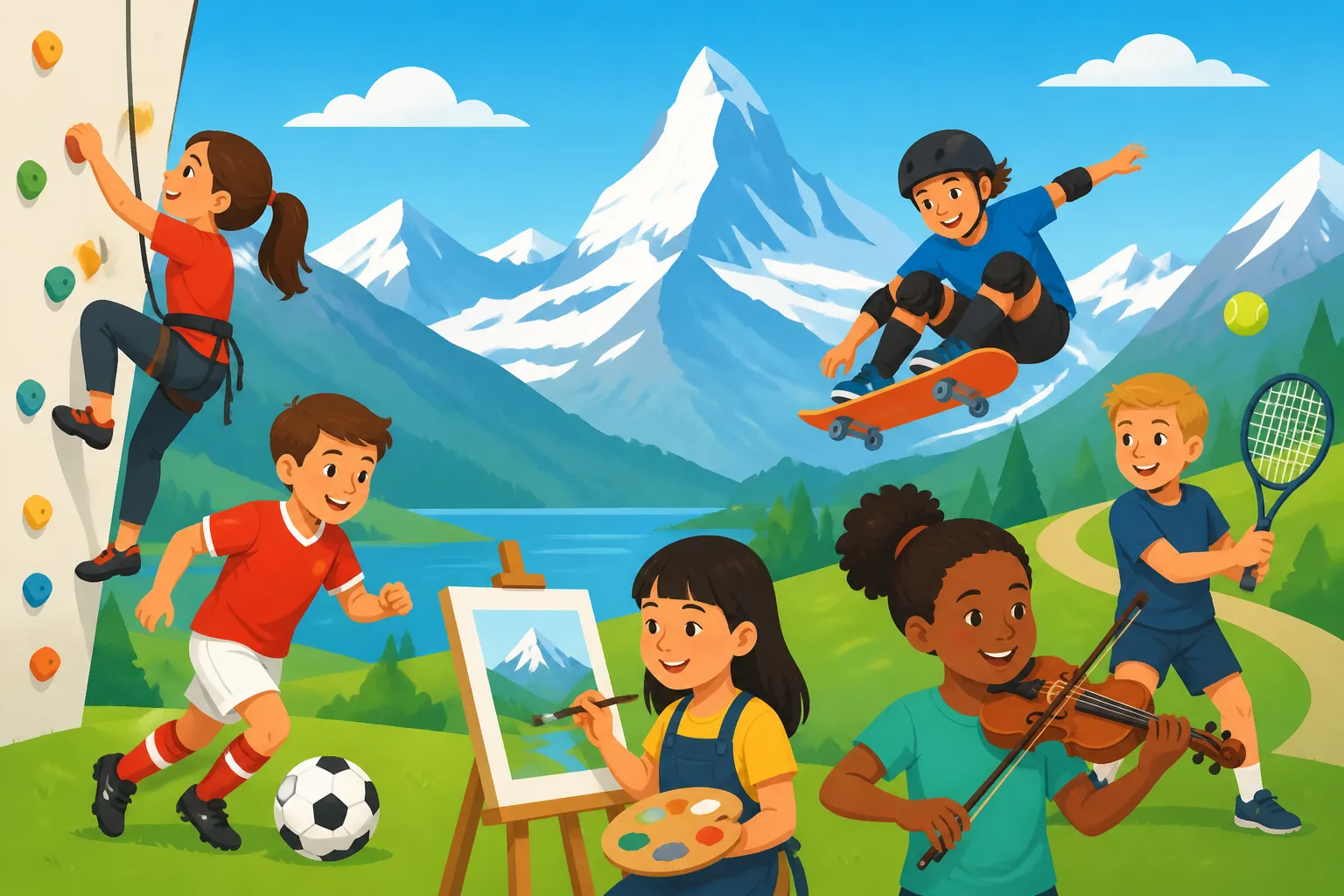
Switzerland offers a fantastic array of activities for children, leveraging its stunning natural landscape and strong community spirit.
Sports Clubs: From Football to Skiing
Swiss kids are active, and sports are a huge part of childhood here. There's something for every interest, often at a very high standard.
- Football (Fussball): Without a doubt, football is king. Nearly every town, no matter how small, has a local football club. It's often one of the easiest ways for boys (and increasingly girls) to make friends and integrate. Clubs are well-organized, with age-group teams and regular training sessions. Look for local clubs like FC [Your Town Name]. The competition can be serious, but the emphasis on teamwork and participation is strong. My eldest son found his best friends through his local FC.
- Swimming (Schwimmen): Given Switzerland's many lakes and public pools (Hallenbäder), swimming is a fundamental skill. Lessons are widely available, often starting from a very young age (e.g., "Babyschwimmen"). Once basic skills are mastered, many children join swimming clubs that offer more advanced training and competitive opportunities. Knowing how to swim well is crucial for enjoying the Swiss summer.
- Skiing/Snowboarding: This is Switzerland, after all! If you move here, your kids will want to ski. Ski schools are abundant in every major resort, offering group lessons for children from age three or four. Many local sports clubs and schools also organize "Ski-Lager" (ski camps) during school holidays, which are fantastic for building skills and friendships. Consider investing in a The Half-Fare Travelcard (Halbtax): The Must-Have Pass for Swiss Residents or even a SBB Travelcards: Is the Generalabonnement (GA) Worth the CHF 4000+ Cost? if you plan frequent trips to the mountains, as transport costs can add up quickly. Look into junior ski passes which often cover entire regions and are much cheaper than adult passes.
- Gymnastics (Turnen), Dance, and Martial Arts: These are also very popular. Local Turnvereine offer gymnastics for various age groups, focusing on coordination, strength, and rhythm. Dance schools offer everything from ballet to hip-hop, and martial arts like Judo or Karate are widely available. These are often great for building discipline and confidence.
- Ice Skating: In winter, many towns set up outdoor ice rinks, and larger cities have year-round indoor rinks. Skating lessons are popular, and it's a wonderfully social activity for kids.
Creative and Educational Pursuits
Beyond physical activity, Switzerland also fosters a rich environment for creative and intellectual development.
- Music Schools (Musikschule): Music education is highly valued. Most Gemeinden or regions have a Musikschule offering individual lessons for almost any instrument imaginable, as well as group classes, choirs, and youth orchestras. The quality is generally excellent, but private lessons can be quite expensive. Many also offer "Musikalische Früherziehung" (early musical education) for preschoolers.
- Art Classes (Malkurs): Community centers, private studios, and some museums offer art classes for children. These are fantastic for nurturing creativity and often provide a more relaxed environment for kids to express themselves, potentially easing language pressure if they're still learning.
- Scouts (Pfadi in German, Scouts in French): The Scouting movement is very strong in Switzerland. It's incredibly popular for both boys and girls, focusing on outdoor skills, teamwork, and community service. Joining a local Pfadi group is a surefire way to immerse your child in the local language and culture, with weekly meetings and regular camps. Be prepared for a lot of time spent in nature, rain or shine!
- Coding/Robotics Clubs: With Switzerland's strong tech and innovation sector, modern clubs focusing on coding, robotics, and STEM subjects are becoming more prevalent, especially in urban areas. These are often run by private initiatives or universities, offering a different kind of challenge and skill development.
- Language Classes: If your child needs an extra boost in the local language, many private language schools offer courses specifically for children. Sometimes, these are integrated into international school offerings or community centers. While not an activity in the traditional sense, they are crucial for full integration and participation in other local clubs. Remember, even if they're struggling, active participation in a local sports club can accelerate their language skills immensely.
Navigating Challenges and Maximizing Integration
It’s not always smooth sailing, but with a bit of foresight and the right mindset, you can turn potential hurdles into stepping stones for your child’s successful integration.
Language Barriers and Cultural Expectations
One of the biggest anxieties for expat parents is the language barrier. Your child might be fluent in English (or another language), but many local clubs operate exclusively in German, French, or Italian.
- Embrace it as an Opportunity: While it's tough to see your child struggle initially, view this as an unparalleled opportunity for rapid language acquisition. Children are sponges! After a few weeks or months, you'll be amazed at how much they pick up, especially in a fun, immersive context like a football field or a dance studio. Many coaches are patient and used to having new children who don't speak the language perfectly at first. They'll often communicate with gestures and simple words.
- Parental Support for Language: Be prepared to help with basic translation if your child is very young or just starting out. For forms or initial communications, don't hesitate to ask a trusted Swiss friend, colleague, or even a relocation service (like Sirelo, which often connects families with local resources) for a quick assist. Most people are understanding.
- Swiss Punctuality and Reliability: The Swiss take punctuality seriously. If training starts at 5 PM, aim to be there a few minutes early. Consistency in attendance is also expected. If your child can't make it, a quick email or message to the coach (even if translated via an app) is appreciated. This demonstrates respect for the club's organization and the commitment of the volunteers.
- Independence: Swiss children are often encouraged to be quite independent from a young age. While parental presence might be welcome at first, coaches generally expect children to be self-sufficient during training. Don't hover unless specifically asked.
Cost Considerations and Support
Let's be real: Switzerland is expensive. Activities for kids are no exception, but there are ways to manage the costs and even find support.
- Breaking Down the Costs:
- Annual Club Membership: This can range from CHF 100-500 for a local sports club, depending on the sport and age group.
- Lessons/Courses: Structured lessons, like swimming courses, music lessons, or intensive ski school weeks, can be CHF 300-800 per course or semester. Private music lessons are often CHF 80-120 per hour.
- Equipment: This can be a significant one-off cost. Football boots, shin guards, ski gear, musical instruments – budget several hundred francs per child. Look for second-hand markets (Brockenhäuser or online platforms like Tutti.ch) for good quality used items.
- Camps/Events: Summer or ski camps can range from CHF 200 (for local day camps) to CHF 800+ (for overnight residential camps).
Here's a quick overview of typical annual costs for some popular activities:
| Activity | Typical Annual Cost (CHF) | Language Level Expected | Integration Potential |
|---|---|---|---|
| Local Football Club | 200-500 | Low-Medium | High |
| Public Swimming Lessons (per course) | 300-600 | Low | Medium |
| Private Music Lessons | 800-1500+ | Medium-High | Medium |
| Ski School (weekly camp) | 400-800 | Medium | High |
| Scouts (Pfadi/Scouts) | 100-300 | High | Very High |
| Gymnastics (Turnen) | 150-400 | Medium | High |
Note: These are approximate annual costs and can vary significantly by canton, municipality, club, and the age of the child. Private, English-speaking options will generally be at the higher end.
- Cantonal Premium Reductions and Subsidies: If your family's income is lower, some cantons offer subsidies or premium reductions for certain activities or health insurance that might indirectly help with costs. Programs like the "Ferienpass" often offer heavily subsidized activities during school holidays, making them accessible to more families. It's worth checking with your Gemeinde or cantonal social services. While not directly linked to activity costs, understanding how to apply for Cantonal Premium Reductions (Prämienverbilligung) for Low-Income Households can free up funds for other essential family expenses.
- Leveraging Existing Services: If you’re using a relocation service to help with your move, they often have local insights into family-friendly resources and can sometimes connect you with communities or even specific clubs that are known to be expat-friendly. This can save you a lot of time and frustration in the initial search phase.
Finding activities for your children in Switzerland is more than just enrolling them in a class; it's a profound step towards integrating into the Swiss way of life. It provides invaluable opportunities for language learning, forming lasting friendships, and understanding the local culture firsthand. While it can seem daunting at first with the language barriers and different administrative processes, the rewards for your child's development and your family's sense of belonging are truly immeasurable. Embrace the Verein culture, be persistent, and don't be afraid to ask for help – you'll soon find your kids thriving in their new Swiss activities.
Disclaimer
Please remember that the information provided in this guide is for general informational purposes only and does not constitute professional advice. While we strive to offer accurate and up-to-date details, regulations, costs, and availability of services can change rapidly in Switzerland. Always verify specific information with official cantonal or municipal bodies, service providers, and legal or financial professionals as needed. We are not liable for any actions taken based on the information provided herein.