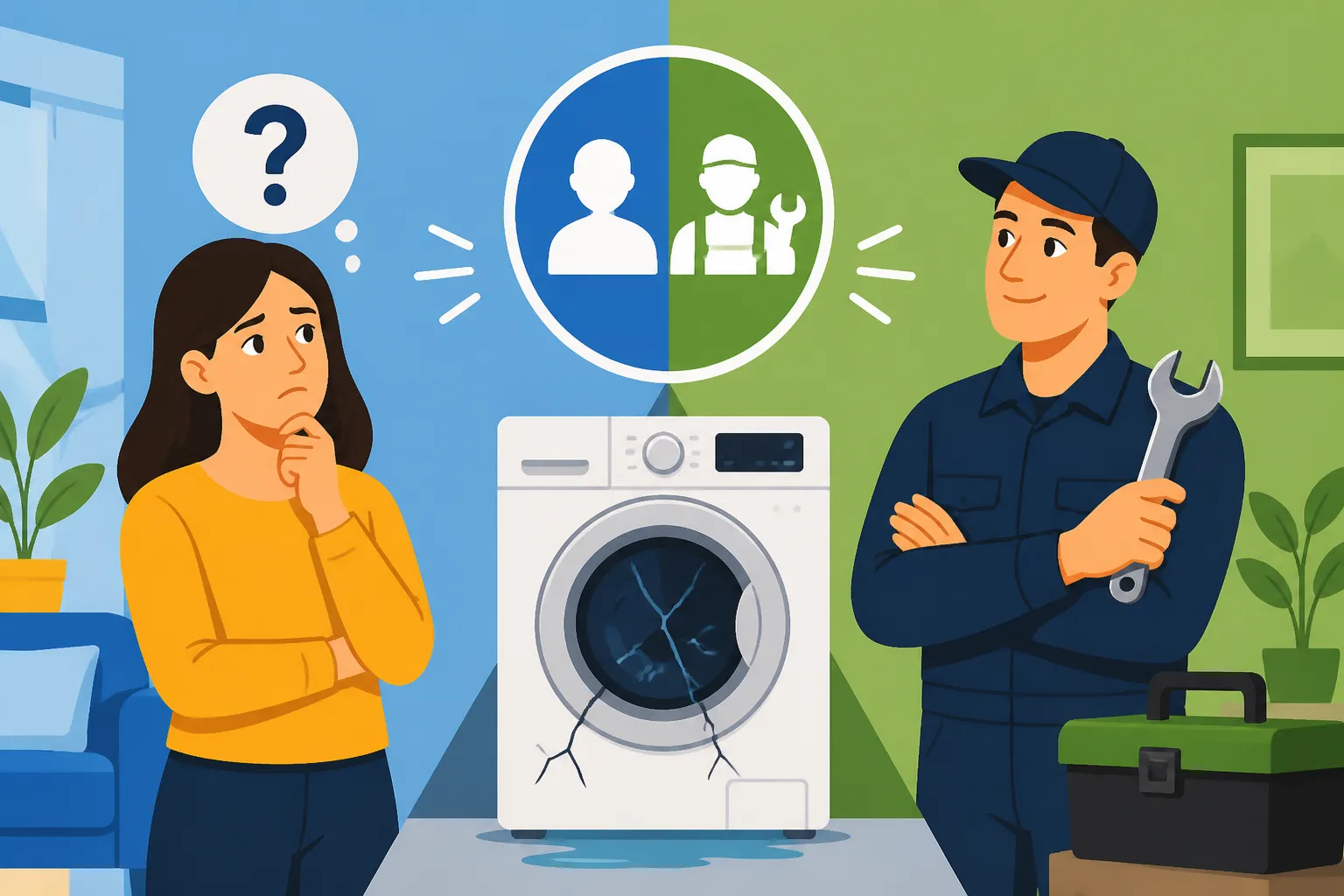
Tenant Rights for Repairs: Who Fixes a Broken Appliance in Switzerland
Finding your washing machine has flooded your laundry room on a Sunday morning is a classic Swiss expat initiation rite that nobody asks for. The panic isn't just about the water; it's about the bill that follows in a country where a simple plumber's visit can cost a week's worth of groceries. This guide clarifies exactly who fixes what under Swiss rental law.
Understanding the Swiss Rental Law Framework
When you sign a lease in Switzerland, you are entering into a relationship governed by the Swiss Code of Obligations (Obligationenrecht). While the contract might look like a standard document, it carries significant legal weight regarding maintenance. In the Swiss system, there is a clear distinction between "Small Maintenance" (Kleinunterhalt) and "Major Repairs." Understanding where your specific broken appliance falls in this spectrum is the difference between a CHF 150 bill and a CHF 2,000 headache.
The Concept of Small Maintenance or Kleinunterhalt
The term Kleinunterhalt refers to the minor upkeep and repairs that a tenant can reasonably be expected to perform themselves without calling in a professional technician. In Switzerland, the law assumes that if a repair is simple enough to be done with basic manual skill and does not require specialized tools, the tenant is responsible for both the labor and the cost. This includes things like replacing a shower hose, swapping out a baking tray that has rusted, or replacing the filters in your kitchen extractor hood.
Many expats struggle with this because, in other countries, landlords might handle every single lightbulb or minor adjustment. In Switzerland, if you call the landlord to change a lightbulb or tighten a loose screw on a kitchen cabinet, they may send a handyman and then bill you for the entire visit. It is essential to realize that your responsibility as a tenant extends to these "surface-level" maintenance tasks. You should always consult the Renting in Switzerland: The Complete 2027 Guide for Expats to understand the broader context of your obligations before you start making demands on your property management (Verwaltung).
The Financial Threshold and the CHF 150 Rule
While the law doesn't explicitly state a single Swiss Franc amount that applies to the entire country, a general rule of thumb used by most courts and The ASLOCA / Mieterverband: Why Every Swiss Tenant Must Join is the CHF 150 limit. Generally, if a repair or a replacement part costs less than CHF 150, it is considered the tenant's responsibility. However, this is not an absolute rule. If the repair costs CHF 140 but requires a certified electrician to perform it for safety reasons, the landlord may still be liable because it is no longer considered "small maintenance" that a layperson can do.
This financial threshold is often misinterpreted. It does not mean that the tenant pays the first CHF 150 of every large repair. If your fridge compressor fails and the repair bill is CHF 600, the landlord pays the full CHF 600. You do not "chip in" the first CHF 150. This is a common point of friction during the Swiss Apartment Handovers (Wohnungsübergabe): Protocols and Deposits process, where landlords might try to charge departing tenants for small items. Knowing this distinction protects your bank account.
The Role of Normal Wear and Tear
One of the most important concepts in Swiss rental law is the "Lebensdauertabelle" or the Life Expectancy Table. Every appliance in your Swiss apartment has a legally recognized lifespan. For example, a standard refrigerator is usually expected to last 10 to 15 years, while a dishwasher might have a lifespan of 12 years. If an appliance breaks because it has reached the end of its natural life, the landlord must replace it at their own expense, provided you haven't intentionally damaged it.
If you have been living in the apartment for five years and a 12-year-old dishwasher breaks, you are generally not liable for the cost of the new machine. However, if you break a brand-new stove by dropping a heavy pot on the glass ceramic top, you might be liable for the "remaining value" of that stove. This is why having Private Liability Insurance (Privathaftpflicht): Why Expats Need It is absolutely non-negotiable for anyone living in Switzerland. It covers these accidental "major" damages so you don't have to pay thousands of francs out of pocket.
Who Fixes What: A Practical Breakdown
Navigating the specifics of what counts as your responsibility versus the landlord's can be tricky. Generally, anything that is "plug and play" or involves simple cleaning and lubrication is on you. Anything involving the internal mechanics, electronics, or structural integrity of the building is on the landlord. If you are just moving in and discovering these issues, using a service like Sirelo can help manage the logistics of your move, but you still need to document every pre-existing fault immediately.
Kitchen Appliances and Laundry
In the kitchen, the most common issues involve the dishwasher, the oven, and the fridge. If the dishwasher stops working because the filter is clogged with food scraps, that is a maintenance issue that the tenant should have prevented; the landlord might charge you for the service call. However, if the water pump fails due to mechanical age, that is a landlord's cost. Similarly, in the laundry room, if you are lucky enough to have your own machines, you must clean the lint filters and the detergent drawers regularly.
When you are searching for a new place or moving between cantons, perhaps using Airalo to stay connected while your home internet is being installed, make sure to check the age of the appliances during the viewing. Older appliances are more likely to fail, and while the landlord is responsible for repairs, the inconvenience of waiting for a technician can be significant. If an appliance is broken when you move in, it must be noted on the Handover Protocol (Übergabeprotokoll): Documenting Damages to Protect Deposits to ensure you aren't blamed for it later.
Bathroom and Plumbing Fixtures
Bathrooms are a frequent source of "small repair" disputes. Replacing a calcified shower head or a leaking shower hose is almost always the tenant's responsibility. In Switzerland’s hard-water regions, decalcifying (Entkalken) your faucets and shower heads is considered basic maintenance. If a drain is blocked because of hair and soap scum buildup, the landlord will likely bill you for the plumber. However, if the blockage is deep in the building's pipes or caused by a structural defect, the landlord pays.
If you find yourself needing professional help for something that is clearly the landlord's responsibility, like a burst pipe or a failing water heater, you should contact your Verwaltung immediately. For those living in the Romandie region, you might need to find Finding an English-Speaking Plumber or Electrician in Geneva if your property manager is slow to react and you have an emergency. Always remember that for non-emergencies, you must get the landlord's permission before hiring a contractor yourself, or you may end up stuck with the bill.
Comparison of Repair Responsibilities
| Item / Scenario | Who Typically Pays? | Reason / Context |
|---|---|---|
| Clogged kitchen sink (surface) | Tenant | Regular maintenance/cleaning |
| Failed Oven Heating Element | Landlord | Internal mechanical failure |
| Leaking Shower Hose | Tenant | Costs < CHF 150 / Simple replacement |
| Broken Fridge Compressor | Landlord | Major appliance failure / High cost |
| Replacing Lightbulbs | Tenant | Kleinunterhalt (Small maintenance) |
| Broken Window Pane (Accidental) | Tenant / Insurance | Damage caused by tenant |
| Peeling Paint / Natural Aging | Landlord | Normal Wear and Tear (Lebensdauer): What Swiss Landlords Cannot Charge For |
| Dishwasher Salt/Rinse Aid | Tenant | Consumables |
How to Properly Report a Fault
The way you communicate a problem to your landlord is just as important as the problem itself. In Switzerland, "he said, she said" doesn't hold much water in a legal dispute. If your washing machine breaks, don't just leave a voicemail and assume it's being handled. You need a paper trail to protect your rights, especially if the broken appliance makes the apartment partially unusable.
The Official Notification Process
The first step should always be a polite phone call or email to the Verwaltung to inform them of the issue. However, if they do not respond within 24 to 48 hours, you must send a "Registered Letter" (Einschreiben). This is a foundational part of Swiss administrative life. A registered letter provides legal proof that the landlord received your notification. In this letter, describe the defect clearly and set a reasonable deadline for the repair (usually 10 to 14 days for non-emergencies).
If you are moving and using Sirelo to coordinate your arrival, discovering a broken stove on day one is a priority. Document the fault with photos and include them in your initial report. If the landlord fails to act after the deadline provided in your registered letter, you may have the right to deposit your rent into a special cantonal escrow account. Never simply stop paying your rent; this is a breach of contract and can lead to eviction. Instead, seek advice on Lowering Your Rent When Reference Interest Rates Drop in Switzerland or for defective appliances through official channels.
Documenting the Defect and Repairs
Always take photos or videos of the broken appliance as soon as the fault occurs. If a repairman comes, ask them what caused the failure. If they tell you it was "old age" or a "mechanical defect," ask them to note that on their work order. This piece of paper is your shield if the landlord later tries to claim you misused the appliance. Keep copies of all correspondence and work orders in a dedicated folder.
During the move-out phase, the Apartment Handovers (Abgabegarantie): Swept Clean vs Thorough Cleaning requirements can be very strict. If an appliance was repaired during your tenancy, ensure you have the records to prove it was done professionally. Landlords often use the Handover Protocol (Übergabeprotokoll): Documenting Damages to Protect Deposits to cross-reference the state of appliances from when you moved in to when you moved out. If you've been diligent about reporting and documenting repairs, this process becomes much smoother.
Dealing with Emergencies
An emergency is something that cannot wait until Monday morning—think a burst water pipe, a complete heating failure in winter, or a total electrical blackout. In these cases, you should first try to reach the landlord's emergency number (usually found in the building's entrance or on your lease). If you cannot reach anyone and the situation is causing damage to your belongings or the building, you are permitted to call an emergency service yourself.
While waiting for a technician, you might rely on your mobile data through Airalo to research local emergency numbers or stay in touch with your family. When the emergency plumber arrives, make sure they document that the intervention was an "emergency." The landlord is required to reimburse you for these costs, provided the emergency was genuine and you tried to contact them first. If you are worried about the cleaning required after an emergency, you might look into End-of-Tenancy Cleaning Companies: Getting a Passed Inspection Guarantee if the mess is substantial, though this is usually a separate insurance matter.
Dispute Resolution and Tenant Rights
Sometimes, despite your best efforts, a landlord might refuse to fix a broken appliance or try to charge you for a repair that should be theirs. This is where the Swiss system of tenant protection comes into play. You are not alone in these struggles, and there are established paths for resolution that don't necessarily involve expensive lawyers.
Joining the Mieterverband or ASLOCA
If you are renting in Switzerland, joining the local tenants' association (Mieterverband in German-speaking areas, ASLOCA in French-speaking areas) is one of the smartest financial moves you can make. For a small annual fee, they provide legal advice, review your lease, and can even represent you in mediation. They are experts in distinguishing between "small repairs" and "major defects" and can tell you exactly where you stand.
They can also help you if you feel you are entitled to a rent reduction. If your only shower is broken and the landlord takes three weeks to fix it, you are legally entitled to a percentage reduction in your rent for that period. Calculating this reduction is complex, and having the association's backing is vital. They are also invaluable during the Swiss Apartment Handovers (Wohnungsübergabe): Protocols and Deposits process, where they can send a representative to ensure the landlord doesn't make unfair claims against your deposit.
The Schlichtungsbehörde (Mediation Authority)
If a dispute cannot be resolved through letters or the tenants' association, the next step is the Schlichtungsbehörde or the Conciliation Authority. This is a special, low-cost (often free) court designed specifically for rental disputes. Both the tenant and the landlord present their case before a panel of experts. The goal is to reach a compromise without a full-blown trial.
The mediation process is highly effective in Switzerland. Whether it's a dispute over a broken fridge or an issue with Normal Wear and Tear (Lebensdauer): What Swiss Landlords Cannot Charge For, the panel will look at the facts and the age of the appliance. Most cases are settled here. Knowing that you have access to this authority often makes landlords more willing to cooperate once they see you are aware of your rights and are prepared to take the official steps.
Disclaimer
The information provided in this guide is for informational purposes only and does not constitute legal advice. While every effort has been made to ensure the accuracy of the information, rental laws and cantonal regulations in Switzerland are subject to change. Always consult with a legal professional or the local tenants' association (ASLOCA/Mieterverband) regarding your specific situation.