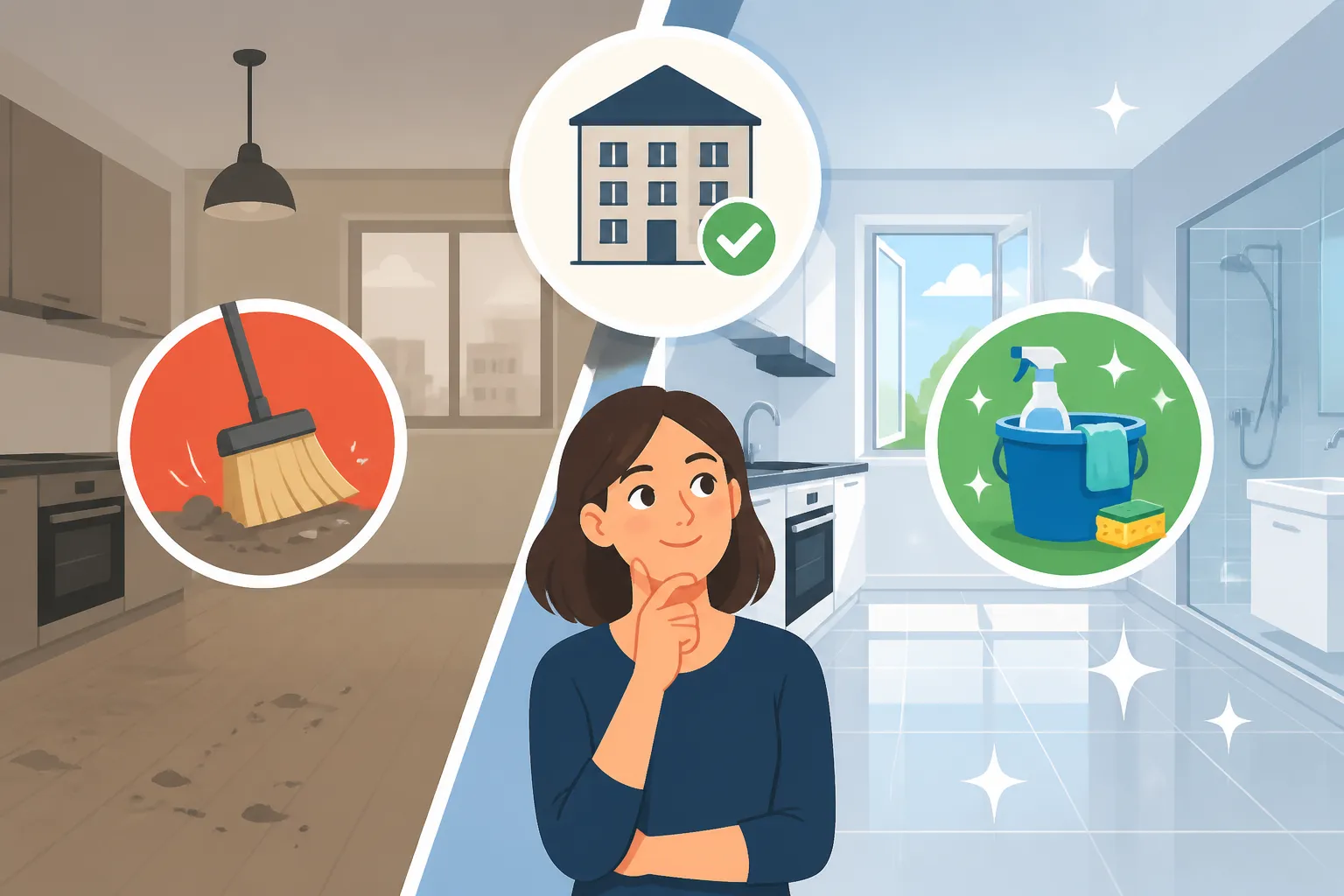
Apartment Handovers (Abgabegarantie): Swept Clean vs Thorough Cleaning
The daunting prospect of a Swiss apartment handover often keeps expats awake at night, fearing the legendary white-glove inspection that can jeopardize thousands of francs in deposit money. I remember my first move in Zurich, standing in an empty living room with a toothbrush, scrubbing the tracks of the sliding glass doors until my fingers bled. This guide breaks down the critical distinction between "besenrein" and "grundreinigung" to ensure you walk away with your deposit intact.
Understanding the Swiss Apartment Handover Process
The apartment handover, or Wohnungsübergabe, is more than just a casual key exchange; it is a legally binding ritual that concludes your tenancy. In Switzerland, the standards for cleanliness are exceptionally high, often surpassing what many foreigners consider "immaculate." The landlord or the management agency (Verwaltung) will walk through the property with a detailed checklist, examining every corner, hinge, and filter. Understanding Swiss Apartment Handovers (Wohnungsübergabe): Protocols and Deposits is the first step in preparing for this bureaucratic hurdle.
During this process, the representative will document every scratch, chip, or stain. If you are moving into a new place found through a platform like HousingAnywhere, you are likely already thinking about the "new life" ahead, but your financial ties to the old one remain firmly rooted in this final inspection. The transition is often a logistical nightmare, especially when your home internet is disconnected early. I highly recommend using an eSIM from Airalo to stay connected during those final days when you are bouncing between your old flat and your new one, as you will inevitably need to coordinate with the landlord or cleaning crews.
The importance of the final document, signed by both parties, cannot be overstated. Once you sign that protocol, you are essentially agreeing to the state of the apartment as described. If the landlord claims the oven isn't clean enough and you sign the paper agreeing with them, they have the right to hire a professional cleaner at your expense. This is why it is vital to understand exactly what level of cleanliness is expected before the day arrives.
The Role of the Protokoll
The handover protocol is the most important piece of paper you will encounter during your move. It lists every room and every feature, from the parquet floors to the ceiling lamps. When you move out, the landlord compares the current state of the apartment to the entry protocol you signed when you first moved in. If there are discrepancies that don't fall under "normal wear and tear," you will be held liable.
In my experience, landlords in Switzerland have an incredible eye for detail. They don't just look at the floors; they look inside the dishwasher salt reservoir and behind the radiators. If you haven't prepared your Handover Protocol (Übergabeprotokoll): Documenting Damages to Protect Deposits correctly, you might find yourself paying for damages that were there before you even arrived. Always bring a copy of your original entry protocol to the exit meeting to defend yourself against unjust claims.
Furthermore, the protocol serves as the basis for the release of your Bank Mietkautionskonto: How to Open a Blocked Rental Deposit Account. Without a signed, clean protocol, the bank cannot return your money. This often leads to a standoff between tenants and landlords that can last months. Being meticulous during the walkthrough and refusing to sign for damages that are actually just signs of age is a skill every expat must learn.
The Timing of the Handover
Most Swiss leases terminate at the end of a month, often specifically targeting Official Moving Dates: Why March 31 and September 30 Matter So Much. This creates a massive surge in demand for moving vans and cleaning companies. If your handover is scheduled for 10:00 AM on the last day of the month, the apartment must be completely empty and cleaned by that exact moment. There is no "grace period" in the Swiss system.
I’ve seen expats try to clean while the landlord is standing there with their clipboard, and it never ends well. The stress levels are through the roof, and the landlord is less likely to be lenient if they feel their time is being wasted. You should aim to have everything finished at least 24 hours before the appointment. This gives you time to do a final "snag list" check and ensures that the air in the apartment is fresh and the surfaces are dry.
If you are doing a DIY clean, start the deep cleaning process weeks in advance. Tasks like descaling the bathroom tiles or cleaning the balcony can be done ahead of time. You can find specialized Swiss cleaning products or even industrial-grade steamers on Amazon Germany to help with the heavy lifting. Waiting until the final 48 hours is a recipe for a failed inspection and a forfeited deposit.
Besenrein vs. Grundreinigung: The Great Cleaning Debate
The most common source of confusion for expats is the terminology used in the lease regarding cleanliness. Most standard rental contracts in Switzerland require a "thorough cleaning" (Grundreinigung), but occasionally, you might see the term "swept clean" (Besenrein). The difference between these two is the difference between a two-hour tidy-up and a two-day deep scrub.
If your contract says "Besenrein," you are lucky. This is typically reserved for properties that are about to be renovated, sold, or in cases where a new tenant has agreed to take the apartment "as is." However, for 95% of expats, the expectation is a professional-level deep clean. Failure to meet this standard will result in the landlord hiring a cleaning company and deducting the cost—often upwards of CHF 800 to CHF 1,500—from your deposit.
| Feature | Besenrein (Swept Clean) | Grundreinigung (Thorough) |
|---|---|---|
| Windows | Not required | Frames, glass, and shutters |
| Kitchen | Wipe down surfaces | Deep clean oven, filters, dishwasher |
| Bathroom | Sweep/mop | Descale every tap and tile |
| Walls | Remove nails/dust | Wipe down cobwebs and stains |
| Closets | Empty and sweep | Wipe inside and on top |
| Carpets | Vacuum | Professional shampooing |
What Swept Clean Really Means
In the rare event that your contract specifies "Besenrein," the requirements are relatively simple. You must remove all your belongings, including trash, and sweep the floors. You should remove any spider webs from the corners and ensure the kitchen surfaces are wiped down so no crumbs or spills are visible. The bathroom should be tidy, but you don't necessarily need to spend hours descaling the showerhead with vinegar.
However, "swept clean" does not mean "dirty." If there is a massive grease stain on the wall or a pile of old newspapers in the basement, you haven't met the "Besenrein" standard. You are still expected to leave the apartment in a respectable state. I once helped a friend move out of a flat that was being demolished; the landlord only asked for "Besenrein," but we still had to spend an afternoon ensuring the "gross" factors were eliminated.
Even with a "swept clean" requirement, you should still document the state of the apartment. Take photos of every room once it’s empty. This prevents the landlord from claiming later that you left furniture behind or damaged the floors during the move. The simplicity of this requirement often makes people complacent, but in Switzerland, even simple rules are strictly enforced.
The Rigors of Thorough Cleaning
For the vast majority of us, "Grundreinigung" is the reality. This is an exhaustive process that leaves the apartment looking like no one has ever lived there. It includes cleaning the inside of every kitchen cupboard, descaling every water outlet, cleaning the tracks of the windows, and scrubbing the shutters (Lamellenstoren). If you have a balcony, the glass panels and the floor must be spotless.
The kitchen is usually where handovers fail. The grease filter in the range hood must be either replaced or thoroughly degreased. The oven must be pristine, with no burnt-on residue on the trays or the racks. Even the refrigerator must be pulled out so the floor underneath can be cleaned. It is a level of detail that feels borderline obsessive, but it is the standard.
Many expats underestimate the time it takes to descale. Swiss water is often very "hard," meaning lime scale builds up quickly. You will need to treat every faucet, showerhead, and tile with a descaler. I recommend buying high-quality products from Amazon Germany in bulk, as you will go through a surprising amount of it. If the landlord sees a single white water spot on a chrome fixture, they will mark it down as "not cleaned."
The Abgabegarantie: Why It Is Your Best Friend
Given how high the standards are, many expats choose to hire professional cleaners. But not just any cleaning company will do. You need a company that offers an "Abgabegarantie" (handover guarantee). This is a contractual promise that the company will stay at the apartment during the handover and, if the landlord finds anything unsatisfactory, they will clean it on the spot at no extra cost.
Using a company with an End-of-Tenancy Cleaning Companies: Getting a Passed Inspection Guarantee is the single best way to reduce move-out stress. If you hire a cheap "man with a van" to clean and the landlord rejects the work, you are stuck. You’ll have to pay the first guy, then pay the landlord's preferred (and expensive) company to fix it. The guarantee shifts the risk from you to the cleaning company.
I have sat through handovers where the cleaning crew spent an extra hour re-scrubbing a balcony because the landlord found a bit of moss in a corner. Because I had the Abgabegarantie, I just sat on my suitcase and watched. It was worth every cent. This is a common practice in Switzerland, and most reputable companies will include this in their quote by default.
How Cleaning Guarantees Work
When you request a quote for an end-of-tenancy clean, the company will usually want to visit the apartment first. They calculate the price based on the number of rooms and the "level of dirt." Once you agree, they will provide a contract that mentions the What is an Abgabegarantie? Why You Need It for Move-Out Cleaning. Make sure this is in writing. A verbal promise is useless when the management agent is complaining about the state of the cellar.
On the day of the handover, a representative from the cleaning company must be present. They should bring their own tools and chemicals for last-minute touch-ups. If the landlord points to a smudge on a window, the cleaner fixes it immediately. Once the landlord signs the protocol, the cleaning company's job is done. If you chose a company without a representative present, you are essentially forfeiting the guarantee.
Be wary of companies that offer prices that seem too good to be true. A proper "Grundreinigung" for a 3.5-room apartment usually takes two people an entire day. If a company says they can do it for CHF 400 in three hours, they are not doing a Swiss-standard deep clean. You will end up losing your deposit and paying more in the long run.
Evaluating Professional Cleaning Services
Before hiring a company, check their reviews specifically regarding handovers. Some companies are great for weekly tidying but fail miserably at the deep-scrub required for a move-out. Ask if they are familiar with the specific requirements of your canton or management agency. Some agencies, like Wincasa or Livit, are known for being particularly strict, and experienced cleaners will know exactly what those agents look for.
Check their insurance status as well. If a cleaner accidentally scratches your expensive parquet floor while scrubbing, their insurance should cover it. If they aren't insured, that damage becomes a dispute between you and the landlord. A professional company will provide proof of liability insurance upon request.
Finally, ensure the quote is a "flat rate" (Pauschalpreis). You don't want to be surprised by an hourly bill if the oven takes longer than expected to clean. A flat rate with a guarantee provides the financial certainty you need during an expensive move. Use the money saved on your deposit to furnish your new place found via HousingAnywhere.
Common Pitfalls and the "White Glove" Inspection
The "white glove" test isn't just a metaphor in Switzerland; I have literally seen a landlord's agent wear white cotton gloves to check the top of a door frame for dust. While that is an extreme case, the principle holds: if they can find dirt, they will. There are several areas that expats almost always miss, leading to unnecessary deductions from their Rental Deposits: Traditional Bank Accounts vs Guarantee Insurances.
The most common failure points are the "hidden" areas. This includes the tracks of sliding doors, the interior of the ventilation fans in the bathroom, and the slats of the window shutters. People spend hours on the floors but forget that the landlord will look at the ceiling for cobwebs and at the light switches for finger marks.
You also need to be aware of what constitutes Normal Wear and Tear (Lebensdauer): What Swiss Landlords Cannot Charge For. A small scratch on the floor from five years of living is usually fine; a giant cigarette burn is not. Understanding where the line is drawn can save you from paying for a full floor sanding that you aren't legally responsible for.
Windows, Shutters, and the Details You Miss
In Switzerland, cleaning a window means more than just the glass. You must clean the frames (inside and out), the handles, and the window sills. But the real "boss level" of Swiss cleaning is the Lamellenstoren (external blinds). These slats collect pollen, dust, and rain spots. Cleaning them slat-by-slat is soul-destroying work, but it is mandatory.
If you are doing this yourself, use a specialized blind-cleaning tool or a microfiber glove. If you leave streaks or miss the very top slats, the landlord will notice. This is why many people give up and hire pros. It’s not that the floor is hard to mop; it’s that the 40 window slats are impossible to get perfect without professional equipment.
Don't forget the Grundreinigung Requirements: Cleaning Shutters, Ovens, and Vents. The ventilation unit in the bathroom usually has a filter that needs to be washed or replaced. If it’s caked in dust, the agent will assume the rest of the apartment was cleaned just as poorly and will start looking even closer at everything else.
Dealing with Wear and Tear
One of the biggest points of contention during a handover is the distinction between "wear and tear" and "damage." Swiss law is actually quite protective of tenants here, provided you know the rules. Every item in an apartment has a "lifespan" (Lebensdauer). For example, a typical wall paint job is expected to last 8 to 10 years. If you move out after 10 years and the walls are slightly yellowed, that is normal wear and tear, and the landlord cannot charge you for repainting.
However, if you lived there for only two years and your kids drew on the walls with markers, that is damage. You will be responsible for the "pro-rata" cost of repainting. This means you pay for the remaining "life" of the paint. If the paint was supposed to last 10 years and you ruined it after 2, you owe 80% of the cost.
This is where Contesting Withheld Deposits: How the Tenants' Association Can Help becomes vital. Landlords often try to "refresh" their apartments on the tenant's dime. If they try to charge you for a new carpet because of a tiny, barely visible stain, you need to know the lifespan of that carpet and whether the charge is legal.
Financial Implications and the Rental Deposit
The financial stakes of a handover are high. Most Swiss landlords require a deposit equal to three months of rent. For a standard Zurich apartment, this could easily be CHF 7,000 or more. This money is held in a "blocked account" (Mietkautionskonto) in your name. To get it back, both you and the landlord must sign a release form after the handover.
If there are disputes about the cleaning or damages, the landlord can withhold the release of the deposit until the repairs are paid for. This can be a huge problem if you need that cash for the deposit on your next home. If you used a guarantee service like SwissCaution, the process is slightly different, but the financial liability remains the same. You can learn more about Rental Deposits: Traditional Bank Accounts vs Guarantee Insurances to see which model suits your situation best.
If you find yourself in a situation where the landlord is being unreasonable, do not sign the protocol. Once you sign, you admit liability. Instead, write "disputed" next to the items you disagree with and contact a tenant's rights organization immediately.
Protecting Your Mietkautionskonto
To ensure your deposit is released quickly, bring a pre-filled deposit release form to the handover. If the inspection goes well and the protocol is clean, ask the landlord to sign the release form right then and there. It saves weeks of back-and-forth mail. I’ve had landlords "forget" to send the form for months, simply because it wasn't a priority for them once I was gone.
If there are minor damages that you agree with, try to negotiate a "flat fee" on the spot. For example, if you lost a key, ask how much the replacement costs and offer to have that specific amount deducted from the deposit, while releasing the rest of the funds. This prevents the entire amount from being blocked over a CHF 50 issue.
Always ensure you have a "debt register extract" (Betreibungsauszug) that is clean. While this is usually for moving in, some landlords check it again if there are disputes over move-out costs. Keeping your financial record spotless in Switzerland is the key to a smooth administrative life.
Using ASLOCA for Disputes
If the handover goes south, The ASLOCA / Mieterverband: Why Every Swiss Tenant Must Join is your best defense. They are the national tenants' association, and for a small annual fee, they provide legal advice and can even send a representative to attend the handover with you.
In my second move, the landlord was notorious for keeping deposits. I hired an ASLOCA representative to stand next to me during the walkthrough. The landlord’s tone changed completely the moment they saw the ASLOCA badge. The representative knows exactly what the law allows and will shut down any "bullying" tactics from the management agency.
Even if you don't have a representative with you, you can call them after the fact if the landlord sends you an outrageous bill. They can help you draft a formal "contest" letter. In Switzerland, there is a specific legal process for these disputes, and if the landlord doesn't follow it perfectly, they lose their right to your money.
Practical Tips for a Stress-Free Move-Out
Preparation is the antidote to move-out anxiety. Start by creating a folder—physical or digital—containing your lease, the original entry protocol, and all receipts for repairs or professional cleanings you’ve done during your tenancy. This evidence is your shield if the landlord tries to claim you neglected the property.
If you’re doing a DIY clean, invest in the right tools. A standard vacuum won't cut it for a Swiss Grundreinigung. You need a powerful wet-dry vac for the cellar and balcony, and a steam cleaner for the bathroom tiles. Again, check Amazon Germany for these items, as they are often cheaper than in Swiss retail stores and can be delivered right to your door.
Finally, don't forget the administrative side. You must register your move with the local authorities. Failing to do so can lead to fines and issues with your residence permit. The "Abmeldung" (deregistration) is just as important as the cleaning of the oven.
Essential Cleaning Supplies and Tools
If you are brave enough to tackle the Grundreinigung yourself, you need a "Swiss-specific" toolkit. This includes a heavy-duty descaler (look for the brand Durgol), a degreaser for the kitchen, and a specialized wood soap for parquet floors. Do not use generic all-purpose cleaners on Swiss wood; you might strip the finish and end up paying for a total floor replacement.
You will also need plenty of "elbow grease" for the shutters. A pressure washer can be tempting for the balcony, but check your house rules first—sometimes the runoff can bother the neighbors below. A simple bucket, a scrub brush, and a lot of patience are often safer bets.
Remember to clean the "ancillary" spaces too. The cellar (Keller) must be swept, and the attic (Estrich) must be empty. If you have a parking spot, check for oil stains. A bit of cat litter or a specialized degreaser can remove those spots and prevent a "cleaning fee" for the garage.
Final Sanity Check
On the morning of the handover, go through the apartment one last time with a fresh pair of eyes. Open every drawer, check the dishwasher filter one more time, and ensure the toilets are flushed and clean. If you have a "Telmed" health insurance model or are generally busy, you might be tempted to rush this, but those final 30 minutes can save you hundreds of francs.
Turn off all the lights, close the windows, and wait for the landlord at the entrance. Being punctual is non-negotiable. If you are five minutes late, you are starting the meeting on the wrong foot. Bring all the keys, including those for the mailbox, the cellar, and any "badges" for the laundry room.
Once it's over and the paper is signed, take a deep breath. You’ve survived one of the most stressful parts of Swiss expat life. Now you can head to your new home, turn on your Airalo data to find the nearest pizza place, and start enjoying your new neighborhood.
Disclaimer
This guide is for informational purposes only and does not constitute legal advice. Swiss rental laws and cantonal regulations can change, and specific lease agreements may contain unique clauses. Always consult with a legal professional or a tenant association like ASLOCA regarding your specific situation.