How Much Does It Cost to Rent a 3.5-Room Apartment by Canton
Moving to Switzerland often involves a massive reality check regarding the cost of housing, as prices vary wildly depending on which side of a cantonal border you land. This guide provides a detailed breakdown of 3.5-room apartment rentals across the country, helping you navigate the financial trade-offs between high-tax hubs and more affordable rural gems.
Understanding the Swiss Room Counting System
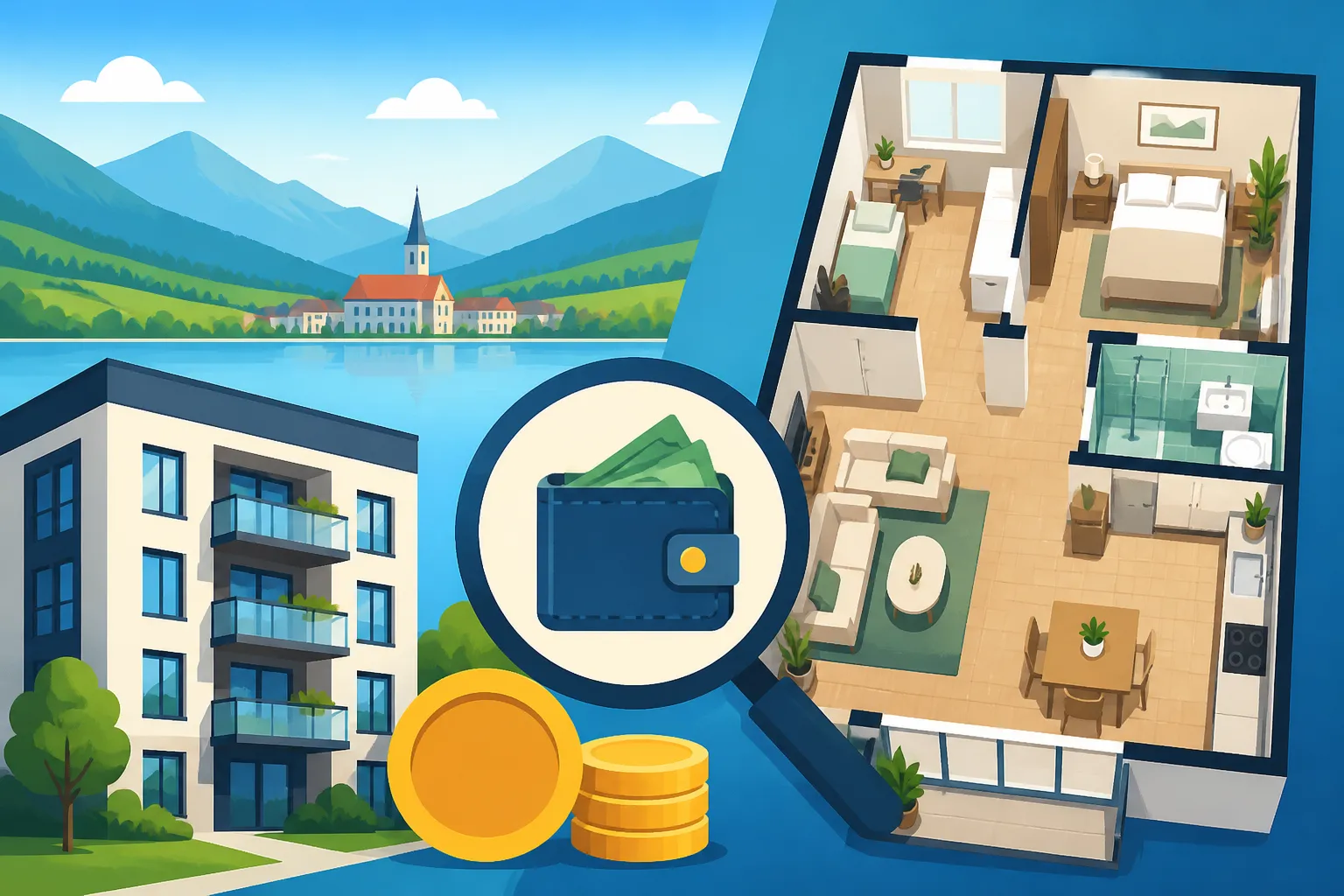
Before you start looking at the price tags in different cantons, you need to understand exactly what a 3.5-room apartment actually is. For many newcomers, the numbering system is the first administrative hurdle. In Switzerland, the "room count" includes the living room and all bedrooms, but it typically excludes the kitchen and the bathroom. A 3.5-room flat usually consists of two bedrooms and one living room.
What the Half Room Represents
The "0.5" in a 3.5-room apartment is where things get interesting. Usually, this refers to an integrated dining area, a very large entrance hall that can function as an office, or an open-plan kitchen-living space that is significantly larger than a standard room. If you are coming from the US or the UK, you might think of this as a two-bedroom apartment. However, you should read our specific deep dive on Does a 3.5 Room Apartment Include a Kitchen? Swiss Room Counting to ensure you aren't surprised when you walk into a viewing and find the "half room" is just a slightly wider hallway.
Why the 3.5 Room Model is the Expat Favorite
For many expat couples or small families, the 3.5-room configuration is the "Goldilocks" of Swiss housing. It offers a dedicated master bedroom and a second room that can serve as a nursery or a home office. Since many professionals are now working in hybrid models, that extra room is non-negotiable. In high-demand cities like Zurich, this specific size is the most contested on the market, making it essential to have your application dossier ready before you even step foot in the door.
Kitchen and Bathroom Standards
In Switzerland, it is standard for apartments to come with a fully fitted kitchen, including an oven, stove, and fridge. This is a relief compared to countries like Germany, where you might find a bare room with pipes sticking out of the wall. However, in older 3.5-room buildings, you might still share a laundry room in the basement with a strict schedule. If you want an in-unit washer and dryer, you should look for "Neubau" (new construction), but be prepared for the rent to reflect that luxury.
The High Cost of Living in Global Hubs
If your job search has landed you in Zurich or Geneva, you are entering the most expensive rental markets in the world. In these cantons, a 3.5-room apartment isn't just a place to live; it’s a significant portion of your monthly take-home pay. You aren't just paying for the square meters; you are paying for the proximity to multinational headquarters, international schools, and high-end infrastructure.
Zurich The Financial Premium
In Canton Zurich, the price for a 3.5-room apartment can fluctuate by a thousand francs depending on whether you are inside the "City" or out in the agglomeration. In districts like Enge or Wiedikon, you can expect to pay anywhere from CHF 2,800 to CHF 4,500 per month. If you move further out to towns like Uster or Wetzikon, the price might drop to the CHF 2,000–2,400 range, but your commute costs will rise. If you are searching in this area, you’ll find that Finding an Apartment in Zurich: Relocation Agents vs Flatfox vs Homegate is a full-time job in itself.
Geneva The Supply Crisis
Geneva is notoriously difficult because the geography limits expansion. With the lake on one side and France on the other, the supply of 3.5-room apartments is perpetually low. Expect to pay a minimum of CHF 3,000 for something decent within the city limits. Many expats choose to live in Canton Vaud to save money, though the "savings" are often eaten up by the SBB train pass. When planning your move to these high-pressure zones, using a service like Sirelo to compare moving quotes can help keep your initial relocation costs from spiraling.
Zug Low Taxes High Rents
Zug is a unique case. It is famous for having some of the lowest tax rates in the country, which makes it a magnet for high-earning expats and corporations. However, the market has responded predictably: the rents are sky-high. A 3.5-room apartment in Zug will often rival or exceed Zurich prices because residents are willing to pay more in rent to save thousands in Lowest Tax Cantons: Moving to Zug, Schwyz, or Nidwalden for Tax Benefits. It’s a calculated financial move, but it requires a high upfront liquidity for the rental deposit.
Average Rent for 3.5 Rooms by Canton
The following table provides a realistic estimate of what you can expect to pay for a standard 3.5-room apartment (approx. 75-90 sqm) in various cantons. These figures include "Netto" rent; remember that utilities are often extra.
| Canton | Average Monthly Rent (CHF) | Availability Level |
|---|---|---|
| Zurich | 2,600 – 3,800 | Very Low |
| Geneva | 2,800 – 4,200 | Critical |
| Zug | 2,700 – 4,000 | Very Low |
| Basel-Stadt | 1,900 – 2,600 | Moderate |
| Vaud (Lausanne) | 2,100 – 2,900 | Low |
| Bern | 1,700 – 2,300 | Moderate |
| Lucerne | 1,800 – 2,500 | Moderate |
| St. Gallen | 1,400 – 1,900 | High |
| Glarus | 1,200 – 1,600 | Very High |
| Valais | 1,300 – 1,800 | High |
Hidden Costs and the Nebenkosten Reality
When you see a price advertised on a portal like Homegate, that is usually the "Nettomiete" (net rent). You must look for the "Bruttomiete" (gross rent) to understand your true monthly commitment. The difference is made up of "Nebenkosten," or ancillary costs, which cover the building's operating expenses.
Heating and Water Adjustments
In a 3.5-room apartment, your Nebenkosten (Ancillary Costs): Heating, Water, and Annual Adjustments will typically range from CHF 200 to CHF 400 per month. This covers communal heating, water, sewage, and the "Hauswart" (caretaker) who cleans the hallways and shovels snow. Be careful: these are often paid as an "acontos" (advance payment). If you have a particularly cold winter or take very long showers, you might receive a bill at the end of the year asking for an extra CHF 500 or more.
Electricity and Multimedia Fees
Unlike heating, electricity is usually billed directly to you by the cantonal provider (like EWZ in Zurich or SIG in Geneva). For a 3.5-room flat with two people, budget about CHF 60–90 per month. Additionally, almost every household must pay the Serafe fee for public broadcasting, which is roughly CHF 335 per year. To stay connected the moment you land, grabbing an Airalo eSIM is a smart move while you wait the typical 10–14 days for a local fiber optic technician to activate your home internet.
Mandatory Insurances
Swiss landlords are very protective of their property. It is nearly impossible to sign a lease for a 3.5-room apartment without proof of "Privathaftpflichtversicherung" (personal liability insurance). This covers you if you accidentally scratch the parquet flooring or overflow the bathtub. It’s relatively cheap—around CHF 100–150 per year—but it is a mandatory part of the Cost of Living Realities: Groceries, Telecoms, and Household Expenses that many newcomers overlook until the day of the contract signing. You can find more details on why this is vital in our guide on Why Almost Every Swiss Landlord Requires Privathaftpflicht Insurance.
Factors That Influence Your Monthly Rent Bill
Not all 3.5-room apartments are created equal. Even within the same neighborhood, two seemingly identical flats can have a price difference of CHF 500 based on several specific Swiss factors. Understanding these can help you decide where to compromise.
Altbau vs. Neubau
"Altbau" refers to older buildings, often with high ceilings, charming moldings, and perhaps a bit of a draft. These are sometimes cheaper, but their heating costs (Nebenkosten) can be significantly higher due to poor insulation. "Neubau" apartments are modern, energy-efficient, and often come with "Minergie" certification. While the base rent is higher, your monthly utility bills will be lower and more predictable. Plus, you’re more likely to have a dishwasher and a private washing machine.
The Floor Level and the Lift
In Switzerland, the "Ground Floor" is often called "Erdgeschoss," and the first floor is one level up. In many older 3.5-room buildings, there is no lift. An apartment on the 4th floor without a lift will be significantly cheaper than a 1st-floor unit. If you are moving heavy furniture via Sirelo, you’ll definitely want to check the lift situation beforehand. Also, "Dachwohnung" (attic apartments) are highly prized for their views and lack of upstairs neighbors, but they can get incredibly hot in the summer.
Proximity to Public Transport
The "SBB Effect" is real. An apartment that is a 5-minute walk from a major train station will command a premium of 10-15% over one that requires a bus connection. However, if you are working in a city center, living slightly further from the station and Registering Your Address at the Kreisbüro Within 14 Days of Moving in a quieter suburb can save you enough money to pay for your annual rail pass twice over.
Strategies for Finding an Affordable 3.5-Room Apartment
Finding a home in Switzerland is often compared to a competitive sport. You aren't just looking for a flat; you are auditioning for a landlord. To secure a 3.5-room apartment at a fair price, you need a strategy that goes beyond just refreshing rental websites.
Prepare Your Application Dossier
You should have a digital and physical folder ready to go. This must include your last three payslips, a copy of your work contract, a copy of your residence permit (or visa), and the crucial "Betreibungsauszug" (debt register extract). If you are new to the country, you might not have a debt history yet, but you should still provide the "empty" extract from your local municipality. To stand out, learn How to Write a Personal Cover Letter to Win a Swiss Apartment—landlords love to know that you are a quiet, responsible tenant who will respect the house rules.
Join the Tenants Association
Once you move in, you should immediately look into The ASLOCA / Mieterverband: Why Every Swiss Tenant Must Join. For a small annual fee, they provide legal protection and advice. In Switzerland, it is actually possible to challenge your initial rent if you can prove it is significantly higher than what the previous tenant paid without any renovations being made. This is a "pro-level" expat move that can save you hundreds of francs a month, but it requires legal backing.
Look Outside the Cantonal Capitals
If your budget is tight, look at the "commuter belt" of the neighboring cantons. For example, if you work in Zurich, look at Canton Aargau or Canton Schaffhausen. A 3.5-room apartment in Olten (Canton Solothurn) is vastly cheaper than one in Zurich, and since Olten is a major rail hub, you can be at Zurich HB in about 30 minutes. The same applies to Geneva; looking at towns in the northern part of Vaud can yield much better value for your money, provided you don't mind the commute.
Important Disclaimer
The rental prices and legal regulations mentioned in this guide are based on market data and local standards as of 2024–2026. However, the Swiss real estate market is subject to frequent fluctuations based on interest rates and federal law changes. This article is for informational purposes only and does not constitute legal or financial advice. Always verify specific lease terms with a qualified professional or the Swiss Tenants' Association before signing any legal documents.