Swiss Withholding Tax on Dividends: How to Reclaim the 35%
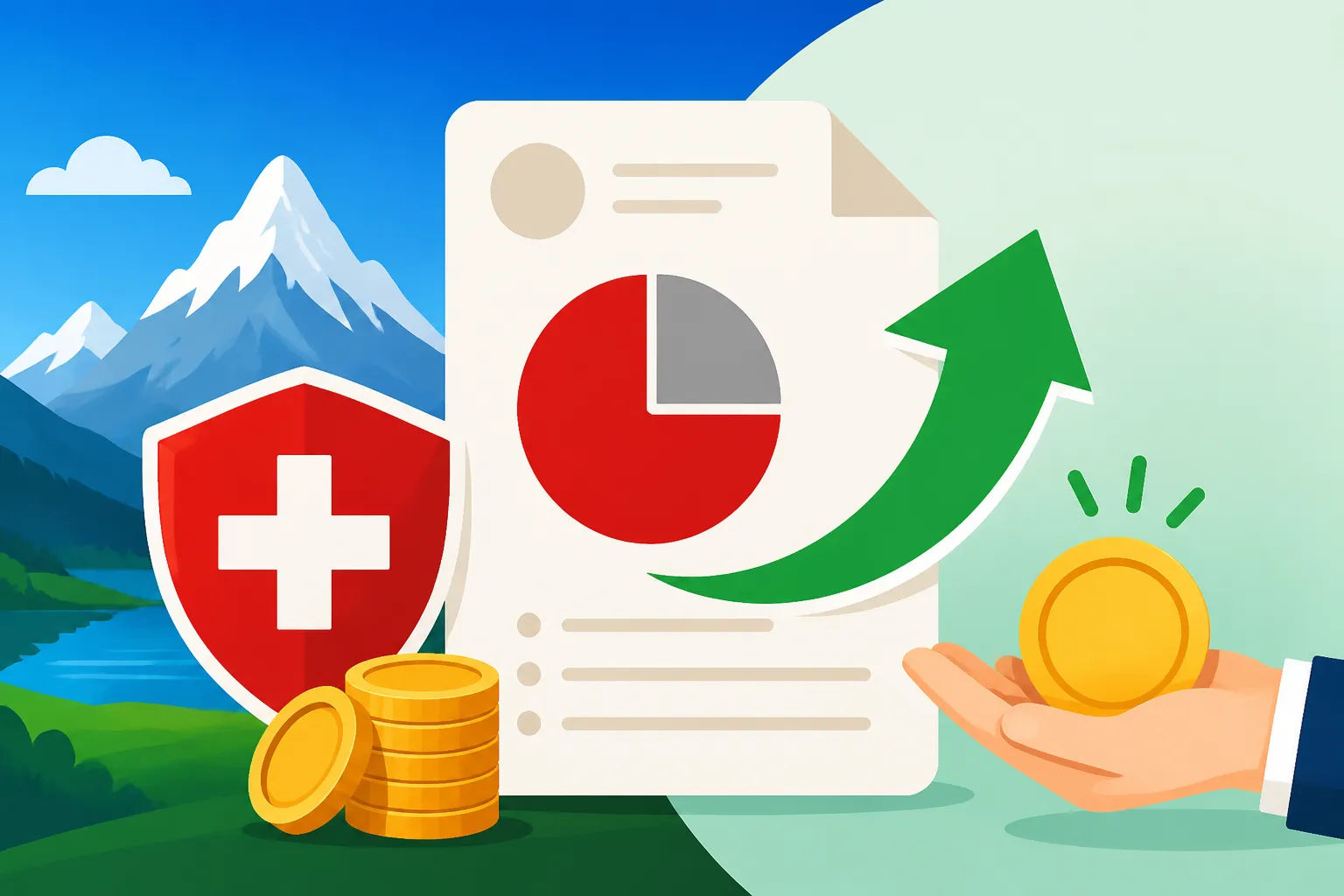
Finding out that 35% of your hard-earned dividend income has been snatched away before it even hits your bank account is a classic welcome to Switzerland moment that leaves many expats fuming. It feels like an aggressive penalty, but it is actually a refundable deposit. This guide walks you through reclaiming the Swiss withholding tax to ensure your investment returns stay in your pocket.
Understanding the Verrechnungssteuer and Why It Exists
If you have opened a brokerage account with a Swiss provider like Swissquote or Saxo Bank, or even if you just hold a simple savings account at Zürcher Kantonalbank, you will eventually notice a line item on your statement labeled Verrechnungssteuer. In the French-speaking cantons, you will see it as Impôt anticipé. This is the Swiss Federal Withholding Tax, and it is set at a staggering 35%.
The first time I saw this as an expat living in Zurich, I thought there had been a massive clerical error. Why was the government taking more than a third of my modest dividend from Nestlé? The reality is that Switzerland uses this tax as a security measure. The Federal Tax Administration (ESTV) assumes that if they do not take a large chunk upfront, residents might forget to declare their assets and income on their annual tax returns. By taking 35% at the source, the state creates a massive financial incentive for you to be honest. Once you declare the assets correctly in your tax return, the 35% is credited back to you or offset against your actual tax liability.
It is important to distinguish this from the income tax you pay on your salary. While your salary might be subject to Withholding Tax (Quellensteuer) vs Standard Taxation for Foreigners if you are on a B Permit, the dividend withholding tax is a separate mechanism entirely. It applies to everyone: Swiss citizens, C Permit holders, and B Permit holders alike. The only difference is the method you use to get that money back.
The Difference Between Residents and Non-Residents
If you are living in Switzerland and are registered with your local commune, you are considered a tax resident. This means you are entitled to a full 100% refund of the Swiss withholding tax, provided you declare the underlying asset. For example, if you hold shares in Roche and they pay a gross dividend of 1,000 CHF, you will receive 650 CHF in your account. The remaining 350 CHF is sent to the ESTV in Bern. When you file your taxes, you list those Roche shares in your securities list, and the 350 CHF is eventually returned to you.
For non-residents—perhaps you have already left Switzerland but kept your Swiss bank account—the situation is more complex. You are generally only entitled to a partial refund based on the double taxation agreement between Switzerland and your current country of residence. If you find yourself in this transitional phase, using a service like Wise can be incredibly helpful for managing the different currency flows and ensuring that when refunds do arrive in CHF, you can move them to your new home without losing a fortune in bank spreads.
The Step-by-Step Reclamation Process for Residents
The primary way to reclaim this tax is through your annual tax declaration. In Switzerland, this is not just a form; it is a comprehensive dossier of your financial life. You will specifically be working with the Wertschriftenverzeichnis, which is the securities and assets list.
Filing the Wertschriftenverzeichnis Correctly
Whether you are using the Private Tax software in Canton Zurich, VaudTax in Lausanne, or Getax in Geneva, the process is similar. You must list every single bank account, stock, bond, and fund you held at the end of the tax year. For every Swiss asset that paid a dividend or interest, you must enter the gross amount and the amount of withholding tax deducted.
The tax software is usually quite smart. Once you enter the ISIN number of a stock like Novartis, it will often pull the dividend data automatically and calculate the 35% for you. However, you must ensure that you have the official Bankbeleg or Erträgnisaufstellung (dividend statement) from your bank. Most Swiss banks provide a Tax Report at the start of the year for a fee. While it might cost 50 CHF to 100 CHF, it is often worth it because it provides all the figures you need to copy-paste into your return, significantly reducing the risk of errors that could trigger an audit.
If you are an American expat, the complexity of this process doubles. You are not just dealing with the Swiss authorities; you are also reporting to the IRS. In these cases, consulting specialists like Taxes for Expats is highly recommended. They understand the intersection of Swiss withholding and US reporting requirements, ensuring you don't accidentally pay tax twice on the same dollar.
Deadlines and Documentation You Need
The deadline for your tax return is typically March 31st, though extensions are easily granted in most cantons. When you submit your return, the tax office reviews your securities list. They compare the 35% you are claiming back against the records provided by the companies and banks.
You should keep the following documents for at least ten years:
- Dividend vouchers for every payment received.
- Year-end bank statements showing the balance as of December 31st.
- The official tax report provided by your brokerage.
- Records of any Declaring Foreign Income as a Resident of Switzerland to ensure consistency.
If you are a B Permit holder earning less than 120,000 CHF, you are usually taxed at source and do not file a full return automatically. However, to get your 35% back, you must proactively request the forms for a simplified reclamation or a full assessment. This is where many expats lose money; they assume that because they are taxed at source on their salary, the dividend tax is also handled. It is not. You must ask for it.
| Document Type | Purpose | Availability |
|---|---|---|
| Erträgnisaufstellung | Lists all dividends and tax withheld | January/February from bank |
| Tax Report (Steuerauszug) | Comprehensive summary of all assets | Upon request from Swiss banks |
| Form DA-1 | Used for foreign dividends to avoid double tax | Part of the standard tax return |
| W-8BEN | Reduces US withholding tax on US stocks | Provided by your broker |
Reclaiming Tax on International Dividends
Many expats in Switzerland do not just hold Swiss stocks. You likely have a diversified portfolio including US tech giants or European ETFs. When a US company like Apple pays you a dividend, the US government takes 15% (if you have filed a W-8BEN) or 30% (if you haven't). This is not the Swiss 35% Verrechnungssteuer, but you still want to ensure you aren't being taxed twice.
Form DA-1 and Avoiding Double Taxation
Switzerland has an extensive network of treaties to prevent double taxation. When you receive a dividend from a US company, the US withheld 15%. When you report this in your Swiss tax return, you use Form DA-1. This form allows you to claim a tax credit in Switzerland for the tax already paid in the US.
This is a critical part of Understanding KVG/LAMal: Mandatory Basic Health Insurance Explained as being a "resident" in the eyes of the tax office gives you these treaty benefits. If you fail to fill out the DA-1, you will pay Swiss income tax on the full amount, effectively paying the US 15% and Switzerland your marginal tax rate on top.
When dealing with these international flows, especially if you are receiving dividends into a non-CHF account, Wise can be a lifesaver. Using their multi-currency account allows you to receive USD dividends directly, avoiding the heavy conversion fees traditional Swiss banks charge. You can then convert to CHF at the mid-market rate when it is time to pay your Swiss tax bill.
Dealing with the Rückbehalt USA
For those holding US securities in a Swiss bank, you might see an additional deduction called "Rückbehalt USA." This is an additional 15% withheld by Swiss banks on behalf of the US authorities for certain types of accounts. Reclaiming this requires meticulous record-keeping. If your portfolio is significant, the DIY approach can lead to expensive mistakes. Professional firms like Taxes for Expats specialize in untangling these specific US-Swiss knots, which is especially vital given the strict FBAR and FATCA reporting rules.
You should also be aware of the Capital Gains Tax in Switzerland: The Tax-Free Stock Market Rule. While dividends are taxed as income (and subject to withholding), capital gains from selling stocks are generally tax-free for private investors. This makes the reclamation of the 35% on dividends even more important, as it is one of the few areas where your investment return is actually hit by the taxman.
Common Pitfalls and Expert Tips for Expats
The most common mistake I see among my fellow expats is the "small account" oversight. You might have a savings account from your first month in the country that has 2,000 CHF in it. It earns a tiny bit of interest, and the bank withholds 0.70 CHF in tax. Many people think it isn't worth the effort to list this account. However, if the tax office discovers an undeclared account—even a tiny one—it can trigger a much deeper investigation into your Cost of Living in Switzerland 2026: Budgeting for Singles and Families. It is always better to be 100% transparent.
What Happens if You Forget to Declare an Account?
If you forget to declare an asset in your Wertschriftenverzeichnis, you lose the right to the 35% refund for that year. More importantly, you could be subject to a fine for tax evasion, which is typically a multiple of the tax you tried to avoid. In Switzerland, the tax authorities are generally helpful, but they have zero tolerance for "forgetting" assets.
If you realize you made a mistake in a previous year, there is a process for "voluntary disclosure" (straflose Selbstanzeige). This allows you to correct the record without the heavy penalties, though you will still have to pay the back taxes and interest. This is another scenario where Taxes for Expats can provide a buffer, helping you present the correction in the most favorable light to the cantonal authorities.
Tracking Your Refunds Across Tax Years
One thing that surprises newcomers is the timeline. If you file your 2024 taxes in March 2025, you might not receive your final assessment and the corresponding refund until late 2025 or even 2026. The 35% refund is usually "booked" against your final tax bill. If your total tax bill is 10,000 CHF and you had 2,000 CHF withheld from dividends, you will simply receive a final bill for 8,000 CHF.
For B Permit holders, if you are Earning Over CHF 120,000: Transitioning to Standard Taxation, the transition to the world of the Wertschriftenverzeichnis is mandatory. You will move away from the simple Quellensteuer and into the realm of the complex tax return. If you find yourself in this bracket, start using an app like Wise to keep your investment funds separate from your daily spending. It makes the end-of-year accounting much cleaner when you can see a clear list of every dividend that hit your account without it being buried under grocery trips to Coop and Migros.
Finally, keep an eye on your Quellensteuer Refund (NOV): Reclaiming Overpaid Withholding Tax if you are still on a B permit. The reclamation of dividend tax is often processed alongside these requests. It requires patience, but remember: that 35% is your money. The Swiss government is just holding it as a deposit to make sure you stay as organized as their train schedules.
Disclaimer
This guide is for informational purposes only and does not constitute professional tax, legal, or financial advice. Tax laws in Switzerland are subject to change and vary significantly between cantons. Always consult with a qualified tax professional or the official cantonal tax office (Steueramt) regarding your specific financial situation before filing any documentation.