Second Pillar Withdrawal for Self-Employment: Rules and Tax
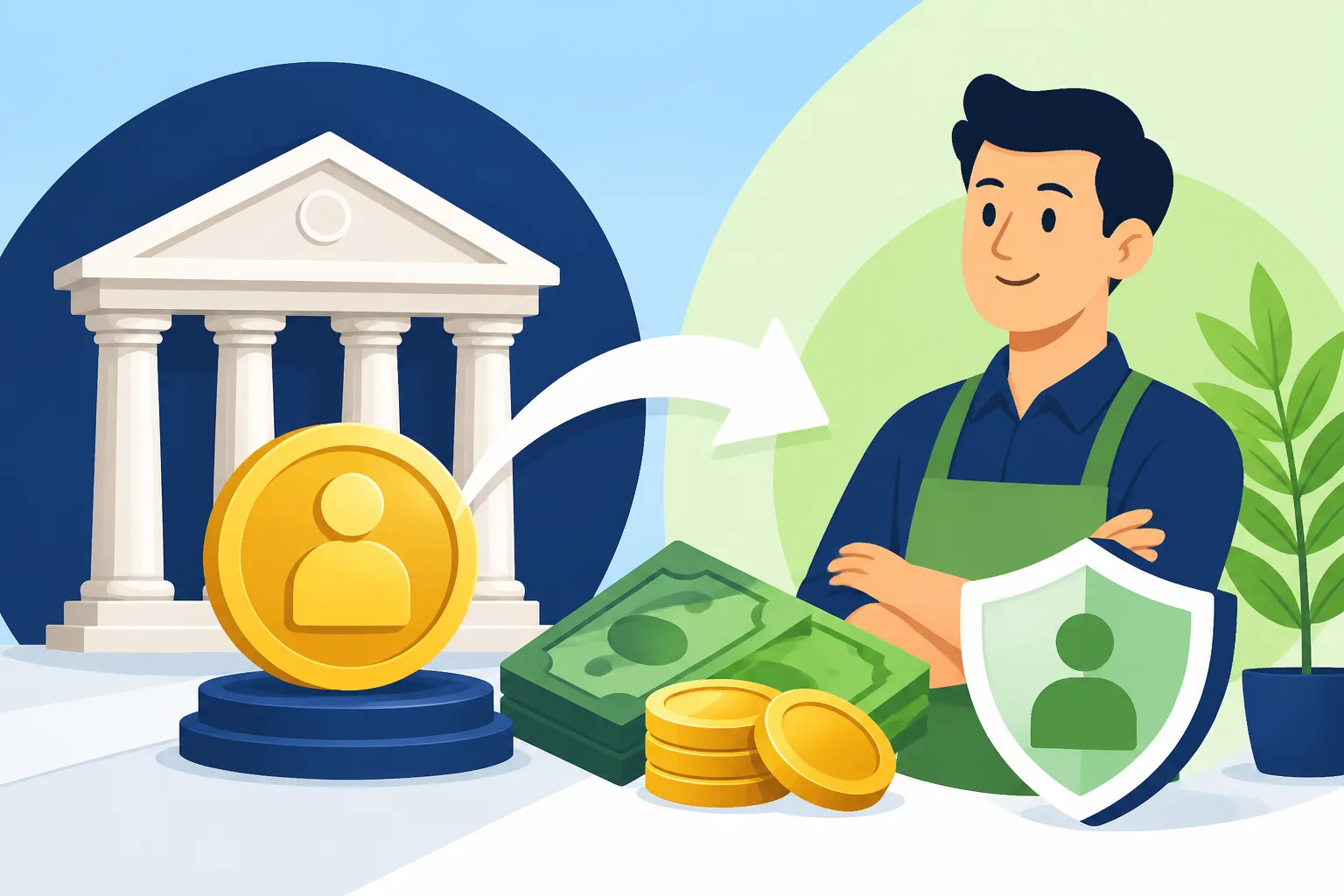
Moving from a stable corporate job in Switzerland to the world of self-employment is a thrilling but terrifying leap of faith. One of the biggest hurdles expats face is securing enough liquidity to cover initial business costs, equipment, and that inevitable "dry spell" before the first invoices are paid. This guide solves the mystery of the Second Pillar (BVG) withdrawal, explaining exactly how to unlock your pension capital to fund your Swiss business dream while navigating the strict tax and administrative requirements.
Qualifying for a Pillar 2 Payout as a New Entrepreneur
When you work for an employer in Switzerland, you are part of The Three-Pillar Pension System: AHV, BVG, and Private Savings. The second pillar, or BVG, is your occupational pension. Normally, this money is locked away until you reach retirement age. However, the Swiss government recognizes that starting a business is a cornerstone of the economy. Therefore, they allow you to withdraw your accumulated capital if you are becoming "primarily self-employed." This is not a loophole; it is a formal administrative process that requires meticulous documentation.
The Definition of Primary Self-Employment
To get your hands on your Pillar 2 (BVG): Understanding Your Swiss Occupational Pension, you must prove to your pension fund that self-employment will be your main source of income. If you are just doing a little bit of consulting on the side while keeping a 50% job at a multinational in Basel, the pension fund will likely reject your application. They want to see that you are no longer subject to mandatory occupational insurance. This usually means you are no longer an employee in the eyes of the law.
I have seen many expats get caught in a "no-man's land" where they quit their job but haven't yet received their official confirmation from the social security office (AHV/SVA). Without that confirmation, your pension fund will not release a single rappen. You need to show that you are taking a genuine risk and building a business that requires your full-time attention.
Proving Your Status to the AHV
Before you even talk to your pension provider, you must register with the AHV office in your canton. This is the office that handles Registering as Self-Employed (Selbständig) with the AHV Office. You will need to submit a formal application where you describe your business activity, provide a business plan, and often show proof that you have already started operating—such as an office lease, signed contracts with clients, or an active website.
Once the AHV reviews your file and accepts you as "Selbständigerwerbend," they will send you a confirmation letter. This letter is your golden ticket. It is the only document the pension fund will accept as proof that you are eligible to withdraw your cash. Be prepared for this to take several weeks; the AHV is thorough, and they want to ensure you aren't just trying to cash out your pension to go on a long holiday.
The 12-Month Window
Time is of the essence. Generally, you must apply to withdraw your pension capital within one year of starting your self-employment. If you wait too long, the pension fund might argue that you have already successfully launched the business without the need for that capital, or they may insist that the money stays in a Freizügigkeitskonto: Managing Vested Pension Benefits Between Jobs. I always tell people to start the paperwork the moment they have their first two or three client contracts in hand. Don't wait until your bank account is at zero to start the 90-day administrative dance.
Sole Proprietorship vs. GmbH: The Payout Trap
This is where many expats make a fatal mistake that costs them their entire pension payout. The legal structure you choose for Freelancing and Entrepreneurship: Setting Up a Business in Switzerland determines whether you can touch your Pillar 2 money or not. There is a massive distinction in Swiss law between being "self-employed" and being an "entrepreneur."
The Einzelfirma (Sole Proprietorship) Advantage
In the eyes of the Swiss government, if you start an Einzelfirma, you and the business are the same legal entity. You are "self-employed." Because you are no longer an employee, you are no longer required to have a Second Pillar pension. This is the only scenario where you can withdraw your full BVG capital in cash. For many, this makes Becoming a Sole Proprietor (Einzelfirma): Risks and Registration Steps the most attractive option during the first year, even if they eventually plan to incorporate.
The GmbH and AG Disadvantage
If you decide to start a GmbH (Limited Liability Company) or an AG (Corporation), the legal situation changes completely. You are technically an employee of your own company. Because you are an employee, you are still subject to mandatory BVG contributions if your salary exceeds the minimum threshold. Consequently, you cannot withdraw your pension capital to fund a GmbH or AG. The money must instead be transferred from your old employer's pension fund to your new company's pension fund.
If your heart is set on a GmbH for liability reasons, you might find yourself in a catch-22. You need the pension money to pay the CHF 20,000 startup capital, but you can’t get the money because a GmbH makes you an employee. Some expats navigate this by starting as an Einzelfirma, withdrawing the pension, and then converting the business to a GmbH a year later. However, you should consult a specialist to ensure this is done correctly without triggering "tax avoidance" red flags.
Comparison of Legal Structures for Pension Withdrawal
| Feature | Sole Proprietorship (Einzelfirma) | GmbH / AG (Limited Company) |
|---|---|---|
| Legal Status of Owner | Self-Employed | Employee of own company |
| Pillar 2 Withdrawal | Possible (Full Cash-out) | Not Possible (Must stay in system) |
| Liability | Personal and Unlimited | Limited to Company Assets |
| AHV Confirmation | Required | Not Applicable (Status is 'Employee') |
| Ideal for… | Service providers needing capital | Scalable businesses with high risk |
Tax Implications: What You Actually Keep
Don't celebrate the total balance on your pension statement just yet. When you withdraw money from the second pillar, it is treated as a capital payment and is subject to a specific "Capital Withdrawal Tax." This is separate from your regular income tax, and the rates vary wildly depending on which canton and municipality you live in.
Cantonal and Federal Tax Rates
Switzerland’s tax system is famously decentralized. If you are living in Zug or Schwyz, your tax bill for a CHF 200,000 withdrawal will be significantly lower than if you are in Lausanne or Geneva. To understand the broader context, you should review Swiss Taxes Explained: Federal, Cantonal, and Municipal Rates. Generally, the capital withdrawal tax is progressive, meaning the more you take out, the higher the percentage you pay. However, the rate is usually much lower than the rate for regular income.
For expats with complex international tax lives, this is where things get tricky. If you are a US citizen, for example, the IRS may view this withdrawal as taxable income. In these cases, using a service like Taxes for Expats is essential to ensure you aren't paying double tax or missing critical reporting requirements like the FBAR. Taxes for Expats can help you navigate the treaty between Switzerland and your home country to protect as much of that capital as possible.
The "All or Nothing" Rule
In most cases, you have to withdraw the entire "mandatory" and "extra-mandatory" portion of your pension if you are leaving the system for self-employment. You can't just take out CHF 20,000 to buy a laptop and leave the rest. Because it is a lump-sum payment, it can push you into a higher tax bracket for that specific year. Strategic timing is key. If you are planning to quit in December, it might be wiser to wait until January to register your self-employment and trigger the payout, so the tax falls into a year where your "employment income" is zero.
Moving and Using the Funds
Once the tax is withheld (often at source if you are a B-permit holder, or billed later if you have a C-permit), the remaining cash is yours to use for the business. If your business involves importing goods from the US or UK, or if you need to pay freelancers in different currencies, you'll want to avoid the high exchange fees at traditional Swiss banks. This is where Wise becomes an invaluable tool. Using Wise to manage your new business's international transfers ensures that the pension capital you fought so hard to unlock isn't eaten up by 3% currency conversion margins.
Risks and Strategic Considerations
Before you sign the withdrawal forms, you need to have a heart-to-heart with yourself about the long-term risks. The Swiss pension system is designed to protect you in your old age and in the event of disability. By cashing out, you are effectively dismantling a major part of your safety net.
Losing Death and Disability Coverage
Your Pillar 2 isn't just a savings account; it includes insurance premiums for "Risiko"—protection against the loss of income due to invalidity or death. The moment you withdraw that money, those protections vanish. As a self-employed person, if you fall off a ladder or suffer a burnout, there is no pension fund to pay you a monthly pension. You must look into private insurance alternatives immediately.
Rebuilding Your Retirement
Many expats think they will just "pay it back later" once the business is successful. While you can make voluntary contributions back into a pension fund later, you lose the years of compound interest. If you are starting your business in your 40s or 50s, cashing out your Pillar 2 is a high-stakes gamble. You should also look into Pillar 3a in 2026: Tax Deductions, Limits, and Investment Options as a way to start rebuilding a tax-advantaged retirement nest egg as soon as your business turns a profit.
Spousal Consent
If you are married or in a registered partnership, your spouse must sign the withdrawal application in front of a notary or a pension fund official. This is a legal safeguard to ensure that one partner doesn't secretly drain the family's retirement savings to fund a risky business idea. If your spouse isn't on board with the business plan, the pension fund will block the payout. It’s a conversation you need to have early and honestly.
Is the Payout Always Necessary?
Sometimes, it's better to leave the money in a vested benefits account and seek a small business loan instead. If the market crashes the year you withdraw, you might be "selling low" on the investments held by your pension fund. Additionally, keeping your pension intact allows you to maintain a base of stability. However, for most expats starting out, that cash is the only way to avoid high-interest debt, making the BVG withdrawal the most logical path to freedom.
Disclaimer
The information provided in this article is for informational purposes only and does not constitute professional financial, legal, or tax advice. Swiss pension laws and tax regulations are subject to frequent changes and vary significantly by canton. Always consult with a qualified Swiss tax advisor, the AHV office, and your specific pension fund provider before making decisions regarding your retirement assets or business structure. If you have tax obligations in other countries, such as the United States, seek specialized advice to understand your global tax liability.