Changing Your Name on Your Residence Permit After Marriage
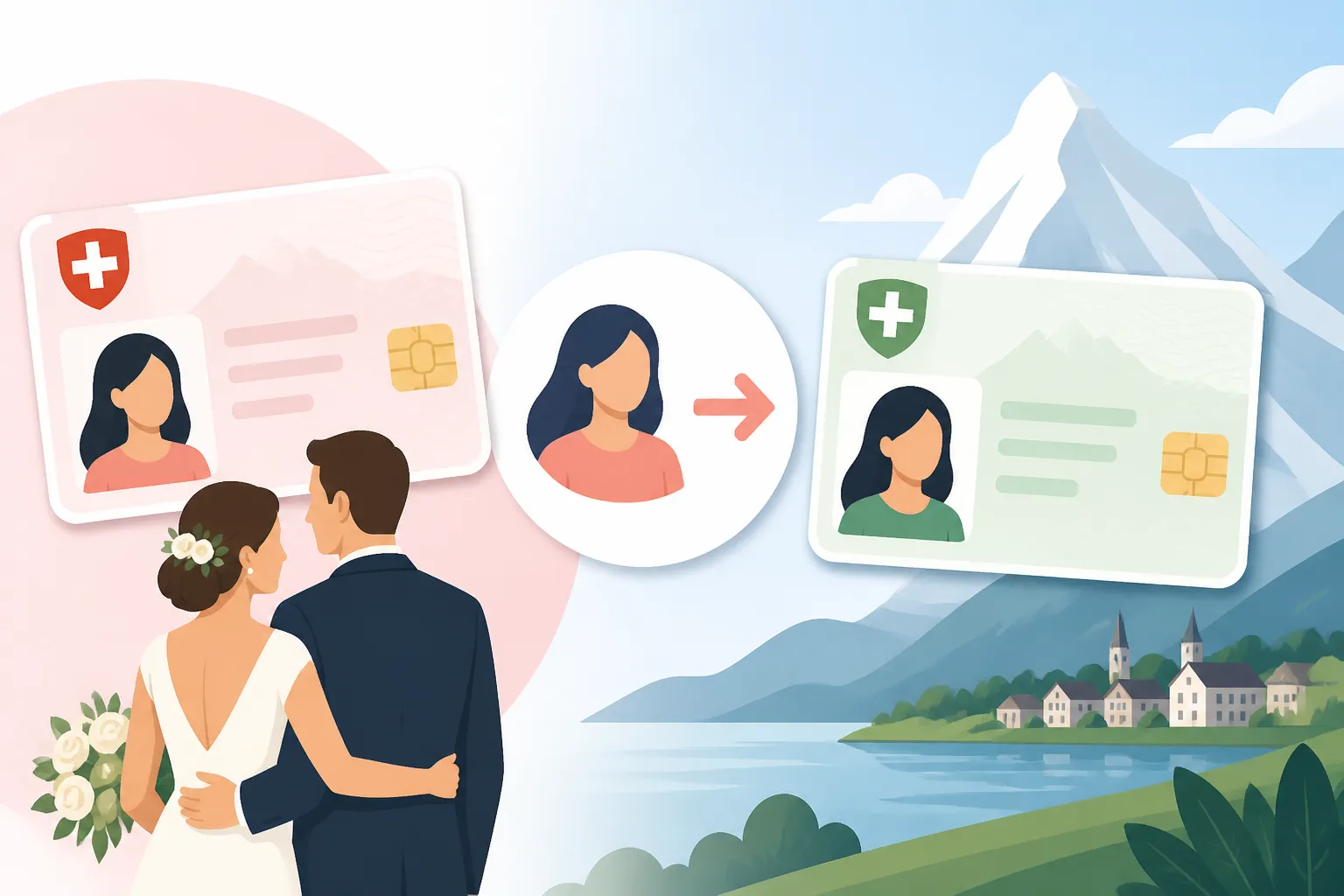
Getting married is a whirlwind of cake tastings and emotional vows, but in Switzerland, the real "romance" starts when you realize your official residence permit still carries your old name. I spent weeks assuming the system would magically update itself after our ceremony, only to be met with a confused clerk at the post office who wouldn't hand over my package. This guide provides the exact roadmap to updating your residence permit so you can avoid the administrative limbo I navigated.
The Administrative Maze: Why a Name Change Isn't Automatic
One of the most jarring things for expats to learn is that Switzerland operates on a system of extreme local autonomy mixed with rigid federal oversight. When you change your name through marriage, whether the ceremony happened in a beautiful Swiss Zivilstandsamt or back in your home country, the Swiss Migration Office does not automatically receive a notification from the marriage registry. You are essentially two different people in the eyes of the law until you reconcile your documents.
The frustration often hits when you least expect it. You might be trying to board a flight out of Zurich or Geneva, showing a new passport with your married name but a residence permit with your maiden name. This discrepancy can lead to intense questioning at border control. I’ve seen fellow expats held up for thirty minutes because they didn't realize the permit is technically tied to the identity established in their passport.
In the Swiss system, your name on the Residence Permits in Switzerland: L, B, C, and G Permits Explained must match your travel document perfectly. There is no room for "middle names omitted" or "hyphens added" unless they are explicitly written in your passport. If your home country's naming laws differ from Swiss norms—for instance, if you are keeping your birth name for professional use but changing it legally—the Swiss authorities will almost always defer to whatever is printed on your national passport.
Step 1: Updating Your Passport (The Essential Foundation)
Before you even think about stepping foot into the Gemeinde or Kreisbüro, you must have your new passport in hand. This is the single most common mistake expats make. You cannot update your Swiss residence permit with a marriage certificate alone; the permit is a secondary document that "reflects" the primary identity established by your home country.
For most of us, this means a trip to our national embassy or consulate in Bern, Zurich, or Geneva. Depending on your nationality, this process can take anywhere from two weeks to three months. During this waiting period, I highly recommend carrying a high-quality scan or photocopy of your marriage certificate. If you are dealing with documents not in German, French, or Italian, you will likely need professional help. Using a service like RushTranslate to get a certified translation of your marriage license or change-of-name decree is often mandatory to satisfy both your embassy and, later, the Swiss authorities.
While you wait for that new passport, be very careful with travel. If you have already changed your name on your flight tickets to match your "new" identity, but your residence permit still shows the old one, you are asking for trouble. I always tell people to keep at least one form of ID that matches their permit until the very day the new permit is issued. It’s a tedious bridge to cross, but it prevents you from being "personally stuck" between two identities at a boarding gate.
Step 2: Notifying the Migration Office (The B/C Permit Update)
Once your new passport arrives, the clock starts ticking. In Switzerland, you are generally required to report changes in your personal status within 14 days. This falls under the same category as Registering at the Kreisbüro: What Documents Do Expats Need to Bring? when you first move to a new apartment. You need to visit your local population office—known as the Einwohnerkontrolle in German-speaking cantons or the Office de la population in French-speaking areas.
When you arrive, you’ll need to fill out a specific form, often called a Veränderungsmeldung. You should bring your new passport, your current (soon-to-be-cancelled) residence permit, and your original marriage certificate. If your marriage took place outside of Switzerland, the office will almost certainly demand a translation. This is where having your documents prepared by RushTranslate becomes a lifesaver, as the Swiss are notoriously picky about the "official" nature of the translator’s credentials.
Be prepared for the "biometric fee" sting. Even if your current permit isn't set to expire for years, a name change requires a brand-new card. This means you’ll likely be sent to the cantonal migration center for a new set of fingerprints and a fresh photo. In Zurich, this is often at the Migrationsamt at Berninastrasse. It feels like a repeat of your first month in Switzerland, and yes, you will have to pay the administrative fees again, which usually range from CHF 80 to CHF 150 depending on the canton and your permit type.
Translation and Apostille Requirements
The "Apostille" is a word that strikes fear into the hearts of many expats. If you were married in a country that is part of the Hague Convention, your marriage certificate will likely need an apostille—a specific stamp that authenticates the document for international use. Without this, the Swiss authorities might reject your name change application entirely. I once spent three weeks mailing documents back and forth to my home state’s Secretary of State because I missed this one tiny detail.
Once you have the apostilled document, the translation must be perfect. Swiss officials are trained to look for discrepancies. If the translation says "Street" instead of "Road," or if the date format is confusing, they might send you back to the start. Using RushTranslate ensures that the terminology aligns with what Swiss bureaucrats expect. They deal with these Translation and Apostille Requirements for Marriage Certificates daily and understand the nuance of legal nomenclature.
Beyond the marriage certificate, if you are a non-EU citizen (Third-Country National), the requirements can be even more stringent. You may need to provide updated proof of your "clean" financial record. The migration office occasionally checks if your new legal identity is linked to any outstanding debts. Ensuring you are current on all obligations is key, as any red flags can stall your permit renewal or update.
The Domino Effect: Updating Other Swiss Institutions
Changing the name on your permit is the "Master Key," but it doesn't automatically unlock the rest of the Swiss bureaucracy. You must manually notify every service provider in your life. The first priority should be your health insurance. Whether you are using a local provider and need to understand Understanding KVG/LAMal: Mandatory Basic Health Insurance Explained or you have international coverage through Cigna Global, they need your updated permit copy to issue a new insurance card.
Your bank is the second most critical stop. Swiss banks are highly regulated, and they will not change the name on your account without seeing the physical "Ausländerausweis" (residence permit) with the new name. If you are in the process of Opening a Swiss Bank Account: UBS, ZKB, PostFinance, and Neobanks, it is much easier to do it after your name change is finalized. If you already have an account, visit a branch in person; they will scan your new permit and have you sign a new signature card to match your married name.
Finally, don't forget your employer and the social security office. Your HR department needs the new permit to update your Managing Your Swiss Salary Certificate (Lohnausweis) for Tax Season and ensure your pension contributions are correctly attributed to your 13-digit AHV number. If you are self-employed, you will need to notify the Ausgleichskasse directly to ensure there is no gap in your contributions, which could haunt you years later when you try to claim a pension or apply for a C-permit.
Name Change Checklist for Swiss Residents
| Institution | Required Document | Priority | Estimated Timeline |
|---|---|---|---|
| Home Country Embassy | Marriage Cert + Old Passport | Critical | 2 – 12 Weeks |
| Local Gemeinde/Kreisbüro | New Passport + Marriage Cert | High | 2 – 4 Weeks |
| Employer / HR | New Residence Permit | High | 1 Week |
| Health Insurance | Copy of New Permit | Medium | 1 – 2 Weeks |
| Bank (UBS/ZKB/etc.) | Physical New Permit | Medium | Instant (In-branch) |
| Social Security (AHV) | Employer usually handles | Low | 1 Month |
| Landlord / Agency | Email copy of Permit | Low | 1 Week |
Potential Pitfalls and Common Frustrations
The most frustrating part of this process is the "waiting gap." There will be a period of about two to three weeks where your old permit has been surrendered or cancelled, and your new one hasn't arrived in the mail yet. During this time, the migration office can issue you a "temporary paper permit" or a Visum zur Rückreise if you absolutely must travel. However, these cost extra—usually around CHF 60 to CHF 100. If you can avoid traveling during this window, your wallet will thank you.
Another pitfall involves your How to Find Your 13-Digit Swiss AHV Social Security Number. While your name changes, your AHV number stays the same for life. However, if you are a woman who has changed her name, the social security office needs to issue a new "grey card" or update the digital record to prevent future confusion during Filing a Swiss Tax Return (C Permit or High Earners on B Permit). It’s easy to forget this step until you receive a tax bill in your maiden name three years later.
If you are a tenant, don't forget your Bank Mietkautionskonto: How to Open a Blocked Rental Deposit Account. If your deposit is held in your maiden name, it can be a nightmare to get it released when you eventually move out if your permit and passport no longer match the name on the account. Taking your new permit to the bank to update the rental deposit account name now will save you a massive headache five years down the line.
Finally, keep an eye on your How to Use Your Swiss Health Card (VeKa) at the Clinic. Doctors’ offices often pull your data directly from the card. If you haven't updated your name with your insurer, the pharmacy might refuse to fill a prescription because the name on your ID (Passport/Permit) doesn't match the name on the insurance database. Dealing with these small sync issues is the "price" of the Swiss precision we otherwise love.
Disclaimer
The information provided in this guide is for informational purposes only and does not constitute legal advice. Swiss immigration laws and cantonal procedures are subject to frequent changes. Always consult with your local Migrationsamt or a qualified legal professional to ensure you are following the most current regulations for your specific situation. Prices and timelines mentioned are based on 2026 averages and may vary by canton.