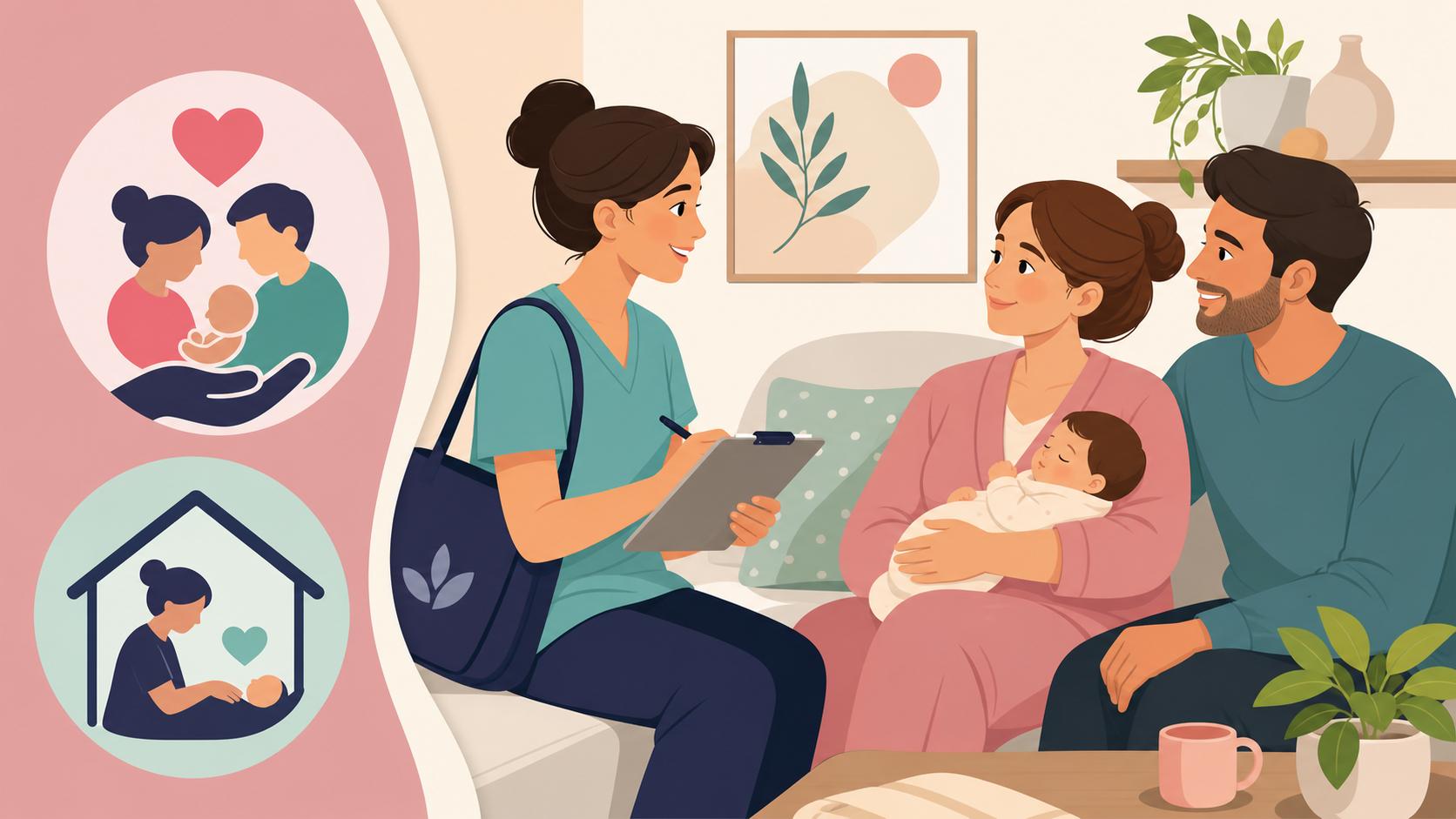
Postpartum Care: Mütter- und Väterberatung and At-Home Midwife Visits
The moment the hospital doors close behind you and you are buckled into a taxi with a tiny, fragile human, the reality of Swiss postpartum life hits like a bucket of cold Alpine water. I remember sitting in my Zurich apartment on day four, staring at a crying newborn and wondering how on earth I was supposed to navigate the mountain of diapers and administrative forms alone. This guide solves that panic by detailing exactly how the Swiss system of at-home midwives and the Mütter- und Väterberatung ensures you are never truly on your own.
The Postpartum Transition in Switzerland
Leaving the hospital in Switzerland is a uniquely structured experience that often feels abrupt to foreigners. Unlike some countries where you might stay for a week, Swiss hospitals—whether you chose Giving Birth in Switzerland: Public Hospitals vs. Private Clinics or a birthing center—typically aim to discharge you within three to four days for a standard delivery. This transition marks the beginning of what locals call the Wochenbett, a sacred eight-week period dedicated entirely to recovery, bonding, and establishing breastfeeding.
From Hospital to Home: The Immediate Reality
The first 72 hours at home are often a blur of sleep deprivation and physical recovery. In Switzerland, there is a strong cultural emphasis on the mother staying in bed or at least within the home during these early days. You will find that neighbors and colleagues respect this boundary, but for an expat without local family, the silence can be deafening. This is why the Swiss healthcare system integrates home visits directly into your mandatory coverage. You aren't expected to pack up the baby and head to a clinic for every minor concern; the care comes to you.
During this phase, you might realize that your international relocation insurance or basic plan needs a supplement for more personalized care. For those who travel frequently or want a higher tier of service, Cigna Global offers plans that can bridge the gap between local mandatory requirements and the high-touch international standards many expats are accustomed to. Having that extra layer of security allows you to focus on the baby rather than the billing logistics of every home visit.
The Critical Role of the Wochenbett Phase
The Wochenbett is not just a poetic term; it is a medically recognized period of fifty-six days where the body undergoes massive hormonal and physical shifts. In the Swiss view, if you "overdo it" during this time, you risk long-term health issues. This is where the cultural clash often happens for expats from "hustle" cultures. Your Swiss neighbors might look at you with genuine concern if they see you at the Coop grocery store on day six.
To support this recovery, the system provides for a Hebamme (midwife) to visit you daily if necessary. They monitor everything from the healing of your incision or tear to the baby's weight gain and jaundice levels. They are the guardians of the Wochenbett, ensuring that the "Baby Blues" don't spiral into something more serious. It is a period of forced slowing down that, while frustrating for some, is the backbone of the high maternal health standards in the country.
At-Home Midwife Visits: Your Clinical Lifeline
The Hebamme is perhaps the most important person in your life during the first month of parenthood. In Switzerland, at-home midwifery is a standard part of Maternity and Child Healthcare in Switzerland: From Pregnancy to Pediatrics and is covered by the basic insurance (KVG/LAMal) without any deductible (Franchise) or co-payment, provided the visits occur within the first 56 days.
What the Hebamme Actually Does During Home Visits
A typical visit lasts about 30 to 60 minutes. The midwife will arrive at your door, often with a portable scale and a wealth of calm energy. They check the baby's umbilical cord stump, monitor for signs of newborn jaundice, and track weight meticulously to ensure feeding is successful. For the mother, they check the involution of the uterus, blood pressure, and physical healing. They are also trained to spot early signs of postpartum depression, providing a vital mental health check-in when you might be too exhausted to advocate for yourself.
Beyond the clinical, they are your "baby whisperers." They will show you how to bathe the baby in your own sink, how to use a wrap or carrier effectively, and how to troubleshoot breastfeeding latches. If you are using supplements or specific lactation teas, they can advise on what is available locally or what you might want to order from iHerb to ensure you are getting high-quality, organic ingredients that meet your specific nutritional needs during the demanding breastfeeding phase.
Navigating Insurance and Costs for Midwifery
One of the most confusing aspects for newcomers is the billing. Most midwives operate on the "Tiers Payant" system, meaning they bill your insurance company directly. However, it is vital to understand How to Pay Medical Bills: Tiers Garant vs. Tiers Payant Billing Systems because some independent midwives might require you to pay upfront and claim the money back.
The basic KVG covers 10 home visits for a first child or a cesarean section, and up to 16 visits if it is your first child, a multiple birth, or if complications arise. If you need more visits after the 56-day mark, you will typically need a doctor’s prescription for insurance to continue paying. If you have Supplementary Health Insurance (VVG): What It Covers and When to Buy It, you might even have access to specialized "Lactation Consultants" who can provide extended support far beyond the standard legal requirement.
Finding an English-Speaking Midwife in Your Canton
The hunt for a midwife should ideally begin around your 20th week of pregnancy. They book up incredibly fast, especially the English-speaking ones in major hubs. If you are Selecting a Hebamme (Midwife) for Postpartum Care in Zurich, you can use the Hebammensuche website to filter by language and postcode. In smaller regions, like when Finding an English-Speaking Midwife in Neuchâtel, you may need to rely more on word-of-mouth or lists provided by your local hospital.
Do not underestimate the importance of the language connection. When you are crying at 2:00 AM because your nipples are cracked and the baby won't stop screaming, you do not want to be translating your pain into high school-level German or French. Find someone you click with personally, as they will be seeing you at your most vulnerable—in your pajamas, in your messy living room, navigating the rawest days of your life.
Mütter- und Väterberatung: Long-term Support for Families
Once the midwife finishes her intensive 56-day stint, you aren't suddenly cut off from the system. This is when the Mütter- und Väterberatung (MVB), or Mother and Father Advisory Service, takes over. This is a low-threshold, usually free service provided by the communes or cantons to support the healthy development of children from birth until age five.
Understanding the Mother and Father Advisory Service
The MVB is not a doctor's office, but rather a community-based support center staffed by specialized nurses and consultants. They offer "drop-in" hours where you can weigh your baby and ask quick questions, as well as scheduled appointments for more in-depth discussions. Most expats find these centers a godsend for the "middle ground" questions—the ones that aren't quite medical emergencies but are keeping you awake at night.
For many, How the Mütter- und Väterberatung Supports New Expat Parents for Free is the first step toward feeling like part of a community. These offices are located in almost every major neighborhood. They are funded by your tax Rappen, so there is no bill to worry about. They bridge the gap between your intensive midwife visits and your scheduled appointments for Pediatric Care: Checkups, Vaccination Schedules, and School Health.
Specialized Support: Feeding, Sleep, and Development
The MVB consultants are experts in the practicalities of child-rearing. If you are struggling with a baby who refuses to nap or are confused about when to start weaning onto solids (Beikost), they provide evidence-based advice tailored to the Swiss context. They can help you navigate local brands of formula or suggest specific baby-safe products you might need. If you prefer international brands of probiotics or organic snacks, they can often give you the "green light" on items you've sourced from iHerb.
They also provide a critical screening function. If a consultant notices a developmental delay or a physical issue like hip dysplasia or a flat head (plagiocephaly), they will refer you to a specialist. This layer of "watchful waiting" by professionals is part of why the Swiss system is so effective—it catches small issues before they become major hurdles.
Social Integration for Expat Parents
One of the hidden benefits of the MVB is the social aspect. Many centers host "Mütter-Kaffees" or parent meetups. As an expat, this is one of the fastest ways to meet local parents and other internationals. Parenting in a foreign language is hard, but sharing those struggles over a coffee while your babies crawl on a play mat is incredibly therapeutic.
These centers often have notice boards with information on local playgroups (Spielgruppen), baby swimming classes, and music circles. If you are feeling isolated, tell your consultant. They often know exactly which "English-speaking parents' group" meets nearby or can recommend a local Mental Health in Switzerland: Accessing Therapists and Psychiatric Care professional who specializes in postpartum support for foreigners.
Comparing Support Systems: Hebamme vs. Advisory Center
While both services aim to support your family, their roles are distinct and complementary. Understanding the overlap—and the boundaries—will help you manage your expectations and your schedule during those first few months.
| Feature | At-Home Midwife (Hebamme) | Mother & Father Advisory (MVB) |
|---|---|---|
| Location | Your home | Local community center/clinic |
| Primary Focus | Medical recovery & newborn health | Child development & parenting skills |
| Duration | First 56 days (can be extended) | Birth until age 5 |
| Cost | Covered by Understanding KVG/LAMal: Mandatory Basic Health Insurance Explained | Free (tax-funded) |
| Medical Authority | Can perform clinical checks/treatments | Advisory and screening only |
| Scheduling | Regular appointments (often daily) | Drop-in or scheduled as needed |
When to Call the Midwife vs. When to Visit the Center
In the very beginning, the midwife is your primary point of contact. If you have a fever, if your baby’s cord looks red, or if you are struggling with the physical mechanics of breastfeeding, the Hebamme is the medical professional who can intervene. She is the one who will call your OB-GYN or pediatrician if she sees something that requires a prescription.
The MVB is for the "marathon" of parenting. Once the initial healing is done, you go to the MVB for things like "How do I transition back to work?" or "My baby is ten months old and still waking every hour." They are your coaches. For expat families who might have Cigna Global for their broader health needs, using the MVB for local developmental norms is a great way to ensure your child is meeting the same milestones as their Swiss peers.
Financial Breakdown of Postpartum Services
Financially, Switzerland is incredibly generous with postpartum care compared to the US or many other countries. As long as you are registered with a Swiss insurer within 90 days of arrival or birth, these costs are handled. The midwife's home visits are part of the "maternity benefits" package, which means they are exempt from the 10% co-payment (Selbstbehalt) that usually applies to other medical services.
However, be aware of "extras." If your midwife brings specialized equipment like a TENS machine or provides acupuncture, there may be a small out-of-pocket fee if your insurance doesn't cover alternative medicine. This is where having a robust supplement cabinet from iHerb can actually save you money—having your own supply of high-quality vitamins, nipple creams, and postpartum teas means you aren't paying the "convenience markup" from a pharmacy or a private provider.
Mental Health and Emotional Recovery
The transition to parenthood is a massive psychological shift, and doing it in a foreign country adds layers of complexity. You are navigating new roles without your usual support network of old friends or parents who can just "drop by."
Addressing the Baby Blues and Postpartum Depression
The "Baby Blues" typically hit around day three to five, coinciding with the massive drop in progesterone and the "milk coming in." In Switzerland, midwives are explicitly trained to expect this. They will listen to you cry, normalize the experience, and help you distinguish between the temporary blues and the more persistent postpartum depression (PPD).
If the feelings of sadness, anxiety, or detachment persist beyond the first two weeks, it is time to seek help. Switzerland has excellent specialized units for maternal mental health. Your midwife or the MVB can refer you to a psychiatrist or psychologist who specializes in peripartum care. Don't wait. The system is designed to support you, and there is zero stigma in the Swiss medical community regarding PPD; they view it as a hormonal complication that requires professional management just like a physical injury.
Support Groups and Community Networks
Beyond the formal medical system, there are numerous informal networks. In cities like Zurich, Basel, and Geneva, there are active "Expat Moms" groups on Facebook and platforms like Glocals. These groups are invaluable for finding out which local pharmacies carry specific brands of colic drops or where to find the best English-speaking pediatrician.
Building your own "village" is essential. Even if you are an introvert, make an effort to go to one MVB coffee morning or a local "Pekip" class. Having one other person who understands the specific struggle of trying to find "witch hazel pads" in a Swiss Apotheke (where they might not even know what you're talking about) can make all the difference in your emotional well-being.
Practical Tips for the First Three Months
To survive the first trimester of parenthood in Switzerland, you need to be organized. The country runs on systems, and once you understand them, they work beautifully.
Essential Supplies for Swiss Postpartum Recovery
While Swiss pharmacies (Apotheken) are excellent, they are expensive and have limited opening hours. I always suggest that expat parents-to-be stock up on recovery essentials before the baby arrives. You can find many of the high-quality, international brands for postpartum care on iHerb, which often ships to Switzerland much faster and cheaper than buying locally.
Essential items to have on hand:
- High-quality postnatal vitamins (the Swiss brands are good, but the selection can be limited).
- Lanolin or silver caps for nipple protection.
- Witch hazel or soothing pads (difficult to find in standard Swiss drugstores like Müller).
- Organic baby massage oil.
- Probiotics for both mom and baby to support gut health after a hospital stay.
Administrative Tasks for New Parents
Finally, don't forget the paperwork. Switzerland loves its documents. Within the first few days, you must register the birth at the Zivilstandsamt (Civil Registry Office) of the place of birth. If you aren't married, there are extra steps for the "Acknowledgement of Paternity."
You also need to add your baby to your health insurance. You have three months to do this, and the coverage will be backdated to the moment of birth. If you have an international plan through Cigna Global, ensure you notify them immediately to add the newborn to your policy. This ensures that any follow-up pediatric appointments or potential neonatal care are fully covered without a hitch in the billing cycle.
Disclaimer
This guide is for informational purposes only and does not constitute professional medical or legal advice. Healthcare regulations and insurance coverage in Switzerland are subject to change. Always consult with your insurance provider, your midwife, or a qualified medical professional regarding your specific health needs and legal obligations.