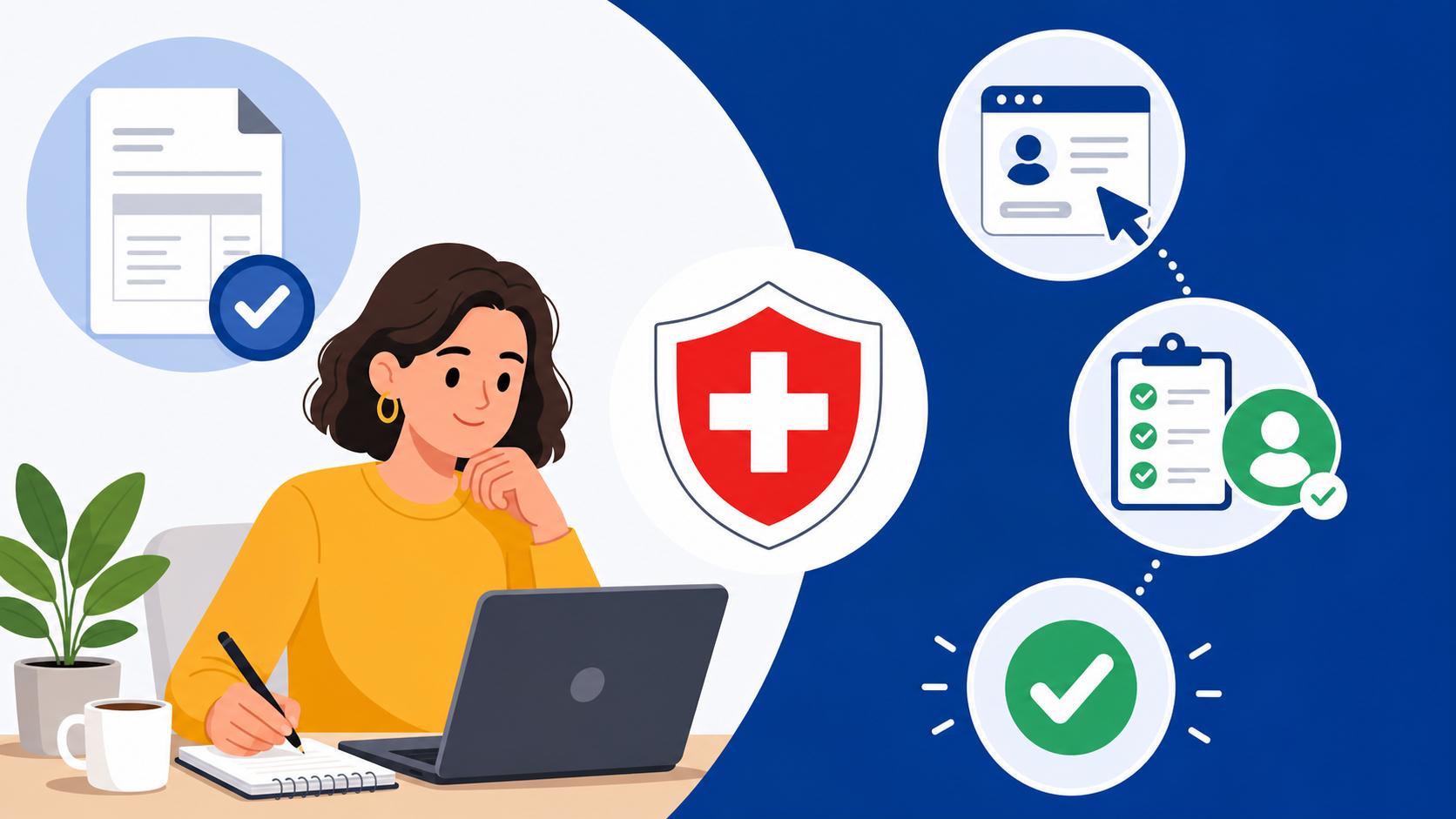
Invoicing as a Freelancer in Switzerland: OASI (AHV) Registration Steps
Starting your own freelance journey in Switzerland often feels like running a marathon through a field of red tape while wearing a blindfold. I remember the sheer anxiety I felt when I sent my first "official" invoice, only to realize weeks later that I hadn't even registered with the social security office. This guide provides the exact roadmap you need to transition from a casual "side-hustler" to a legally recognized freelancer, focusing on the critical OASI (AHV) registration and Swiss invoicing standards.
The Legal Reality of Freelancing in Switzerland
In many countries, you can simply start working, track your income, and tell the tax office at the end of the year. Switzerland operates with a much more rigid gatekeeping system. Before you even think about your first client, you must understand that the Swiss authorities do not automatically recognize you as self-employed just because you say you are. To the state, you are either an employee or an entrepreneur, and the distinction is guarded by the social security offices, known as the SVA (Sozialversicherungsanstalt) in German-speaking cantons or AVS in the French-speaking regions.
The status you are most likely seeking is known as an Einzelfirma or Sole Proprietorship. This is the simplest form of business, where you and the business are one legal entity. While this makes setup easier, it also means you have unlimited liability. Before proceeding with your OASI registration, it is highly beneficial to read about Becoming a Sole Proprietor (Einzelfirma): Risks and Registration Steps to ensure you aren't exposing your personal assets to unnecessary danger. The Swiss system is designed to protect "pseudo-self-employed" workers—people who work for one "client" but are treated like employees without the benefits. Because of this, the registration process is essentially an audit of your business's legitimacy.
If you are currently on a B Permit, you might be wondering if you are even allowed to go independent. The answer is generally yes, but the requirements can vary significantly between EU/EFTA citizens and third-country nationals. You should verify your specific residency rights by checking Freelancing in Switzerland on a B Permit: Is It Legally Allowed? before committing to long-term contracts. Understanding your permit's limitations is the first step in avoiding a painful rejection from the migration office later down the line.
Navigating the OASI AHV Registration Process
The most important acronym in your new professional life is AHV (Alters- und Hinterlassenenversicherung), which translates to Old-Age and Survivors’ Insurance, often referred to in English as OASI. Every resident in Switzerland must contribute to this fund. When you are an employee, your boss pays half and you pay half. When you are a freelancer, you are responsible for the entire "employer" and "employee" portion. However, you cannot just start paying; you must be "admitted" into the system as a self-employed person by your cantonal SVA office.
To register, you will need to fill out a lengthy questionnaire that asks for proof of your business activity. The SVA typically wants to see at least three separate contracts or evidence of three different clients. If you only have one client, they will likely classify you as "scheinselbstständig" (falsely self-employed) and force your client to hire you as an employee. This is a major hurdle for many expats who move here to consult for their former employer back home. To prove your independence, you should show marketing materials, a professional website, and business insurance policies. If your business involves teaching or consulting, using tools like Lingoda to brush up on your professional German or French can help you navigate these complex forms without a translator.
During the registration, you will also be asked for your AHV number. If you have lived in Switzerland as an employee before, you already have one. If you are new to the country, this will be generated for you. For those who are unsure where their documentation is, learning How to Find Your 13-Digit Swiss AHV Social Security Number is a small but necessary administrative victory. Once your application is submitted, be prepared to wait. The SVA can take several weeks or even months to process your request. During this time, you are technically allowed to work, but you must keep meticulous records for the back-payments that will inevitably be triggered once your status is approved.
Mandatory Elements of a Swiss Invoice
Invoicing in Switzerland is not a creative endeavor; it is a clinical one. Since late 2022, the traditional orange and red payment slips have been replaced by the "QR-bill." This is a mandatory format that includes a Swiss QR code containing all the necessary payment information. If you send an invoice without a QR-bill or with the wrong formatting, many Swiss companies will simply refuse to pay it, as their automated accounting systems cannot process "plain" PDFs.
Your invoice must contain specific data points to be legally valid for tax purposes. These include your full name and business address, the client’s full name and address, a detailed description of the services provided, the date of delivery, and the total amount in Swiss Francs (CHF). If you are registered for VAT (MWST), you must also include your UID number and the applicable tax rate. However, most freelancers starting out do not need to register for VAT unless their annual turnover exceeds CHF 100,000. It is a good idea to familiarize yourself with Working in Switzerland as an Expat: Jobs, Culture, and Employment Laws to see how these invoicing requirements fit into the broader context of Swiss labor expectations.
For those whose German or French isn't quite up to the task of drafting professional service descriptions, spending time on GermanPod101 or FrenchPod101 can be a lifesaver. Being able to correctly label your line items—using terms like "Dienstleistung" or "Stundenansatz"—shows your clients that you are integrated and professional. A well-formatted invoice is often the difference between getting paid in 10 days or 30 days in the Swiss corporate culture, where punctuality is a virtue.
Required Information for a Professional Freelance Invoice
| Component | Requirement | Note |
|---|---|---|
| Sender Info | Name, Address, UID | Use your registered business name. |
| Recipient Info | Full Company Name, Address | Ensure it matches the contract. |
| Invoice Date | DD.MM.YYYY | Crucial for the 30-day payment clock. |
| Service Description | Detailed Line Items | Avoid vague terms like "Consulting." |
| QR-Bill | Mandatory QR Code | Must include IBAN and Reference Number. |
| VAT / MWST | Only if > 100k Revenue | Include your MWST number if applicable. |
Managing Social Security Contributions and the Three Pillars
Once you are registered with the SVA, they will send you an estimate of your annual social security contributions. These are based on your projected income. I cannot stress this enough: be honest but conservative with your estimates. If you under-project your income, you will be hit with a massive "reconciliation" bill two years later when the SVA cross-references your tax return. This has bankrupted more than one expat freelancer I know. The AHV/OASI contribution rate for self-employed people is roughly 10% of your net income, though there is a sliding scale for those earning less than approximately CHF 58,800.
Beyond the mandatory AHV, as a freelancer, you are now your own HR department. You are no longer automatically enrolled in a pension fund (Pillar 2). While it is optional for the self-employed, many choose to join a professional association's pension fund to ensure they aren't penniless in their 70s. For a deeper dive into how this fits into your overall financial health, read up on The Three-Pillar Pension System: AHV, BVG, and Private Savings. This system is the backbone of Swiss retirement planning, and as a freelancer, you have the unique opportunity to customize your contributions.
One of the best "tax hacks" available to freelancers in Switzerland is the Pillar 3a. Because you don't have a mandatory Pillar 2, the law allows you to contribute a much higher amount to a private Pillar 3a account—up to 20% of your net earned income, capped at a specific annual limit. This amount is fully deductible from your taxable income. You can find the current 2026 limits in our guide on Pillar 3a in 2026: Tax Deductions, Limits, and Investment Options. Managing these contributions correctly can save you thousands of francs in federal and cantonal taxes every year.
Tax Realities and the Importance of the Accountant
In your first year of freelancing, you will feel rich. You will receive 100% of your invoiced amounts into your bank account, and the SVA bills might take months to arrive. This is the "Freelancer’s Trap." In reality, about 20% to 30% of that money belongs to the state. In Switzerland, taxes are not deducted at the source for self-employed residents (unless you are on a specific type of B-Permit subject to Quellensteuer, though many move to standard taxation after registering a business). You must set aside a significant portion of every invoice into a separate "tax and social security" savings account.
The complexity of Swiss taxes cannot be overstated. Each canton and even each municipality (Gemeinde) has its own tax rate. If you live in Zurich but move to a small village in Zug, your tax bill could drop by 40%. It is vital to understand the landscape by reading Swiss Taxes Explained: Federal, Cantonal, and Municipal Rates before you finalize your business budget. Most successful freelancers eventually hire a "Treuhänder" (an accountant/fiduciary) to handle their annual filings. A good Treuhänder will cost you about CHF 500 to CHF 1,500 a year, but they will likely save you more than that in deductions you didn't know existed.
Finally, remember that being your own boss means you are also your own insurance broker. As a freelancer, you are no longer covered by an employer's accident insurance. You must contact your health insurance provider to add "accident coverage" (Unfallversicherung) to your policy. Furthermore, since you aren't an employee, you aren't automatically entitled to the same salary protections. Understanding the nuances of Salary and Compensation: Navigating Swiss Pay, Bonuses, and Deductions can help you benchmark what you should be charging to cover these extra out-of-pocket costs.
Practical Steps to Finalize Your Registration
To recap, your journey to legal freelancing follows a very specific order. First, secure your permit rights and your first three clients. Second, prepare your professional dossier including a website and contract templates. Third, apply to your cantonal SVA/AVS office for self-employed status. Fourth, set up an accounting software that generates Swiss QR-bills. Throughout this process, don't forget the cultural integration aspects. Joining local business clubs or "Vereine" can provide the social proof the SVA loves to see.
If you ever feel overwhelmed by the German-heavy forms of the SVA Zurich or the French requirements in Geneva, remember that thousands of us have navigated this path before. Using resources like FrenchPod101 for those in Romandie or GermanPod101 for those in the German-speaking cantons will make the "Amtsdeutsch" (officialese) much more manageable. Transitioning to self-employment is a major milestone in your expat life. It offers a level of freedom that is rare in the high-pressure Swiss corporate world, provided you respect the administrative foundations the country is built upon. For more general advice on navigating the early days of your move, our guide on Freelancing and Entrepreneurship: Setting Up a Business in Switzerland is the perfect companion piece to this technical deep dive.
Disclaimer
The information provided in this article is for informational purposes only and does not constitute legal, financial, or tax advice. Swiss laws and cantonal regulations regarding self-employment, OASI (AHV) contributions, and taxation are subject to frequent change. We strongly recommend consulting with a qualified Swiss tax professional (Treuhänder) or legal expert before making any decisions related to your business registration or financial planning. This guide reflects the standard procedures as of 2026, but individual circumstances may vary based on residency permit types and specific cantonal requirements.