Changing Doctors: How to Transfer Your Medical Dossier
Finding yourself in a situation where your current doctor doesn't speak your language or has a bedside manner that leaves you feeling more stressed than cured is a classic expat rite of passage. I personally spent three years with a GP who grunted more than he spoke before I realized I didn't have to settle. This guide simplifies the process of changing your provider and moving your medical history across the Swiss healthcare system.
The Reality of Switching Providers in Switzerland
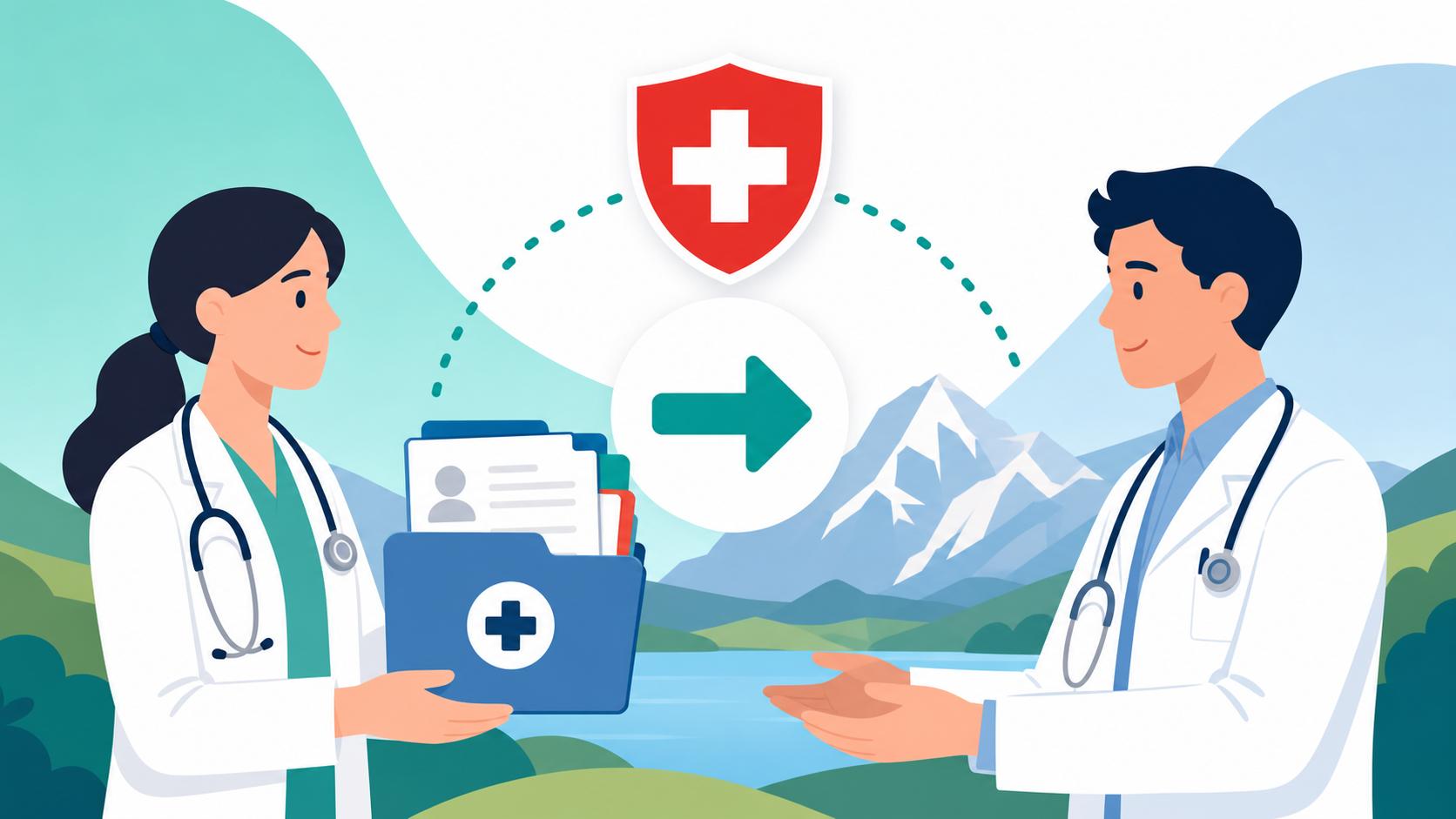
Moving house or simply being unhappy with your current care is a perfectly valid reason to seek a new practitioner, but in Switzerland, this isn't always as simple as walking into a new clinic. The Swiss healthcare system is world-class, yet it is deeply rooted in local networks. When I first tried to move my records from a small practice in the mountains to a larger center in the city, I was met with blank stares and a request for a physical stamp. It taught me that while you have the right to move, you have to be the one driving the process.
Most expats find they need to change doctors because they have moved cantons, which can feel like moving to a different country entirely. A Zurich Expat Healthcare Guide: Hospitals, Clinics, and Emergency Contacts will look very different from a guide for someone living in Geneva or Lugano. Beyond geography, the language barrier is the most frequent catalyst for a switch. If you are struggling to communicate complex symptoms, it is time to look for a provider where you feel heard. You might start by Finding an English-Speaking Family Doctor in Zug or whatever your local hub happens to be, ensuring that the foundational relationship of your healthcare is built on clear communication.
Another common reason for switching is a change in your insurance circumstances. If you have recently switched from a standard plan to a more restrictive one, you must understand how Comparing Health Insurance Models: Telmed, HMO, Family Doctor, and Standard impacts your choice of provider. Some models mandate that you see a specific doctor or visit a specific HMO center. If your preferred doctor isn't in that network, you will find yourself paying out of pocket unless you initiate a formal transfer and update your insurance provider accordingly.
Your Legal Right to Your Medical Records
Under Swiss law, specifically the Federal Act on Data Protection, your medical data belongs to you. This is a crucial point to remember if you ever feel "gatekept" by a medical secretary or a doctor who seems reluctant to let you go. The medical dossier, known as the Patientendossier in German or Dossier Médical in French, is a comprehensive collection of your history, including lab results, X-rays, vaccination records, and consultation notes.
What is Contained in a Swiss Medical Dossier
In Switzerland, a medical dossier is not just one file; it is a living document of your health journey in the country. It typically includes:
- Reports from specialists you have been referred to.
- Results from blood tests and diagnostic imaging (MRIs, CT scans).
- Your history of prescriptions and any known allergies.
- Notes regarding chronic conditions and long-term treatment plans.
It is helpful to keep a personal copy of these documents, especially if you use services like iHerb to supplement your prescribed treatments with vitamins or specific over-the-counter wellness products that your Swiss doctor might not stock. Having your own records allows you to track what is working for you independently of the official system.
The Electronic Patient Record (EPD)
Switzerland has been slowly rolling out the EPD (Electronic Patient Record), which is a digital file intended to make these transfers automatic. However, the reality on the ground is that many smaller practices are still heavily reliant on their own internal software or even physical files. You cannot assume that because you have an EPD, your new doctor in a different canton will automatically see everything. You still need to be proactive. If you are confused about how the broader system works, reviewing Healthcare in Switzerland for Expats: The Complete System Overview (2027) can give you a better sense of where the digital infrastructure currently stands.
Practical Steps for a Smooth Record Transfer
When you have decided to move, the first step is to find your new "Hausarzt." This is a foundational step because, in the Swiss system, your family doctor acts as the gatekeeper for everything else. Without a primary doctor, getting a referral to a specialist can become a bureaucratic nightmare. Once you have a new doctor willing to take you on, the process of moving your dossier follows a specific protocol.
Initiating the Request
You should start by asking your new doctor’s office if they have a standard "Release of Information" form. This is a simple document where you authorize your old doctor to send your records to the new one. If they don't have a form, a polite, signed letter to your old practice is usually sufficient. In this letter, you should clearly state your name, date of birth, and the contact details of the new practice.
I have found that calling the old practice to give them a "heads up" often speeds things up. Medical secretaries in Switzerland are often overworked, and a friendly phone call can move your file from the bottom of the pile to the top. Mentioning that you need the records for an upcoming appointment provides a deadline that they are usually keen to meet.
Handling Costs and Logistics
One thing that often surprises expats is that some doctors may charge a small administrative fee for copying and sending a large dossier, especially if it involves physical films for X-rays. While this fee is usually modest, it is worth asking about upfront. Understanding The Swiss Franchise System: How Deductibles and Copays Work is vital here, as these small administrative costs usually fall under your deductible and won't be reimbursed by your insurance until you've hit your limit.
| Transfer Method | Typical Timeline | Pros | Cons |
|---|---|---|---|
| Digital (E-mail/Secure Portal) | 1-3 Business Days | Instant, eco-friendly, easy to store | Risk of file format incompatibility |
| Physical Mail (Paper Copies) | 5-10 Business Days | Guaranteed readable by all clinics | Slower, can be lost in post, bulky |
| Patient Pick-up (USB/Paper) | Same Day | You have total control of the data | Requires physical travel to the old clinic |
| Electronic Patient Record (EPD) | Instant (if set up) | Most modern and seamless | Not all doctors are fully integrated yet |
Navigating the Insurance Bureaucracy
Changing your doctor isn't just about the medical files; it’s about your insurance contract. If you are on a "Family Doctor" (Hausarztmodell) or HMO plan, your insurance company literally lists your doctor’s name in their system. If you go to a new doctor without telling your insurance company first, they may refuse to pay the bill.
I once made the mistake of seeing a new doctor after a move without updating my insurance profile. I ended up with a 400 CHF bill that the insurance company rejected simply because the "wrong" doctor had signed it. To avoid this, call your insurance provider as soon as you have chosen a new GP. They will update your policy, usually starting from the first of the following month.
For those who find the Swiss mandatory system too restrictive or who travel frequently, looking into Supplementary Health Insurance (VVG): What It Covers and When to Buy It can provide more freedom in choosing specialists. Some expats also opt for international plans like Cigna Global to ensure they have coverage that follows them across borders without the rigid "gatekeeper" requirements of the local KVG plans. Cigna Global can be particularly useful if you are a high-net-worth individual or a frequent traveler who wants to see any doctor, anywhere, without asking for permission from a Swiss insurance clerk.
Troubleshooting Common Hurdles
What happens if your old doctor has retired or the practice has closed? In Switzerland, medical records must be kept for at least 10 to 20 years, depending on the canton. If a practice closes, the records are usually transferred to a successor or the cantonal medical officer. You may need to contact the cantonal health department (Gesundheitsdirektion) to track them down.
Another hurdle is the language of the records themselves. If you are moving from Romandie to a German-speaking canton, your new doctor might struggle with the French notes. This is where Translating Medical Records from English to German/French for Your Hausarzt becomes relevant. While most Swiss doctors have a working knowledge of the other national languages, a complex surgical report is best understood in the doctor's primary language.
If you encounter a doctor who refuses to release your records or is being intentionally difficult, you should know that you have the law on your side. You can refer to the guide on Reporting Medical Malpractice: Patient Rights in Switzerland to understand how to escalate a complaint if your right to your own data is being ignored.
Maintaining Continuity of Care
During the transition period, make sure you have enough of your essential medications to last at least a month. It can take time to get that first appointment with a new doctor, and the last thing you want is to run out of a vital prescription. Your old doctor is generally required to provide a final prescription refill to bridge the gap.
For daily health maintenance, many expats rely on Pharmacies and Medication: Prescriptions, Costs, and OTC Regulations to navigate what can be bought locally. I often supplement my local pharmacy runs with orders from iHerb for specific brands of melatonin or high-dose Vitamin D that can be harder to find or much more expensive in Swiss "Apotheken." Just be mindful of customs limits when ordering health products from abroad.
If you are a Cigna Global policyholder, you might find that your international coverage allows for a much smoother transition, as they are used to dealing with expats moving between different systems. They often provide resources to help you find providers who are used to working with international dossiers, which can save you hours of administrative headache.
Ultimately, changing doctors is about finding a partner in your health. Don't be afraid to "shop around" and have an initial consultation with a few different providers before committing. The Swiss healthcare system is expensive, and you deserve a doctor who respects your time, speaks your language, and manages your medical history with the care it deserves.
Disclaimer
This article is for informational purposes only and does not constitute legal or medical advice. Healthcare regulations and insurance laws in Switzerland are subject to change. Always consult with the Swiss Federal Office of Public Health (FOPH), your specific insurance provider, or a qualified legal professional regarding your individual residency and health coverage status.