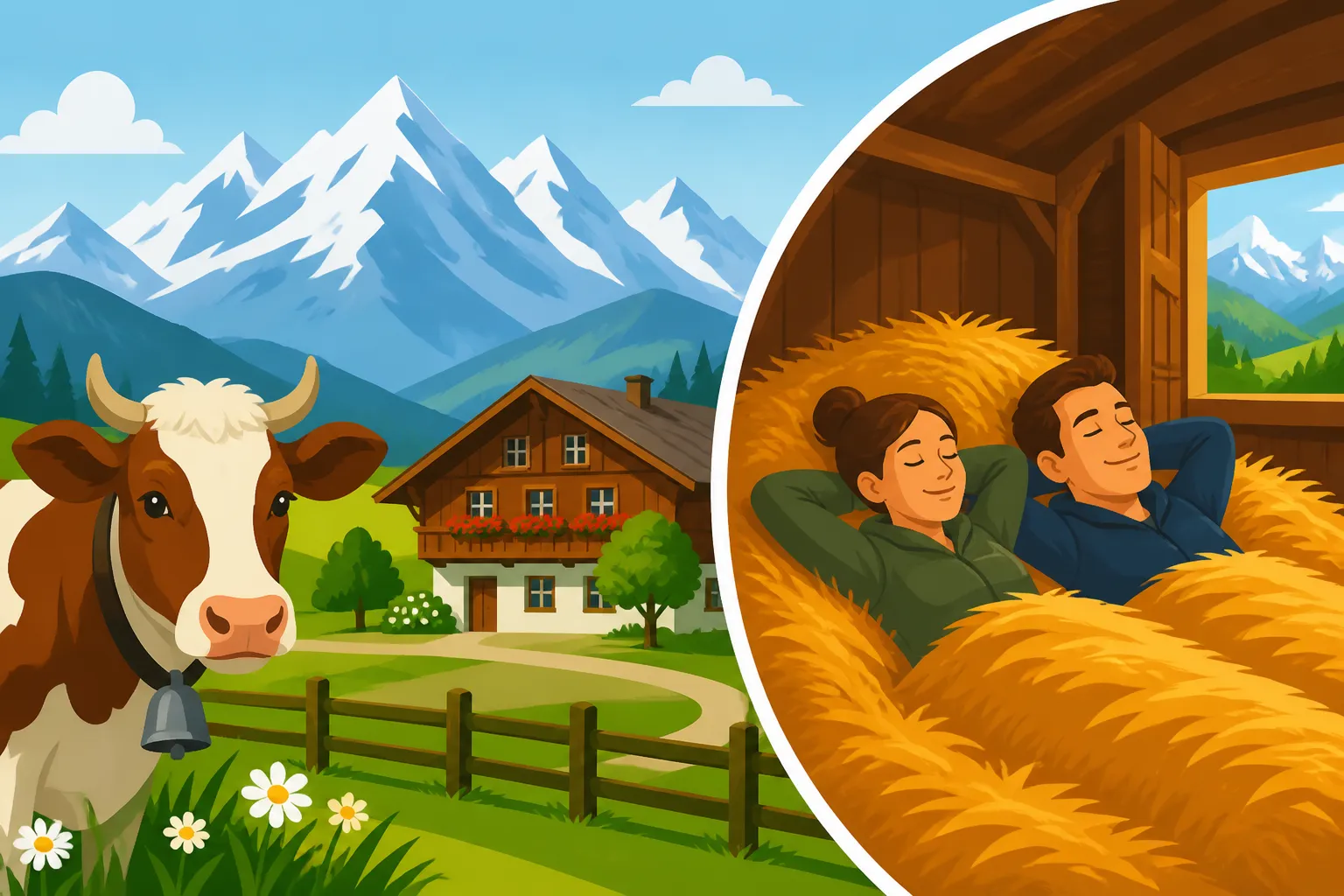
Agritourism in Switzerland: Sleeping on a Farm (Schlaf im Stroh)
After years of navigating the hustle and bustle of Swiss city life, whether it's the banking towers of Zurich or the international organizations of Geneva, sometimes you just crave an escape that truly reconnects you with nature, simplicity, and genuine Swiss culture. This guide is all about diving deep into Swiss agritourism, particularly the charming "Schlaf im Stroh" (sleeping on straw) experience, offering you a realistic, no-fluff look at how to embrace farm life and create unforgettable memories.
What Exactly is Agritourism in Switzerland?
When you hear "agritourism," you might think of simply visiting a farm or buying local produce, but in Switzerland, it's so much more. It's a deeply ingrained cultural movement that allows city dwellers and tourists alike to experience the rural lifestyle firsthand, supporting local farmers and preserving traditional practices. This isn't just about pretty scenery; it’s about authentic immersion, connecting with the land, and understanding where your food truly comes from.
The Swiss Federal Office for Agriculture actively promotes agritourism, recognizing its value in diversifying farmers' income and giving people a glimpse into the challenging, yet rewarding, agricultural world. You'll find everything from luxurious farm-to-table dining experiences to simple, rustic overnight stays. It's a beautiful counterpoint to the country's polished, high-tech image, offering a grounding experience that many expats, myself included, truly cherish.
Beyond the Cowbells: Diverse Farm Experiences
While the image of a Swiss cow grazing in an alpine meadow is iconic, Swiss farms offer a surprising variety of agritourism options. It's not just about dairy; you'll find fruit farms, vineyards, alpaca ranches, and even organic vegetable growers opening their doors. Each farm, often family-run for generations, has its own unique character and offerings.
For instance, some farms focus on interactive experiences for children, allowing them to help with feeding animals, collecting eggs, or even learning to milk a cow. Others might offer workshops on cheesemaking, bread baking, or preparing traditional regional dishes. If you're looking for something more active, some farms are perfectly situated for exploring the surrounding countryside, offering direct access to Swiss Hiking for Beginners: Trail Grades and the SAC System or even cycling routes. It’s a chance to truly unwind and engage with a different pace of life, a far cry from the daily commute on the SBB.
The Rise of "Schlaf im Stroh": A Back-to-Basics Movement
Among the many agritourism offerings, "Schlaf im Stroh" or "Sleeping on Straw" stands out as perhaps the most authentic and, frankly, most memorable. It’s exactly what it sounds like: spending a night or two in a barn, nestled in a cozy bed of fresh straw. For those of us used to proper beds and silent rooms, it might sound a bit… rustic, but trust me, it’s an experience that truly strips away the unnecessary frills and lets you reconnect with a simpler way of being.
This isn't just a quirky novelty; it’s a traditional practice that's been revived for modern tourism. Farmers convert a section of their barn, often with a dedicated sleeping area, sometimes even individual cubicles for a bit more privacy, though usually it’s a communal space. You bring your own sleeping bag and pillow, settle into the soft, fragrant straw, and drift off to sleep. The sounds of the farm, the fresh country air, and the sheer novelty of it all make for a truly unique night. It’s an informal, budget-friendly way to experience rural Switzerland, making it accessible even if you're keeping a keen eye on the Cost of Living in Switzerland 2026: Budgeting for Singles and Families.
Delving into "Schlaf im Stroh": The Unique Experience
Okay, let’s get into the nitty-gritty of what "Schlaf im Stroh" actually entails. It’s not just a bed; it’s an entire sensory experience that will stick with you long after the straw dust has settled. From the initial scent of hay to the surprisingly comfortable slumber, it’s a journey back to basics that many expats find surprisingly refreshing.
What to Expect: Rustic Charm and Farm Sounds
When you arrive at a "Schlaf im Stroh" location, you're usually met by the farmer or a family member. They'll show you to the sleeping area, which is typically a clean, dry section of a barn or an outbuilding, generously filled with fresh straw. Don't expect five-star hotel amenities; this is all about rustic charm. You'll often find shared bathroom facilities, perhaps a simple shower, and often a communal eating area where breakfast, usually featuring homemade or local products, is served.
The sounds are part of the charm: the gentle rustling of straw as you settle in, the distant lowing of cows, perhaps a rooster crowing at dawn (yes, it happens!). The fresh country air, imbued with the scent of hay and farmland, is incredibly calming. I vividly remember one such stay near a small village in Valais, waking up to the most incredible mountain views right from the barn door. It’s a world away from the constant hum of city traffic, offering a profound sense of peace.
| Feature | Traditional Hotel Stay | Schlaf im Stroh (Farm Stay) |
|---|---|---|
| Sleeping Surface | Mattress, proper bed | Fresh straw, bring own sleeping bag |
| Amenities | Private bathroom, TV, mini-bar | Shared, basic facilities, communal |
| Noise Level | Soundproofed rooms (hopefully) | Natural farm sounds, animals |
| Privacy | Private room | Often communal, sometimes cubicles |
| Meals | Restaurant, room service | Homemade farm breakfast included |
| Interaction | Hotel staff, other guests | Direct with farmer, family, animals |
| Cost | Typically higher | Generally budget-friendly |
| Experience | Comfort, anonymity | Authentic, immersive, unique |
Pros and Cons: Is It Right for You?
Like any unique travel experience, "Schlaf im Stroh" comes with its own set of advantages and disadvantages. It's not for everyone, but for the right person, it can be absolutely magical.
The Pros:
- Authenticity: You get a truly genuine taste of Swiss farm life, far from tourist traps. It's a connection to the land and the people who work it.
- Affordability: Compared to many other overnight options in Switzerland, sleeping on straw is very budget-friendly. This is a big plus when you consider the overall Cost of Living in Switzerland 2026: Budgeting for Singles and Families.
- Unique Experience: It's certainly a story to tell! Few people can say they’ve slept in a barn in the Swiss Alps.
- Family-Friendly: Kids absolutely adore it. It's an educational and engaging adventure, allowing them to interact with farm animals and learn about agriculture.
- Fresh Air and Nature: You're fully immersed in the natural environment, away from screens and city stress. It's a wonderful way to detox and unwind.
- Local Food: Most "Schlaf im Stroh" offers include a delicious farm breakfast, often with homemade bread, jams, cheese, and fresh milk. It's a culinary treat.
The Cons:
- Comfort Level: While surprisingly comfortable, it's still straw. If you have a bad back or absolutely require a proper mattress, this might not be ideal.
- Allergies: If you suffer from hay fever or dust allergies, this is definitely not for you. The straw is fresh, but it's still hay.
- Lack of Privacy: Many sleeping areas are communal. While some offer partitions, you'll be sharing a space with others.
- Basic Facilities: Expect shared, simple bathrooms. This isn't a luxury spa retreat.
- Farm Smells: Yes, it’s a farm. There might be some farm smells. For some, this is part of the authenticity; for others, it’s a deterrent.
- Booking: Popular farms, especially those near major tourist areas like Grindelwald or Zermatt, can book up quickly, particularly during peak seasons.
If you’re open to a little adventure and don’t mind roughing it just a tad, the pros far outweigh the cons. It's an opportunity to create really special memories and experience a side of Switzerland that many visitors completely miss.
How to Find and Book Your Swiss Farm Stay
Finding the perfect "Schlaf im Stroh" experience can be a fun little treasure hunt. Unlike booking a conventional hotel, these stays are often listed on specialized platforms or directly through farmer networks. It’s all about knowing where to look!
Dedicated Platforms and Farmer Networks
The most reliable way to find "Schlaf im Stroh" options is through dedicated Swiss agritourism platforms. These sites specifically cater to farm stays and often provide detailed information about each farm, its amenities, the types of animals, and any additional activities offered.
One of the prominent organizations is Agriturismo.ch (Landwirtschaftliche Unterkünfte Schweiz), which acts as a central hub for various farm stays across all cantons. Their website allows you to filter by region, type of accommodation (including "Schlaf im Stroh"), and specific facilities. You'll often find direct contact details for the farmers, allowing you to book directly and ask any specific questions you might have about the setup, like if they have an outdoor grill or a trampoline for the kids. Another great resource for general Swiss agritourism, though not exclusively for straw beds, is MySwitzerland.com, which also lists various farm stays and experiences.
While less common for direct "Schlaf im Stroh" bookings, larger travel platforms like GetYourGuide or Booking.com might feature some of the more established agritourism operations, especially those offering glamping or more upscale farm stays. However, for the truly rustic "sleeping on straw," the dedicated agritourism sites are usually your best bet.
Tips for Successful Booking and Planning
Booking your farm stay requires a slightly different approach than your typical hotel reservation. Here are some pointers from an expat who's been there:
- Book in Advance, Especially for Summer: Swiss summers (June to August) are peak season for outdoor activities, and many families flock to farm stays. If you have specific dates or a particular region in mind, try to book several months ahead. For instance, if you're planning a trip to the Engadine Valley in Graubünden, where farms are nestled amidst stunning landscapes perfect for Exploring St. Moritz and the Engadine Valley, early booking is key.
- Check Accessibility: Many farms are in rural locations, meaning public transport might be limited. If you’re relying on the excellent Swiss public transport system, use Omio to check train and bus connections to the nearest village, and then confirm with the farmer if they offer pick-up or if it’s a manageable walk. Some farms are quite remote, making a car almost essential, though many are well-connected by PostBus routes.
- Read Reviews: While these are usually small, family-run operations, checking reviews on their website or on Google Maps can give you a better idea of what to expect, especially regarding cleanliness, host hospitality, and the quality of the breakfast.
- Communicate Directly: Don't be shy about contacting the farmer directly if you have questions. Most farmers are incredibly welcoming and happy to chat (though don’t expect fluent English everywhere – a little German, French, or Italian will go a long way!). Ask about facilities, meal times, and what activities are available on the farm.
- Pack Appropriately: Remember, you're sleeping on straw. Bring a good sleeping bag (one for cooler temperatures, even in summer, as barns can get chilly overnight), a pillow, a towel, and perhaps some earplugs if you’re a light sleeper (roosters, remember?). Don't forget sturdy shoes for exploring the farm and nearby trails.
Making the Most of Your Agritourism Adventure
Once you’ve booked your "Schlaf im Stroh" adventure, it's time to prepare for an experience that goes beyond just a bed for the night. This is your chance to truly live like a local, even if just for a day or two, and embrace the rhythm of rural Switzerland.
Engaging with Farm Life and Local Activities
The beauty of agritourism, and "Schlaf im Stroh" in particular, is the opportunity for genuine engagement. Don't just show up to sleep and leave; dive in!
- Help Out (If Offered): Many farmers are happy for guests to lend a hand. This could be anything from helping to feed the animals, collecting eggs, or even assisting with small chores. It's not mandatory, but it's an incredible way to bond with the host family and understand their daily life. My kids once spent an hour carefully placing freshly laid eggs into cartons, feeling immensely proud of their "work."
- Explore the Farm: Take the time to wander around the farm. Meet the cows, goats, chickens, and maybe even a friendly farm dog. Ask the farmer about their crops, their challenges, and their joys. You’ll find they often have fascinating stories and deep knowledge of their land.
- Enjoy Farm-Fresh Meals: The breakfast is usually a highlight. Savour the homemade bread, local cheese, fresh milk, and possibly farm-made jams. Many farms also offer a simple dinner (sometimes for an extra fee), which is a fantastic opportunity to taste authentic regional cuisine prepared with ingredients from just metres away. This is often far more authentic than anything you'd find in a city restaurant.
- Discover the Surroundings: Swiss farms are almost always in breathtaking locations. Use your stay as a base to explore the region. Whether it's a gentle walk through meadows, a more challenging hike up a nearby peak, or cycling on picturesque paths, the natural beauty is boundless. You might even find opportunities for Wild Swimming and Lake Swimming Etiquette in Switzerland in a nearby stream or lake during warmer months.
Essential Etiquette and Considerations
To ensure a positive experience for both you and your hosts, it's good to keep some basic etiquette in mind, especially given the close quarters and the nature of farm life.
- Respect Quiet Hours: Just like in Swiss apartment buildings, there are often unwritten (or sometimes written) quiet hours, especially at night. Remember, it's a working farm, and early mornings are the norm. Be mindful of noise, especially if you’re sharing a sleeping area. This goes back to the general Swiss Everyday Rules: Recycling, Quiet Hours, and Neighborhood Etiquette that apply everywhere in the country.
- Keep it Clean: You're a guest on a working farm. Keep the shared facilities tidy, dispose of your rubbish properly (often there are specific recycling bins, even on farms!), and leave the sleeping area as you found it.
- Animal Interaction: Always ask the farmer before touching or feeding any animals. While most farm animals are used to people, they are still animals, and it’s important to respect their space and safety. Teach children to do the same.
- Allergies and Dietary Needs: If you have severe allergies (to hay, animals, or food), communicate these well in advance during booking. While farmers are usually accommodating, they are not always equipped to handle complex dietary restrictions without prior notice.
- Flexibility: Farm life can be unpredictable. Weather, animal needs, or harvest times can sometimes alter plans. Embrace the spontaneity and be flexible. This isn’t a rigid hotel schedule; it’s an authentic slice of life.
By embracing the simplicity, respecting your surroundings, and engaging with your hosts, a "Schlaf im Stroh" stay can be one of the most rewarding and memorable adventures you’ll have in Switzerland. It’s a chance to truly unplug, breathe in the fresh air, and appreciate the backbone of this beautiful country. And honestly, after years of expat life, sometimes a simple bed of straw and the smell of hay is exactly what the soul needs.
Disclaimer
The information provided in this guide is intended for general informational purposes only and does not constitute professional advice. While we strive to ensure accuracy, conditions and regulations in Switzerland can change rapidly. Always verify current details with official sources, relevant authorities, or your specific farm hosts before making plans or bookings. We do not endorse any specific brands or services mentioned, but include them for contextual information where relevant. Agritourism, and "Schlaf im Stroh" in particular, involves interaction with a working farm environment; participants assume all risks associated with such activities.