Tax-Filing Software for Switzerland: Free Cantonal Tools vs Paid Apps
Every year, usually around February or March, a thick blue or gray envelope arrives in your Swiss mailbox, and for many expats, it triggers an immediate sense of administrative dread. This is the "Steuererklärung" or tax return request, a document that signals the beginning of a complex data-gathering mission that can feel like a part-time job. This guide is designed to dismantle that anxiety by comparing the free software provided by your canton against premium paid applications, helping you choose the most efficient path to compliance without overpaying the taxman.
Understanding the Landscape of Swiss Tax Preparation
When you first move to Switzerland, you might initially be subject to Withholding Tax (Quellensteuer) vs Standard Taxation for Foreigners, where your employer deducts taxes directly from your salary. However, once you cross a certain income threshold, usually CHF 120,000 per year, or if you obtain a C permit, you are required to file a regular tax return. This shift can be jarring because the responsibility of calculating deductions and declaring global assets suddenly falls squarely on your shoulders. The Swiss tax system is decentralized, meaning each of the 26 cantons has its own rules, rates, and, most importantly, its own software.
The first hurdle many foreigners face is the language barrier. Most free cantonal tools are strictly in the local language of the canton—German, French, or Italian. If you are living in Zurich but your German is still at an A2 level, navigating a technical interface filled with terms like "Lohnausweis" or "Schuldenverzeichnis" can lead to expensive mistakes. This is where the debate between free and paid tools begins. Free tools are highly functional but unforgiving to those who do not speak the language, while paid apps often offer an English interface and a "wizard" style guidance system that explains each step in plain English.
Another critical factor is the complexity of your financial life. If you only have a Swiss salary and a local bank account, the free tools are more than sufficient. However, if you hold stocks abroad, own property in your home country, or have several foreign bank accounts, the data entry becomes significantly more tedious. For those utilizing Wise to manage multiple currencies or move money between countries, you will need to meticulously declare every account and the interest earned, even if it is just a few centimes. These nuances are where a well-designed software interface can save you hours of frustration.
Free Cantonal Software The Government Standard
Almost every canton in Switzerland provides its own proprietary software for residents to file their taxes. In Zurich, this is known as ZHprivateTax; in Vaud, it is VaudTax; and in Geneva, it is GeTax. These tools have improved significantly over the last decade, moving from clunky downloadable Java applications to streamlined web-based interfaces that allow you to import data from previous years. The primary advantage, of course, is that they are completely free. Since the government builds them, they are always up to date with the latest cantonal tax laws and deduction limits.
When you begin Filing a Swiss Tax Return (C Permit or High Earners on B Permit), the cantonal software will guide you through the standard sections: income, assets, and deductions. One of the most useful features of these free tools is the ability to upload PDF versions of your bank statements and salary certificates directly to the server. This "paperless" filing is now the norm in many cantons, reducing the need to mail a mountain of physical documents to the tax office. However, you must still be diligent about Tax Allowances and Deductions: Commuting, Meals, and Childcare, as the software will not always prompt you to take a deduction you might be entitled to if you don't know it exists.
The downside of free software is the lack of "tax optimization" advice. The government's goal is to collect the correct amount of tax, not necessarily to show you how to pay as little as possible. While the software will calculate your tax bill as you go, it won't suggest that you should have contributed more to your Pillar 3a in 2026: Tax Deductions, Limits, and Investment Options to lower your taxable income. For many veterans of the Swiss system, the free software is used as a final entry tool after they have already done their strategic planning elsewhere. If you find the interface too intimidating, you might consider Hiring a Swiss Tax Advisor: Costs and When It's Worth It for your first year to see how a professional handles the government forms.
Paid Apps and Specialized Expat Solutions
For the expat community, a secondary market of paid tax applications has flourished. These apps, such as TaxMe or specialized versions of Dr. Tax, often provide an English-language overlay and a much more user-friendly experience. They are particularly beneficial for those who find the official cantonal terminology impenetrable. These platforms act as a bridge, asking you simple questions in English and then mapping your answers to the correct boxes on the official Swiss forms. This drastically reduces the "fear factor" associated with clicking the wrong button in a language you are still learning.
Paid software is also better at handling the "global" nature of expat life. If you are a US citizen, for instance, you are trapped in a world of dual-reporting requirements. While Swiss software handles your local obligations, it does nothing for your IRS filings. In these cases, using a service like Taxes for Expats can be a lifesaver, as they specialize in the intersection of US and foreign tax law. They understand the complexities of FBAR filings and how to avoid double taxation on your Swiss salary. Combining a local Swiss app with a dedicated expat tax service ensures that you aren't accidentally committing tax evasion in one country while trying to be compliant in another.
Furthermore, paid apps often include "optimization modules" that scan your return for missing deductions. They might remind you that you can deduct the cost of professional training, or that moving to a nearby municipality could result in significant savings, as discussed in our guide on Lowest Tax Cantons: Moving to Zug, Schwyz, or Nidwalden for Tax Benefits. If you have a high net worth, these apps are also better at calculating Wealth Tax in Switzerland: How Global Assets Are Assessed, which is a concept that often catches newcomers off guard. The small fee for the software (usually between CHF 50 and CHF 150) is often recuperated through the discovery of a single forgotten deduction.
Comparing Your Filing Options
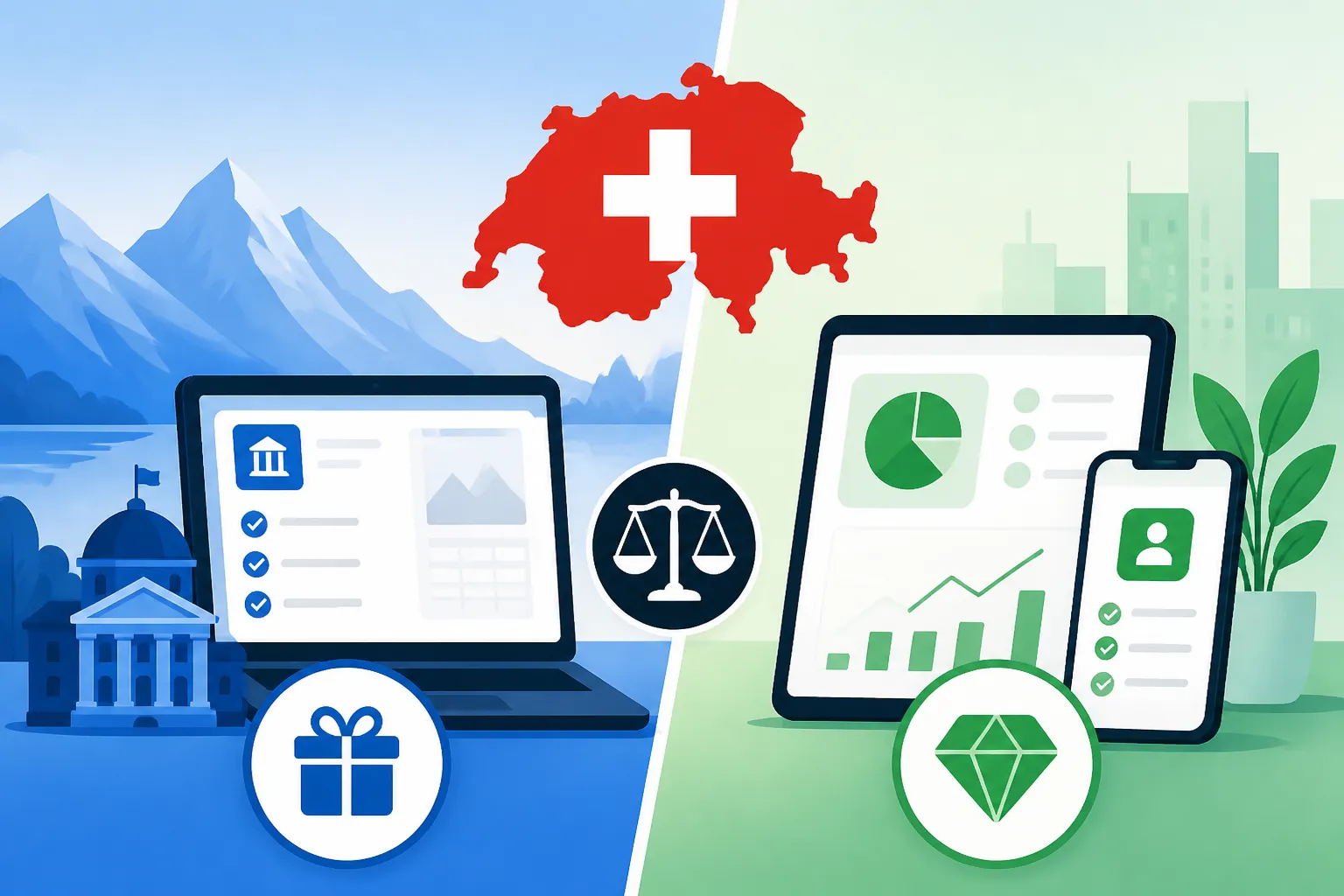
Choosing the right tool depends on your comfort level with the local language and the complexity of your financial portfolio. To help you visualize the trade-offs, the following table compares the three main routes you can take for your Swiss tax return.
| Feature | Cantonal Software (Free) | Paid Private Apps | Professional Tax Advisor |
|---|---|---|---|
| Cost | CHF 0 | CHF 40 – CHF 200 | CHF 300 – CHF 1,500+ |
| Language | Local (DE/FR/IT) | Often English available | English/Multilingual |
| User Experience | Technical / Form-based | Wizard / Question-based | Personal Consultation |
| Global Assets | Manual entry only | Better guidance | Full professional handling |
| Optimisation | None | Basic suggestions | Strategic planning |
| Time Investment | High (first year) | Moderate | Low |
For those who are Filing Taxes Jointly as a Married Couple in Switzerland, the complexity doubles. You must merge two incomes, potentially two sets of deductions, and a combined asset pool. Paid software handles this "merger" of data more elegantly than some of the older cantonal systems. If you have international transfers to account for, using the transaction history from Wise makes it easy to provide proof of exchange rates used on the day of the transaction, a detail that Swiss tax offices appreciate.
If you are still on a B permit and not yet required to file a full return, you might still want to look into Tax Corrections (Tarifkorrektur): Claiming Deductions on Withholding Tax. This is a "mini" version of the tax return where you can claim specific deductions like 3rd pillar contributions or interest on debt. Even for this simplified process, using a paid app or a professional can help ensure you don't miss out on a refund that could be worth thousands of francs. The Cost of Living in Switzerland 2026: Budgeting for Singles and Families is high enough that every franc reclaimed from the tax office makes a difference.
Ultimately, the goal is to reach a point where the blue envelope no longer causes a spike in blood pressure. Whether you choose the free government route or opt for the comfort of a paid app like Taxes for Expats, the key is starting early. Requesting an extension is usually free and can be done online through the same cantonal portals where the software is hosted. This gives you the breathing room to gather your documents, check your Wise statements, and ensure that your first or tenth Swiss tax return is filed accurately and on time.
Disclaimer
The information provided in this article is for informational purposes only and does not constitute legal, financial, or tax advice. Tax laws in Switzerland are subject to change and vary significantly by canton and individual circumstances. You should always consult with a qualified tax professional or the official cantonal tax authorities before making financial decisions or filing your tax return. The author and publisher are not responsible for any errors, omissions, or the results obtained from the use of this information.