US Person Investing in Switzerland: PFIC Rules and IBKR Workarounds
Living as a US citizen or Green Card holder in Switzerland often feels like being caught between two jealous lovers. While you enjoy the stability of the Swiss Franc and high salaries, the IRS follows you up every mountain peak. This guide explores the treacherous landscape of Passive Foreign Investment Companies (PFIC) and provides actionable strategies, like the IBKR workaround, to grow your wealth without triggering punitive tax traps.
Understanding the US Person Dilemma in Switzerland
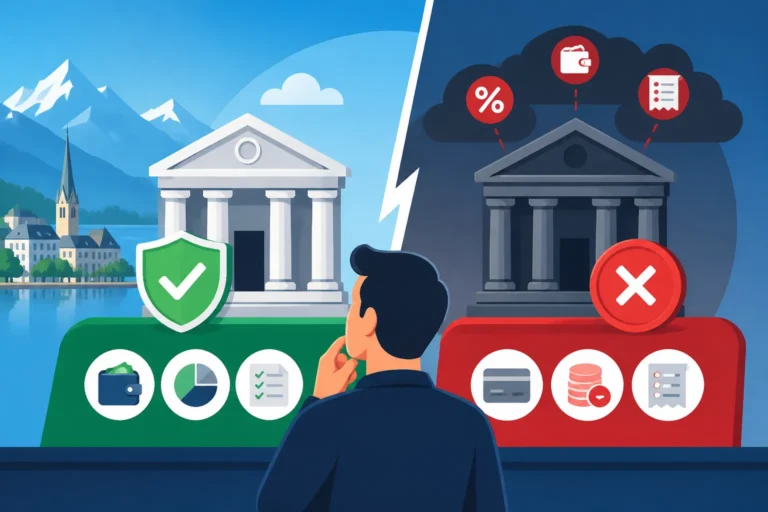
Moving to Zurich or Geneva usually starts with excitement about a high-paying job and the pristine quality of life. However, for any US Person—a term that includes citizens, Green Card holders, and those meeting the substantial presence test—the financial honeymoon ends the moment you try to open a local brokerage account. You quickly realize that Banking and Finance for Expats in Switzerland: The 2027 Guide is significantly more complicated for Americans than for our European colleagues.
The core of the problem lies in the Foreign Account Tax Compliance Act (FATCA). This US law requires foreign financial institutions to report the assets of their US clients directly to the IRS. Because the administrative burden is so high, many local Swiss banks, such as certain Cantonal banks or smaller private institutions, simply refuse to serve Americans. They don't want the risk or the paperwork. Even if you find a bank that will take you, the local investment products they offer are often a "tax bomb" waiting to explode.
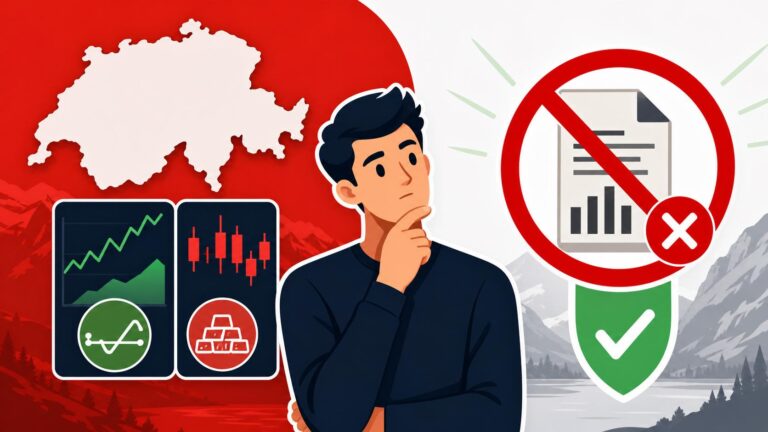
When you walk into a branch of UBS or Credit Suisse, your advisor might suggest a local Swiss mutual fund or an ETF managed by a Swiss firm. To a non-US expat, these are excellent, low-cost ways to build wealth. To you, these are PFICs. The IRS views these foreign-domiciled funds with extreme suspicion, assuming they are tools for tax evasion. Consequently, they apply a tax regime so punishing that it can effectively wipe out all your gains and even eat into your principal. Navigating this requires a deep understanding of Swiss Taxes Explained: Federal, Cantonal, and Municipal Rates and how they clash with US federal law.
What is a PFIC and Why Does It Matter
A Passive Foreign Investment Company (PFIC) is any foreign corporation that meets one of two tests: the income test (75% or more of its gross income is passive) or the asset test (at least 50% of its assets produce passive income). In plain English, almost every Swiss-domiciled ETF, mutual fund, and even some "wrapped" insurance products are PFICs. If you buy a fund with a Swiss ISIN (the code starting with CH), you are likely buying a PFIC.
The tax treatment under Section 1291 of the Internal Revenue Code is the stuff of nightmares. Instead of the usual 15% or 20% long-term capital gains rate you might expect in the US, PFIC gains are often taxed as ordinary income at your highest marginal rate. Furthermore, the IRS applies a "deferred tax interest charge." They act as if you earned that gain evenly over the years you held the investment and charge you interest for the "privilege" of not paying tax every single year. By the time you sell, your effective tax rate could exceed 50% or even 60%.
Reporting is another hurdle. You are required to file Form 8621 for every single PFIC you own. Tax professionals often charge hundreds of dollars per form because they are incredibly complex to calculate. If you have a portfolio of five Swiss ETFs, you could be looking at thousands of dollars in accounting fees every year just to stay compliant. This is why many expats seek help from specialized firms like Taxes for Expats to ensure they aren't missing a critical filing that could lead to five-figure penalties. To avoid this, you must understand FBAR and Form 8938: Reporting Swiss Bank Accounts for US Expats and how they relate to your investment holdings.
The IBKR Workaround: Investing Like an American in the Alps
The "IBKR workaround" refers to using Interactive Brokers (IBKR) to bypass the PFIC trap. Interactive Brokers is one of the few platforms that allows US Persons living in Switzerland to open a brokerage account and, crucially, allows them to purchase US-domiciled ETFs. Because these ETFs (like VTI, VOO, or VXUS) are registered in the US, they are not "foreign" and therefore cannot be PFICs.
For years, many European residents have been blocked from buying US ETFs due to EU regulations known as PRIIPs, which require a "Key Information Document" (KID) that US providers refuse to produce. However, Switzerland's implementation of similar rules (FIDLEG) has been slightly more flexible, and US citizens are often treated as "professional" or simply allowed to bypass these restrictions when using a US-linked broker like IBKR. This allows you to build a portfolio of Vanguard or BlackRock funds that are tax-efficient for the IRS while you reside in Switzerland.
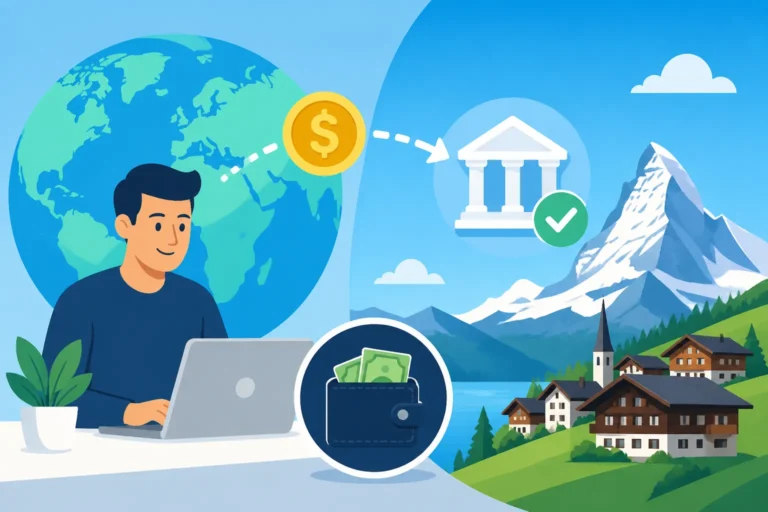
When setting up your IBKR account, you can fund it in Swiss Francs (CHF). If you need to move money between your Swiss bank and your US accounts, using a service like Wise is often the most cost-effective way to handle the conversion. Wise provides the mid-market exchange rate, which helps you avoid the hidden 1-3% markup that traditional banks often charge. Once your CHF is in your IBKR account, you can convert it to USD at near-institutional rates and buy your US ETFs. Naturally, you should keep an eye on The Guide to Moving Money: Wise vs Revolut vs Swiss Banks to ensure you are always using the cheapest channel for your capital.
Swiss Retirement Accounts and US Tax Complexity
Retirement planning in Switzerland is built on a three-pillar system, and each pillar has its own unique relationship with the IRS. For a US Person, The Three-Pillar Pension System: AHV, BVG, and Private Savings is not just a savings vehicle; it is a complex legal puzzle. The First Pillar (AHV) is generally treated similarly to Social Security under the US-Swiss Tax Treaty, making it relatively straightforward.
The Second Pillar (BVG or LPP) is your employer-sponsored pension. Most tax experts view the mandatory portion of the BVG as a "qualified" retirement plan under the treaty, meaning you aren't taxed on the growth or the employer contributions until you withdraw the money. However, if you make voluntary "buy-ins" to your pension, the tax treatment can become murky. Before making large extra contributions, it is wise to consult with Taxes for Expats to determine if those contributions might be viewed as a "grantor trust" by the IRS, which would require additional reporting.
The Third Pillar (Pillar 3a) is the most dangerous area for US Persons. Many Swiss banks will try to sell you a 3a account invested in—you guessed it—Swiss mutual funds. These funds are PFICs. Even though the account is a "retirement" account in Switzerland, the IRS does not recognize Pillar 3a as a qualified pension plan under the current treaty. This means you have no protection from the PFIC rules within a 3a. If you want to use a 3a for the Swiss tax deduction, you should generally keep it in a cash-only account, or use a provider that allows for US-compliant investments, though these are rare. Understanding Pillar 3a in 2026: Tax Deductions, Limits, and Investment Options is essential, but for Americans, the "tax deduction" on the Swiss side might be completely offset by the "tax headache" on the US side.
Navigating Currency Risk and Cash Management
When you invest in US-domiciled ETFs while living in Switzerland, you are essentially investing in USD-denominated assets. This introduces currency risk. If the US Dollar weakens against the Swiss Franc, your investments may lose value in CHF terms, even if the underlying stocks go up. For an expat who plans to retire in Switzerland, this is a significant consideration. You are earning in one of the world's strongest currencies but investing in one that has historically devalued against it.
To mitigate this, some expats keep a larger portion of their "safe" money in CHF-denominated assets. However, finding CHF assets that aren't PFICs is difficult. Holding cash in a high-yield Swiss savings account is one option, but Swiss interest rates are notoriously low. Some investors look into individual Swiss stocks (like Nestlé, Roche, or Novartis). Unlike Swiss funds, individual stocks are not PFICs. You can own individual Swiss equities without the punitive tax regime, provided you don't own more than 10% of the company (which, for most of us, isn't an issue).
For managing your day-to-day cash flow between the US and Switzerland, integration is key. If you are receiving a US tax refund or have income in the US, you can use Wise to bridge the gap. Wise allows you to hold balances in both CHF and USD, making it easier to time your conversions when the exchange rate is favorable. This flexibility is vital when you are trying to balance a Cost of Living in Switzerland 2026: Budgeting for Singles and Families against your long-term US tax obligations.
Practical Steps for US Expats to Start Investing
If you are a US Person in Switzerland and you have been paralyzed by the fear of the IRS, the first step is to simplify. Do not buy any investment product from a Swiss bank without first asking for its ISIN and checking where it is domiciled. If it starts with anything other than "US," proceed with extreme caution. Most of the time, the answer should be a firm "no."
Next, open an account with a broker that understands the US expat experience. Interactive Brokers is the most common choice because of its robust multi-currency support and access to US markets. Once the account is open, fund it using a transparent transfer service. Using Wise to send your first 1,000 CHF to your brokerage account will show you exactly how much you are saving compared to a standard bank wire.
Finally, establish a relationship with a tax professional. Companies like Taxes for Expats specialize in exactly this niche. They can help you navigate the annual filing of FBAR, Form 8938, and the dreaded Form 8621 if you’ve already accidentally purchased a PFIC. While it feels unfair that you have to jump through these hoops while your Swiss neighbors invest with ease, following the IBKR workaround is the most reliable path to building wealth without the IRS taking the lion's share.
| Investment Type | PFIC Status | US Tax Treatment | Swiss Tax Treatment |
|---|---|---|---|
| US-Domiciled ETF (e.g., VTI) | No | Standard Capital Gains | Wealth Tax + Dividend Tax |
| Swiss-Domiciled ETF (e.g., CHSPI) | Yes | Punitive (Ordinary Income + Interest) | Wealth Tax + Dividend Tax |
| Individual Swiss Stocks | No | Standard Capital Gains | Wealth Tax + Dividend Tax |
| Swiss Pillar 3a (Bank/Fund) | Usually Yes | Punitive (unless cash-only) | Tax Deductible (Contribution) |
| Swiss Pillar 2 (Mandatory) | Exempt | Treaty Protected (Deferred) | Tax Deductible (Contribution) |
The Role of Professional Tax Advice
You might be tempted to "DIY" your US tax returns to save money. In the world of US-Swiss cross-border finance, this is often a penny-wise, pound-foolish decision. The intersection of Withholding Tax (Quellensteuer) vs Standard Taxation for Foreigners and US federal tax credits is incredibly dense. For example, the Foreign Tax Credit (FTC) can often be used to offset your US tax liability using the taxes you’ve already paid to your Swiss canton, but calculating this correctly requires precision.
A professional firm like Taxes for Expats can also advise on whether you should use the Foreign Earned Income Exclusion (FEIE) or the Foreign Tax Credit. For many high-earners in Switzerland, the FTC is superior because Swiss tax rates are often higher than US rates, allowing you to carry forward excess credits. This is particularly useful if you are using the IBKR workaround, as it can help offset taxes on the dividends your US ETFs will inevitably pay.
Moreover, if you have already been living in Switzerland for a few years and haven't been filing your FBARs or reporting your Swiss accounts, don't panic. There are "Streamlined Filing Compliance Procedures" designed to help "non-willful" taxpayers get back into the system without massive penalties. Reaching out to a specialist is the first step toward peace of mind, ensuring that your life in Switzerland remains a financial success rather than a legal liability.
US Person Investing Disclaimer
This guide is provided for informational purposes only and does not constitute professional tax, legal, or financial advice. Tax laws, particularly those involving US international taxation and PFIC rules, are subject to change and are highly dependent on individual circumstances. Always consult with a qualified tax professional who specializes in US expat taxation and a financial advisor familiar with Swiss regulations before making any investment decisions or filing tax returns. Switzerland's financial landscape is complex, and errors in IRS reporting can lead to significant financial penalties.